
Adverse Drug Reaction: What It Is, How to Spot It, and What to Do
When your body reacts badly to a medicine you took on purpose, that’s an adverse drug reaction, an unintended and harmful response to a medication at normal doses. Also known as ADR, it’s not just a minor upset stomach—it can mean internal bleeding, liver damage, dangerous drops in blood pressure, or even life-threatening allergic responses. Unlike simple side effects like drowsiness or dry mouth, which are often expected and mild, an adverse drug reaction is unpredictable, serious, and sometimes fatal.
These reactions don’t always come from the drug itself. Sometimes they happen because of drug interactions, when two or more medications clash in your body. Take blood thinners like warfarin—mix them with ginkgo biloba, aspirin, or even certain antibiotics, and you risk uncontrolled bleeding. Or consider polypharmacy, the use of five or more medications at once, which is common in older adults. The more pills you take, the higher the chance one will trigger something dangerous. Studies show that over 30% of hospital admissions in seniors are tied to these kinds of reactions.
It’s not just about what’s in the bottle. Your age, liver function, kidney health, genetics, and even what you eat can change how your body handles a drug. A dose that’s safe for one person might be toxic for another. That’s why tracking your symptoms matters. Did your joint pain start after taking sitagliptin? Did your dizziness begin when you added a new beta blocker? These aren’t just coincidences—they’re clues. The FDA and groups like ISMP track these patterns and issue warnings when a pattern emerges. You don’t need to wait for a recall. If something new shows up after starting a new med, write it down. Note the date, the dose, and how long it lasted. Bring that to your doctor.
Some reactions show up fast—hives, swelling, trouble breathing. Others creep in slowly: unexplained fatigue, weight gain, confusion, or bruising without injury. That’s why knowing the difference between a disease symptom and a drug side effect is crucial. You can’t assume every new ache or change is your condition getting worse. Sometimes, it’s the medicine itself.
What you’ll find here are real, practical stories from people who’ve been there—how they spotted a dangerous reaction, what steps they took, and how they worked with their doctors to fix it. You’ll see which drugs carry the highest risks, how to read safety updates, and how to talk to your provider without sounding alarmist. No fluff. No theory. Just what you need to stay safe while taking the meds you need.
How to Tell a Side Effect from a True Drug Allergy
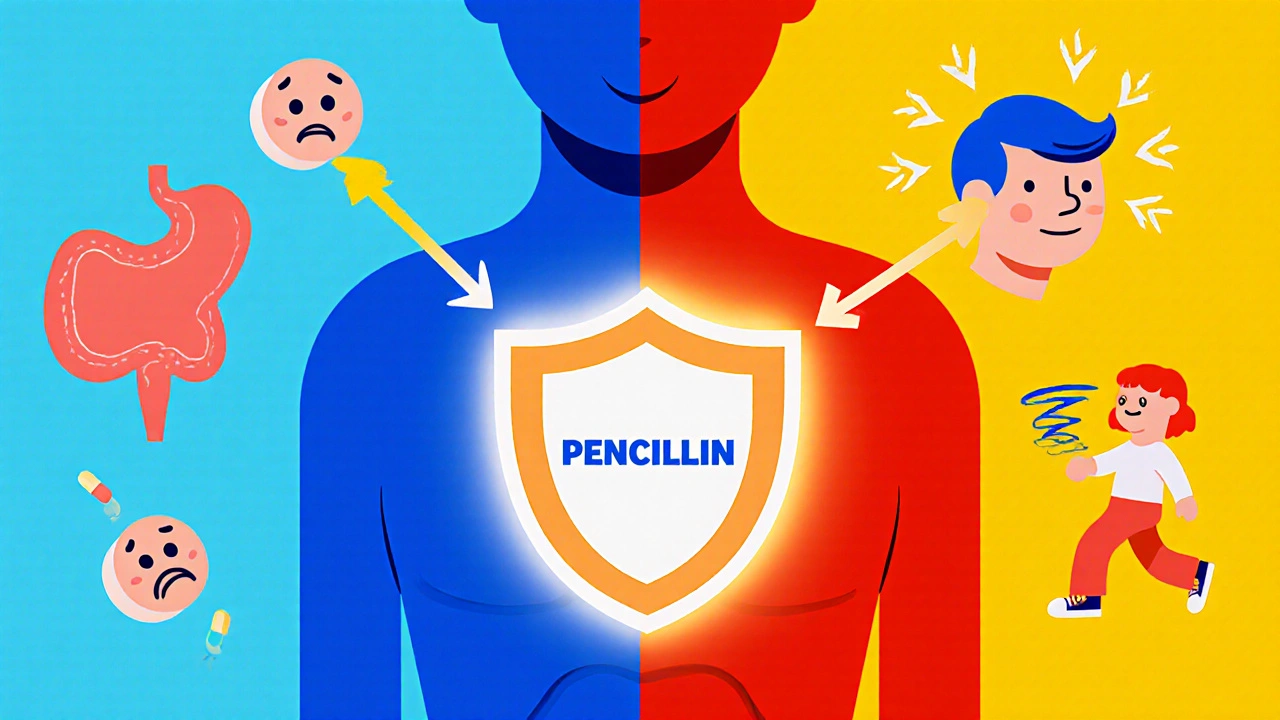
Learn how to tell the difference between a harmless side effect and a dangerous drug allergy. Most reactions aren’t allergies-mislabeling them can limit your treatment options and put your health at risk.
- November 22 2025
- Tony Newman
- 17 Comments