
Antipsychotics: What They Are, How They Work, and What You Need to Know
When someone is struggling with antipsychotics, a class of medications used to manage symptoms of psychosis such as hallucinations, delusions, and disordered thinking. Also known as neuroleptics, these drugs don’t cure mental illness—but they can make daily life possible again. They’re not sedatives. They’re not mood stabilizers alone. They’re targeted tools designed to reset how the brain processes reality, often when someone’s thoughts have slipped out of sync with the world around them.
Most people who take antipsychotics are dealing with conditions like schizophrenia, a chronic brain disorder that affects perception, thinking, and behavior or bipolar disorder, a condition marked by extreme mood swings that can include episodes of psychosis. But they’re also used off-label for severe anxiety, treatment-resistant depression, or even agitation in dementia—though that’s controversial and requires close monitoring. These drugs work by blocking dopamine receptors in the brain, especially in areas tied to emotion and perception. Too much dopamine? That’s often linked to hallucinations and paranoia. Reduce it, and symptoms ease.
But it’s not magic. Side effects are common—weight gain, drowsiness, shaking, or even long-term movement disorders. Some people feel like they’ve lost parts of themselves. Others find their lives finally stable enough to work, see family, or sleep through the night. It’s messy. It’s personal. And it’s why so many posts here focus on managing side effects, comparing drugs, or figuring out when to switch or stop. You’ll find guides on spotting whether a new symptom is from the illness or the medication. You’ll see advice on working with doctors to balance effectiveness with quality of life. And you’ll find real talk about what it’s like to live on these drugs—because knowing how they work isn’t enough. You need to know how to live with them.
The posts below aren’t just drug facts. They’re about real people trying to make sense of treatment, side effects, and long-term health. Whether you’re a patient, a caregiver, or just trying to understand what’s going on, this collection gives you the tools to ask better questions and make smarter choices.
Evening Primrose Oil and Seizure Risk: What You Need to Know About Antipsychotic Interactions
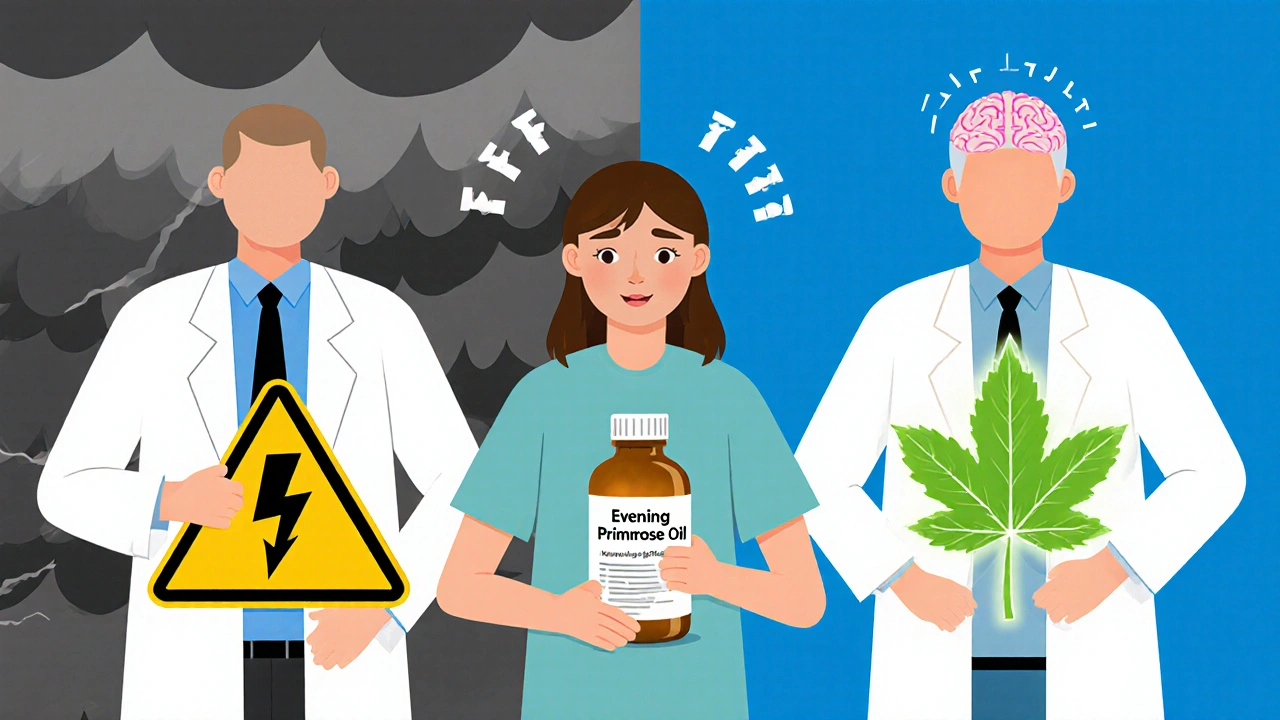
Evening primrose oil may increase seizure risk when taken with antipsychotics, but evidence is conflicting. Learn who should avoid it, what the science says, and safer alternatives for PMS and eczema.
- October 28 2025
- Tony Newman
- 8 Comments