
Dispensing: How Medications Are Given and Why It Matters
When you pick up a prescription, dispensing, the process of preparing and giving out medication to a patient under professional supervision. Also known as drug distribution, it’s not just filling a bottle—it’s the final checkpoint before a drug enters your body. This step links prescribing to pharmacy practices, the systems and protocols pharmacies use to ensure safe, accurate medication delivery. If the wrong dose, wrong drug, or wrong instructions slip through, the consequences can be serious—especially for older adults on multiple meds or people with kidney or liver issues.
Medication safety, the practice of preventing errors and harm from drug use. depends heavily on how well dispensing is done. Studies show nearly half of all medication errors happen at this stage—not because pharmacists are careless, but because systems are overloaded. Think about it: a pharmacist might be handling 200 prescriptions a day, each with different dosages, interactions, and patient histories. A misread script, a mix-up between similar-looking drugs like hydroxyzine and hydralazine, or skipping a check for blood thinner interactions can lead to hospital visits. That’s why good dispensing includes double-checks, clear labeling, and patient counseling—not just handing over a bag.
Dispensing also ties into how you take your meds. If you’re on drug administration, the method by which a medication is delivered into the body. like warfarin, insulin, or DPP-4 inhibitors, the way it’s dispensed affects whether it works—or causes harm. A bottle labeled "take once daily" might be misinterpreted if the patient doesn’t know if that means morning or night. Or worse, if the pharmacist doesn’t flag that Ginkgo Biloba you’re buying over the counter could bleed you out when mixed with your blood thinner. That’s why the FDA is pushing for standardized Patient Medication Information—one clear page that tells you what the drug does, what to watch for, and how to avoid dangerous combos.
Dispensing isn’t just a pharmacy task—it’s part of your health chain. It connects to deprescribing, where doctors and pharmacists work together to stop unnecessary drugs. It matters when you’re managing polypharmacy, especially as a senior. It’s the moment where medical power of attorney decisions get put into action—if someone else is making your choices, they need to understand what’s being dispensed and why. And when you’re pregnant, dealing with kidney disease, or on beta blockers like bisoprolol, the right dispensing could mean the difference between feeling better and ending up in the ER.
You’ll find posts here that dig into exactly how this works: how to spot errors, what to ask your pharmacist, how to read labels, and why some meds are riskier than others. Whether you’re managing heart pain, diabetes, or just trying to cut down on pills, understanding dispensing helps you take control. This isn’t about trusting blindly—it’s about knowing what to look for, what questions to ask, and how to make sure what you walk out with is exactly what your body needs.
Specialty Pharmacy: How Providers Dispense Generic Specialty Drugs
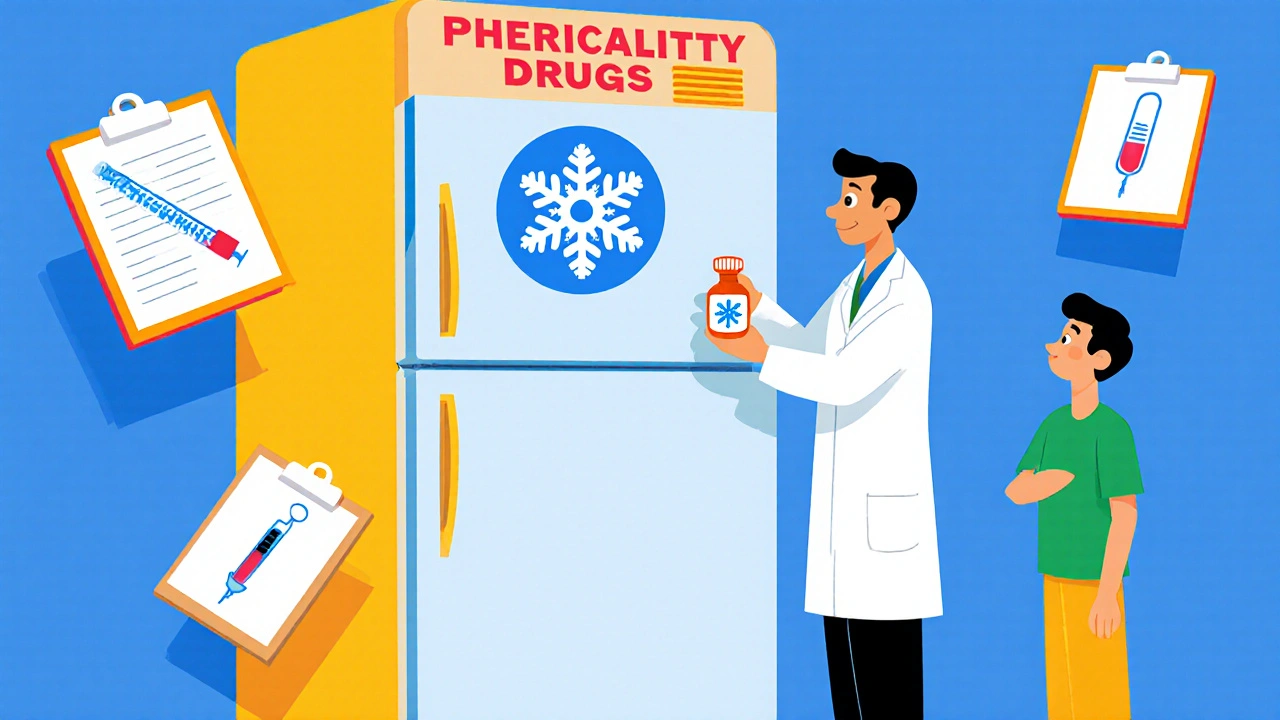
Specialty pharmacies dispense generic specialty drugs the same way as branded ones-not because of cost, but because of complexity. Learn how providers manage these drugs, why retail pharmacies can't fill them, and what patients should expect.
- November 17 2025
- Tony Newman
- 8 Comments