
DPP-4 Inhibitors: What They Are, How They Work, and What You Need to Know
When you have type 2 diabetes, your body doesn’t use insulin well, and your blood sugar stays too high. One group of medicines designed to fix that is called DPP-4 inhibitors, a class of oral antidiabetic drugs that help the body maintain normal blood sugar levels by boosting natural insulin production and reducing glucose release from the liver. Also known as gliptins, these drugs include sitagliptin, saxagliptin, linagliptin, and others. They’re often used when metformin alone isn’t enough, or when weight gain and low blood sugar are big concerns.
DPP-4 inhibitors work by blocking an enzyme called dipeptidyl peptidase-4. This enzyme normally breaks down incretin hormones like GLP-1, which tell your pancreas to make more insulin after you eat. By slowing down that breakdown, DPP-4 inhibitors let your body use its own incretins longer—so you get more insulin when you need it and less glucose dumped into your blood. Unlike some other diabetes drugs, they rarely cause hypoglycemia unless paired with sulfonylureas or insulin. They’re also weight-neutral, which makes them a good fit for people trying to avoid gaining extra pounds.
These drugs are commonly prescribed for older adults or those with kidney issues because some, like linagliptin, don’t need dose adjustments even with reduced kidney function. But they’re not magic. They work best when combined with diet, movement, and sometimes other meds. You’ll see them mentioned in posts about polypharmacy, the use of multiple medications at once, which is common in older patients with diabetes and other chronic conditions, especially when doctors are trying to cut down on side effects without losing control of blood sugar. They also come up in discussions about medication safety, how to avoid harmful drug interactions and manage risks when taking several prescriptions, since DPP-4 inhibitors can interact with other drugs—like those for heart conditions or infections.
If you’re on one of these meds, you might notice fewer crashes in energy after meals, steadier glucose readings, and less need for insulin shots. But they won’t fix poor eating habits or inactivity. That’s why so many articles here focus on lifestyle changes alongside meds—because DPP-4 inhibitors are tools, not replacements for healthy choices. You’ll find posts that help you tell if your fatigue or dizziness is from the drug or something else, how to safely reduce meds over time, and what to watch for when mixing supplements or other treatments.
There’s no one-size-fits-all in diabetes care. What works for one person might not work for another. That’s why understanding your options—like how DPP-4 inhibitors compare to GLP-1 agonists or SGLT2 inhibitors—is key. The articles below cover real-world stories, science-backed tips, and practical advice on managing diabetes meds, spotting side effects, and working with your doctor to find the safest, most effective plan for you.
DPP-4 Inhibitors and Joint Pain: What You Need to Know
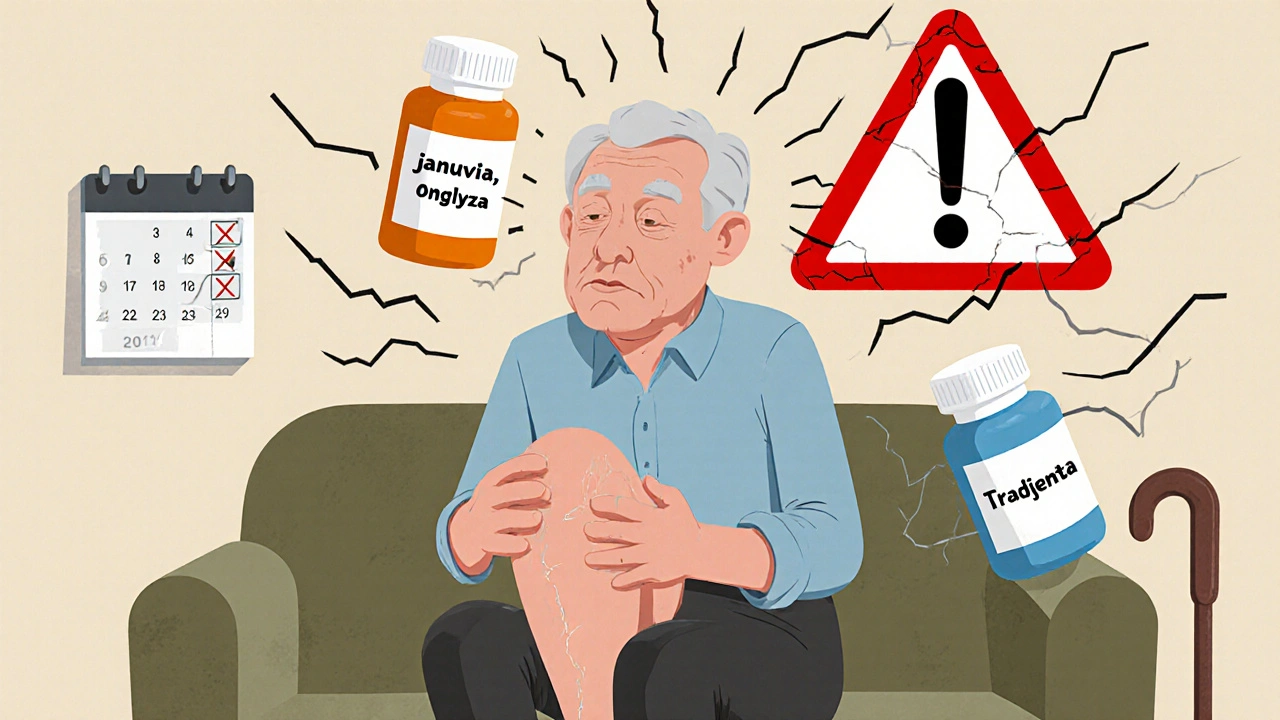
DPP-4 inhibitors help manage type 2 diabetes but can cause severe joint pain in rare cases. Learn the signs, what the FDA says, and what to do if you're affected.
- November 12 2025
- Tony Newman
- 15 Comments