
Evening Primrose Oil: Benefits, Uses, and What Science Says
When you hear evening primrose oil, a plant-based oil extracted from the seeds of the evening primrose flower, known for its high concentration of gamma-linolenic acid (GLA), an omega-6 fatty acid. Also known as EPO, it’s been used for decades as a natural remedy for hormonal discomfort, dry skin, and joint stiffness. Unlike fish oil or flaxseed, evening primrose oil doesn’t give you EPA or DHA—it gives you GLA, which your body turns into substances that help reduce inflammation and support cell function.
People turn to evening primrose oil, a plant-based oil extracted from the seeds of the evening primrose flower, known for its high concentration of gamma-linolenic acid (GLA), an omega-6 fatty acid. Also known as EPO, it’s been used for decades as a natural remedy for hormonal discomfort, dry skin, and joint stiffness. for PMS relief, a common set of physical and emotional symptoms occurring before menstruation, often managed with supplements like evening primrose oil because studies suggest GLA may help balance hormone-related mood swings and breast tenderness. It’s also popular for skin health, the condition of the skin, often improved by topical or oral fatty acids that strengthen the skin barrier—especially for eczema and dryness. Many users report smoother skin after weeks of daily use, though results vary. It’s not a miracle cure, but for some, it’s a gentle alternative to harsher creams or prescription meds.
There’s a reason you’ll find evening primrose oil in the same breath as herbal supplements, natural products derived from plants, often used to support wellness without synthetic drugs. Unlike pharmaceuticals, it doesn’t require a prescription, and most people tolerate it well. But that doesn’t mean it’s risk-free. Some users report mild stomach upset or headaches. And if you’re on blood thinners or have epilepsy, talk to your doctor first. The science isn’t always clear-cut—some trials show strong benefits, others show little difference from placebo. But for those who’ve tried it and felt a difference, it sticks around.
What you’ll find in the posts below isn’t just a list of random articles. It’s a collection of real, practical insights—from how evening primrose oil interacts with other medications, to whether it really helps with menopause symptoms, to how it compares to other oils like flaxseed or borage. No fluff. No marketing hype. Just what people have learned from using it, studying it, or managing side effects. If you’re curious whether it’s worth trying, or if you’ve already started and want to know what to expect, you’re in the right place.
Evening Primrose Oil and Seizure Risk: What You Need to Know About Antipsychotic Interactions
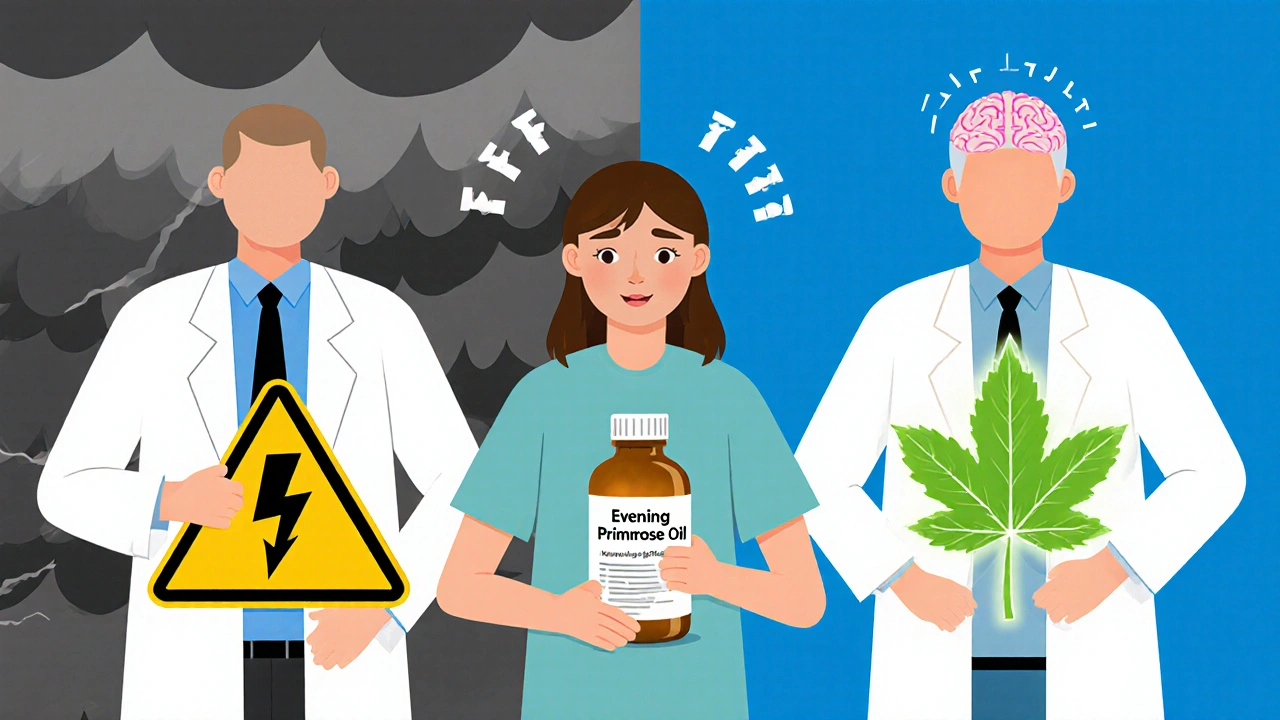
Evening primrose oil may increase seizure risk when taken with antipsychotics, but evidence is conflicting. Learn who should avoid it, what the science says, and safer alternatives for PMS and eczema.
- October 28 2025
- Tony Newman
- 8 Comments