
FDA Warning: What You Need to Know About Drug Safety and Risks
When the FDA warning, an official alert issued by the U.S. Food and Drug Administration about serious risks tied to a medication or supplement. Also known as a black box warning, it's not just paperwork—it’s a red flag that could prevent hospitalization or worse. A FDA warning means something serious is happening: a drug might cause liver failure, deadly bleeding, or sudden heart rhythm changes. These aren’t theoretical risks. They’re based on real patient harm, often uncovered after thousands of people have already taken the drug. The FDA doesn’t issue these lightly. When they do, it’s because the danger is real, measurable, and often preventable.
FDA warnings aren’t just about new drugs. They also cover herbal supplements, natural products marketed as safe but proven to interact dangerously with prescription meds—like Ginkgo Biloba boosting bleeding risk when taken with warfarin. They cover polypharmacy, the practice of taking five or more medications at once, which multiplies the chance of harmful interactions. And they cover patient medication information, the new one-page format the FDA is pushing to replace confusing, outdated drug guides. These aren’t abstract concepts. They’re the reason someone on blood thinners might get a spinal tap and end up paralyzed. Or why a post-menopausal woman on hormone therapy and a dozen other pills ends up in the ER with a clot.
You don’t need to be a doctor to understand an FDA warning. You just need to know what to look for. If your pill bottle says "May increase risk of internal bleeding," or "Avoid with grapefruit juice," or "Not for use in patients with severe kidney disease," that’s an FDA warning in plain sight. Many people ignore these. They think, "It’s just a warning," or "My doctor knows what they’re doing." But doctors are human. They miss interactions. They don’t always ask about your supplements. And if you’re on more than three meds, the odds of a hidden danger go up fast. That’s why deprescribing—safely cutting back on unnecessary pills—isn’t just a trend. It’s a safety strategy backed by real studies showing fewer hospital visits and better quality of life.
What you’ll find below are real, practical guides that connect directly to these warnings. From how to tell if your dizziness is from your beta blocker or something worse, to why evening primrose oil might trigger seizures when mixed with antipsychotics, to how to safely buy generic meds online without falling for scams. These aren’t theory pieces. They’re tools. They help you ask the right questions, spot the red flags, and take control before the FDA has to step in again. You don’t have to wait for a warning to become a crisis. Start here.
DPP-4 Inhibitors and Joint Pain: What You Need to Know
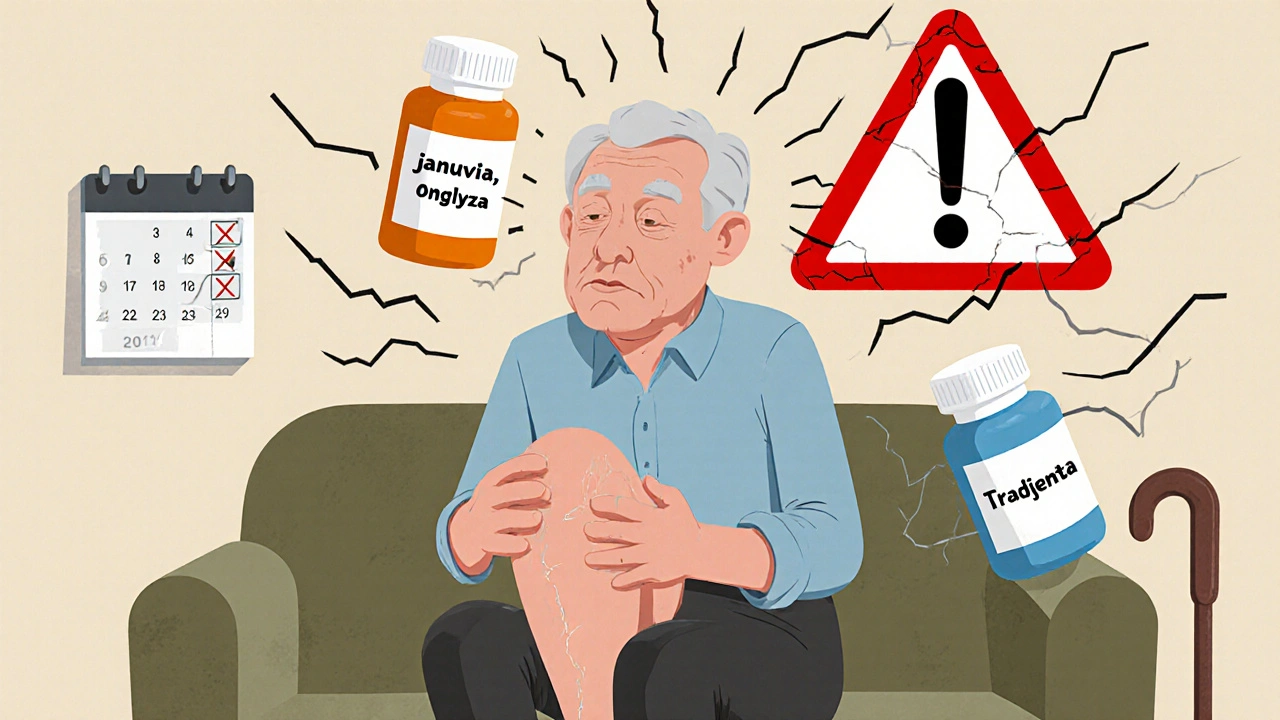
DPP-4 inhibitors help manage type 2 diabetes but can cause severe joint pain in rare cases. Learn the signs, what the FDA says, and what to do if you're affected.
- November 12 2025
- Tony Newman
- 15 Comments