
Insurance Formulary Tiers: How Your Drug Costs Are Decided
When you pick up a prescription, the price you pay isn’t just set by the drug company—it’s shaped by your insurance formulary tiers, a system health plans use to group medications by cost and clinical value. Also known as drug tiers, this structure tells your insurer how much they’ll cover and how much you’ll owe out of pocket. It’s not random. Every drug on your plan’s list is placed into one of several tiers, and that tier decides whether you pay $5, $50, or $300 for the same pill.
Pharmacy benefits, the system that manages which drugs are covered and at what cost are built around these tiers. Tier 1 usually includes generic drugs that are cheap and widely used—think metformin for diabetes or lisinopril for blood pressure. These are the go-to choices because they work well and cost little. Tier 2 often has brand-name drugs with generic alternatives available. Tier 3 is for higher-cost brand-name drugs with no close generics. And Tier 4? That’s where specialty drugs live—expensive meds for conditions like cancer, MS, or rheumatoid arthritis. Some plans even have Tier 5, where you pay a percentage of the total cost instead of a flat fee.
Formulary management, how insurers decide which drugs go where isn’t just about price. It’s also about evidence. Drugs that are proven safer, more effective, or cheaper overall tend to land in lower tiers. But it’s not always fair. Sometimes a drug ends up in a higher tier simply because the manufacturer didn’t negotiate a good deal with your insurer. That’s why two people on the same plan can pay wildly different amounts for the same medicine.
You might be surprised how often this affects your health. If a drug you need is in Tier 4, your doctor might switch you to a Tier 1 alternative—even if you’ve been stable on the original. That’s not because it’s better. It’s because your insurance won’t cover the expensive one without a prior authorization, or maybe not at all. And if you skip filling a prescription because the cost is too high, you’re not being irresponsible—you’re reacting to a system that puts price before access.
But you’re not powerless. You can ask your pharmacist to check your plan’s formulary before you fill a script. You can ask your doctor if there’s a lower-tier alternative. You can appeal a tier placement if your drug was moved up unexpectedly. And you can look at your plan’s formulary list online—it’s usually hidden in a PDF, but it’s there. Knowing which tier your meds are on helps you spot surprises before you get to the counter.
The posts below dive into real-world issues tied to how drugs are priced and covered. You’ll find guides on how generic drugs compare to brand names, how to spot dangerous drug combinations, and how to tell if your side effects are from the medicine or something else. You’ll see how insurance rules affect what you can get, why some meds cost more even when they’re the same, and how to push back when the system doesn’t work for you. This isn’t about jargon. It’s about making sure you get the right drug at a price you can afford.
Insurance Formulary Tiers Explained: Tier 1, Tier 2, Tier 3, and Non-Formulary Drugs
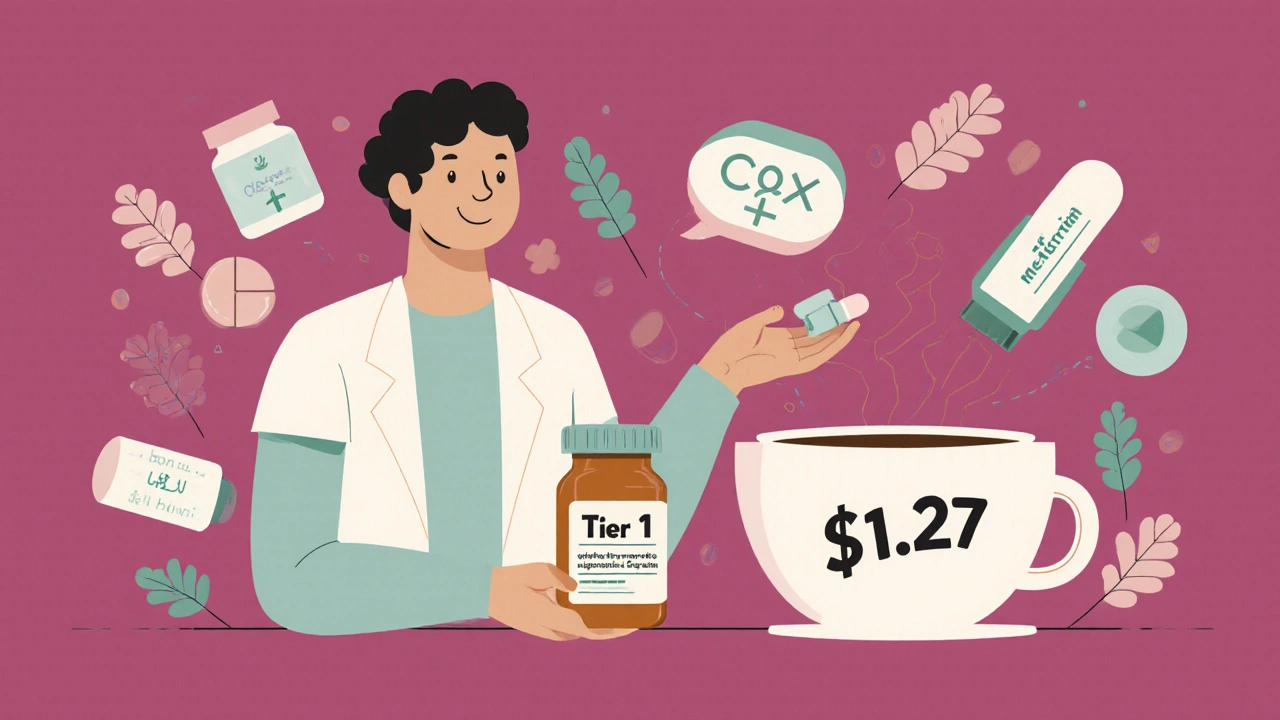
Understand how insurance formulary tiers work-Tier 1 to Tier 5 and non-formulary drugs-and how they affect your out-of-pocket costs for prescriptions. Learn what drives tier placement and how to save money.
- November 26 2025
- Tony Newman
- 10 Comments