
Joint Pain Side Effect: What You Need to Know About Medications and Relief
When your joints start aching, you might assume it’s aging, injury, or arthritis—but it could be your medication, a substance taken to treat a condition that can unintentionally trigger new health problems. Also known as drug-induced joint pain, this side effect shows up quietly, often after weeks or months of use, and gets mistaken for something else. Many people don’t connect their stiff knees or sore shoulders to the pills they take daily. But studies and real-world reports show that common drugs like statins, antibiotics, and even some antidepressants can cause inflammation or muscle stiffness that feels exactly like joint pain.
This isn’t rare. If you’re on more than one medication—something called polypharmacy, the use of multiple drugs at the same time, often in older adults—your risk goes up. The more pills you take, the more chances for hidden interactions. For example, a blood pressure med might worsen joint discomfort by reducing circulation, or a diabetes drug could trigger muscle cramps that radiate into joints. And when you’re already dealing with chronic illness, it’s easy to blame new pain on the disease itself instead of the treatment.
That’s why knowing the difference between disease symptoms and medication side effects, unwanted reactions caused by drugs, not the underlying condition matters. Did the pain start after you began a new prescription? Did it get worse when your dose changed? Did it improve when you skipped a pill? These aren’t just questions—they’re clues. A simple checklist can help you track patterns and bring real evidence to your doctor, instead of vague complaints.
And here’s the good part: you don’t have to live with it. Many people find relief by adjusting their meds—not quitting them cold, but working with their provider to simplify their regimen through a process called deprescribing, the careful, planned reduction of unnecessary or harmful medications. It’s not about stopping everything. It’s about removing what’s doing more harm than good. Some folks cut their joint pain by dropping a single drug they didn’t even realize was the culprit.
Below, you’ll find real, practical advice from people who’ve been there—how to spot the signs, what questions to ask your doctor, and how lifestyle changes like walking, eating better, and sleeping well can reduce your reliance on drugs that cause joint pain. No fluff. No guesswork. Just what works.
DPP-4 Inhibitors and Joint Pain: What You Need to Know
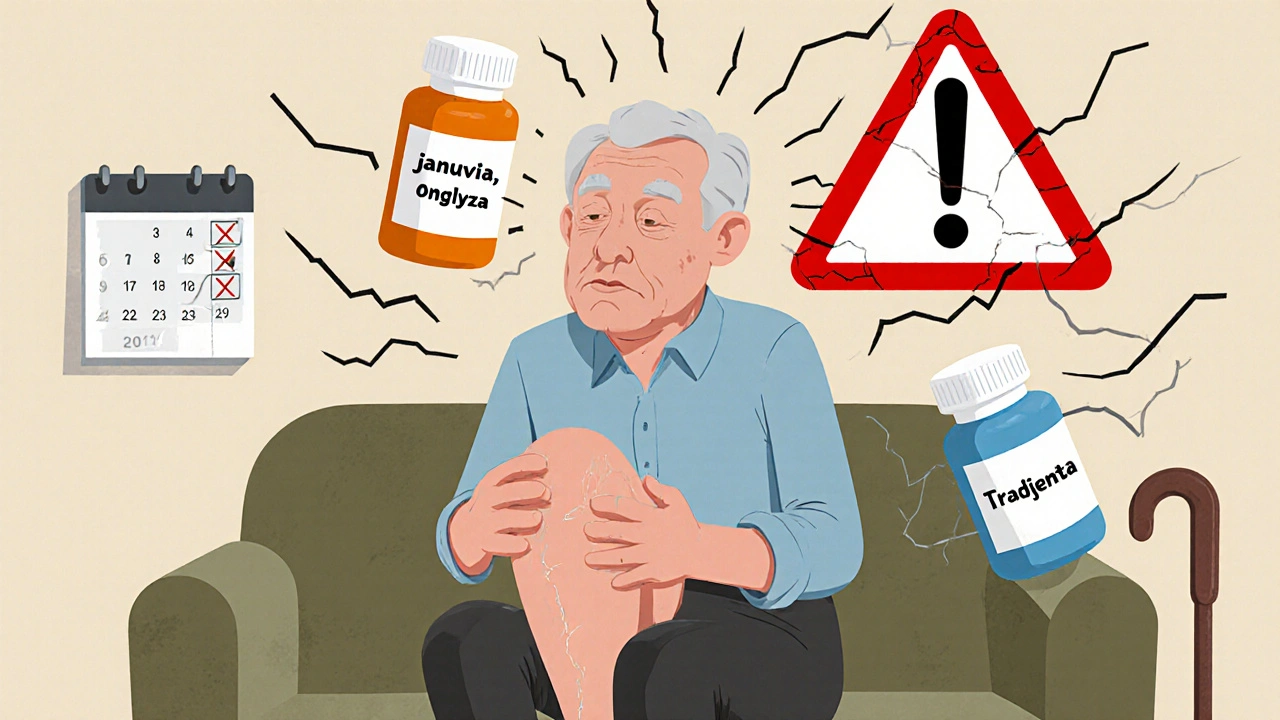
DPP-4 inhibitors help manage type 2 diabetes but can cause severe joint pain in rare cases. Learn the signs, what the FDA says, and what to do if you're affected.
- November 12 2025
- Tony Newman
- 15 Comments