
Penicillin Allergy: Symptoms, Alternatives, and What to Do If You're Allergic
When someone says they have a penicillin allergy, a hypersensitive immune reaction to penicillin antibiotics that can range from mild rashes to life-threatening anaphylaxis. Also known as beta-lactam allergy, it's one of the most commonly reported drug allergies in the U.S. But here’s the catch: up to 90% of people who believe they’re allergic to penicillin aren’t. Many outgrew it. Others had a rash as a kid that wasn’t a true allergy at all—maybe it was a virus or a side effect. Getting tested can save you from being stuck with costlier, less effective, or more dangerous antibiotics.
True penicillin allergy, an immune system overreaction triggered by penicillin or its derivatives like amoxicillin and ampicillin. Also known as penicillin hypersensitivity, it can cause hives, swelling, trouble breathing, or even shock usually shows up within an hour of taking the drug. If you’ve had a reaction, your doctor might label you allergic for life—even if you haven’t taken penicillin in decades. But if you’re labeled allergic without confirmation, you might end up on cephalosporins, a different class of antibiotics that share a similar chemical structure with penicillin and can sometimes cause cross-reactions. Also known as cephalosporin antibiotics, they’re often used as alternatives or broader-spectrum drugs like clindamycin or vancomycin. These can be harder on your gut, more expensive, or even less effective for common infections like strep throat or sinusitis.
Not all reactions are allergies. A stomachache after taking amoxicillin? Probably not an allergy. A rash that shows up days later? Could be viral. Only a skin test or oral challenge—done under medical supervision—can confirm a real penicillin allergy. And if you’ve never had a severe reaction, you might be safe to try it again. The FDA and major medical groups now recommend allergy testing for anyone with a past label, especially before surgery or if you’re on multiple meds.
What if you’re truly allergic? You’re not out of options. Doxycycline, azithromycin, and sulfamethoxazole are common alternatives for infections like pneumonia, ear infections, or urinary tract infections. But you need to know which ones are safe for your body. Some people with penicillin allergy can still take certain cephalosporins—especially third-generation ones—with low risk. It’s not one-size-fits-all.
And don’t forget: if you’ve been told you’re allergic, tell every doctor, pharmacist, and ER staff. Write it on your phone, carry a card, or use a medical alert bracelet. Mislabeling isn’t just inconvenient—it can lead to worse outcomes. You might get a drug that causes more side effects, longer hospital stays, or even antibiotic resistance because the right one was avoided.
Below, you’ll find real patient stories, expert-backed guides on what to avoid, how to get tested, and which antibiotics actually work when penicillin is off the table. No fluff. Just what you need to stay safe and get better.
How to Tell a Side Effect from a True Drug Allergy
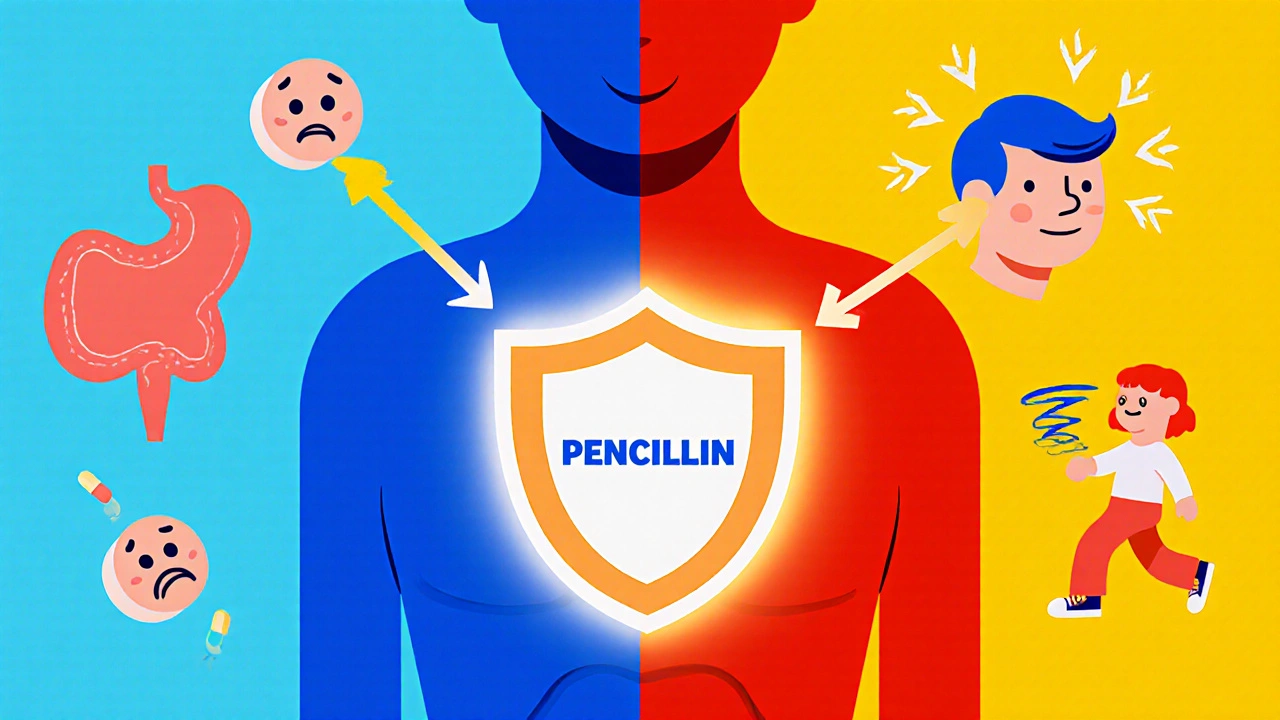
Learn how to tell the difference between a harmless side effect and a dangerous drug allergy. Most reactions aren’t allergies-mislabeling them can limit your treatment options and put your health at risk.
- November 22 2025
- Tony Newman
- 17 Comments