
Professional Society Guidelines: What They Are and How They Shape Your Care
When your doctor recommends a treatment, they’re often following professional society guidelines, official recommendations created by groups of medical experts to standardize care based on the best available evidence. These aren’t just suggestions—they’re the backbone of modern treatment decisions, used by hospitals, insurers, and pharmacies to ensure you get safe, effective care. Also known as clinical guidelines, structured recommendations that translate research into practical steps for patient care, they help cut through the noise of conflicting studies and outdated practices.
These guidelines don’t appear out of thin air. They’re built by groups like the American Heart Association, the American College of Physicians, or the Endocrine Society—teams of doctors, pharmacists, and researchers who review hundreds of studies, weigh risks and benefits, and agree on what works best. For example, when it comes to treatment protocols, standardized plans for managing conditions like diabetes, high blood pressure, or heart disease, these groups decide whether a drug like metformin should come before another, or when it’s time to switch from one medication to another. They also flag risks, like how evidence-based medicine, the practice of using high-quality research to guide medical decisions rather than tradition or opinion led to warnings about DPP-4 inhibitors and joint pain, or why anticoagulants need careful timing before spinal procedures.
What you might not realize is that these guidelines directly affect what drugs you can get, how much you pay, and even whether your insurance covers a test or procedure. That’s why you’ll see them referenced in posts about deprescribing, generic specialty drugs, or medication safety for older adults. They’re why your doctor might suggest switching from a brand-name drug to a generic, or why they’re cautious about herbal supplements like Ginkgo Biloba when you’re on blood thinners. These aren’t random choices—they’re responses to standards set by expert panels who track outcomes across thousands of patients.
And they’re not static. As new data comes in—like the FDA’s proposed changes to how prescription info is presented—guidelines get updated. That’s why some of the advice you got five years ago might have changed. It’s not that doctors were wrong before; it’s that better evidence is now available. This is why posts on managing bisoprolol side effects, renal nutrition for kidney disease, or polypharmacy in seniors all tie back to these same guidelines. They’re the hidden framework behind every treatment decision you’re offered.
What you’ll find below are real-life examples of how these guidelines play out: when they help you save money with generics, when they warn you about dangerous interactions, when they push for safer dosing in older adults, and when they help you understand why a treatment was chosen over another. These aren’t abstract rules—they’re the reason your care is more consistent, more predictable, and more grounded in science than ever before.
How to Follow Professional Society Safety Updates on Medications
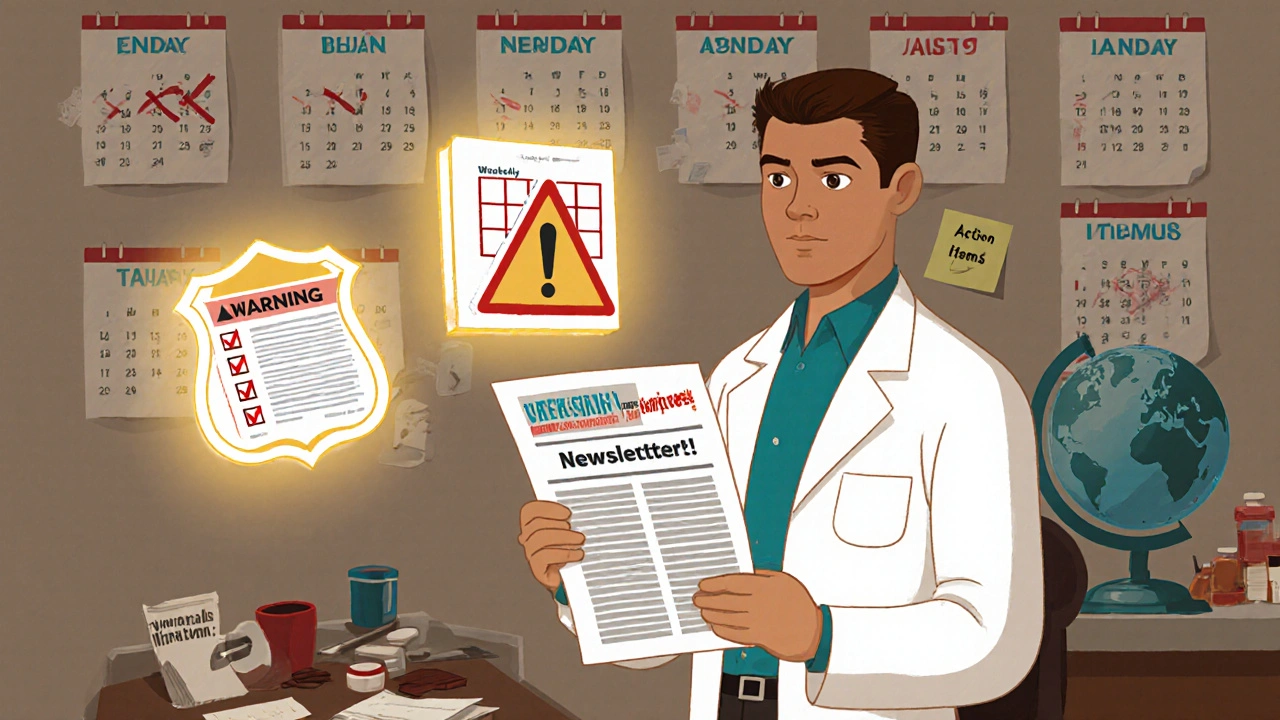
Learn how to track medication safety updates from trusted sources like ISMP, FDA, and ASHP. Get practical steps to set up alerts, avoid common mistakes, and turn guidelines into real safety actions.
- November 19 2025
- Tony Newman
- 12 Comments