
Side Effect: What You Need to Know About Medication Reactions
When you take a medicine, your body doesn’t always respond the way you hope. A side effect, an unintended reaction to a medication that occurs at normal doses. Also known as adverse drug reaction, it’s not a mistake—it’s biology. Side effects range from mild, like a dry mouth or drowsiness, to dangerous, like internal bleeding or liver damage. They’re not rare. Nearly half of people on multiple medications experience at least one. And the more drugs you take, the higher the chance one will mess with another.
Some side effects are predictable. first-generation antihistamines, like Benadryl, commonly cause drowsiness because they cross into the brain. Others are trickier. DPP-4 inhibitors, used for type 2 diabetes, can trigger severe joint pain in rare cases, but most patients never see it coming. Even natural products like Ginkgo Biloba, often thought of as harmless, can increase bleeding risk when mixed with blood thinners. These aren’t edge cases—they’re real, documented, and avoidable with awareness.
Side effects don’t always mean you need to stop the drug. Sometimes, they’re manageable. Fatigue from bisoprolol fumarate, a heart medication, can improve with timing changes or gentle exercise. But if you’re unsure whether your new headache is from stress or your new blood pressure pill, you need a clear way to tell. That’s where deprescribing, the careful process of reducing unnecessary meds to cut side effects comes in. It’s not about quitting drugs—it’s about using only what truly helps.
Many people blame their symptoms on aging, stress, or bad luck. But a growing number of health issues—fatigue, confusion, dizziness, even falls—are actually caused by medication interactions. The older you get, the more likely you are to be on five or more drugs. That’s polypharmacy, the use of multiple medications at once, which multiplies the risk of side effects. And it’s not just seniors. Younger people taking antidepressants, painkillers, and supplements are at risk too.
What you’ll find here isn’t a list of scary warnings. It’s a practical toolkit. You’ll learn how to spot when a symptom is a side effect, not a disease. You’ll see how to talk to your doctor about cutting back safely. You’ll understand why some drugs are riskier than others, and how to avoid dangerous combinations. Whether you’re managing a chronic condition, helping an aging parent, or just wondering why you feel off after starting a new pill—this collection gives you the facts without the fluff.
How to Tell a Side Effect from a True Drug Allergy
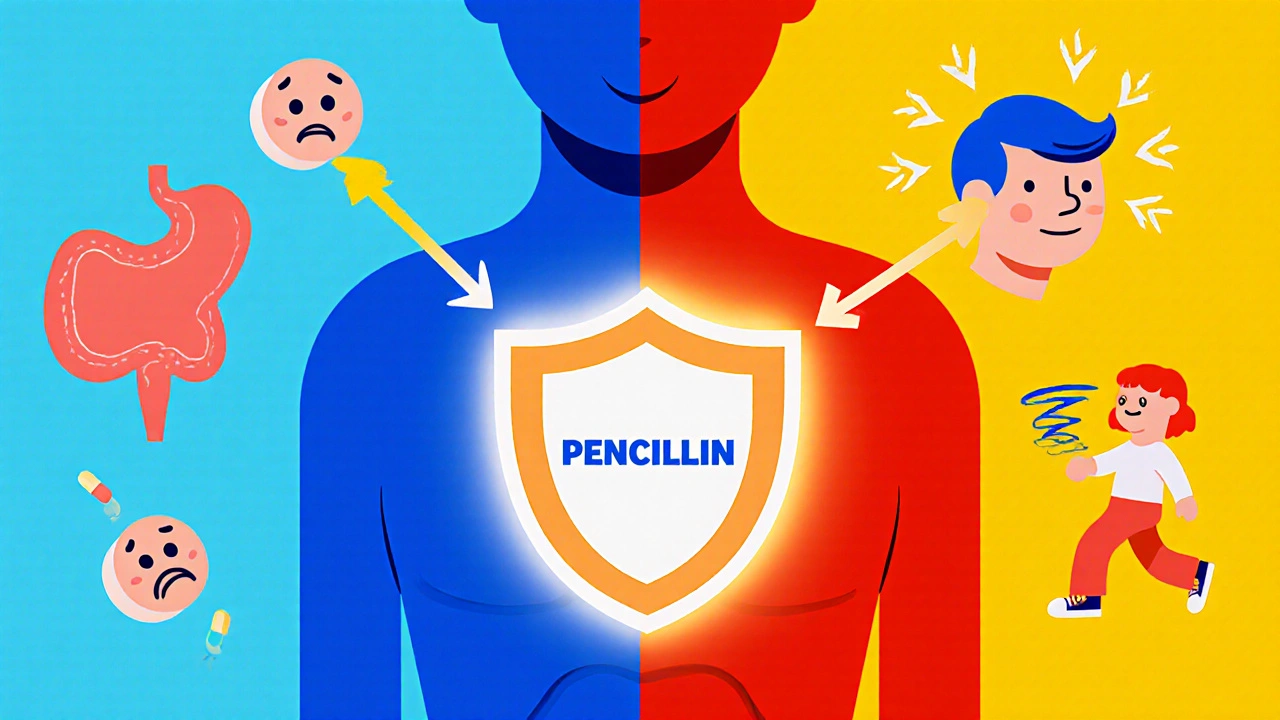
Learn how to tell the difference between a harmless side effect and a dangerous drug allergy. Most reactions aren’t allergies-mislabeling them can limit your treatment options and put your health at risk.
- November 22 2025
- Tony Newman
- 17 Comments