
Sitagliptin: What It Is, How It Works, and What You Need to Know
When you’re managing sitagliptin, a DPP-4 inhibitor used to treat type 2 diabetes by helping the body maintain normal blood sugar levels. Also known as Januvia, it’s one of the most prescribed diabetes meds in the U.S. because it works without making you gain weight or crash your blood sugar — a big deal if you’ve had bad reactions to other drugs. Unlike insulin or sulfonylureas, sitagliptin doesn’t force your pancreas to pump out more insulin. Instead, it keeps your body’s own natural incretin hormones active longer. These hormones tell your pancreas to release insulin only when your blood sugar rises — like after a meal — and quietly shut off when it’s not needed.
This makes sitagliptin a smart choice for people who need steady control but hate the side effects of older drugs. It’s often paired with metformin, especially if metformin alone isn’t enough. But it’s not magic. It won’t fix a diet full of sugary snacks or a sedentary lifestyle. That’s why many of the posts below talk about how lifestyle changes — like walking after meals or cutting refined carbs — can make sitagliptin work better, or even reduce the dose you need. It’s also why doctors sometimes suggest deprescribing other meds when sitagliptin is added, especially in older adults juggling five or more prescriptions. Polypharmacy isn’t just a buzzword — it’s a real risk, and sitagliptin’s low interaction profile makes it a safer piece of the puzzle.
People with kidney problems need to watch their dose. Sitagliptin is cleared by the kidneys, so if your eGFR drops below 50, your doctor should lower the amount you take. And while it’s generally well-tolerated, some users report joint pain, headaches, or nausea — symptoms that can easily be mistaken for aging or another condition. That’s why knowing how to tell if a new symptom is from the drug or the disease matters. You don’t want to stop a helpful med because you think it’s causing trouble when it’s actually something else.
There’s also a quiet connection between sitagliptin and gut health. Incretin hormones are released by cells in your intestines, and recent research suggests your microbiome might influence how well sitagliptin works. That’s one reason why posts on renal nutrition, post-nasal drip, and even gut infections show up in this collection — they’re all part of the bigger picture of how your body responds to medication in context. Sitagliptin doesn’t exist in a vacuum. It lives in your liver, your kidneys, your gut, and your daily routine.
And while you might be reading this because you’ve been prescribed sitagliptin, you’re probably also wondering: Is there a cheaper generic? Can I take it with ginkgo or evening primrose oil? Will it mess with my blood thinners? The posts here answer those exact questions — not with hype, but with real-world evidence. You’ll find guides on reducing medication risks, spotting side effects, and safely combining drugs. You’ll see how sitagliptin fits into the larger conversation about geriatric polypharmacy, medication safety, and patient-centered care. This isn’t just about one pill. It’s about how you take control — without losing your quality of life.
DPP-4 Inhibitors and Joint Pain: What You Need to Know
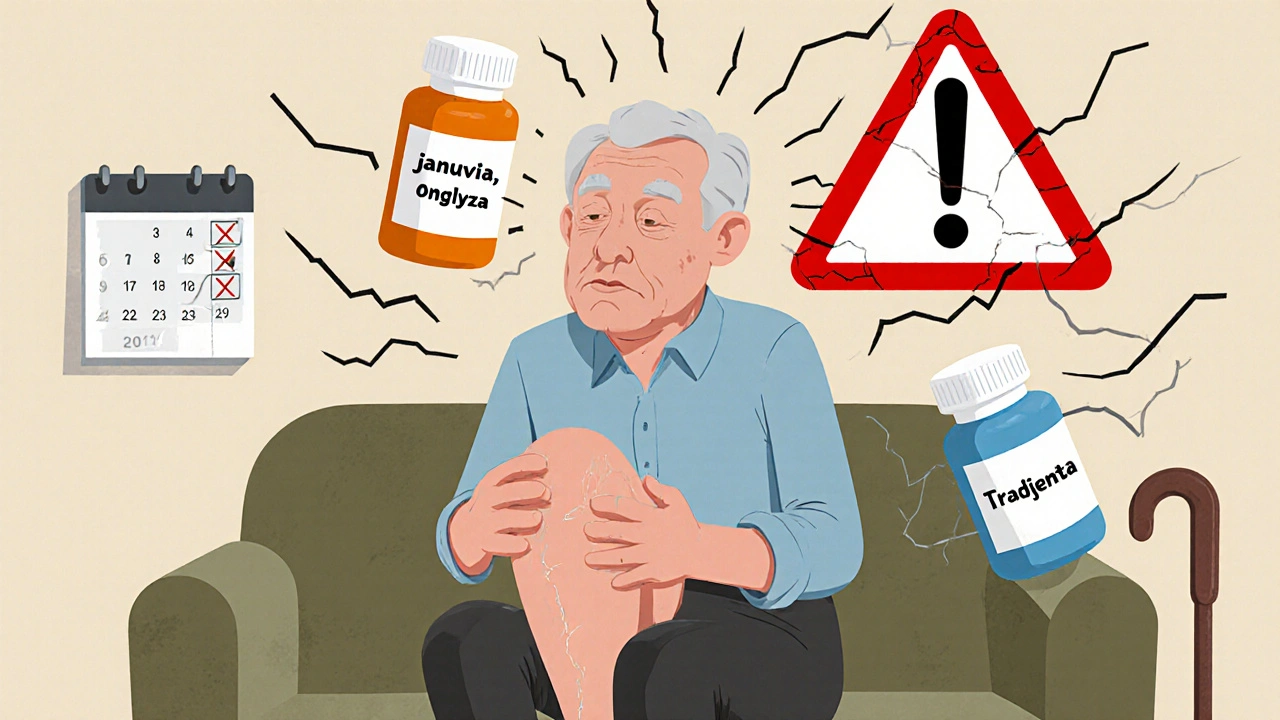
DPP-4 inhibitors help manage type 2 diabetes but can cause severe joint pain in rare cases. Learn the signs, what the FDA says, and what to do if you're affected.
- November 12 2025
- Tony Newman
- 15 Comments