
Sleep Hygiene: Better Nights, Healthier Days
When we talk about sleep hygiene, the set of daily habits and environmental factors that influence how well you sleep. It's not about sleeping pills, fancy mattresses, or white noise machines—it's about the quiet, repeatable choices you make every day that either help your brain wind down or keep it wired. Also known as sleep habits, it’s the foundation of restful sleep, and it’s something you can start improving tonight.
Good sleep hygiene connects directly to your circadian rhythm, your body’s internal 24-hour clock that controls when you feel alert or sleepy. This rhythm responds to light, meals, and movement—not alarms. If you scroll in bed at midnight, eat pizza at 11 p.m., or nap after 3 p.m., you’re fighting your own biology. And when your rhythm gets out of sync, it doesn’t just mess with sleep—it affects your mood, focus, and even how your body handles medications. Many people on blood thinners or diabetes drugs report worse side effects when their sleep is poor, because sleep disruption changes how your liver processes those pills. Then there’s the sleep environment, the physical space where you sleep—its temperature, noise, light, and even the feel of your sheets. A room that’s too warm, too bright, or too noisy can keep you in light sleep all night, even if you think you’re asleep. You don’t need a $2,000 bed. You need darkness, cool air, and no screens within an hour of bedtime.
People with insomnia, trouble falling or staying asleep despite having the chance to sleep often try meds first—but studies show that fixing sleep hygiene works better long-term. One 2022 trial found that people who adjusted their bedtime routine and light exposure improved sleep as much as those on prescription sleep aids, without the grogginess or dependency. And it’s not just for insomniacs. If you’re tired all day, reach for your phone right after waking up, or wake up feeling like you didn’t rest at all, your sleep hygiene is likely broken. You don’t need to overhaul your life. Start with one thing: no screens after 9 p.m. Or set your thermostat to 65°F. Or stop drinking coffee after noon. These aren’t magic tricks—they’re signals to your brain that it’s time to shut down.
The posts below cover real-world connections between sleep and health—from how anticoagulants and diabetes drugs interact with poor sleep, to how lifestyle changes like walking and stress reduction can improve rest without pills. You’ll find practical advice on managing side effects of meds that disrupt sleep, how to spot if your fatigue is from a disease or bad sleep habits, and why older adults on multiple drugs need sleep hygiene even more. There’s no fluff here. Just what works.
Caffeine Cutoff Times: When to Stop Coffee for Better Sleep
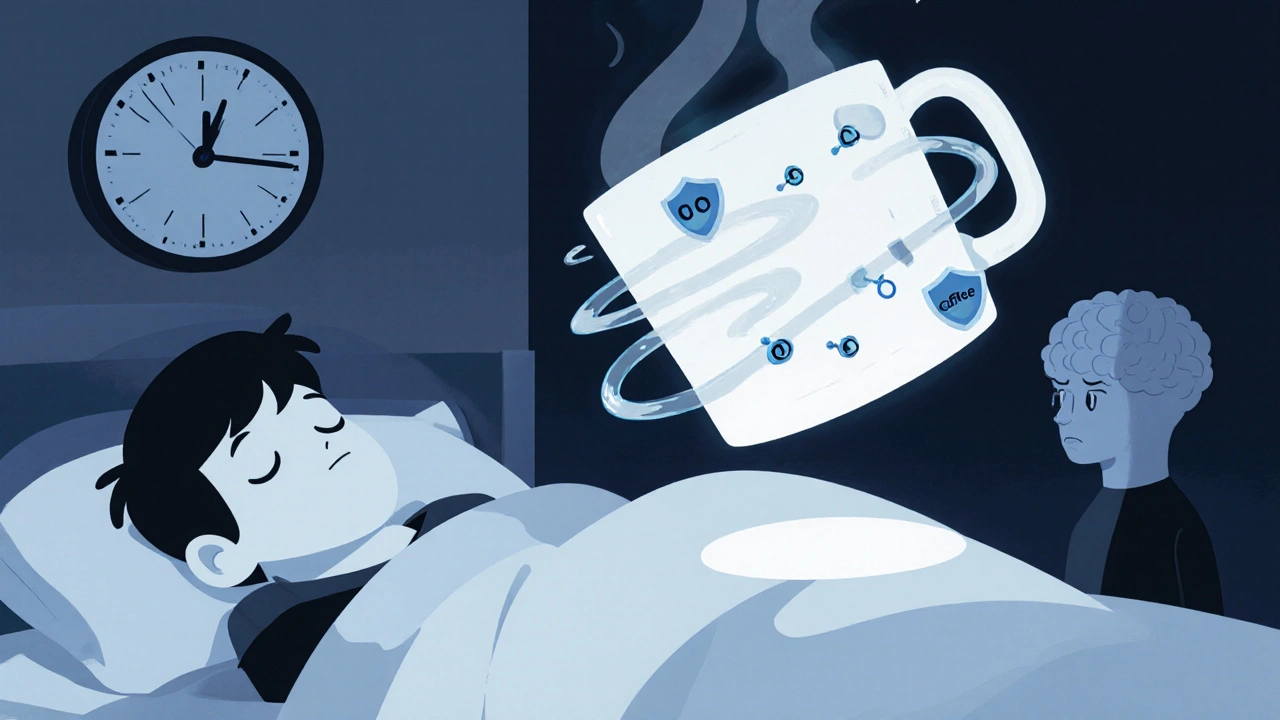
Learn the science-backed caffeine cutoff times to improve sleep onset and quality. Discover when to stop coffee, energy drinks, and hidden caffeine sources for deeper, more restful sleep.
- November 23 2025
- Tony Newman
- 9 Comments