
Sleep Onset: What Causes Trouble Falling Asleep and How to Fix It
When you lie down at night but your mind won’t shut off, you’re dealing with a sleep onset, the time it takes to fall asleep after turning off the lights. Also known as sleep latency, it’s not just about being tired—it’s about whether your body and brain are ready to switch into rest mode. Most people fall asleep in 10 to 20 minutes. If it takes longer than 30 minutes regularly, you’re not alone—and it’s not just "stress." It’s often a mix of habits, biology, and environment working against you.
Circadian rhythm, your body’s internal 24-hour clock that controls when you feel alert or sleepy is the main driver. If you’re scrolling in bed at midnight, exposed to blue light, your brain thinks it’s still daytime. That delays melatonin, the hormone that tells your body it’s time to sleep. Sleep hygiene, the daily habits that affect how well you sleep isn’t just about avoiding caffeine. It’s about consistency: same bedtime, same wake-up—even on weekends. Skipping it throws off your rhythm like a broken watch.
Many people blame anxiety or overthinking, but the real issue is often the environment. Your bedroom should be dark, cool, and quiet—not a workspace, entertainment center, or stress zone. If you’ve been lying awake for more than 20 minutes, get up. Do something boring in dim light—read a physical book, stretch gently—then return to bed only when sleepy. This trains your brain to associate the bed with sleep, not frustration.
Supplements like melatonin, a natural hormone that helps regulate sleep timing can help reset your rhythm, especially if you travel across time zones or work nights. But they don’t work like sleeping pills—they don’t make you drowsy. They just nudge your internal clock. Taking them too early or too late can make things worse. And they’re not a fix for poor sleep habits.
What you’ll find in the posts below are real, practical stories and science-backed fixes from people who’ve been stuck in the same loop. You’ll see how medications, lifestyle shifts, and even simple changes like when you eat or move during the day can turn sleep onset from a battle into a breeze. No magic pills. No hype. Just what works—based on real experience and medical evidence.
Caffeine Cutoff Times: When to Stop Coffee for Better Sleep
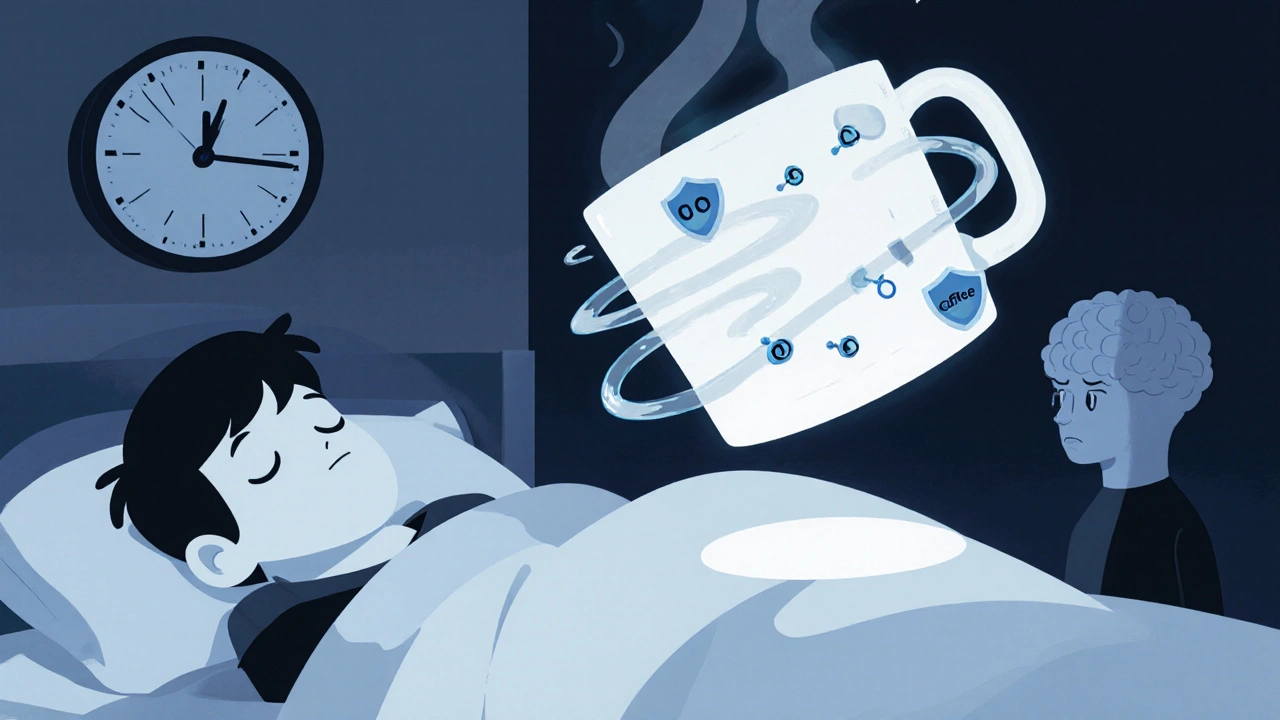
Learn the science-backed caffeine cutoff times to improve sleep onset and quality. Discover when to stop coffee, energy drinks, and hidden caffeine sources for deeper, more restful sleep.
- November 23 2025
- Tony Newman
- 9 Comments