
Tier 1 Drugs: What They Are, Why They Matter, and How They Affect Your Treatment
When your insurance plan says a drug is Tier 1 drugs, the lowest-cost category of medications covered by health plans, typically generic versions of commonly prescribed drugs. Also known as preferred generics, these are the medications your insurer wants you to use first because they’re proven, safe, and cost-effective. You won’t always see the term on your prescription bottle, but you’ll feel its impact in your wallet—lower copays, fewer denials, and more predictable costs.
Tier 1 drugs aren’t chosen randomly. They’re selected based on clinical effectiveness, safety history, and price. Think of them as the baseline for treatment: if a generic version of a drug works just as well as the brand-name version, and costs a fraction of the price, it lands in Tier 1. Formulary, a list of medications approved and covered by a health plan. Also known as preferred drug list, it’s the map your insurer uses to guide prescribing. If your doctor prescribes a drug not on the formulary, you might pay more—or get denied unless they file an exception. That’s why knowing your plan’s formulary matters. It’s not about what’s best in theory—it’s about what’s best for your budget and coverage.
And here’s the thing: not all generics are created equal. Some are Tier 1 because they’ve been used for years with solid data behind them. Others might be newer, cheaper, but still unproven in real-world use. That’s where bioequivalence studies, the FDA-mandated tests proving generic drugs work the same as brand-name versions. Also known as ANDA approval process, they ensure you’re not sacrificing effectiveness for savings. If a drug passes these tests, it’s eligible for Tier 1 status. But if it doesn’t? You might end up paying more, even if it’s technically a generic.
Some people assume Tier 1 means "lower quality," but that’s a myth. Many of the most widely used medications—like metformin for diabetes, lisinopril for blood pressure, or atorvastatin for cholesterol—are Tier 1 generics. They’re prescribed millions of times a year because they work. And when you combine them with deprescribing, the careful process of reducing unnecessary medications to lower side effects and costs. Also known as medication review, it’s a smart way to simplify your regimen and stay on the most effective, affordable drugs., you’re not just saving money—you’re reducing clutter, confusion, and risk.
But coverage isn’t the whole story. What if your doctor prescribes a Tier 1 drug and you still feel worse? That’s when you need to look at active ingredients, the components in a drug that actually treat your condition. Also known as pharmacologically active compounds, they’re what determine whether a drug works for you. Two drugs might be in the same tier, but if one has a different inactive ingredient, it could trigger side effects or allergies. That’s why knowing what’s in your pill matters—especially if you’ve had bad reactions before.
Below, you’ll find real-world guides on how to spot the difference between a side effect and a true allergy, how to ask your doctor about switching to a Tier 1 drug, and how to avoid dangerous combinations that could undo the benefits of even the safest medication. Whether you’re managing high blood pressure, diabetes, or chronic pain, understanding Tier 1 drugs means you’re not just paying less—you’re getting more control over your health.
Insurance Formulary Tiers Explained: Tier 1, Tier 2, Tier 3, and Non-Formulary Drugs
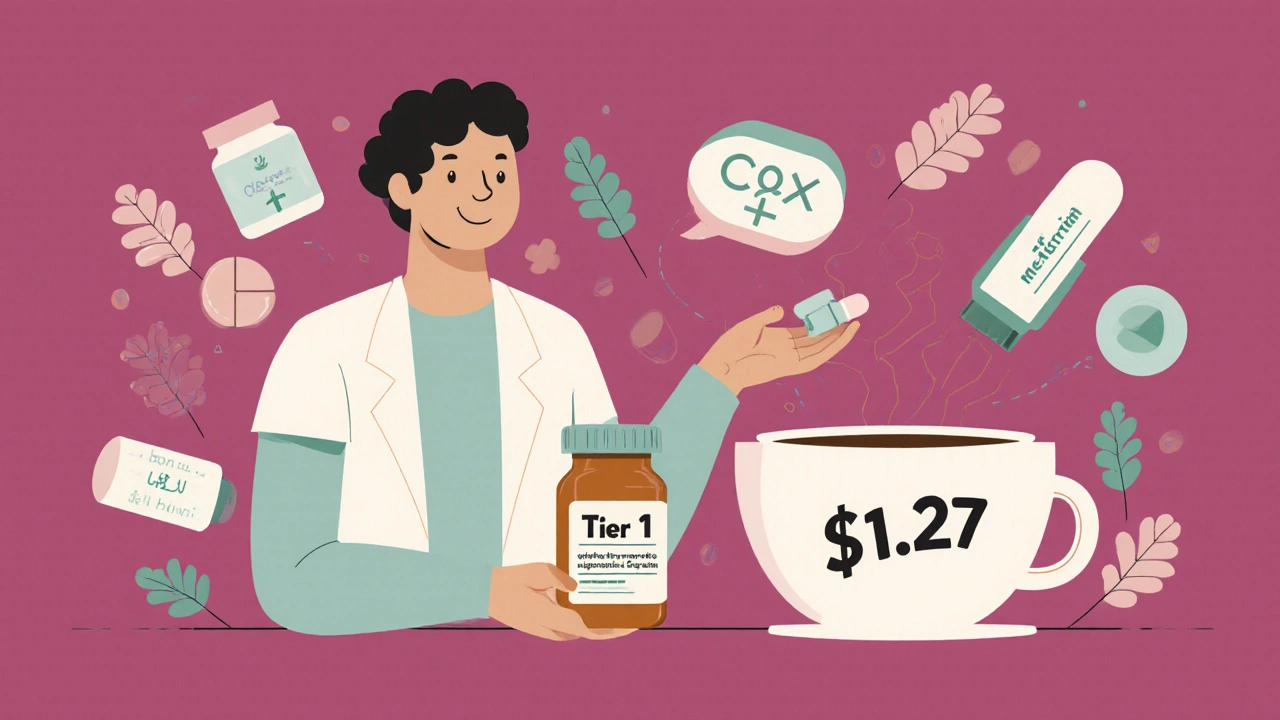
Understand how insurance formulary tiers work-Tier 1 to Tier 5 and non-formulary drugs-and how they affect your out-of-pocket costs for prescriptions. Learn what drives tier placement and how to save money.
- November 26 2025
- Tony Newman
- 10 Comments