
Tier 2 Drugs: What They Are, Why They Matter, and How They Affect Your Treatment
When your doctor prescribes a medication, it doesn’t just land on your pharmacy shelf—it goes through a hidden system called a Tier 2 drug, a classification used by insurance plans to group medications by cost and preferred status. Also known as mid-tier drugs, these are typically generic versions of brand-name pills or newer brand-name drugs that aren’t the cheapest option but are still considered effective and safe by your insurer. You’ll pay more for a Tier 2 drug than a Tier 1, but less than a Tier 3 or specialty medication. This isn’t about quality—it’s about cost control.
Tier 2 drugs often include generic versions, lower-cost copies of brand-name medications that meet FDA bioequivalence standards like lisinopril for blood pressure or metformin for diabetes. But they can also be newer brand-name drugs that haven’t yet been pushed to the bottom of the formulary. Insurance companies use these tiers to steer you toward cheaper options first. If a Tier 1 generic exists for your condition, they’ll require you to try it before approving a Tier 2. But if no cheaper alternative works—or if you’ve already tried one and it didn’t help—your doctor can request an exception.
Understanding your drug tier matters because it directly affects your wallet. A Tier 2 copay might be $30 instead of $10 for Tier 1, and that adds up fast if you’re on multiple meds. Some people assume Tier 2 means "second-rate," but that’s not true. Many Tier 2 drugs are just as effective as their cheaper or more expensive counterparts. The difference is often in patent status, marketing, or how recently they entered the market. For example, a newer statin might be Tier 2 because it’s still under patent, even if it’s no better than a $5 generic.
Drug tiers also connect to other important concepts like insurance formularies, the official lists of drugs covered by a health plan, organized by cost tiers and medication cost-sharing, how much you pay out-of-pocket based on your plan’s structure. These systems are designed to balance affordability, safety, and access—but they’re not always transparent. Your pharmacy might tell you a drug is "not covered," but if you dig into your plan’s formulary, you might find it’s just Tier 2 and you can still get it with a higher copay.
There’s no universal list of Tier 2 drugs. What’s Tier 2 for one insurer might be Tier 1 for another. That’s why checking your plan’s formulary before filling a prescription saves money. You can often switch to a similar drug in a lower tier without losing effectiveness. Many of the posts below break down exactly how to do this—whether you’re managing blood pressure, diabetes, or chronic pain, and whether you’re using generics, brand names, or specialty drugs.
You’ll find real examples here: how bioequivalence studies prove generics work just as well, how single-source drugs lock you into higher costs, and how drug interactions can change your tier status if you’re on multiple meds. You’ll also see how post-menopausal women, older adults, and people with kidney disease often end up on Tier 2 drugs—and why those choices need extra attention. The goal isn’t just to cut costs, but to make sure you’re getting the right drug at the right price, without surprises at the pharmacy counter.
Insurance Formulary Tiers Explained: Tier 1, Tier 2, Tier 3, and Non-Formulary Drugs
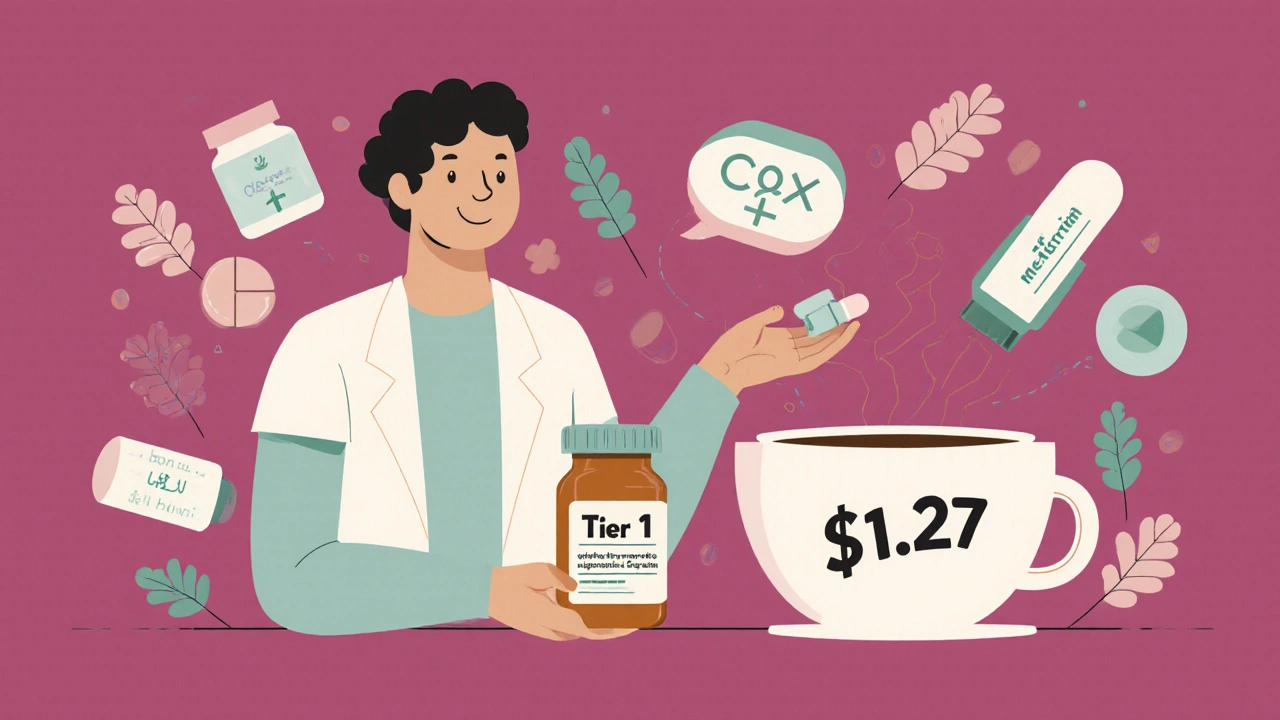
Understand how insurance formulary tiers work-Tier 1 to Tier 5 and non-formulary drugs-and how they affect your out-of-pocket costs for prescriptions. Learn what drives tier placement and how to save money.
- November 26 2025
- Tony Newman
- 10 Comments