
Tier 3 Drugs: What They Are, Why They Matter, and How They Affect Your Prescriptions
When your insurance plan puts a drug in Tier 3 drugs, a category of prescription medications that cost more than basic generics but less than specialty drugs. Also known as preferred brand drugs, these are often brand-name medications without a generic version available, or newer drugs with higher price tags. They’re not the cheapest option on your formulary, but they’re not the most expensive either—just the ones that make you pay more out of pocket.
Tier 3 drugs are part of a larger system called drug tiers, a structure insurers use to control costs by encouraging patients to choose lower-cost alternatives. This system isn’t random—it’s built around how much the drug costs, whether a generic version exists, and how often it’s prescribed. If your doctor prescribes a Tier 3 drug, you’ll likely pay a higher copay than for Tier 1 or 2 drugs. For example, you might pay $20 for a generic blood pressure pill but $60 or more for a brand-name version of the same medicine.
Why does this matter? Because many people don’t realize they’re paying extra just because of how their insurance classifies the drug—not because it’s better. A formulary, the list of drugs covered by a health plan. can change every year. Just because a drug was Tier 2 last year doesn’t mean it won’t jump to Tier 3 this year. And when it does, your monthly bill can spike overnight. That’s why checking your plan’s formulary before filling a prescription is critical. Some drugs on Tier 3 have equally effective generics that are Tier 1. Others are newer and have no cheap alternative—but you might still qualify for manufacturer coupons or patient assistance programs.
It’s also worth noting that Tier 3 drugs often show up in discussions about generic drugs, medications that are chemically identical to brand-name versions but cost far less. Many people assume brand-name drugs are superior, but bioequivalence studies prove otherwise. The FDA requires generics to work the same way as the original. Yet, insurance plans still push you toward higher tiers for brand-name versions—even when the generic is available. This isn’t about safety. It’s about profit margins.
If you’re stuck with a Tier 3 drug, don’t just accept the cost. Talk to your pharmacist. Ask if there’s a therapeutic alternative in a lower tier. Ask your doctor if they’ve considered a generic version. Some Tier 3 drugs are just old brand names clinging to market share—like certain cholesterol or diabetes meds—while cheaper, equally effective options sit right next to them on the shelf. And if you’re on multiple prescriptions, you might be dealing with polypharmacy—taking too many drugs at once—which increases your risk of side effects and interactions. That’s why deprescribing and medication reviews are so important, especially for older adults.
Below, you’ll find real-world guides on how to spot when a drug is overpriced, how to challenge your insurance coverage, how to tell if a side effect is from your medication or something else, and how to avoid dangerous combinations. These aren’t theoretical tips—they’re what people actually use to save money and stay safe. Whether you’re paying for a blood thinner, a diabetes pill, or a heart medication, understanding Tier 3 drugs gives you power over your care—and your wallet.
Insurance Formulary Tiers Explained: Tier 1, Tier 2, Tier 3, and Non-Formulary Drugs
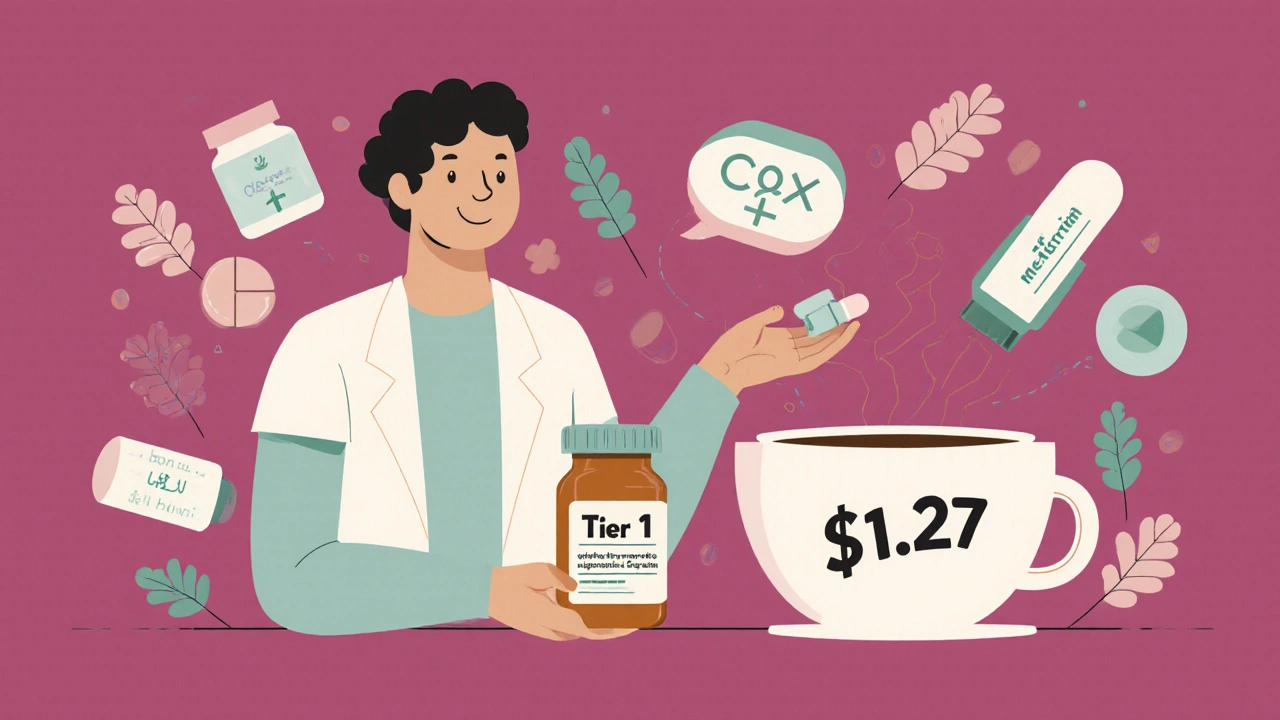
Understand how insurance formulary tiers work-Tier 1 to Tier 5 and non-formulary drugs-and how they affect your out-of-pocket costs for prescriptions. Learn what drives tier placement and how to save money.
- November 26 2025
- Tony Newman
- 10 Comments