
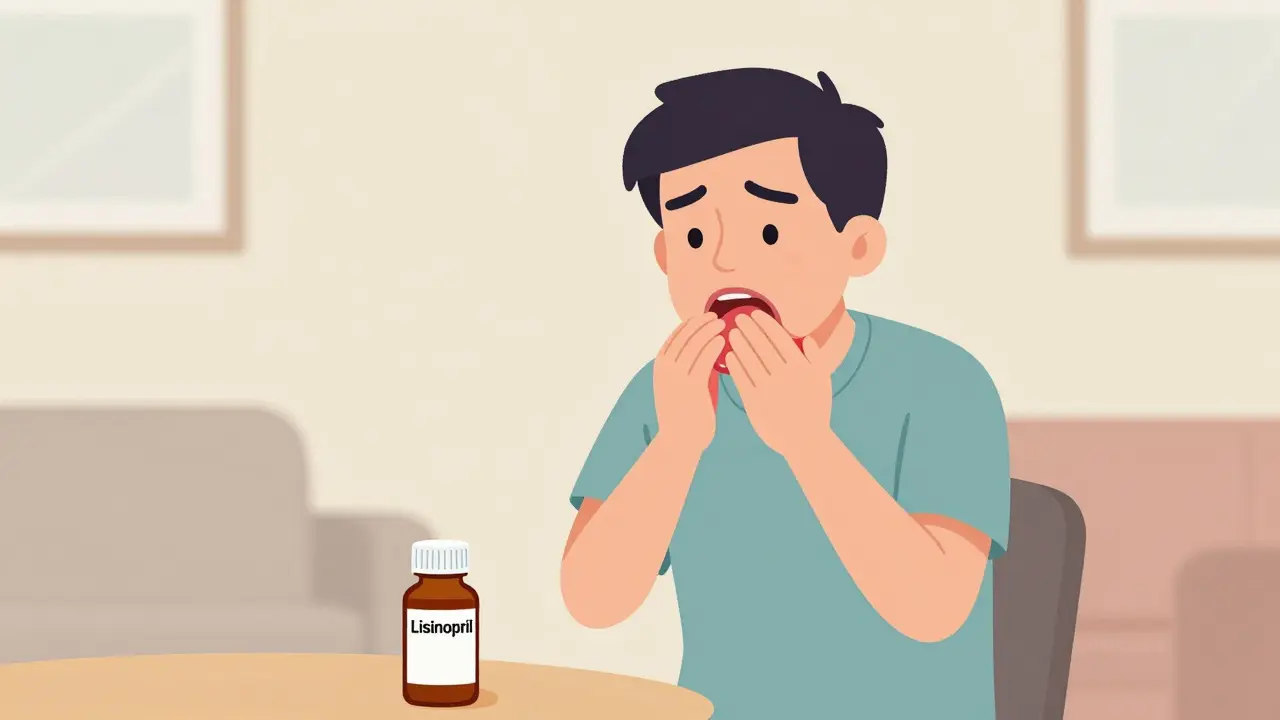
Swelling in your lips, tongue, or throat after starting a new blood pressure pill isn’t just inconvenient-it could be life-threatening. This isn’t a typical allergy. It’s ACE inhibitor angioedema, a rare but dangerous drug reaction that catches even doctors off guard. And if you’ve been taking an ACE inhibitor for years, you might think you’re safe. You’re not.
What Exactly Is ACE Inhibitor Angioedema?
ACE inhibitors like lisinopril, enalapril, and ramipril are among the most common prescriptions in the world. They help lower blood pressure, protect kidneys in diabetics, and ease heart failure. But for about 1 in every 200 people taking them, these drugs trigger sudden, deep swelling-not from an allergic reaction, but from a chemical buildup called bradykinin.
Normally, your body breaks down bradykinin using an enzyme called angiotensin-converting enzyme. ACE inhibitors block that enzyme. Without it, bradykinin piles up, leaking fluid into tissues and causing swelling. This isn’t hives. It doesn’t itch. Antihistamines and epinephrine won’t fix it. And that’s where things go wrong-fast.
Why This Reaction Is So Dangerous
Most drug reactions show up right away. This one doesn’t. Half of all cases happen within the first week. But 20% of people experience it after months-or even years-of taking the same pill. I’ve seen patients who’ve been on lisinopril for 12 years, feeling fine, then wake up with a swollen tongue. No warning. No rash. Just swelling that keeps getting worse.
The real danger? Airway blockage. Swelling in the throat can cut off your breathing in minutes. Emergency rooms see this often. In fact, ACE inhibitor angioedema makes up about 30% of all angioedema cases in ERs. And because it looks like an allergic reaction, too many patients get the wrong treatment: epinephrine shots, Benadryl, steroids. None of it helps. And while they’re being treated with the wrong drugs, the swelling keeps growing.
Who’s Most at Risk?
This isn’t random. Certain groups are far more likely to develop it. African Americans face a 2 to 4 times higher risk than other ethnic groups. Women are affected more often than men-about twice as often. And if you’re taking a DPP-4 inhibitor for diabetes (like sitagliptin or linagliptin) along with your ACE inhibitor, your risk jumps 4 to 5 times.
There’s a genetic reason. Some people have a variation in the XPNPEP2 gene, which affects how well their body clears bradykinin. If you’re missing even a little bit of the enzyme aminopeptidase P, you’re more vulnerable. That’s why some people react after just a few days, while others take years. It’s not about dosage. It’s about biology.

How to Tell It Apart From Allergies
Here’s the key difference: allergic swelling comes with hives, itching, redness, and often trouble breathing from wheezing. ACE inhibitor angioedema? No hives. No itch. Just deep, painless swelling-usually in the lips, tongue, face, or throat. Sometimes the voice changes. Sometimes swallowing feels weird. It can start mild and explode in an hour.
If you’ve had swelling before and got better after an epinephrine shot, you might assume it’s allergies. But if you’ve been on an ACE inhibitor and the swelling didn’t improve after epinephrine or Benadryl? That’s a red flag. That’s not an allergy. That’s bradykinin.
What Happens When You Suspect It?
Stop the ACE inhibitor. Immediately. Not tomorrow. Not after your next doctor’s appointment. Right now. Every single guideline says this: the only thing that stops this reaction is stopping the drug. If you keep taking it, the swelling comes back-worse each time.
Then get to an ER. Not because you need a shot. Because you need airway monitoring. Swelling in the throat can turn fatal within minutes. Emergency teams don’t just give you more meds-they watch your breathing. They may need to put in a breathing tube before the swelling gets too bad.
There are targeted treatments, but they’re not always available. Icatibant, a drug that blocks bradykinin receptors, works in 2 to 4 hours. But it costs around $9,000 per dose in the U.S. and isn’t in every hospital. Fresh frozen plasma has been used off-label because it contains the missing enzyme-but evidence is limited. The bottom line? Your best defense is stopping the drug and protecting your airway.
What Comes Next?
Once you’ve had one episode, you can never take an ACE inhibitor again. Not even a different one. Not even if your doctor says it’s "probably safe." The risk of recurrence is too high, and future episodes can be deadlier.
The usual replacement is an ARB-like losartan or valsartan. These work similarly to ACE inhibitors but don’t affect bradykinin. About 90% of people who had angioedema on ACE inhibitors can switch safely to ARBs. But 10 to 15% still react. So even with ARBs, watch for swelling. If it happens, stop immediately and tell your doctor.
Documentation matters. Make sure your medical record says "ACE inhibitor-induced angioedema"-not "allergy." That distinction keeps future providers from prescribing the wrong drug. The American College of Emergency Physicians recommends a medical alert bracelet after a severe episode. Wear one. It could save your life.

Why So Many People Miss the Diagnosis
Studies show only 55% of ER doctors correctly identify this condition on the first visit. That means nearly half of people with this reaction are given the wrong treatment. One patient I read about went to the ER three times over two weeks. Each time, they got Benadryl. Each time, the swelling came back. It wasn’t until a specialist asked, "Are you on a blood pressure pill?" that the real cause was found.
Patients report spending months confused, anxious, and frustrated. Some have lingering swelling for months after stopping the drug. One Reddit user shared: "I stopped lisinopril seven months ago, but my lips still swell up sometimes. No one believes me." That’s not rare. The body takes time to clear excess bradykinin. Mild swelling can linger, but it’s not the drug-it’s the aftereffect.
What’s Changing in the Future?
Doctors are starting to pay attention. The FDA now requires black box warnings on all ACE inhibitors. The European Medicines Agency recommends extra monitoring for African descent patients. And research is moving fast. A 2023 study found that a simple genetic test for the XPNPEP2 mutation could predict who’s at highest risk-with 3.7 times higher accuracy.
Within five years, experts predict genetic screening before prescribing ACE inhibitors will become standard for high-risk groups. Until then, awareness is your best tool. If you’re Black, female, on diabetes meds, or have had unexplained swelling-even after years on the drug-ask your doctor: "Could this be ACE inhibitor angioedema?"
What You Should Do Today
- If you’re on an ACE inhibitor and notice swelling in your lips, tongue, face, or throat-stop the pill immediately and go to the ER.
- Don’t wait to see if it goes away. Don’t take more Benadryl. Don’t assume it’s allergies.
- Ask your doctor for a list of all your medications. Look for lisinopril, enalapril, ramipril, captopril, or any drug ending in "-pril."
- Make sure your medical records say "ACE inhibitor-induced angioedema"-not "allergy."
- Consider a medical alert bracelet if you’ve had a severe episode.
- If you’re switching to an ARB, watch for swelling for the first few weeks.
This isn’t something you can ignore. It’s not a side effect you can "tough out." It’s a medical emergency that demands quick, correct action. And if you’ve been taking an ACE inhibitor for years, don’t assume you’re safe. The clock doesn’t reset.
Can ACE inhibitor angioedema happen after years of taking the drug?
Yes. While half of cases happen within the first week, up to 20% occur after more than a year of use. There are documented cases of swelling starting after 10 or more years on the same medication. The risk doesn’t disappear over time.
Do antihistamines or epinephrine help with ACE inhibitor angioedema?
No. These treatments work for allergic reactions that involve histamine. ACE inhibitor angioedema is caused by bradykinin buildup, not histamine. Giving epinephrine or Benadryl delays proper care and can be dangerous if it makes you think the problem is resolved.
Is it safe to switch to an ARB after having ACE inhibitor angioedema?
Most people can switch safely-about 85 to 90% do not react to ARBs like losartan or valsartan. But 10 to 15% still develop swelling. If you switch, monitor closely for the first few weeks. If swelling returns, stop the ARB immediately and tell your doctor.
Why is this more common in African Americans?
Research shows African Americans have a 2 to 4 times higher risk, likely due to genetic differences in how the body breaks down bradykinin. Specifically, variations in the XPNPEP2 gene reduce the activity of aminopeptidase P, a key enzyme that clears bradykinin when ACE is blocked.
How long does swelling last after stopping the ACE inhibitor?
Acute swelling usually improves within 24 to 48 hours after stopping the drug. But mild swelling-especially in the lips or tongue-can linger for weeks or even months. This doesn’t mean the drug is still active. It means your body is slowly clearing excess bradykinin. If swelling returns after months, it’s not from the ACE inhibitor-it’s another cause.
Should I get genetic testing before starting an ACE inhibitor?
Not yet, but it’s coming. As of 2026, genetic screening for XPNPEP2 mutations isn’t standard practice-but experts predict it will be within the next few years, especially for high-risk groups like African Americans. Until then, awareness and vigilance are your best tools.

Gregory Clayton
January 9, 2026 AT 23:42Y’all act like this is some new conspiracy, but I’ve seen this happen to my uncle. Took lisinopril for 8 years. Woke up one morning looking like a frog. ER gave him Benadryl. He went home. Swelling came back worse. Third time, a nurse asked if he was on blood pressure meds. Bingo. They had to intubate him. This isn’t ‘maybe’ dangerous-it’s a silent killer and the system is STILL asleep.
Catherine Scutt
January 10, 2026 AT 02:40Wow. Just… wow. I’m a nurse and I’ve seen this misdiagnosed at least five times. Every time, the patient gets steroids and antihistamines. Every time, they leave with no real answer. And then they come back. And again. And again. It’s heartbreaking. If you’re Black, female, or on diabetes meds-don’t wait. Ask the question. Now.
Ashley Kronenwetter
January 11, 2026 AT 22:10Thank you for this comprehensive and clinically accurate breakdown. The distinction between histamine-mediated and bradykinin-mediated angioedema is critically under-taught in medical training. I appreciate the emphasis on documentation and medical alert bracelets-these are simple, life-saving measures that are too often overlooked in discharge protocols.
Aron Veldhuizen
January 13, 2026 AT 03:57Let me ask you this: if your body’s natural enzyme is being blocked by a drug, and the drug is designed to mimic a physiological process-then isn’t this just capitalism’s version of a Trojan horse? We’ve turned biology into a profit-driven algorithm. ACE inhibitors were never meant to be lifelong. They were meant to be temporary bridges. But now? They’re corporate staples. And we’re the collateral damage. The real tragedy isn’t the swelling-it’s that we’ve normalized being pharmacologically hijacked.
Meghan Hammack
January 13, 2026 AT 23:50STOP. BREATHE. LISTEN. If you’re on lisinopril and your lips feel weird-even a little-DON’T IGNORE IT. I had a friend who thought it was just allergies. She took Benadryl. Swelling got worse. She almost lost her airway. Now she wears a bracelet. She’s alive. You can be too. Just stop the pill. Go to the ER. No excuses. Your life is worth more than waiting.
Lindsey Wellmann
January 14, 2026 AT 17:22OMG I JUST REALIZED MY DAD IS ON ENALAPRIL 😱😭 I’M GOING TO CALL HIM RIGHT NOW. HE’S BEEN ON IT FOR 15 YEARS. I’M SO SCARED. THANK YOU FOR THIS POST. 🙏❤️🩹
Maggie Noe
January 14, 2026 AT 18:55It’s ironic, isn’t it? We’re told to trust science, to trust doctors, to trust the pill that keeps us alive. But what if the very thing keeping us alive is quietly strangling us from the inside? We don’t question the system until it almost kills us. And even then, we’re told it’s ‘rare.’ Rare doesn’t mean ‘not you.’ It just means ‘not yet you.’
Darren McGuff
January 15, 2026 AT 03:12I’m a GP in the UK. We’ve started screening all Black patients and those on DPP-4 inhibitors before prescribing ACE inhibitors. It’s not perfect, but it’s a start. I’ve had three patients with delayed angioedema-two after 7 years, one after 11. All were misdiagnosed initially. The moment we stopped the drug, they improved. The key isn’t just awareness-it’s proactive questioning. Ask the patient: ‘Have you had unexplained swelling?’ Not ‘Do you have allergies?’ That’s the difference between life and death.