
What Happens to Your Liver When You Stop Drinking?
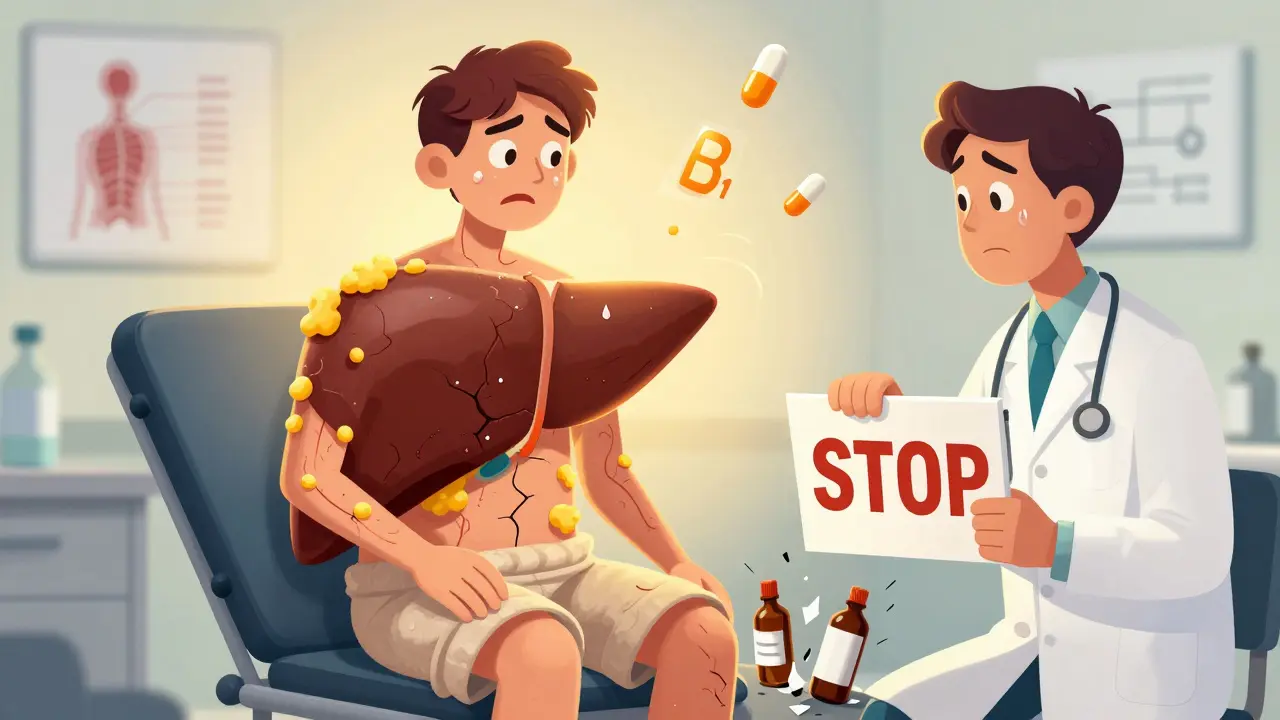
When you’ve been drinking heavily for months or years, your liver is working overtime just to keep up. It breaks down alcohol into toxins, and over time, that takes a toll. Fatty deposits build up. Inflammation kicks in. Scar tissue starts forming. Then you decide to quit. That’s when things get tricky.
Stopping alcohol suddenly doesn’t just mean you’ll feel shaky or anxious-it can trigger a cascade of changes inside your liver that actually make things worse before they get better. Your liver’s blood flow shifts, enzymes go haywire, and your body’s ability to process other substances-like painkillers-becomes dangerously unpredictable. The good news? Your liver is one of the few organs that can regenerate. But only if you give it the right conditions.
The Real Risks of Quitting Cold Turkey
Alcohol withdrawal isn’t just about sweating through a bad night. For people with long-term heavy use, it can be life-threatening. Symptoms like tremors, confusion, and rapid heartbeat usually start within 6 to 24 hours after your last drink. But the real danger lies in what happens behind the scenes.
Delirium tremens, a severe form of withdrawal, affects about 5% of people who stop drinking abruptly. It comes with high fever, hallucinations, and seizures-and it needs emergency care. Even if you don’t get that bad, your liver is under stress. A 2002 study showed that in the first week after quitting, liver enzymes (AST and ALT) can spike in 32% of people. That’s not a sign of improvement-it’s a sign your liver is struggling to adapt.
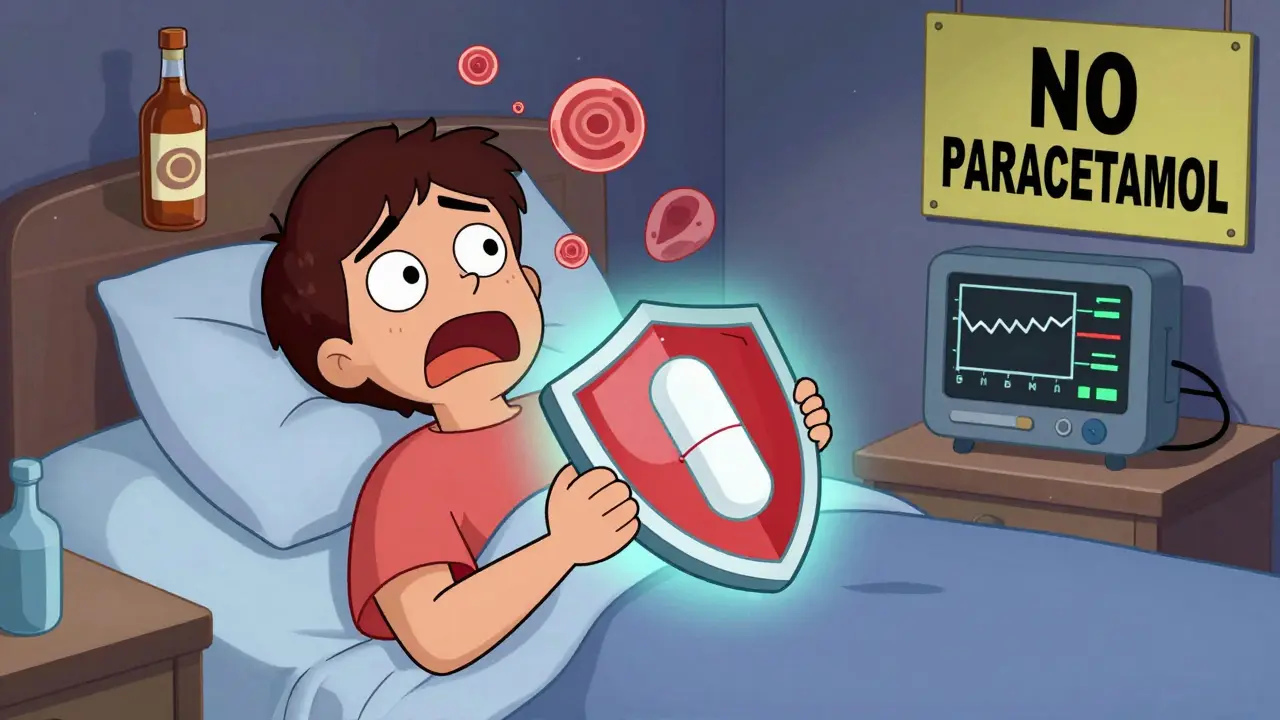
And here’s the part most people don’t know: your liver becomes extra sensitive to toxins during withdrawal. Even a small dose of paracetamol (acetaminophen)-something many take for headaches-can cause serious liver damage when you’re detoxing. One case study showed a person who took just 1-2 grams a day (half the max daily dose) had the biggest enzyme spike of anyone in the study. That’s not a coincidence. It’s a warning.
What Does Safe Detox Actually Look Like?
Safe detox isn’t about toughing it out at home. It’s about medical support that protects your liver while managing withdrawal. Medically supervised detox has a 95% safety rate. Unsupervised detox? Only 65%. The difference isn’t just comfort-it’s survival.
The gold standard for managing withdrawal symptoms is benzodiazepines like chlordiazepoxide. They reduce seizures and agitation. But the real liver-saving moves happen alongside them:
- Thiamine (vitamin B1): Given as 500mg IV daily for 3-5 days. Without it, you risk Wernicke-Korsakoff syndrome-a brain disorder that can cause permanent memory loss.
- N-acetylcysteine (NAC): A supplement shown in trials to cut liver enzyme spikes by 30% during detox. It helps your body make glutathione, a key antioxidant your liver needs to repair itself.
- High-protein diet: Aim for 1.2-1.5 grams of protein per kilogram of body weight. That’s about 80-100g daily for most adults. Protein helps rebuild liver cells and prevents muscle wasting.
- Avoid all liver-toxic substances: No paracetamol. No NSAIDs like ibuprofen. No herbal supplements like kava or green tea extract in high doses. Even some cold medicines can be dangerous.
How Long Does It Take for Your Liver to Heal?
Healing isn’t instant. But it’s faster than most people think-if you stay off alcohol.
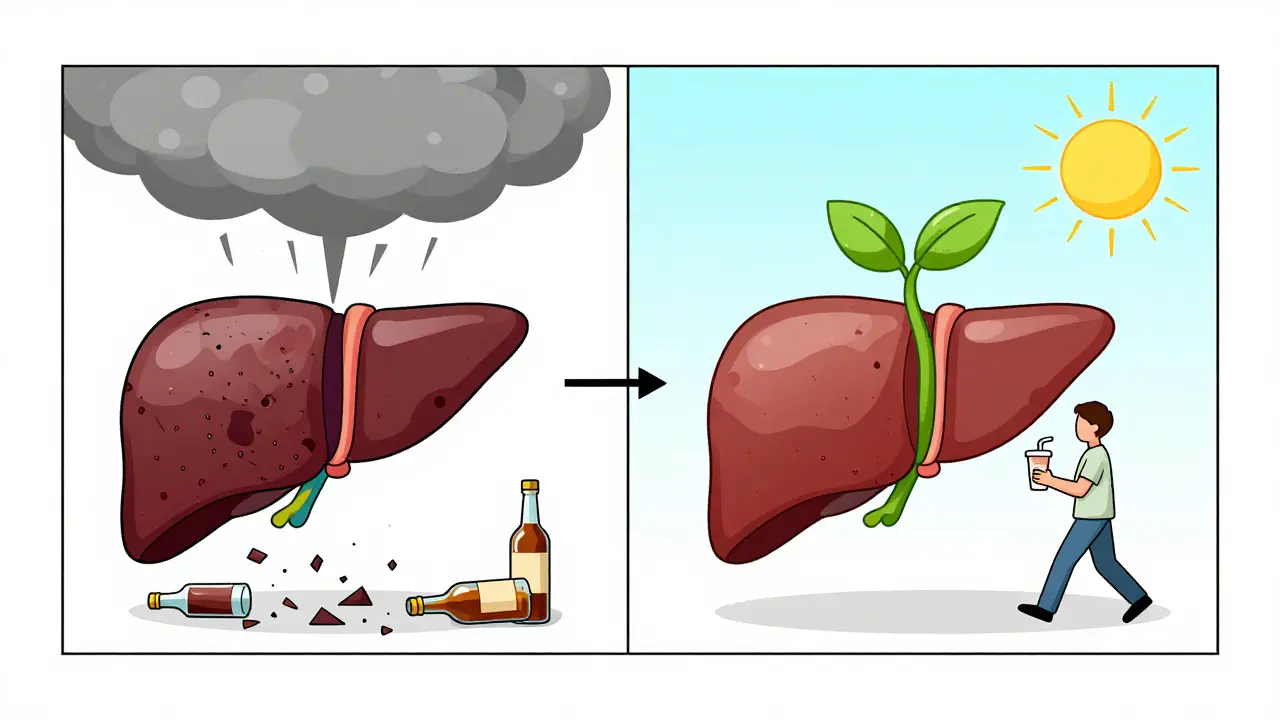
For mild fatty liver disease, liver enzymes often start normalizing within 7-14 days of quitting. After 4-8 weeks of no alcohol, many people see significant improvement. A 2021 study found that even with moderate to severe damage, the liver can show major recovery within 3-12 months of complete abstinence.
But here’s the catch: if you have alcoholic hepatitis or cirrhosis, recovery isn’t just about time-it’s about permanence. The Cleveland Clinic says clearly: if alcoholic hepatitis isn’t too advanced, it can be reversed by quitting. If you don’t quit, you’re headed for liver failure.
And while some people believe they can go back to "moderate" drinking after 6 weeks, that’s only possible for those with the mildest form of liver damage-and even then, only under a doctor’s supervision. For most, lifelong abstinence is the only safe path.
What You Shouldn’t Do During Detox
There are a lot of "natural" detox myths out there. Juice cleanses. Herbal teas. Saunas. None of them help your liver heal-and some can hurt it.
- Don’t fast. Your liver needs fuel to repair. Skipping meals slows recovery and increases muscle breakdown.
- Don’t use over-the-counter "liver cleanses." They’re unregulated, often contain unknown ingredients, and can be toxic.
- Don’t rely on willpower alone. Withdrawal symptoms peak between 24-72 hours. That’s when seizures and delirium are most likely. You need monitoring.
- Don’t ignore nutrition. Low protein, low vitamins, and dehydration are common during withdrawal-and they directly delay liver repair.
What Happens After Detox?
Detox is just the first step. The hardest part comes after.
Studies show that 70% of people who complete detox but don’t get ongoing support relapse within six months. And every drink after that sets back your liver’s recovery. Even one drink can restart inflammation.
Long-term success means building a new routine: therapy, support groups, healthy meals, sleep, and regular check-ups. Blood tests every 3-6 months to track AST, ALT, albumin, and INR are essential. If your AST:ALT ratio stays above 2:1, your liver is still under stress.
Emerging tools like real-time liver monitoring and genetic testing for drug metabolism are starting to help personalize care. But they’re not widely available yet. Right now, the best tools are simple: stay off alcohol, eat well, get support, and stick with it.
Who Needs Medical Help-and Who Can Try at Home?
Not everyone needs a hospital. But most people who think they can handle withdrawal on their own are wrong.
You should seek medical detox if:
- You’ve been drinking heavily for more than a year
- You’ve had withdrawal symptoms before
- You have any signs of liver damage-yellow skin, swollen belly, confusion, dark urine
- You’re taking other medications
- You’re over 45 or have other health conditions like diabetes or high blood pressure
If you’ve only been drinking moderately for a short time and have no liver issues, you might be able to quit under a doctor’s guidance at home. But even then, you need a plan: regular check-ins, a support person, and a list of emergency contacts.
And remember: if you’re unsure, err on the side of caution. Liver damage doesn’t always show symptoms until it’s advanced.
Final Thoughts: It’s Not About Willpower. It’s About Science.
Alcohol withdrawal isn’t a moral test. It’s a medical event. Your liver doesn’t care how hard you tried. It responds to what you give it-or don’t give it.
Quitting alcohol is the single most powerful thing you can do for your liver. But quitting safely? That’s where the real work begins. Medical support, proper nutrition, avoiding toxins, and long-term commitment aren’t optional. They’re the science-backed foundation of recovery.
There’s no magic pill. No quick fix. But if you do this right, your liver can heal. And you can get your life back.

Donna Fleetwood
January 31, 2026 AT 06:56Jason Xin
January 31, 2026 AT 21:00Blair Kelly
January 31, 2026 AT 22:39Rohit Kumar
February 2, 2026 AT 00:17Lily Steele
February 2, 2026 AT 14:03calanha nevin
February 3, 2026 AT 03:24Sarah Blevins
February 3, 2026 AT 05:25Gaurav Meena
February 4, 2026 AT 00:11Sidhanth SY
February 4, 2026 AT 08:36Sheila Garfield
February 6, 2026 AT 03:02Niamh Trihy
February 7, 2026 AT 19:06Jodi Olson
February 7, 2026 AT 21:38