
Antacid Safety Checker for Kidney Disease
Enter your kidney function level and select antacid ingredients to see if they're safe for you.
⚠️ Safety Checklist
- ✓ Monthly Labs: Track Calcium, Phosphate, Magnesium levels
- ✓ Medication Timing: Wait 2 hours between antacids and other medications
- ✓ Warning Signs: Confusion, muscle weakness, excessive thirst - contact doctor immediately
- ✓ Daily Limit: Don't exceed recommended doses without medical supervision
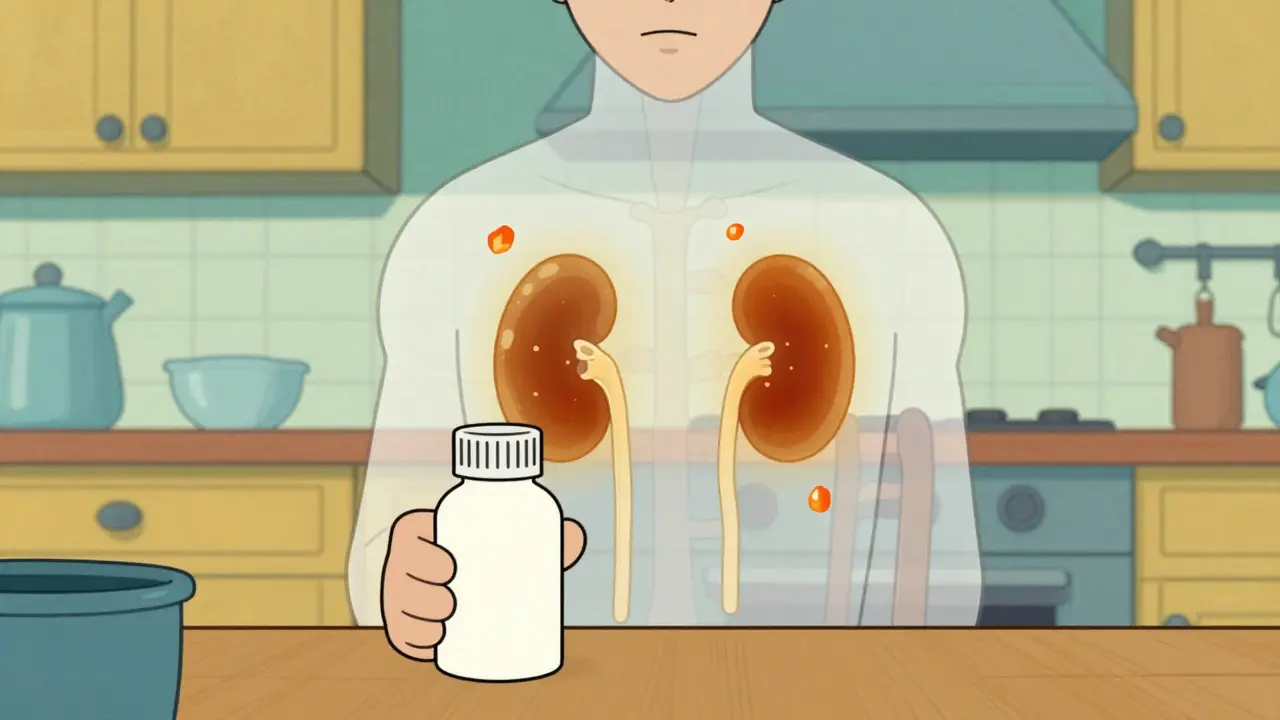
Imagine you reach for a bottle of Tums to fix your heartburn after dinner. You’ve taken them for years without issue. But if you have kidney disease, that same bottle could silently push your calcium levels into a dangerous zone or lock poison inside your body. It sounds extreme, yet for millions of people with kidney trouble, over-the-counter antacids are no longer harmless comfort medicine. They become complex tools that balance acid in the stomach against minerals in the blood.
This isn’t just theory. In clinical settings, we see cases regularly where good intentions lead to emergency room visits. Patients take generic magnesium supplements for constipation or heartburn, unaware their failing kidneys cannot flush out the excess magnesium. The result isn’t just indigestion; it can be respiratory depression. We need to separate the old wisdom from the new reality. The way we manage stomach acid changes completely once kidney function slips below a certain point.
The Hidden Role of Antacids in Kidney Health
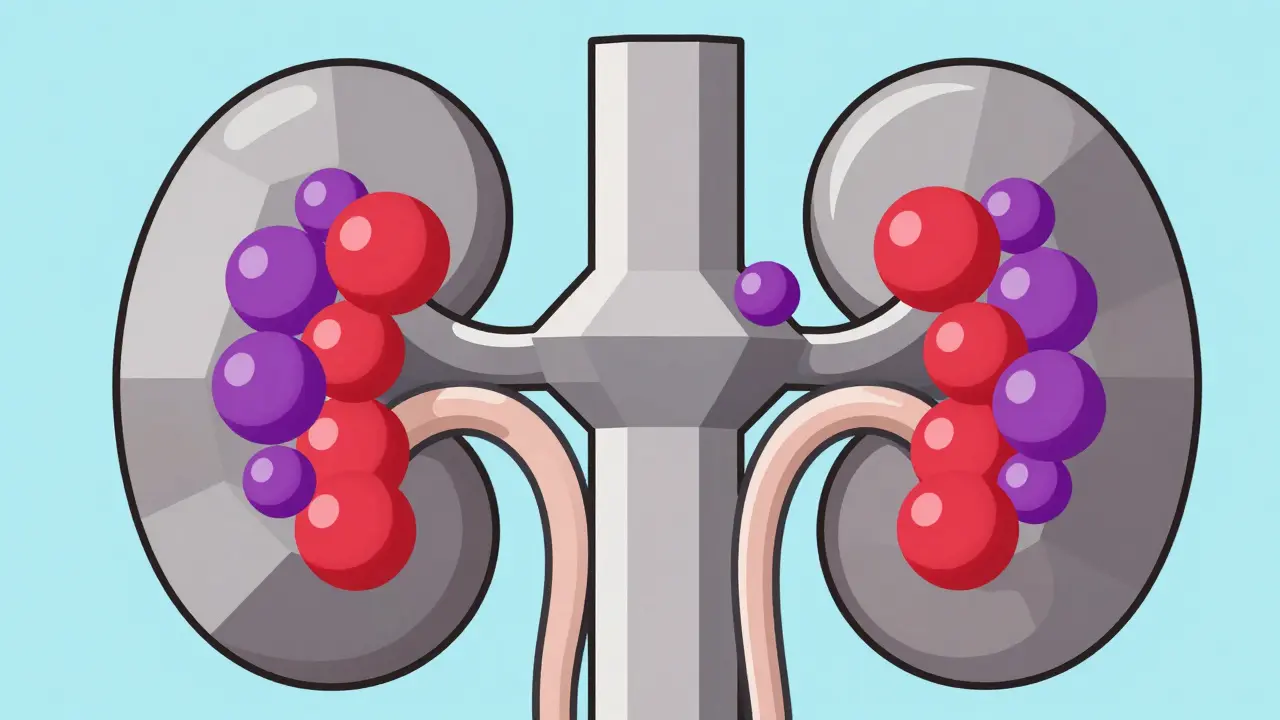
Chronic Kidney Disease (CKD) is a progressive condition where kidneys lose ability to filter waste and regulate minerals. When these filters slow down, phosphate builds up in the blood. Normally, your kidneys dump excess phosphate into urine. In advanced stages, specifically stage 3 and beyond, this cleanup crew stops working efficiently. This leads to high phosphate levels, which steal calcium from your bones and deposit it into blood vessels. That’s hardening arteries, a recipe for heart attacks and strokes.
Here is where the confusion starts. Doctors often prescribe medications called phosphate binders to stop food phosphate from entering the blood. Surprisingly, many of these work exactly like antacids. They grab the phosphate in your gut and poop it out. However, using a regular grocery store antacid as a binder is different than swallowing one just for gas. You have to understand the mechanism. Antacids neutralize gastric acid by reacting with hydrochloric acid in the stomach, forming salts and water, but in kidney disease, they also react with dietary phosphate. If you aren’t monitoring your levels, you might be treating your stomach while poisoning your system.
Decoding the Ingredients: Calcium, Magnesium, and Aluminum
You can’t look at just the brand name on the bottle; you have to look at the active ingredient list. Each type carries distinct risks depending on your filtration rate, known as GFR. When your GFR drops below 30 mL/min/1.73m², the margin for error shrinks drastically.
| Ingredient Type | Mechanism | Primary Risk in CKD | Recommended Limit |
|---|---|---|---|
| Calcium Carbonate | Binds Phosphate | Hypercalcemia, Vascular Calcification | Monitor Calcium closely |
| Magnesium Hydroxide | Neutralizes Acid | Hypermagnesemia, Cardiac Arrest | Avoid if GFR < 30 mL/min |
| Aluminum Hydroxide | Binds Phosphate | Aluminum Toxicity, Bone Pain, Dementia | Avoid unless short-term rescue |
Calcium carbonate is the most popular choice found in stores like Tums. While it effectively lowers phosphate, studies published in journals like the Journal of the American Society of Nephrology show that relying on it alone in Stage 4 CKD increases cardiovascular risk. If your calcium sits above 10.2 mg/dL consistently, your blood vessels begin to calcify. You become stiff, literally, as minerals cement into the soft tissue.
Magnesium-based options, like Milk of Magnesia, seem safer generally, but they are deadly for dialysis patients. Healthy kidneys clear magnesium instantly. Sick kidneys hold onto it. Levels above 10 mg/dL can stop your heart. The National Kidney Foundation warns against these for anyone with Stage 4 or 5 disease. Then there is aluminum. Historically used before modern drugs took over, aluminum is essentially banned for long-term use. Even tiny amounts accumulate in the brain. Once you develop dialysis dementia, it doesn’t go away easily.
Prescription Binders Versus Over-the-Counter Choices
Many patients assume their doctor won’t prescribe expensive pills if cheap Tums work. Sometimes that’s true, but the cost gap is narrowing compared to the safety risk. Prescription phosphate binders like sevelamer (Renagel) or lanthanum carbonate were designed specifically to avoid calcium overload. According to the BLOCK study, sevelamer reduces phosphate by 25-35%, whereas calcium carbonate tops out around 15-25% reduction per dose. More importantly, the non-calcium binders do not raise serum calcium levels.
Cost remains a barrier. Generic calcium carbonate costs roughly $10 monthly. Brand-name sevelamer can run thousands. In 2023, the FDA updated labeling requirements to clarify who can safely use which products, acknowledging that while OTC meds are accessible, they lack the precise dosing controls needed for Stage 4 and 5 CKD. Tenapanor (Xphozah), approved in 2023, offers a new path as a non-absorbable inhibitor. It doesn’t act like traditional antacids, meaning it avoids some mineral interactions entirely, though access varies.

Practical Safety Protocols for Daily Life
If your doctor approves antacid use, you must follow strict rules to prevent interaction disasters. First, timing matters immensely. Do not crush or chew tablets immediately before other oral medications. Antacids alter stomach pH, which can decrease absorption of drugs like phenytoin by up to 40%. Always leave a one-hour gap between your heartburn remedy and any other pill.
- Check your GFR: If Glomerular Filtration Rate is under 30, skip magnesium and aluminum.
- Monitor labs monthly: Look at Calcium, Phosphate, and Magnesium levels.
- Watch for symptoms: Confusion, nausea, or muscle weakness are not normal aging signs in this context.
- Distinguish the goals: Ask yourself, “Am I taking this for heartburn or to lower phosphate?” Treatments differ.
Patient forums reveal frequent gaps in education. Many users report discovering vascular calcification years after casually using Tums for decades. Education initiatives launched recently aim to bridge this. The 'Know Your Binders' campaign highlights that 68% of patients couldn’t tell the difference between a binder and a standard antacid. Knowing the distinction is life-saving.
Recognizing the Signs of Toxicity
Your body gives signals before a lab test does. You need to listen to them. High calcium often feels like constant fatigue, excessive thirst, and vomiting. High magnesium mimics intoxication; your muscles feel heavy, breathing gets shallow, and reflexes disappear. Aluminum toxicity is subtle initially, presenting as bone pain or difficulty walking, but progresses to cognitive decline. If you notice these, stop the medication and call your nephrologist immediately.
Regular lab work is non-negotiable. We recommend tracking serum levels alongside symptoms. Don’t wait for the next appointment if you feel off. In the ER, doctors see delays where patients thought their stomach upset was minor until paralysis set in. Early intervention prevents hospitalization.
Can I take Tums if I have kidney disease?
Yes, but cautiously. Tums contain calcium carbonate. They are safe for mild disease but dangerous if you have Stage 4 or 5 CKD due to calcium overload risk. Always ask your nephrologist first.
What is the difference between a phosphate binder and an antacid?
Phosphate binders are prescribed to lower blood phosphate in kidney failure. Antacids treat acid reflux. Some antacids bind phosphate, but others add toxins like aluminum that kidneys cannot clear safely.
Which antacid ingredients should I avoid with bad kidneys?
Avoid Aluminum Hydroxide and Magnesium Hydroxide if your GFR is low (under 30). These cause toxicity quickly when kidney function declines.
How often should I check my mineral levels?
Monthly testing is standard care for CKD stages 3-5. This tracks Calcium, Phosphate, and Magnesium to prevent toxic build-up.
Do antacids stop other medicines from working?
Yes. They can reduce absorption of critical drugs like antibiotics or seizure meds. Space them out by at least two hours.
