
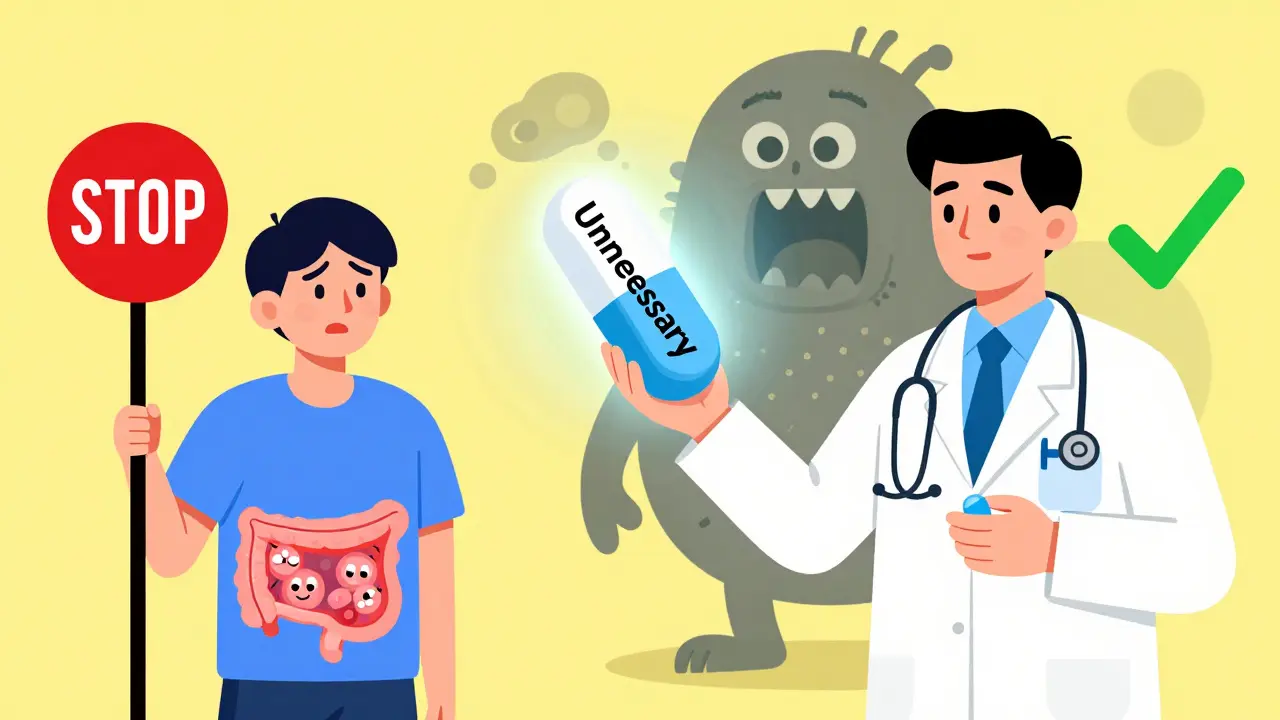
Every year, millions of people take antibiotics - sometimes when they don’t need them. And every time that happens, the risk of serious side effects goes up. It’s not just about getting better faster. It’s about avoiding dangerous complications like life-threatening diarrhea, allergic reactions, and even long-term damage to your gut microbiome. The solution isn’t more antibiotics. It’s smarter use. That’s where antibiotic stewardship comes in.
What Is Antibiotic Stewardship?
Antibiotic stewardship isn’t a new trend. It’s a proven, science-backed system designed to make sure antibiotics are used only when necessary, in the right dose, for the right amount of time. The CDC defines it as the effort to measure and improve how antibiotics are prescribed and taken. In simple terms: give the right drug, to the right person, for the right bug, for the right length of time. This isn’t just about fighting superbugs. It’s about protecting patients from harm. Every unnecessary antibiotic course increases the chance of side effects - and not just mild ones. Up to 30% of outpatient antibiotic prescriptions in the U.S. are inappropriate. That means nearly one in three people are being exposed to drugs that offer no benefit but carry real risks.How Inappropriate Use Leads to Side Effects
Antibiotics don’t just kill bad bacteria. They wipe out the good ones too - especially in your gut. These friendly microbes help with digestion, immune function, and even mood regulation. When antibiotics wipe them out, harmful bacteria like Clostridioides difficile (C. diff) can take over. C. diff causes severe diarrhea, fever, and in extreme cases, colon damage or death. Studies show that inappropriate antibiotic use increases the risk of C. diff infection by 7 to 10 times. In hospitals, C. diff leads to longer stays, higher costs, and more deaths. But here’s the good news: when stewardship programs are in place, C. diff rates drop by 25% to 30%. That’s not a small win - it’s a life-saving shift. Other side effects are just as common. Allergic reactions, kidney damage from certain antibiotics, yeast infections, and even long-term changes in gut flora are directly tied to overuse. A 2019 CDC report found that 35,000 people in the U.S. die each year from antibiotic-resistant infections - many of which started because someone took an antibiotic they didn’t need.How Stewardship Programs Work in Practice
Effective stewardship doesn’t mean denying antibiotics. It means using them wisely. Hospital programs use several proven strategies:- Prospective audit and feedback: Pharmacists review prescriptions daily and suggest changes - like switching from IV to oral, shortening the course, or choosing a narrower-spectrum drug.
- Formulary restrictions: Certain powerful antibiotics are only available with approval from an infectious disease specialist.
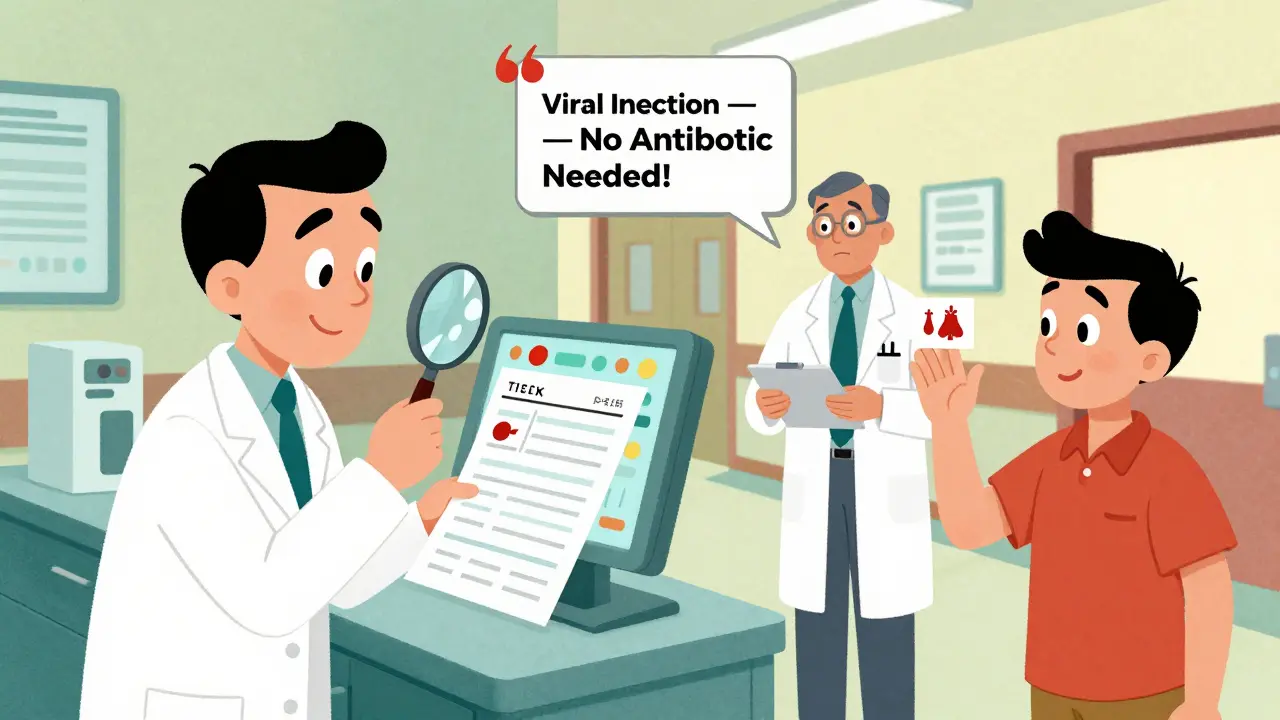
- Clinical decision support: Electronic health records pop up alerts when a doctor tries to prescribe an antibiotic for a viral infection like a cold or flu.
- Biomarker testing: Tests like procalcitonin help doctors tell if an infection is bacterial (needs antibiotics) or viral (doesn’t). One study showed this reduced antibiotic use by nearly 3 days without hurting patient outcomes.
Why It’s Harder in Outpatient Settings
Hospitals have teams of specialists, lab support, and real-time data. Outpatient clinics? Not so much. In doctor’s offices and ERs, pressure to “do something” is high. Patients expect a prescription. Doctors feel rushed. And without quick diagnostic tools, it’s easy to overprescribe. That’s why 47 million unnecessary antibiotic prescriptions are written each year in U.S. outpatient settings. Most are for sinus infections, bronchitis, or ear infections - conditions that are often viral. Antibiotics won’t help. But patients still get them. The good news? Simple interventions work. Giving doctors data on their own prescribing habits compared to peers cuts unnecessary use by 20%. Providing quick-reference guidelines and automated alerts in electronic systems helps too. One study showed that adding a single prompt - “Is this infection bacterial?” - reduced antibiotic prescriptions for bronchitis by 30%.Who Runs These Programs?
You can’t run a stewardship program with good intentions alone. It needs trained experts. The CDC recommends at least two full-time staff: an infectious disease physician (0.5 FTE) and a clinical pharmacist with specialized training (1.0 FTE). These professionals understand not just which drug to pick, but how it affects the body, how resistance develops, and how to communicate with skeptical providers. Training takes time. Pharmacists need 40+ hours of focused education in antibiotic pharmacology, microbiology, and clinical decision-making. But the ROI is clear. Hospitals with strong stewardship programs save an average of $250,000 per year in reduced drug costs, shorter hospital stays, and fewer complications.
The Bigger Picture: Resistance and Global Health
Antibiotic resistance isn’t a future threat. It’s happening now. The WHO calls it one of the top 10 global public health threats. If we keep using antibiotics like they’re candy, we’ll lose them. By 2050, resistant infections could kill 10 million people a year worldwide - more than cancer. Stewardship is the most powerful tool we have to slow this down. Every time we avoid an unnecessary antibiotic, we protect not just that patient - but everyone around them. Resistant bacteria spread easily. One person’s misuse can endanger an entire community. And it’s working. In the U.S., 88% of hospitals with 200+ beds now have formal stewardship programs - up from just 40% in 2014. The Joint Commission now requires all accredited hospitals to have one. The global market for stewardship tools is projected to hit $1.8 billion by 2027. That’s not just business - it’s a public health wake-up call.What You Can Do
You don’t need to be a doctor to help. Here’s what patients can do:- Ask: “Do I really need an antibiotic?” If your doctor says yes, ask why - and if there’s a narrower, safer option.
- Never demand antibiotics for a cold, flu, or sore throat without a fever or pus.
- Take antibiotics exactly as prescribed - no skipping doses, no saving leftovers.
- Never share antibiotics or use old prescriptions.
- Ask about alternatives: pain relievers, saline rinses, rest - sometimes those are the best treatment.
The Future: AI, Diagnostics, and Better Tools
The next big leap in stewardship isn’t more rules - it’s better information. Rapid molecular tests can now identify bacteria and their resistance genes in hours, not days. AI tools are being trained to analyze symptoms, lab results, and patient history to recommend the best antibiotic - or none at all. A 2022 study found that using rapid testing for pneumonia patients cut antibiotic use by 2.1 days. That’s not just saving money - it’s saving gut health, reducing side effects, and protecting the next generation from superbugs. The goal isn’t to eliminate antibiotics. It’s to use them like precision tools - not sledgehammers.Are antibiotics always necessary for infections?
No. Many common infections - like colds, flu, most sore throats, and bronchitis - are caused by viruses, not bacteria. Antibiotics don’t work on viruses. Taking them in these cases won’t help you feel better faster and only increases your risk of side effects like diarrhea, yeast infections, or C. diff. Always ask your doctor if the infection is bacterial before accepting a prescription.
Can antibiotic stewardship really reduce side effects?
Yes, and the data is clear. Hospital-based stewardship programs have reduced C. diff infections by 25-30%, lowered rates of antibiotic-associated diarrhea by over 20%, and cut adverse drug events by 21.5% across 28 U.S. hospitals. These aren’t small improvements - they’re life-saving changes that come from stopping unnecessary prescriptions.
Why do doctors still overprescribe antibiotics?
Pressure from patients, time constraints, diagnostic uncertainty, and fear of missing a bacterial infection all play a role. In emergency rooms or busy clinics, it’s easier to write a prescription than to explain why one isn’t needed. Stewardship programs help by giving doctors tools - like rapid tests and decision support - to make confident, evidence-based choices without delay.
Is antibiotic stewardship only for hospitals?
No. While hospitals have the most structured programs, outpatient settings are the biggest source of unnecessary prescriptions - 47 million per year in the U.S. alone. Stewardship is now expanding into doctor’s offices, urgent care centers, and pharmacies. Simple tools like prescribing feedback reports and electronic alerts are making a big difference in community care.
What happens if I stop taking my antibiotics early?
It depends. For some infections, shorter courses are now proven just as effective - and safer. For others, stopping early can let the strongest bacteria survive and multiply, leading to relapse or resistance. Always follow your doctor’s instructions. But if you’re unsure about the duration, ask: “Is this course length based on the latest evidence?” New guidelines are moving toward shorter, targeted treatments - not longer ones.
Can I prevent side effects from antibiotics?
The best way to prevent side effects is to avoid taking antibiotics unless they’re truly needed. If you do need them, take them exactly as directed. Avoid probiotics unless recommended - evidence is mixed. Stay hydrated, eat fiber-rich foods, and watch for signs of diarrhea or rash. If symptoms appear, contact your doctor immediately. Prevention starts with smart use, not supplements.

Paula Villete
December 24, 2025 AT 00:21So let me get this straight - we’re giving people antibiotics like they’re M&Ms at a movie theater, then acting shocked when their guts turn into a warzone? 🤦♀️
Also, 35,000 dead Americans a year from antibiotic resistance? That’s not a public health crisis - that’s a national failure dressed up in white coats.
niharika hardikar
December 24, 2025 AT 23:03The empirical evidence supporting antibiotic stewardship protocols is unequivocal. The reduction in Clostridioides difficile incidence rates - quantified at 25–30% in institutional settings - underscores the necessity of structured, multidisciplinary interventions grounded in antimicrobial pharmacokinetics and resistance epidemiology.
Furthermore, the integration of biomarker-guided decision-making, particularly procalcitonin kinetics, represents a paradigm shift from symptom-driven empiricism to pathogen-targeted therapeutics.
It is imperative that regulatory frameworks mandate compliance with CDC guidelines across all outpatient prescriptive environments, as the current fragmentation of care delivery undermines the collective efficacy of stewardship initiatives.
Without standardized audit mechanisms and real-time feedback loops, antimicrobial misuse will persist as a systemic pathology.
Moreover, the economic burden of resistant infections exceeds $20 billion annually in the U.S. alone - a figure that fails to account for the intangible costs of prolonged morbidity and microbiome dysbiosis.
Therefore, the moral imperative to optimize prescribing behavior transcends clinical utility; it is an ethical obligation to future generations.
Pharmacists, as medication experts, must be elevated to co-leadership roles in stewardship teams, not merely administrative gatekeepers.
The current model of physician autonomy in prescribing is archaic and dangerous.
Electronic health record alerts are not sufficient - they require enforced protocols with tiered escalation pathways.
And let us not forget: resistance is not an individual phenomenon. It is a population-level threat.
Every unnecessary prescription is a contribution to the global reservoir of multidrug-resistant organisms.
It is not hyperbole to say that we are on the cusp of a post-antibiotic era - and our complacency is the catalyst.
Isaac Bonillo Alcaina
December 25, 2025 AT 18:15Oh wow. Another sanctimonious article about how *we* are the problem. Let me guess - you’re the kind of person who brings your own silverware to restaurants because ‘plastic is evil’?
My kid had strep throat. I didn’t ask for antibiotics. The doctor ordered them. Because if I’d said ‘no,’ I’d be the bad parent. And now you want me to feel guilty because I followed medical advice?
Meanwhile, the real problem is that Big Pharma markets antibiotics like candy and hospitals don’t test properly. But sure, blame the moms.
Bhargav Patel
December 25, 2025 AT 19:46Humanity stands at a crossroads where the mechanistic application of pharmaceuticals has eclipsed the wisdom of biological equilibrium. Antibiotics, once revered as miraculous interventions, have been reduced to transactional tools - prescribed not as therapeutic instruments, but as social pacifiers.
The gut microbiome, an ancient symbiotic ecosystem honed over millennia, is not a mere accessory to digestion - it is the silent conductor of immune regulation, neurochemical signaling, and metabolic homeostasis.
When we indiscriminately deploy broad-spectrum agents, we do not merely kill pathogens - we orchestrate silent ecological collapses within the human body.
And yet, the response is not reflection, but escalation: more drugs, more tests, more protocols - as if complexity can be solved by adding more layers of intervention.
True stewardship is not administrative - it is philosophical. It requires humility before nature’s intricate balance.
Perhaps the question is not how to prescribe better - but whether we are worthy of prescribing at all.
Let us remember: the bacteria that survive our antibiotics are not the enemy. They are the teachers.
They remind us that evolution does not negotiate - it adapts.
And if we continue to treat biology as a machine to be fixed, we will one day find ourselves alone in a sterile world - with no medicine left to save us.
Steven Mayer
December 27, 2025 AT 03:20Procalcitonin-guided algorithms reduce antibiotic duration by 1.8–3.2 days across randomized controlled trials. Meta-analyses confirm non-inferiority in clinical outcomes with shorter courses. Yet adoption remains below 30% in community hospitals due to provider inertia and lack of standardized decision-support integration.
The cost-benefit ratio of stewardship programs is favorable: $5–$10 saved per $1 invested. But ROI metrics are rarely prioritized over workflow convenience.
Formulary restrictions are effective, but only when coupled with mandatory education modules for prescribers.
Without institutional accountability structures, guidelines remain performative.
Charles Barry
December 27, 2025 AT 04:31They say ‘antibiotic stewardship’ - but what they really mean is control. Who’s behind these ‘guidelines’? The CDC? The WHO? Big Pharma? They want you to believe this is about health - but it’s about power.
They don’t want you to know that natural remedies work. They don’t want you to know that fasting and zinc can beat a cold. They want you dependent. They want you scared of your own immune system.
And now they’re pushing AI to make decisions for doctors? That’s not science - that’s surveillance disguised as medicine.
Every time you take an antibiotic, you’re being tracked. Every prescription is logged. Every refusal is flagged.
This isn’t stewardship. It’s a soft dictatorship.
They’ll ban antibiotics next. Then vaccines. Then your right to breathe air that isn’t ‘microbe-free’.
Wake up. They’re not saving lives - they’re selling fear.
Rosemary O'Shea
December 28, 2025 AT 15:17Oh, how *adorable*. A 12-page white paper on antibiotics, as if this is the first time anyone’s ever heard of the microbiome.
Did you know that in 19th-century Europe, doctors used to bleed patients to treat fevers? And now we’re doing the same thing - just with pills instead of scalpels?
It’s not that people don’t understand stewardship. It’s that they’ve seen this circus before. The same people who told us antibiotics were miracle cures are now telling us they’re evil.
Which is it? Are they saviors or villains?
And why does every ‘solution’ require more bureaucracy, more forms, more specialists?
Maybe the real problem isn’t antibiotics - it’s the cult of medical infallibility.
But of course, I’m just a layperson. What do I know?
Joe Jeter
December 30, 2025 AT 11:24Actually, the CDC’s own data shows that 80% of antibiotic prescriptions for sinusitis are unnecessary - but here’s the twist: patients who didn’t get antibiotics had *higher* satisfaction scores.
So why do doctors keep prescribing?
Because they’re afraid of being sued. Not because patients are dumb. Not because they don’t know better.
It’s malpractice fear, not ignorance.
And now we’re going to fix it with more AI? Brilliant.
Let’s automate the fear.
Sidra Khan
December 30, 2025 AT 22:51So let me get this straight - I’m supposed to feel bad for not taking antibiotics for a cold? 🙃
Meanwhile my coworker took amoxicillin for a ‘sinus infection’ and now she’s got a yeast infection, a rash, and a 3-day hospital stay.
But yeah, I’m the problem because I didn’t ask for a prescription.
Also, can we talk about how the word ‘stewardship’ sounds like a corporate buzzword that got stuck in a medical textbook?
It’s not ‘stewardship.’ It’s ‘stop giving out free drugs.’
Also, I just ate yogurt. I’m fine. ✨
Lu Jelonek
December 31, 2025 AT 06:18In rural India, where I grew up, antibiotics were a luxury. We used turmeric, neem, and rest. When we finally got access to penicillin, it was a miracle - but we used it sparingly, because we knew it was precious.
Now, in the U.S., it’s treated like aspirin. And yet, we’re the ones with the best labs, the most data, the smartest doctors.
Maybe the solution isn’t more technology - it’s more humility.
And maybe we need to stop treating medicine like a product and start treating it like a relationship - with our bodies, with our bacteria, with our history.
It’s not about control. It’s about coexistence.
Ademola Madehin
January 1, 2026 AT 23:39Bro, I took amoxicillin for a sore throat last week. Felt like a boss. Now my stomach’s doing backflips, but hey - I got that prescription like a grown man.
Why you all so stressed? Just take the pill. Chill. The body gon’ fix itself. Or it won’t. Either way, I’m still alive.
Y’all act like antibiotics are a crime. Nah. They’re a blessing. Don’t make it complicated.
suhani mathur
January 3, 2026 AT 13:24Wow. So we’re all supposed to be microbiome philosophers now? 😏
Here’s what actually works: doctors who say, ‘I’m not prescribing this because it won’t help - here’s what will.’ That’s it. No jargon. No guilt. Just honesty.
And yes - I’ve asked for antibiotics. And yes - I’ve been told ‘no’ and lived to tell the tale.
It’s not about being perfect. It’s about being informed. And that starts with doctors who stop treating patients like children.