
Anticoagulant Reversal Agent Selector
Select Patient's Anticoagulant
Recommended Reversal Agent
Select a blood thinner to see recommendations
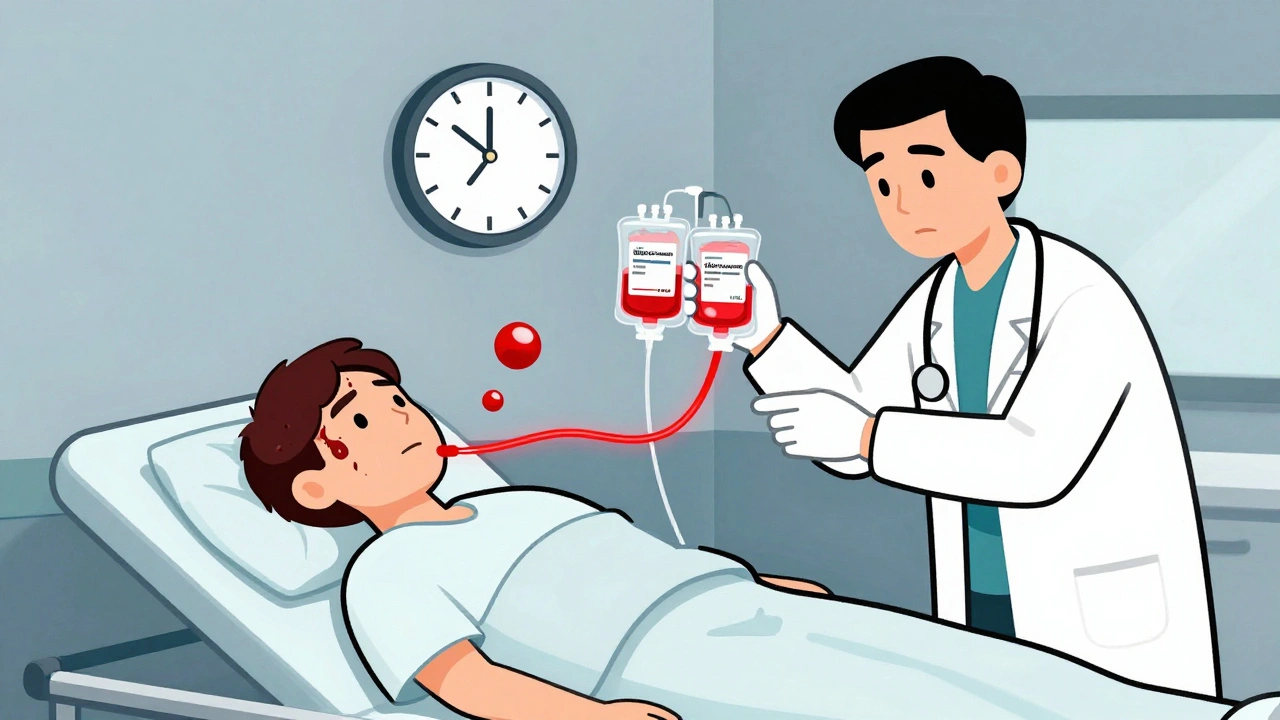
When someone on blood thinners suffers a serious bleed-like a fall leading to a brain hemorrhage-time isn’t just money. It’s life. That’s where anticoagulant reversal agents come in. These aren’t just backup plans. They’re emergency tools designed to stop bleeding fast. And the choices? Idarucizumab, andexanet alfa, PCC, and vitamin K. Each works differently. Each has pros, cons, and real-world limits. Knowing which one to use-and when-can mean the difference between survival and tragedy.
Why Reversal Agents Even Exist
About 4 million Americans take blood thinners. Most are for atrial fibrillation, deep vein clots, or after joint replacements. The two big classes? Warfarin (an old-school vitamin K antagonist) and the newer DOACs: dabigatran, rivaroxaban, apixaban, edoxaban. They work great at preventing clots. But if you bleed out, they work against you. The problem? These drugs don’t wear off quickly. Warfarin’s effects last days. DOACs last 8-15 hours. In a major bleed-especially intracranial hemorrhage-waiting isn’t an option. Mortality rates hit 30-50% when bleeding happens on anticoagulants. That’s why reversal agents exist: to undo the drug’s effect fast, before the brain or organs are destroyed.Vitamin K: The Old Workhorse
Vitamin K is the oldest reversal agent. It’s been around since the 1940s. It only works on warfarin and similar vitamin K antagonists. It doesn’t touch DOACs. Here’s how it works: warfarin blocks your body’s ability to use vitamin K to make clotting factors. Giving more vitamin K tells your liver to start making those factors again. Simple. Cheap. Available everywhere. But here’s the catch: it takes 4 to 6 hours to start working. Full reversal? Up to 24 hours. That’s too slow for a bleeding brain. So vitamin K alone won’t cut it in an emergency. It’s always given with something faster-like PCC-to buy time while it does its job. Skip the PCC, and you risk rebound bleeding once the PCC wears off.Prothrombin Complex Concentrate (PCC): The Fast Generalist
PCC is a concentrated mix of clotting factors: II, VII, IX, X, and sometimes C and S. Modern 4-factor PCC (4F-PCC) is the gold standard for reversing warfarin. It’s not new, but it’s been refined. Administered in 15-30 minutes, 4F-PCC can bring an INR from 5.0 down to under 1.5 in under 30 minutes. That’s faster than fresh frozen plasma (FFP). In fact, one 2018 study showed 92% of patients got their INR under control with PCC, compared to just 65% with FFP. Dosing? Based on INR and weight. For INR 2-4: 25-50 units/kg. INR 4-6: 35-50 units/kg. Above 6: 50 units/kg. It’s not guesswork. Guidelines spell it out. It’s also used off-label for DOACs when specific agents aren’t available. Emergency rooms do this all the time. A 2022 survey found 63% of ER doctors have used PCC for apixaban or rivaroxaban bleeds when idarucizumab or andexanet alfa weren’t on hand. Cost? $1,200-$2,500 per dose. That’s a fraction of the newer drugs. And availability? Nearly universal. Every hospital stocks it.Idarucizumab: The Dabigatran Killer
Idarucizumab is a monoclonal antibody fragment. It’s like a molecular magnet for dabigatran. It binds to it-tightly-and neutralizes it instantly. Administered as two 2.5g IV bags (5g total). Done in under a minute. Reversal? Within 5 minutes. The RE-VERSE AD trial showed 100% of patients had their anticoagulant effect reversed. No delays. No guesswork. It’s specific. Only works on dabigatran. Useless for rivaroxaban or warfarin. But for dabigatran? It’s the best tool. Mortality in ICH cases? Just 11% with idarucizumab, compared to 24-26% with PCC. Thrombotic events? Only 5%. Cost? Around $3,500 per vial. Not cheap. But it’s widely available in most urban hospitals. Emergency docs prefer it. Why? Speed, safety, simplicity. No complex dosing. No infusion pumps. Just two bags, push it in, and move on.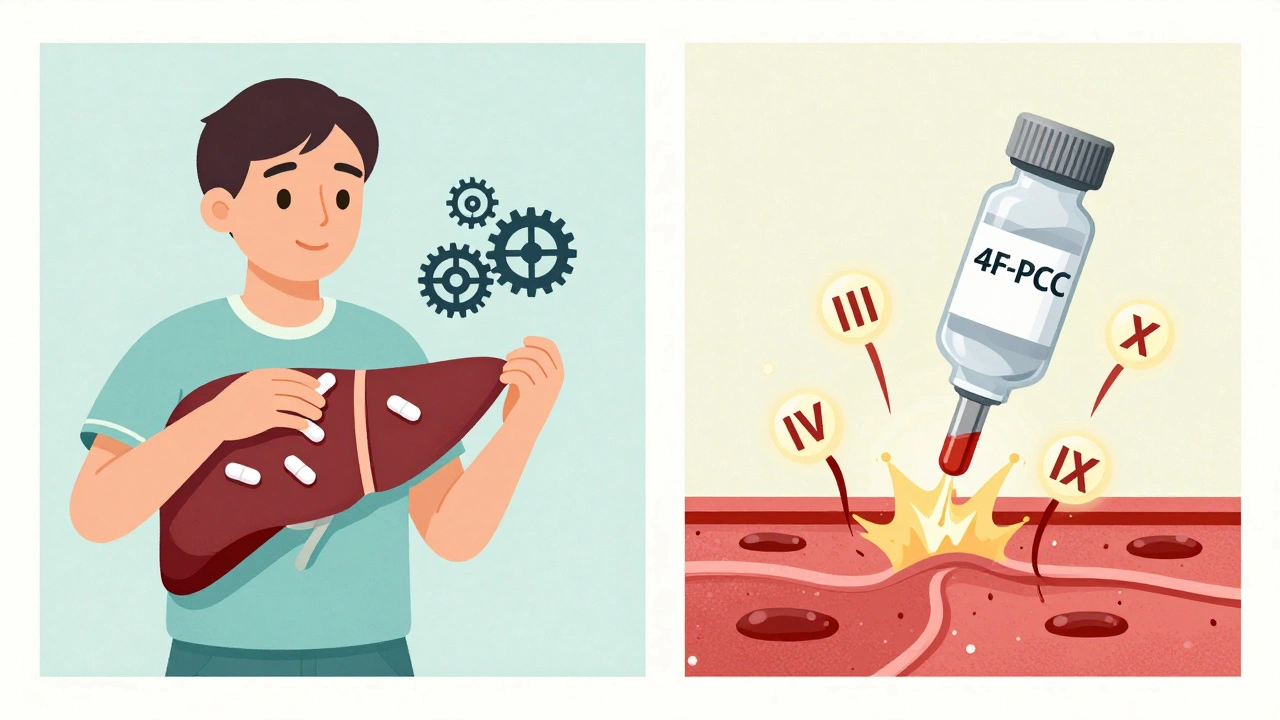
Andexanet Alfa: The Factor Xa Buster
Andexanet alfa is designed for the big four DOACs: rivaroxaban, apixaban, edoxaban. It’s a decoy protein. It mimics factor Xa so the DOAC binds to it instead of your real clotting factors. Dosing? Complicated. First, a 400mg IV bolus. Then, a 4mg/min infusion for 120 minutes. Total treatment? About 2.5 hours. Reversal happens in 2-5 minutes. The ANNEXA-4 trial confirmed it works. But here’s the dark side: 14% thrombotic event rate. That’s double the rate of idarucizumab and higher than PCC. Why? Because you’re flooding the system with clotting potential. Your body doesn’t know when to stop. The FDA added a boxed warning for this. Heart attacks, strokes, deep vein clots-these aren’t rare side effects. They’re expected. Cost? $13,500 per treatment. That’s 4-6 times more than PCC. Availability? Only 65% of U.S. hospitals stock it. Many rural or community hospitals don’t have it. And training? You need 2-3 hours to learn the protocol. Not every ER nurse can do it on the fly.Which One Do You Use?
It’s not about what’s newest. It’s about what’s right for the patient.- Dabigatran? Use idarucizumab. Fast, safe, proven. No debate.
- Rivaroxaban or apixaban? Use andexanet alfa-if it’s available. If not? Use 4F-PCC. It’s not perfect, but it’s better than nothing.
- Warfarin? Use 4F-PCC + vitamin K. Always both. Never just vitamin K in an emergency.
- Unknown drug? Assume DOAC. Use 4F-PCC. Most DOACs are rivaroxaban or apixaban. PCC covers them well enough until you can test.
What About Cost and Access?
Money matters. A lot. Andexanet alfa costs $13,500. Idarucizumab? $3,500. PCC? $2,000. Vitamin K? $10. In a system where insurance denies coverage or hospitals can’t afford to stock $13k drugs, PCC remains the backbone. A 2023 VA Formulary report showed PCC is used for DOAC reversal in 40% of cases where specific agents aren’t available. That’s not off-label use out of laziness. It’s clinical necessity. And access isn’t equal. In Melbourne, Sydney, or Toronto? You’ll likely find all four. In rural Kansas or inner-city clinics with tight budgets? You might only have PCC and vitamin K.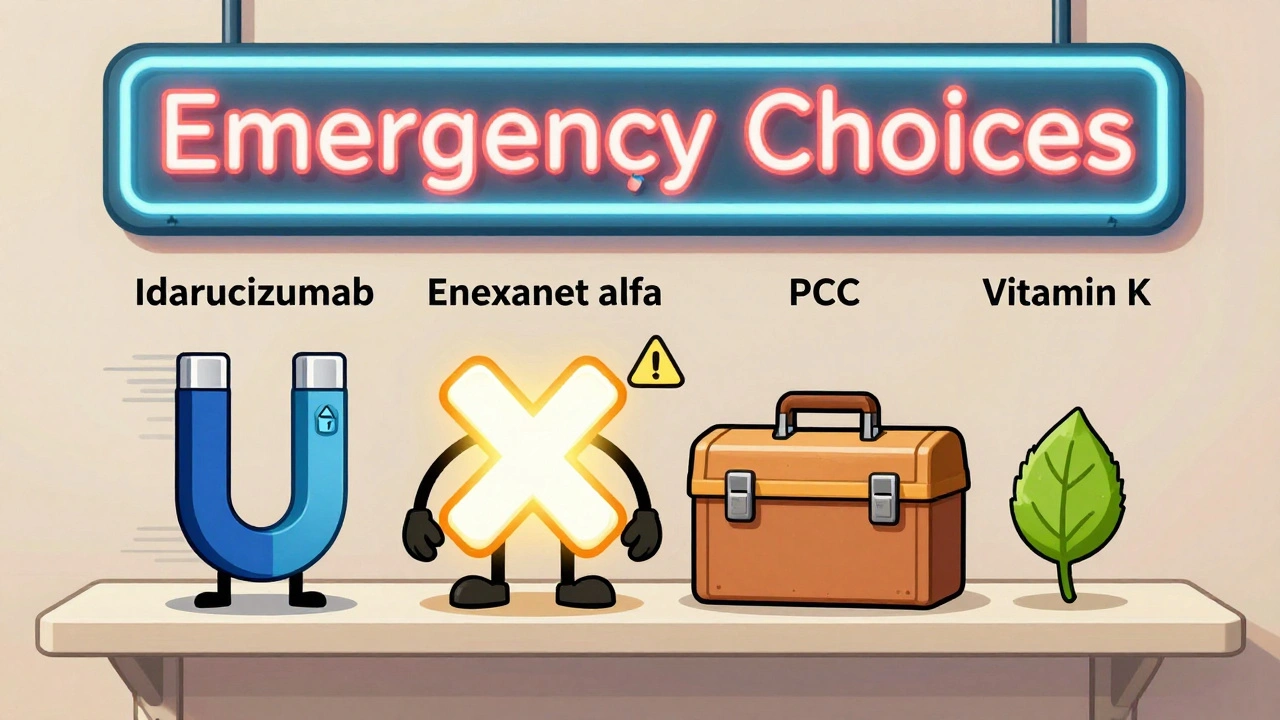
The Future: Ciraparantag and Beyond
There’s a new player coming: ciraparantag. It’s a synthetic molecule designed to reverse all anticoagulants-warfarin, heparin, DOACs-in one shot. Phase III trials are wrapping up. FDA approval could come by late 2025. If it works, it could replace all four agents. One drug. One dose. One cost. No more guessing which drug the patient took. Just reverse it. But until then? We’re stuck with a patchwork of options. And the best choice isn’t always the most expensive. It’s the one you can get fast, safely, and with the least risk of another clot.What Happens After Reversal?
Reversing the drug doesn’t mean stopping the need for anticoagulation. A patient who had a stroke from AFib? They still need a blood thinner. The question is: when to restart? Guidelines suggest waiting 1-7 days, depending on the cause of bleeding. A brain bleed? Wait longer. A GI bleed? Maybe sooner. Restarting too soon? Risk of another clot. Too late? Risk of another stroke. This is where the real challenge begins. Reversal is just the first step. The second? Deciding if-and when-to go back on the drug.Bottom Line: Speed, Safety, and Simplicity Win
There’s no perfect reversal agent. But there are better choices for each situation. - Idarucizumab is the gold standard for dabigatran. Use it. - For factor Xa inhibitors, andexanet alfa is ideal-if you can afford it and it’s on the shelf. Otherwise, PCC works. - For warfarin? PCC plus vitamin K. Always. - Vitamin K alone? Only for planned procedures, not emergencies. The data doesn’t lie: idarucizumab has the lowest death rate. PCC is the most accessible. Andexanet alfa saves lives but risks more clots. Cost and availability shape real-world decisions more than guidelines do. In the end, it’s not about the fancy new drug. It’s about having the right tool in your hand when the clock is ticking. And for most of us? That’s still PCC and vitamin K.Can vitamin K reverse DOACs like apixaban or rivaroxaban?
No. Vitamin K only works on warfarin and other vitamin K antagonists. DOACs like apixaban, rivaroxaban, and dabigatran work through completely different mechanisms. Vitamin K has no effect on them. Using vitamin K alone for a DOAC bleed is ineffective and dangerous.
Is PCC safe to use for reversing DOACs even though it’s off-label?
Yes. While 4F-PCC is FDA-approved only for warfarin reversal, it’s widely used off-label for DOACs-especially when specific reversal agents aren’t available. Studies show it effectively reduces bleeding in apixaban and rivaroxaban cases. Emergency departments rely on it because it’s fast, available, and cheaper than the alternatives.
Why is andexanet alfa associated with more blood clots than other reversal agents?
Andexanet alfa works by mimicking factor Xa, which pulls the DOAC away from your natural clotting system. But it also floods the bloodstream with clotting potential. Your body doesn’t know when to stop making clots, leading to a higher risk of heart attacks, strokes, or deep vein thrombosis. This is why the FDA added a boxed warning. The risk is real and measurable-14% in trials.
How long does it take for idarucizumab to work?
Within 5 minutes. The RE-VERSE AD trial showed complete reversal of dabigatran’s anticoagulant effect in under 5 minutes after the second 2.5g IV dose. This makes it the fastest and most predictable reversal agent for dabigatran.
What should you do if your hospital doesn’t have idarucizumab or andexanet alfa?
Use 4F-PCC with vitamin K. For warfarin, that’s standard. For DOACs, it’s off-label but proven effective. Emergency teams across the U.S. and Australia use this approach daily when specific agents aren’t available. It’s not ideal, but it’s life-saving. Don’t delay-get PCC started immediately.

Desmond Khoo
December 7, 2025 AT 18:53Sadie Nastor
December 9, 2025 AT 14:27Kyle Flores
December 11, 2025 AT 05:50Olivia Hand
December 12, 2025 AT 22:57Louis Llaine
December 14, 2025 AT 12:51Jane Quitain
December 15, 2025 AT 20:31Sam Mathew Cheriyan
December 17, 2025 AT 04:44Ernie Blevins
December 18, 2025 AT 11:06Nancy Carlsen
December 18, 2025 AT 21:55Ted Rosenwasser
December 19, 2025 AT 08:12Helen Maples
December 20, 2025 AT 11:25Ashley Farmer
December 20, 2025 AT 21:28David Brooks
December 21, 2025 AT 23:23