
Antihistamine Safety Checker for Seniors
Check Your Medications
Enter any medication name to see if it contains dangerous anticholinergic drugs common in seniors
Results
These options:
- Non-sedating for most seniors
- Minimal fall risk
- No link to dementia risk
What to do next:
1. Stop immediately if taking diphenhydramine or doxylamine
2. Consult your doctor about safer alternatives
3. Review ALL medications quarterly with your pharmacist
Many older adults reach for diphenhydramine (Benadryl) or doxylamine (Unisom) when they have allergies or can’t sleep. It’s cheap, easy to find, and seems harmless. But for people over 65, these common meds aren’t just weak solutions-they’re ticking time bombs. The problem isn’t dosage. It’s the drug itself.
Why First-Generation Antihistamines Are a Perfect Storm for Seniors
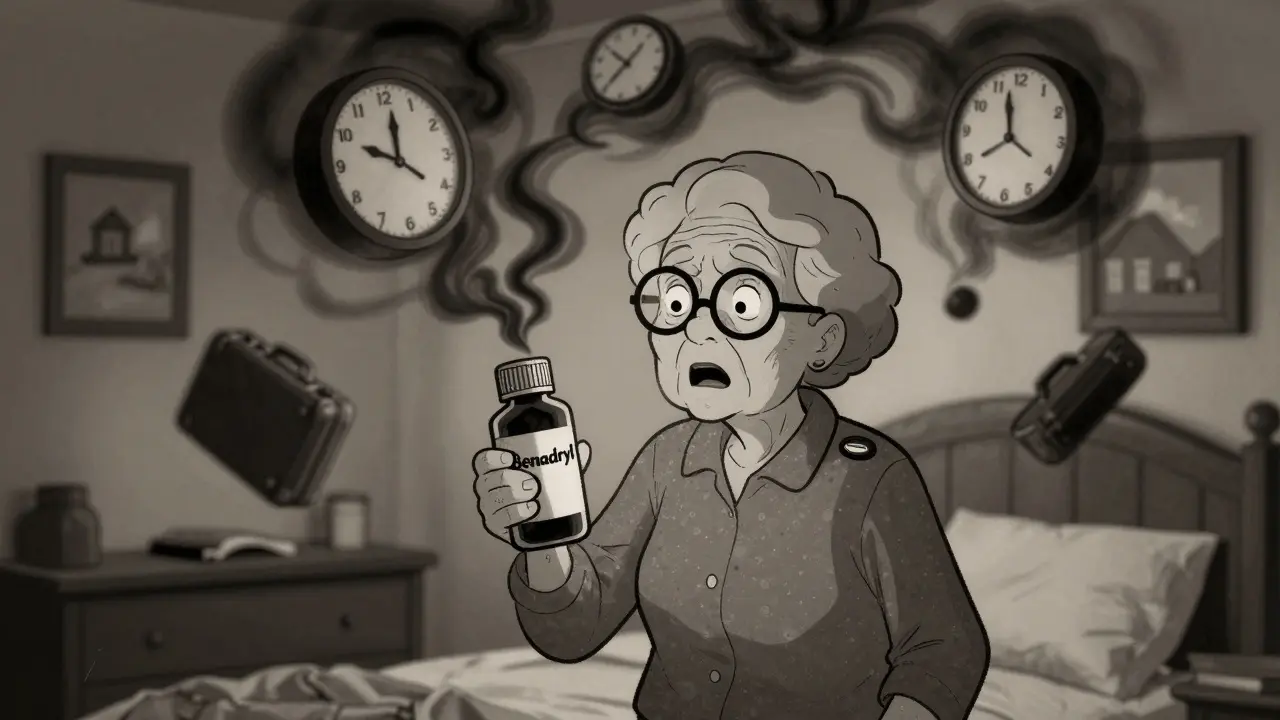
First-generation antihistamines like diphenhydramine, chlorpheniramine, and doxylamine were designed in the 1940s to block histamine, the chemical that causes sneezing, itching, and runny noses. But they don’t stop there. These drugs are lipophilic-meaning they easily slip through the blood-brain barrier and mess with brain chemistry. In younger people, that might just mean drowsiness. In older adults, it triggers something far more dangerous: anticholinergic toxicity. Your brain uses a chemical called acetylcholine to help with memory, attention, and coordination. As we age, our bodies naturally make less of it. When a first-gen antihistamine blocks the remaining acetylcholine receptors, it’s like turning off the lights in an already dim room. The result? Confusion, disorientation, hallucinations, and sudden memory lapses. One caregiver on AARP’s forum described her 78-year-old mother suddenly packing her bags to ‘go home’-even though she’d lived in the same house for 40 years. That wasn’t dementia. That was Benadryl.The Fall Risk Is Real-and Often Deadly
A 2018 meta-analysis reviewed data from over 15,000 elderly patients and found that those taking first-generation antihistamines had more than double the risk of falling or breaking a bone. That’s not a small increase. That’s a 103% higher chance. Why? These drugs don’t just make you sleepy. They cause dizziness, low blood pressure, blurred vision, and poor balance. One study showed that even a single dose of diphenhydramine can impair reaction time as much as having a blood alcohol level of 0.05%. Falls in older adults aren’t just scary-they’re deadly. One in five falls causes a serious injury like a hip fracture or brain bleed. And recovery? It’s often a downhill spiral. Many never regain independence. The CDC estimates that over 36,000 older adults die each year from fall-related injuries. And antihistamines are one of the most preventable contributors.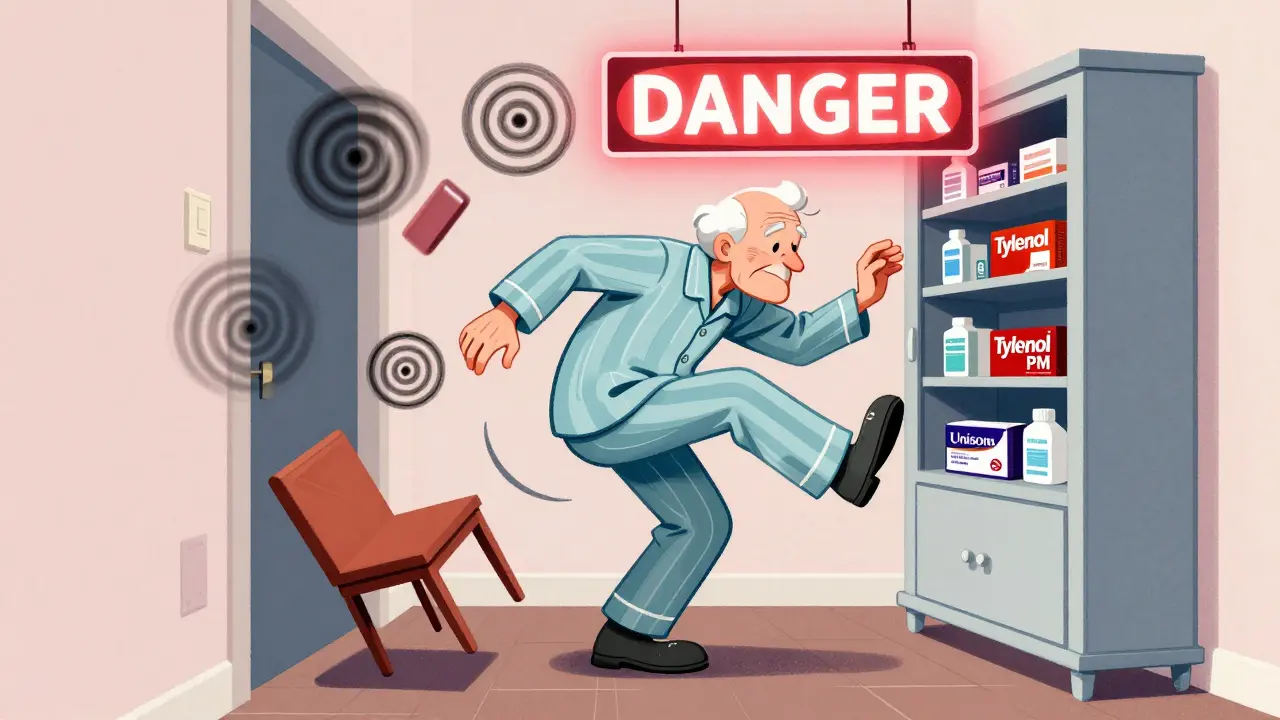
Second-Generation Antihistamines: The Safe Alternative
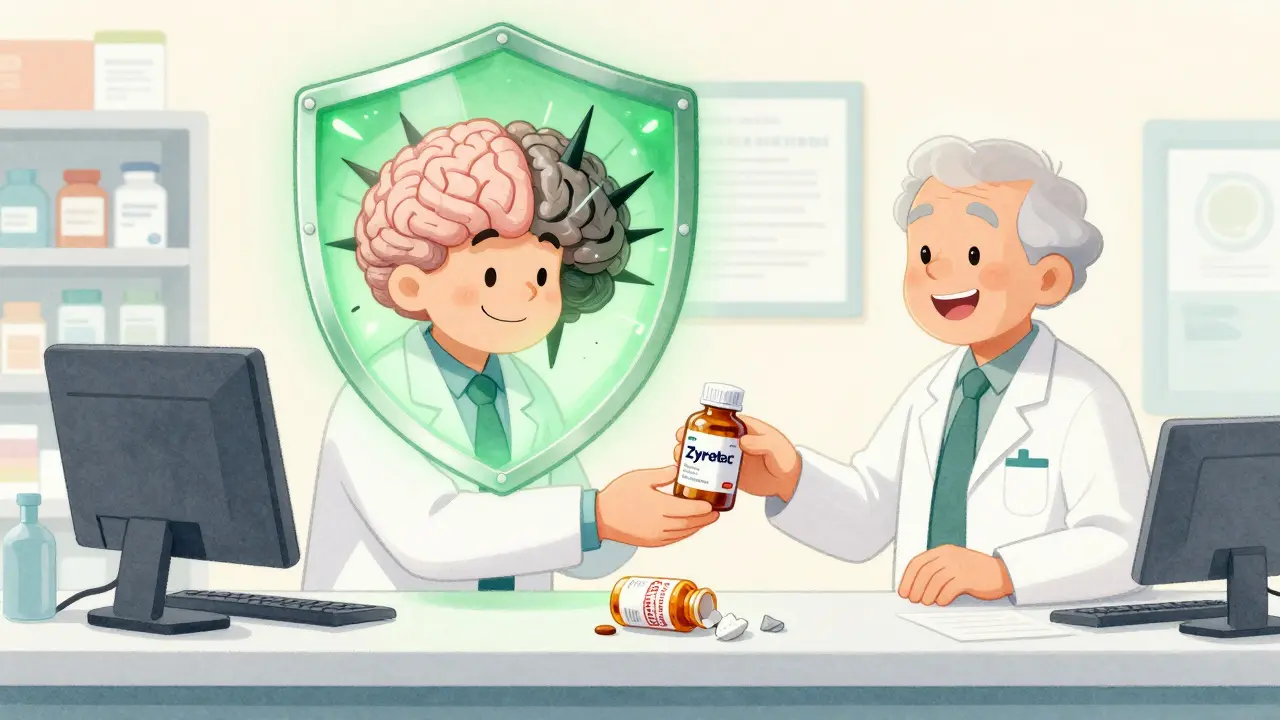
The good news? There’s a better way. Second-generation antihistamines like cetirizine (Zyrtec), loratadine (Claritin), and fexofenadine (Allegra) were engineered differently. They’re polar molecules-bulky and water-soluble-that can’t cross the blood-brain barrier easily. That means they block histamine in your nose and skin… but leave your brain alone. Studies show these drugs have almost no link to falls, confusion, or dementia. In fact, a 2015 JAMA Internal Medicine study tracked 3,434 adults over seven years and found that those who took strong anticholinergics (like first-gen antihistamines) for three or more years had a 54% higher risk of developing dementia. The same group using second-gen meds showed no increased risk. Loratadine (10 mg daily) and cetirizine (5 mg daily) are now the go-to choices for elderly patients. They’re effective for allergies, non-sedating for most, and safe for long-term use. Fexofenadine is another solid option, especially if someone has kidney issues-since it’s cleared by the liver instead of the kidneys.Hidden in Plain Sight: The Over-the-Counter Trap
Here’s where things get tricky. Most elderly patients don’t realize they’re taking a high-risk drug. Diphenhydramine and doxylamine are hidden in dozens of OTC products:- ‘Nighttime’ pain relievers (Tylenol PM, Advil PM)
- Cough syrups (Robitussin Nighttime, Vicks NyQuil)
- Sleep aids (Unisom SleepTabs, ZzzQuil)
- Allergy and cold combos (Alka-Seltzer Plus Nighttime)
What Should You Do? A Practical Guide
If you or a loved one is using diphenhydramine or doxylamine, here’s what to do:- Check every medicine bottle. Look for ‘diphenhydramine’ or ‘doxylamine succinate’ on the active ingredients list. Even if it’s labeled ‘for sleep’ or ‘for colds,’ it’s still a risk.
- Switch to a second-gen antihistamine. Loratadine (Claritin) or cetirizine (Zyrtec) are safe, effective, and available over the counter. Start with half the dose if you’re unsure-some seniors respond to 5 mg of cetirizine instead of 10 mg.
- Ask about non-drug options. Saline nasal sprays, HEPA air filters, and allergen-proof pillowcases can cut allergy symptoms by up to 70% without any drugs.
- Review meds quarterly. Ask your pharmacist or doctor to run a ‘medication check’ every three months. Many seniors take 10+ pills a day. One hidden anticholinergic can tip the balance.
The Bigger Picture: Why This Matters Beyond One Pill
This isn’t just about allergies or sleep. It’s about preserving independence. Every time an elderly person takes a first-gen antihistamine, they’re gambling with their ability to walk, remember, and live safely at home. Modeling from the 2018 and 2015 studies suggests that eliminating these drugs in seniors could prevent 250,000 falls and 50,000 dementia cases each year in the U.S. alone. Second-gen antihistamines aren’t magic. They won’t fix every allergy. But they’re the only option that doesn’t trade safety for relief. And in geriatric care, safety isn’t optional-it’s the foundation.Are over-the-counter sleep aids safe for elderly people?
No, most over-the-counter sleep aids for seniors contain doxylamine or diphenhydramine-both strong anticholinergics. These can cause confusion, falls, and even delirium. If sleep is the issue, talk to a doctor about non-drug options like sleep hygiene, melatonin (at 0.5-1 mg), or low-dose trazodone, which are safer and more effective long-term.
Can second-generation antihistamines help with sleep?
No, they’re not designed for sleep. Cetirizine and loratadine are non-sedating for most people. If someone needs help sleeping, using an antihistamine for that purpose is a mismatch. Better options include cognitive behavioral therapy for insomnia (CBT-I), reducing evening caffeine, or-under medical supervision-low-dose melatonin or trazodone.
Why don’t doctors always catch this?
Many seniors get prescriptions from multiple providers, and OTC meds aren’t always discussed during visits. Also, some doctors still believe ‘it’s just Benadryl’ and don’t realize how dangerous it is for older bodies. Ask your pharmacist to review all meds-including supplements and OTC products-every time you refill prescriptions.
Is there a difference between Zyrtec and Claritin for seniors?
Both are safe and effective. Zyrtec (cetirizine) can cause mild drowsiness in about 10-15% of users, so it’s best taken at night. Claritin (loratadine) is even less likely to cause drowsiness and is often preferred for daytime use. Fexofenadine (Allegra) is the least likely to cause any side effects and is ideal for those with kidney issues.
What if my parent is already confused after taking Benadryl?
Stop the medication immediately. Symptoms like disorientation, hallucinations, or agitation often clear up within 24-72 hours after stopping. But don’t wait-call a doctor. Delirium can mimic dementia, and if left unaddressed, it can lead to longer-term cognitive decline. Document when the symptoms started and what meds were taken-this helps doctors rule out other causes.
