
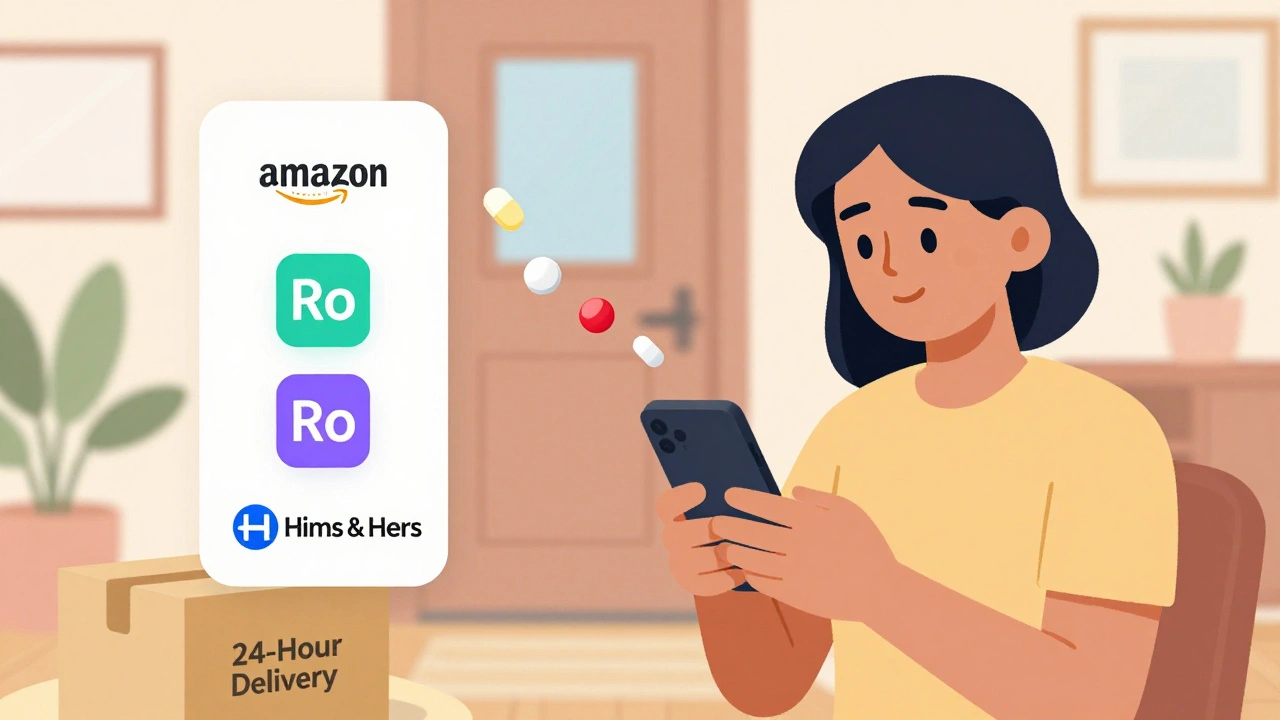
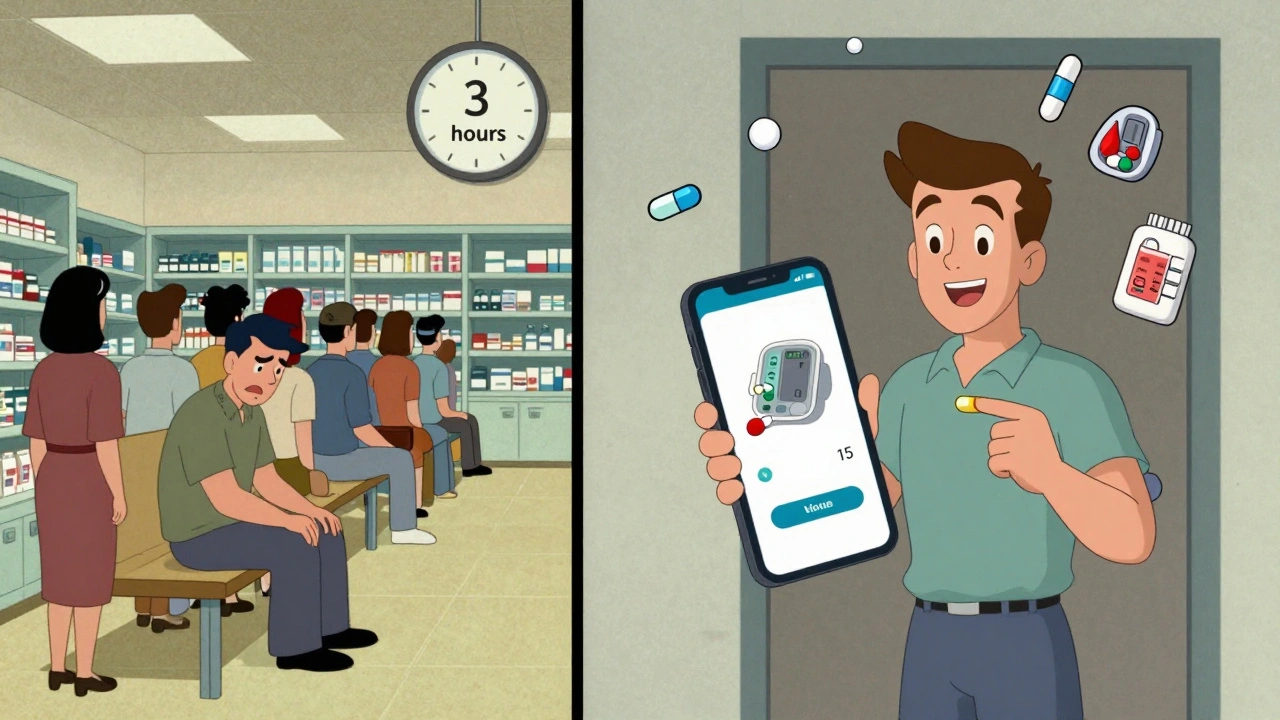
Getting your generic medications shouldn’t feel like a chore. Yet for years, people have been stuck driving to pharmacies, waiting in line, dealing with insurance hassles, and paying full price for drugs that cost pennies to make. That’s changing - fast. In 2025, app-based prescribing is the easiest, cheapest way to get generic medications delivered to your door. No more awkward conversations with your pharmacist about erectile dysfunction. No more calling your doctor’s office three times just to get a refill. Just open an app, answer a few questions, and get your meds shipped in under 24 hours.
How App-Based Prescribing Actually Works
It’s simpler than ordering food. You download an app like Amazon RxPass, Ro, or Hims & Hers. You fill out a short medical form - things like your age, symptoms, current meds, and allergies. Then you either chat with a doctor via text or hop on a quick video call. If they approve your request, they send an e-prescription directly to a partnered pharmacy. The pharmacy fills it, packages it discreetly, and ships it out. Most orders arrive within 1 to 2 days. Some even offer same-day delivery in major cities.
Behind the scenes, these apps use secure, HIPAA-compliant systems to protect your data. Your medical info is encrypted, and most platforms require biometric login (fingerprint or face ID). The apps are built on platforms like React Native, so they work smoothly on both iPhone and Android. Average app size? Around 60MB - smaller than most games.
The real magic? Speed. Traditional doctor visits for a refill can take days. With these apps, the average time from start to prescription is under 15 minutes. And because they’re designed for common, ongoing conditions - like high blood pressure, cholesterol, acne, or hair loss - they skip the long waits and unnecessary tests.
Why Generics? The Real Savings
Brand-name drugs can cost $100, $200, even $500 a month. The generic version? Often $5 to $15. That’s not a rumor. According to Drug Patent Watch’s 2025 report, generics are 80-85% cheaper than their brand-name equivalents. And app-based platforms pass those savings straight to you.
Take metformin, the most common diabetes medication. At your local pharmacy, it might cost $45 for a 30-day supply. On Amazon RxPass? $5 a month - if you’re a Prime member. Same drug. Same manufacturer. Just no fancy packaging or marketing.
Another example: lisinopril for high blood pressure. Retail price: $38. On Ro: $12. On Hims: $15. That’s not a discount. That’s a revolution.
And here’s the kicker: most of these apps don’t even require insurance. You pay a flat fee - sometimes as low as $5 - and that’s it. No copays. No deductibles. No forms to fill out.
Top Platforms in 2025 - And Who They’re Best For
Not all apps are the same. Some are like grocery stores. Others are like boutique clinics. Here’s who’s leading the pack - and who you should pick.
- Amazon RxPass: Best for simplicity. Pay $5/month, get over 150 generic meds delivered free. No consultation fee. Just pick your drug, hit buy. Works only for Prime members, and it’s limited to common, stable conditions. No controlled substances. No complex prescriptions. But if you’re on metformin, atorvastatin, or levothyroxine? This is the cheapest option out there.
- Ro: Best for breadth. Covers 1,200+ medications across 15 conditions - from depression to thyroid issues to urinary tract infections. They use board-certified doctors in all 50 states. Monthly fee is $15, plus medication cost. They’re also the only platform integrating with Apple Health, helping track your meds over time. If you’re on multiple prescriptions or have a chronic condition, Ro’s the most comprehensive.
- Hims & Hers: Best for lifestyle meds. They dominate the market for hair loss, erectile dysfunction, and skincare. Their branding is slick, their app is easy, and their customer service is responsive. But they don’t do diabetes or heart meds. If you’re only looking for finasteride or tadalafil, this is your go-to. Generics here are 40-60% cheaper than retail.
- Beem Health: Best for financial flexibility. Unique feature: they let you get a cash advance up to $1,000 through their Everdraft™ tool to cover your meds. If you’re underpaid, uninsured, or just need help paying upfront, this is the only platform that offers real financial relief alongside prescriptions. They serve over 5 million users and have the highest Trustpilot score (4.2/5).
Amazon RxPass wins on price. Ro wins on range. Hims & Hers wins on niche appeal. Beem wins on support. Choose based on what you need - not just what’s trending.
What You Can’t Get (And Why)
These apps aren’t magic. They’re not meant for everything.
You won’t get:
- Controlled substances (opioids, Adderall, Xanax)
- Injectables or complex infusions
- Medications for rare or severe conditions (like cancer or autoimmune diseases)
- First-time prescriptions for high-risk conditions (like new-onset diabetes or heart failure)
Why? Because doctors won’t prescribe them remotely. It’s not about the app - it’s about safety. The FDA and state medical boards have strict rules. In 22 states, you need an existing relationship with a provider before getting a prescription. That means if you’ve never seen a doctor for high blood pressure, you’ll still need an in-person visit first.
Also, prescription approval rates hover around 65-75%. That means nearly 1 in 3 requests get denied - not because you’re being difficult, but because the doctor thinks it’s unsafe or unnecessary. That’s actually a feature, not a bug. These platforms have algorithms that flag risky combinations. If you’re on three blood pressure pills and ask for another, the system will stop you.
The Dark Side: What No One Tells You
Yes, these apps save money. But they’re not perfect.
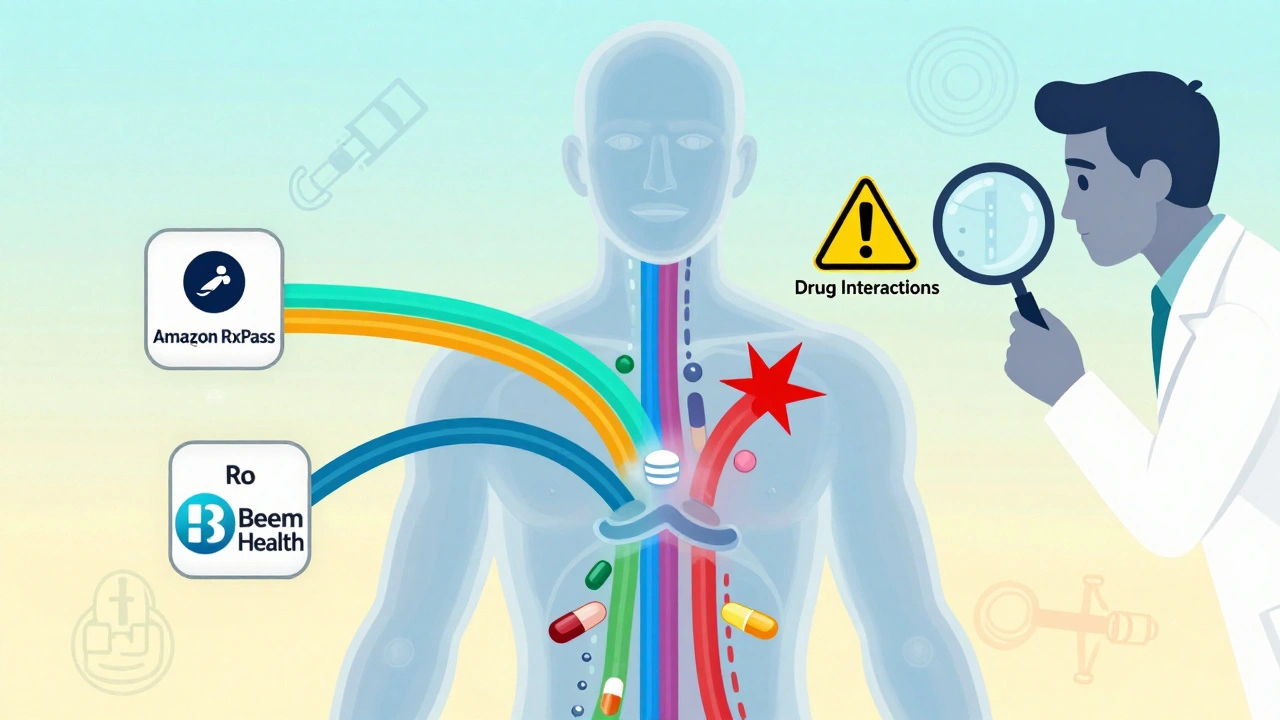
First, care fragmentation. A 2025 survey of 1,200 pharmacists found that 37% of patients using telehealth apps had incomplete medication records. One person might get blood pressure meds from Ro, cholesterol meds from Amazon, and anxiety meds from Hims. Their local pharmacist has no idea what’s being taken where. That’s dangerous. Drug interactions can sneak through.
Second, support is hit-or-miss. Amazon RxPass has 24/7 chat, but it’s mostly automated. Ro gives you access to pharmacists - but average wait time is 47 minutes. Hims & Hers? Great for quick questions, terrible for complex issues. Reddit users complain constantly about being stuck in chatbot loops when their prescription gets denied.
Third, marketing hype. Some apps make it sound like you can get anything you want - just download and go. But the FDA issued 12 warning letters in early 2025 to telehealth companies for exaggerating benefits and hiding risks. One company claimed their hair loss treatment was “98% effective” without clinical proof. That’s not just misleading - it’s illegal.
And then there’s the big one: convenience can lead to complacency. People stop seeing their regular doctors. They skip annual checkups. They don’t get labs done. A JAMA study found telehealth platforms prescribed meds 23% more often than traditional clinics for the same conditions. That doesn’t mean better care. It means more prescriptions.
How to Use These Apps Safely
If you’re going to use one, here’s how to do it right:
- Stick to conditions you’ve already been diagnosed with. Don’t use these apps to self-diagnose.
- Keep a list of all your meds - including OTC and supplements - and share it with your primary doctor every 6 months.
- Use only one platform for each condition. Don’t mix Ro for blood pressure and Hims for cholesterol.
- Always check the generic name. If the app says “Viagra,” make sure it’s actually sildenafil.
- Save your prescription receipts. If your pharmacy says they don’t recognize the script, you’ll need proof.
- Don’t skip your annual physical. These apps are for refills, not replacements.
And if your prescription gets denied? Don’t just accept it. Ask for a reason. Most platforms let you appeal or request a second opinion. It’s your right.
Who’s Really Using These Apps?
It’s not just young techies. According to KFF’s 2025 survey, 38% of Americans have used a telehealth pharmacy. The biggest users? People aged 25 to 44 - 52% of them. Why? They’re digital natives. They hate waiting. They want control. They’re tired of being treated like a number.
Seniors? Only 18% use them. Mostly because they don’t trust apps, or their doctors still prefer paper scripts. But that’s changing. Beem Health is rolling out Medicare Part D integration in 2026. Ro is partnering with AARP. The older crowd is coming online - slowly.
Employers are catching on too. 27% of companies now offer telehealth pharmacy benefits as part of their health plans. Why? Because it cuts costs. One Fortune 500 company saved $1.2 million in a year just by switching employees to Amazon RxPass for cholesterol and blood pressure meds.
The Future: Where This Is Headed
By 2026, Amazon RxPass will expand to 300 medications. Ro will sync with EHR systems so your primary care doctor can see your app-prescribed meds. Beem Health will let you pay with your health savings account directly in the app. And in 12 states, pilot programs are testing real-time data sharing between telehealth apps and brick-and-mortar pharmacies.
The goal? No more fragmented records. No more dangerous gaps. Just one clear picture of your meds - whether they came from a doctor’s office, a clinic, or your phone.
App-based prescribing isn’t going away. It’s getting smarter. More connected. More regulated. And if you’re taking generics for a chronic condition? You’re already behind if you’re still driving to the pharmacy.

Saket Modi
December 2, 2025 AT 10:01Chris Wallace
December 4, 2025 AT 06:10Sheryl Lynn
December 5, 2025 AT 02:42Paul Santos
December 6, 2025 AT 11:57Eddy Kimani
December 6, 2025 AT 13:22Chelsea Moore
December 7, 2025 AT 08:09John Biesecker
December 8, 2025 AT 23:24Genesis Rubi
December 9, 2025 AT 17:27Doug Hawk
December 10, 2025 AT 23:52John Morrow
December 12, 2025 AT 05:45