
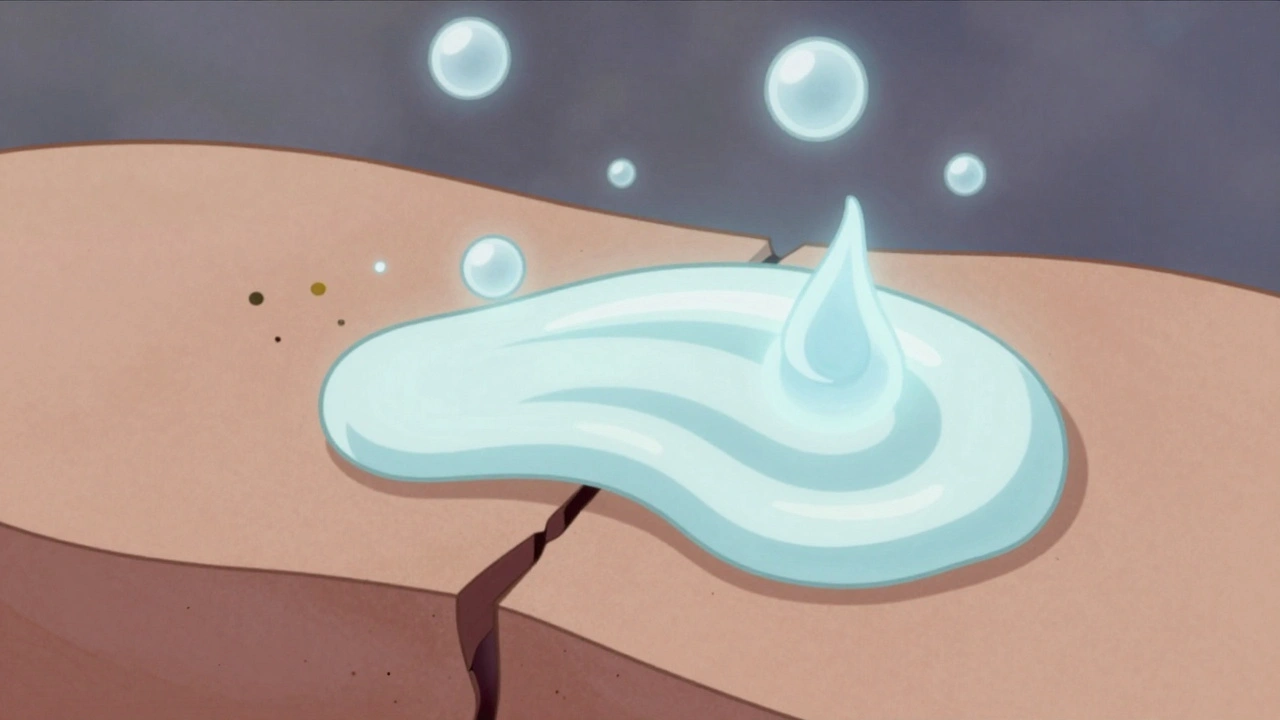
Atopic dermatitis isn’t just dry skin. It’s a relentless cycle of itching, scratching, inflammation, and broken skin that can make daily life unbearable. If you or someone you care for has this condition, you’ve probably tried everything-from steroid creams to natural oils-and still wake up to red, raw patches. The truth? Most people treat the flare, but ignore the root cause: a broken skin barrier. And the single most powerful tool to fix it isn’t a prescription. It’s emollient therapy.
What’s Really Happening When Your Skin Flares Up
Atopic dermatitis, often called eczema, starts with a genetic flaw. About one in three people with moderate to severe eczema have a mutation in the filaggrin gene. That gene helps build the skin’s natural protective layer. When it’s broken, your skin can’t hold onto moisture. Water escapes at a rate 3 to 6 times faster than normal skin. That’s why your skin feels tight, cracked, and rough-even if you’ve just showered. That dryness isn’t just uncomfortable. It’s a gateway. Tiny cracks let in irritants like soap, dust, and pollen. Your immune system reacts like an alarm going off, triggering inflammation and that unbearable itch. Then you scratch. Scratch breaks the skin more. More irritants get in. More inflammation. More itch. It’s a loop that keeps feeding itself. And it’s not random. Certain triggers consistently spark flares. Cold, dry air below 40% humidity increases flare risk by 37%. Heat above 80°F (27°C) causes sweat to sit on your skin, irritating already sensitive areas-68% of patients report this. Even a little sodium lauryl sulfate, found in many cheap cleansers at just 0.5% concentration, can wreck your skin barrier. Fragrances? They trigger flares in 15% of people. Preservatives like methylisothiazolinone? They cause contact dermatitis in nearly 6% of users.Why Emollients Are the Foundation-Not Just a Backup
You’ve heard it before: “Use moisturizer.” But most people use it wrong. Emollients aren’t just moisturizers. They’re skin repair tools. And they’re the #1 recommended first-line treatment by the American Academy of Dermatology and the National Eczema Association. Here’s how they work:- Occlusives like petrolatum (Vaseline) form a seal over the skin, blocking water loss. They’re 98% effective at reducing transepidermal water loss (TEWL).
- Humectants like glycerin pull water into the skin. The sweet spot? 40-50% concentration. Too little, and it doesn’t help. Too much, and it can dry you out.
- Emollients like ceramides fill the gaps between skin cells. At 0.5-3% concentration, they restore the barrier’s structure. That’s why CeraVe and Eucerin products list ceramides high on their ingredient list.
The Soak and Seal Method: The One Technique That Makes All the Difference
Applying emollient after a shower isn’t enough. Timing matters. You have three minutes after getting out of the bath or shower to lock in moisture. After that, your skin starts losing water again. The “soak and seal” method works like this:- Take a 15-20 minute lukewarm bath. No hot water. No scrubbing. Just soak.
- Pat your skin dry gently-don’t rub. Leave a little dampness on the surface.
- Within 3 minutes, apply a thick layer of emollient all over. Don’t skip your arms, legs, neck, or scalp if they’re affected.
- Use 2-3 finger units (the amount that fits between your fingertip and first knuckle) per body section. For an adult, that’s 250-500 grams per week.

What to Look For-and What to Avoid
Not all emollients are created equal. The market is flooded with products that smell nice but do more harm than good.- Choose fragrance-free. Even “natural” scents like lavender or tea tree oil can irritate. Reddit users with eczema overwhelmingly report success with unscented products-78% of 1,243 surveyed said fragrance-free was key.
- Avoid parabens and methylisothiazolinone. These preservatives cause reactions in 2-5% of users. Look for “preservative-free” or “hypoallergenic” labels.
- Go thick. Creams and ointments work better than lotions. Lotions are mostly water. Ointments like petrolatum are 100% barrier-repairing. If your skin is cracked and bleeding, petrolatum is your best friend.
- Watch the price. Ceramide creams cost $18-$25 per tube. Petrolatum costs $8. And for many, it works just as well. You don’t need fancy labels to fix your barrier.
When Emollients Aren’t Enough
Emollients are the foundation-but they’re not a cure-all. In mild cases, they clear flares in 30-40% of people. In moderate to severe cases? That number drops to 10-15%. That’s why doctors combine them with other treatments.- For mild flares: Emollient + low-strength topical corticosteroid (like hydrocortisone) for 3-5 days.
- For sensitive areas (face, eyelids, groin): Use topical calcineurin inhibitors like tacrolimus. They don’t thin the skin like steroids.
- For severe, chronic cases: Biologics like dupilumab can reduce flares by 70-80%. But they’re expensive and require injections. Emollients are still used alongside them.
The Hard Truth: Why Most People Fail
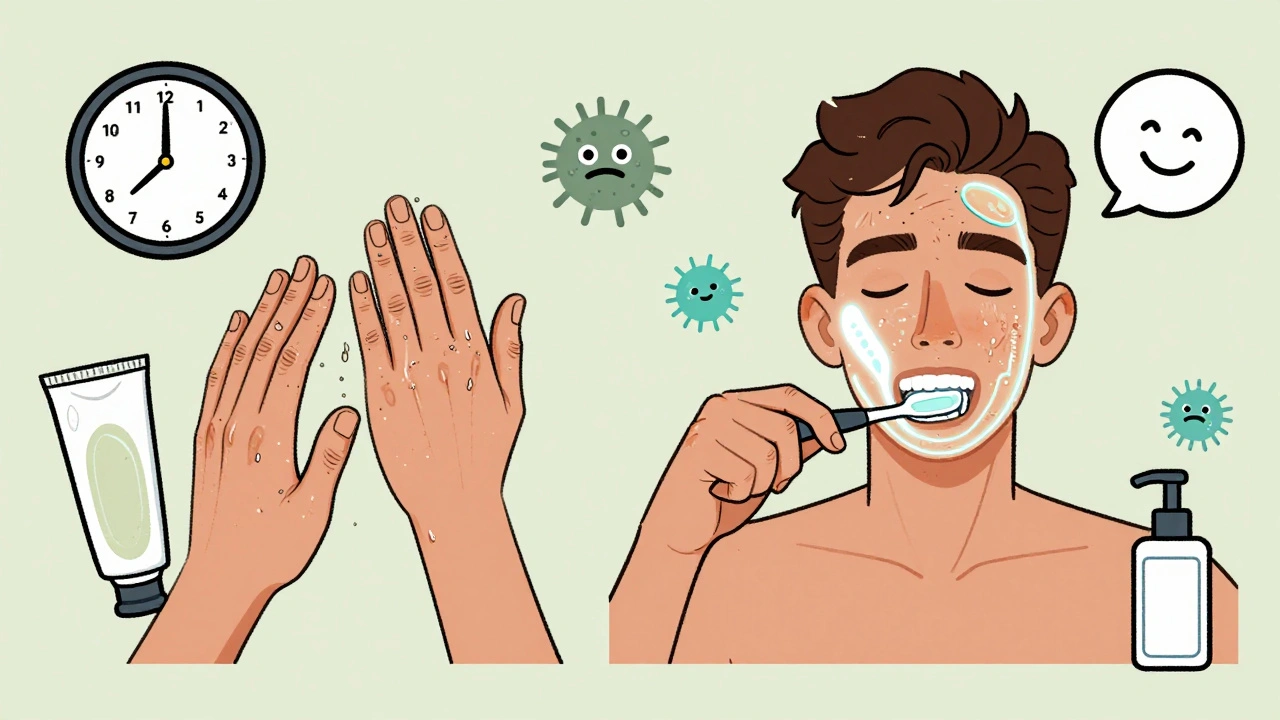
The biggest problem with emollient therapy? Adherence. Only 35% of patients stick with it after six months. Why?- Time. 67% of patients say they don’t have time to apply it twice a day.
- Texture. 58% hate the greasy, sticky feel. Urea-based creams can feel like glue. Some ceramide products are thick and hard to spread.
- Cost. Prescription-grade emollients can cost $40 a month. Petrolatum is $8.
- Expectations. People expect instant results. It takes 2-4 weeks of consistent use to see real improvement.
What’s Next? The Future of Skin Barrier Repair
The field is evolving fast. In May 2023, the FDA approved the first emollient with sustained-release ceramides (Ceramella MD). It reduces water loss by 63% for 12 hours-nearly double the effect of traditional products. Researchers are now testing microbiome-targeted emollients. These products don’t just seal the skin-they feed the good bacteria that keep Staphylococcus aureus (a bacteria that worsens eczema) in check. Phase 2 trials are underway. Even smart dispensers are coming. A pilot program at Massachusetts General Hospital is testing emollient dispensers that track when you use them and send reminders to your phone. Because if you forget, your skin pays the price.Final Takeaway: Your Skin Barrier Can Heal
Atopic dermatitis isn’t your fault. It’s not caused by poor hygiene or stress alone. It’s a biological flaw. But it’s manageable. Emollient therapy isn’t glamorous. It doesn’t make headlines. But it’s the one thing that works for everyone-no matter the severity. Start simple: Get a tube of plain petrolatum. Take a lukewarm bath. Pat dry. Apply within three minutes. Do it twice a day. Don’t worry about the brand. Don’t worry about the cost. Just do it. Your skin isn’t broken beyond repair. It’s just waiting for you to give it the right tools.Can emollients cure atopic dermatitis?
No, emollients don’t cure atopic dermatitis. But they repair the skin barrier that’s at the core of the condition. When used consistently, they reduce flares by up to 36%, prevent infections, and make other treatments work better. Think of them as the foundation of your treatment plan-not the finish line.
How much emollient should I use each week?
The American Academy of Dermatology recommends 250-500 grams per week for adults. For children, it’s 500-1000 grams. That’s about 2-4 tablespoons per application, twice a day. Most people use less than half that amount, which is why they don’t see results. If you’re going through a 250g tube in under two weeks, you’re probably using enough.
Is Vaseline better than expensive ceramide creams?
For sealing in moisture and protecting cracked skin, yes-Vaseline (petrolatum) is more effective than most creams. Ceramides help rebuild the skin’s structure, but if your barrier is severely damaged, you need the occlusive power of petrolatum first. Many dermatologists recommend using petrolatum at night and a ceramide cream during the day for the best of both.
Why does my skin get worse after I apply emollient?
If your skin stings or gets redder after applying emollient, you’re likely reacting to a preservative, fragrance, or additive-not the emollient itself. Switch to a product labeled “fragrance-free,” “preservative-free,” or “for sensitive skin.” Look for ingredients like petrolatum, glycerin, and ceramides. Avoid anything with alcohol, lavender, tea tree oil, or methylisothiazolinone.
Should I use emollients even when my skin looks fine?
Absolutely. Atopic dermatitis is a chronic condition. Even when your skin looks clear, the barrier is still weak. Applying emollient twice daily prevents new flares. Think of it like brushing your teeth-you don’t wait until you have a cavity to do it. Consistency is what keeps flares away long-term.

Arun kumar
December 3, 2025 AT 04:58man i tried every fancy cream under the sun till i just used vaseline at night. no joke. my skin stopped cracking like dry earth. no fragrance, no junk, just pure seal. took 3 weeks but now i dont even think about flares. simple works.
Ella van Rij
December 4, 2025 AT 17:06oh wow another ‘just use vaseline’ post. how original. did you also get your skincare advice from a 1997 AOL forum? i mean sure, it seals, but it doesn’t REPAIR. you’re just trapping bacteria and sweat like a plastic bag. i’ve been using ceramide-rich prescription creams since 2021 and my barrier actually rebuilt. just saying.
Alicia Marks
December 5, 2025 AT 04:37you’re not alone. i used to skip emollients because they felt gross… until i started applying right after my shower like they said. now it’s part of my bedtime ritual. no more 3am scratching. you got this.
Laura Baur
December 6, 2025 AT 15:12Let us not confuse the palliative with the curative. The skin barrier is not merely a physical membrane-it is a bioelectrochemical interface, a sentient boundary between self and environment, shaped by evolutionary pressures we have violently disrupted through industrial detergents, synthetic fragrances, and the pathological myth of ‘cleanliness.’ Emollients, in their most elemental form-petrolatum, glycerin, ceramides-are not moisturizers. They are linguistic acts of reintegration. They whisper to keratinocytes: ‘You are whole again.’ And yet, the modern psyche, conditioned by Amazon reviews and influencer marketing, demands instant gratification. We want a serum that glows. We want a pill that heals. But healing is not a product. It is a practice. A daily, quiet, greasy, unsexy ritual of devotion to one’s own flesh. The real tragedy? We have forgotten how to be patient with our bodies. We are not broken. We are merely neglected.
Zed theMartian
December 8, 2025 AT 06:33petrolatum? really? you’re telling me the $8 jar from walmart is better than the $30 ‘dermatologist-approved’ ceramide cream that took 3 years of research to formulate? i mean, come on. if you’re not using a peptide-infused, microbiome-balanced, cold-pressed, vegan, cruelty-free, blockchain-tracked emollient, you’re just doing it wrong. 🤦♂️
dave nevogt
December 9, 2025 AT 09:32i’ve lived with eczema since i was 5. i’ve tried everything. the only thing that never failed me? applying thick emollient within 3 minutes of getting out of the shower. it’s not magic. it’s physics. water evaporates fast. if you don’t trap it, you lose it. i don’t care what brand it is. i use whatever’s cheapest and unscented. my skin doesn’t care about your marketing.
ATUL BHARDWAJ
December 9, 2025 AT 15:23in india we use coconut oil and amla. works fine. but i see your point. barrier repair is real. i use simple petrolatum now. no fuss. no nonsense. just oil on skin. after bath. every day. no drama.
Steve World Shopping
December 11, 2025 AT 12:09the data is unequivocal: transepidermal water loss (TEWL) is the primary biomarker of barrier dysfunction. occlusives reduce TEWL by 98%, per RCTs published in the Journal of Investigative Dermatology. yet, adherence remains suboptimal due to behavioral economics-specifically, hyperbolic discounting of long-term outcomes versus short-term sensory discomfort. ergo, the solution is not product innovation but behavioral nudging. smart dispensers? yes. reminders? essential. compliance engineering is the next frontier.
Rebecca M.
December 12, 2025 AT 13:15so let me get this straight… you’re telling me the cure for my 15-year battle with eczema is… Vaseline? 🤡 i spent $12,000 on light therapy, allergy tests, and organic goat milk soap… and the answer was in the baby aisle? i feel like i’ve been scammed by Big Dermatology.
Lynn Steiner
December 14, 2025 AT 06:32my skin cries when i don’t do this. i used to think i was weak for needing it. now i know it’s strength. i apply it before bed like i’m tucking my skin in. it’s the only thing that makes me feel safe. thank you for saying this. i’m not alone.
Paul Keller
December 15, 2025 AT 10:15While the empirical evidence supporting emollient therapy is robust, the sociocultural context surrounding its adoption cannot be ignored. The medical industrial complex has long prioritized pharmacological interventions over behavioral and preventive care, primarily due to profit incentives. The fact that petrolatum, a petroleum-derived byproduct, outperforms patented ceramide formulations speaks volumes about the inefficiency of modern dermatological marketing. We must recalibrate our expectations: healing is not a transaction. It is a commitment. And yes-it is greasy. And yes-it is mundane. But it is effective.
Roger Leiton
December 16, 2025 AT 08:44so i tried the soak and seal thing… and wow. my skin hasn’t felt this calm in years. i use vaseline at night and cerave cream in the morning. no itching. no redness. just… peace. 🌿 i even told my mom about it and now she does it too. thank you for the real talk.
Shannara Jenkins
December 17, 2025 AT 08:57you don’t need to be perfect. just do it once a day. then twice. then it just becomes part of you. i used to hate the sticky feeling… now i miss it when i forget. it’s my skin’s hug.
Joel Deang
December 17, 2025 AT 20:21so i used vaseline for a week and my skin looked like a greasy mess… then i realized i was applying it to DRY skin. then i did the soak and seal… and boom. magic. not a miracle. just science. lol i feel dumb now.
Jack Dao
December 18, 2025 AT 10:51you’re all missing the point. this isn’t about emollients. it’s about your entire lifestyle. you’re all stressed, eating processed food, sleeping 5 hours, scrolling at night, and then wonder why your skin is falling apart? fix your life first. the lotion is just a bandage on a bullet wound. 🤷♂️