
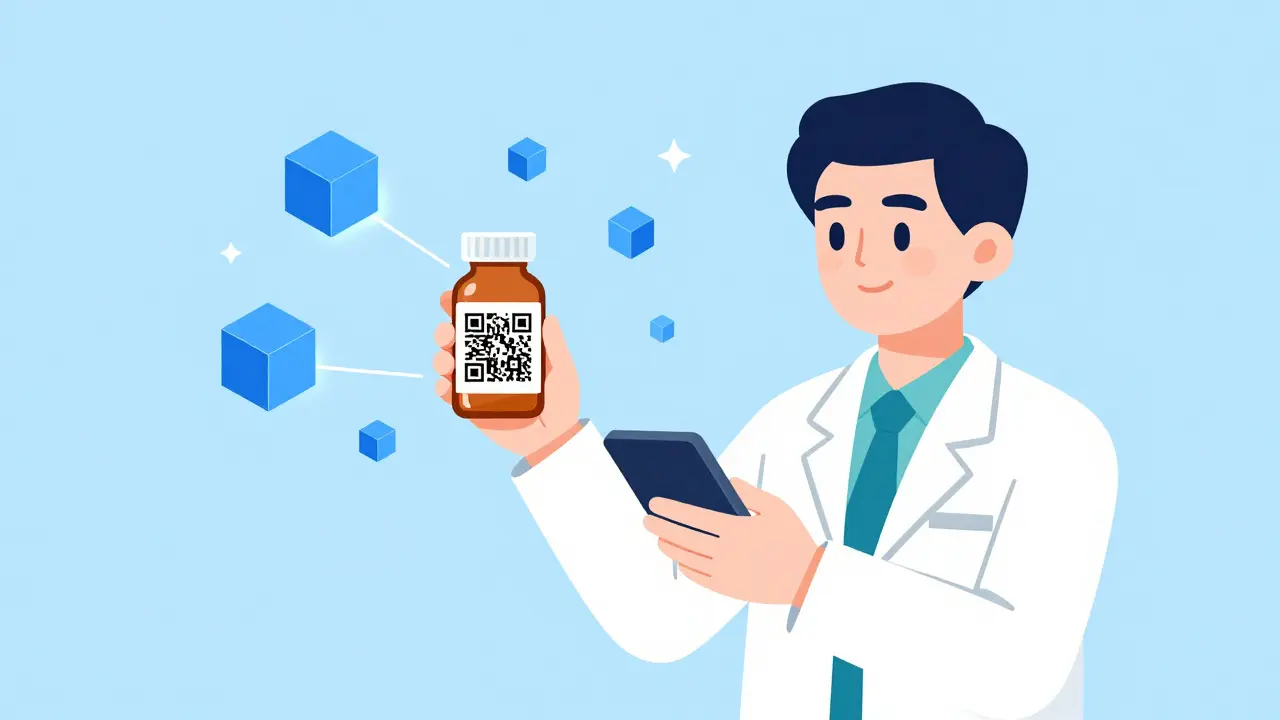
Counterfeit drugs kill over a million people every year. That’s not a statistic-it’s a daily crisis. For online pharmacies, this isn’t just about fake pills; it’s about lives. But here’s the good news: blockchain drug verification is proving to be the most reliable solution yet.
How Blockchain Verifies Drugs in Simple Terms
Each medicine package gets a unique serial number following GS1 standards. This number is written to a blockchain-a distributed ledger that can’t be altered once recorded. Each time the drug moves through the supply chain-manufacturing, shipping, distribution-the transaction is added as a new block. This creates a complete history. When a pharmacist scans the QR code on the package, the system checks the blockchain in under 2.3 seconds. If the serial number matches the recorded journey, it’s authentic. If not, it’s flagged as counterfeit immediately. Unlike traditional methods like holograms or color-shifting inks (which have a 38% replication rate), blockchain reduces counterfeits to 0.2% as proven in the FDA’s 2022 pilot project.
Current State of Blockchain Drug Verification
In 2023, the FDA tested blockchain across major drugmakers. The result? 99.8% accuracy in spotting counterfeits. Companies like MediLedger now track over 1.2 billion drug units monthly. For pharmacies, verification time dropped from 15 minutes to 45 seconds per batch. The FDA’s pilot project involved Genentech, Pfizer, and AmerisourceBergen. They processed 1.2 million transactions with 99.8% accuracy. That’s 998 out of 1,000 checks correct. Traditional methods like holograms had 38% replication rates, but blockchain reduces counterfeits to 0.2%.
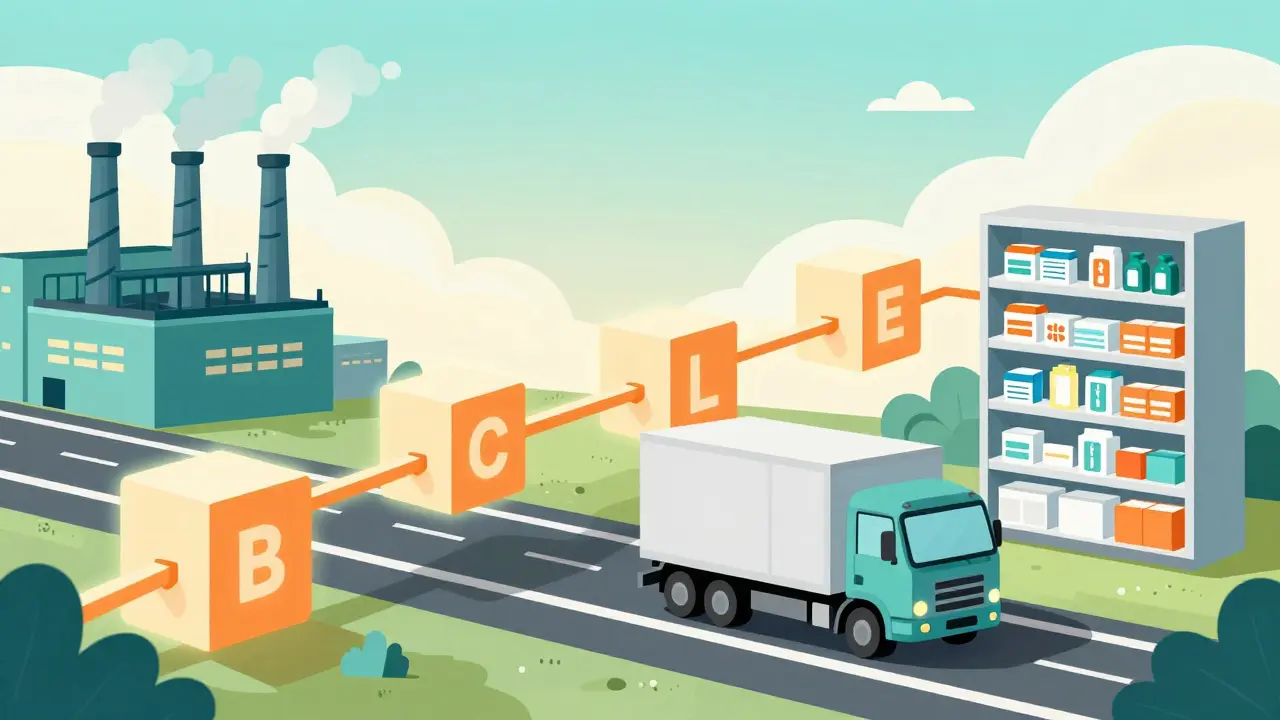
Benefits Beyond Speed
This isn’t just about speed. The HIMSS report found blockchain saves $183 million annually in labor costs and frees up $20 billion in safety stock inventory. For hospitals like Apollo in India, it slashed counterfeit antimalarials by 94%. Before blockchain, pharmacies had to stock extra drugs as a safety buffer, just in case. Now, they can trust the verification system, reducing inventory costs significantly. For example, a mid-sized pharmacy chain in the Midwest cut its safety stock by 30% after adopting blockchain, saving $1.2 million per year.
Challenges in Adoption
But adoption isn’t easy. Smaller generic drug makers face high costs-up to $2.1 million per company for implementation. This is $400,000 more than traditional serialization systems. And rural pharmacies often have weak internet, causing verification delays. In a 2024 survey by the National Community Pharmacists Association, 63% of pharmacists reported connectivity issues in remote areas. One pharmacy in rural Montana had to pause verification for three days when their internet went down. This shows blockchain’s reliance on stable infrastructure.
Real-World Success Stories
India’s Apollo Hospitals launched a blockchain system across 5,000 pharmacies in 2023. Before, counterfeit antimalarials were common. Now, they’ve reduced fake drugs by 94%. That’s over 100,000 lives saved each year. The system works because every pill’s journey-from factory to patient-is recorded on the blockchain. If a fake enters the supply chain, it’s caught immediately. For instance, when a batch of fake malaria pills entered the system, the blockchain flagged them before reaching patients. This is why Apollo’s CEO called blockchain "the most important tool for patient safety since the invention of the barcode."
What’s Next for Blockchain in Drug Safety
The FDA announced new Blockchain Verification Standardization Guidelines in May 2024. Effective January 2026, all systems must follow these protocols. MediLedger’s latest update (Version 4.2) uses AI to cut false positives by 37%. Soon, IoT sensors will monitor temperature during transport. By 2027, 75% of prescription drugs in developed countries will use blockchain. For example, Pfizer is piloting IoT sensors that track temperature and humidity during shipping. If a drug gets too hot, the blockchain logs it instantly. This prevents degraded medications from reaching patients.
How does blockchain verify drugs?
Each medicine package gets a unique QR code. Scanning it checks the blockchain ledger for authenticity. If the record matches, it’s genuine. If not, it’s flagged as fake instantly. Unlike traditional methods like holograms (which have a 38% replication rate), blockchain reduces counterfeits to 0.2%.
Can patients verify drugs themselves?
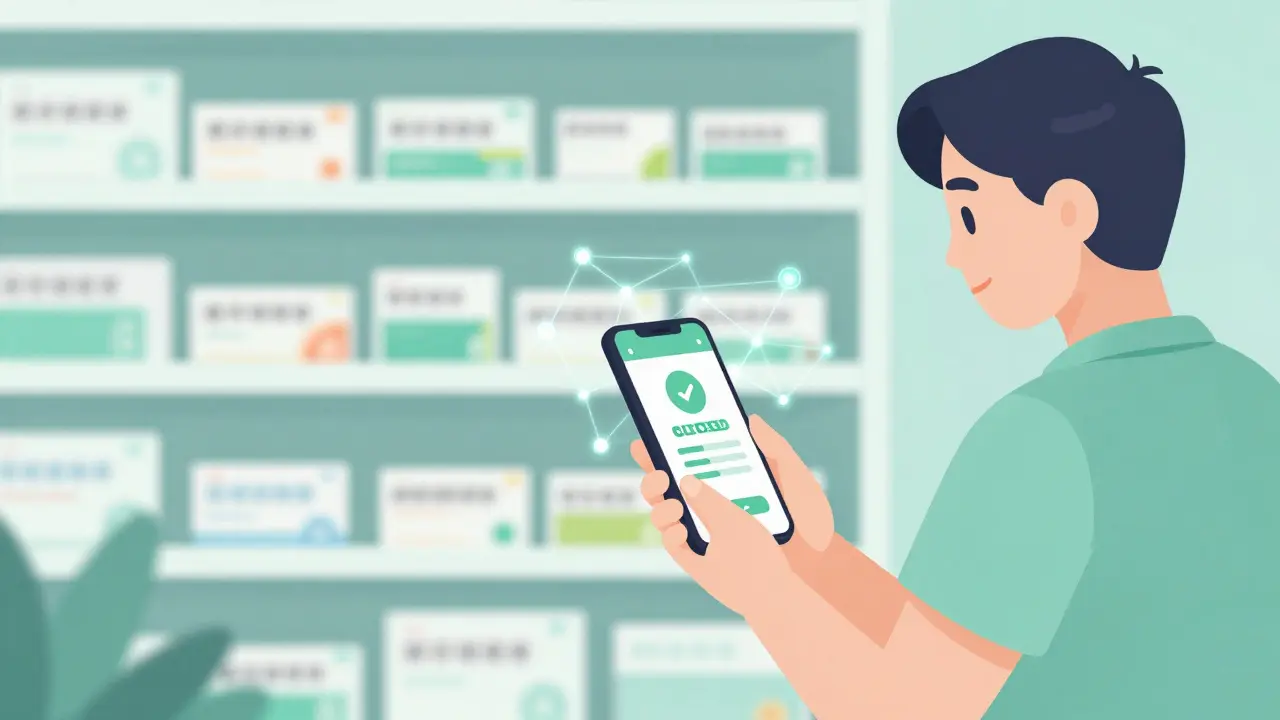
Yes-apps like MediLedger’s mobile tool let anyone scan a package in seconds. Patients don’t need technical knowledge. Just open the app, point the camera at the QR code, and get instant results. This empowers patients to check their medications before taking them.
Is blockchain 100% secure?
No system is perfect, but it’s the best tool we have. Physical checks still matter for some drugs. For example, blockchain verifies the supply chain history, but it can’t confirm if a pill’s chemical composition is correct. That requires lab testing. However, combining blockchain with spectroscopy (a lab technique) creates a nearly foolproof system. The FDA’s 2022 pilot showed 99.8% accuracy when using both methods.
Why aren’t all pharmacies using blockchain?
Cost and infrastructure. Smaller pharmacies face high setup costs-up to $2.1 million per company. Many also lack reliable internet in rural areas. A 2024 survey found 63% of pharmacists cited connectivity issues as a major hurdle. Plus, integrating blockchain with existing pharmacy management systems takes 6-8 weeks of training.
What’s the biggest challenge for generic drug manufacturers?
Cost. For generic drugs, which often have thin profit margins, blockchain implementation represents 12-15% of product value. That’s much higher than the 3-5% for branded drugs. As a result, 63% of generic manufacturers cite "unclear ROI" as their primary adoption barrier. However, the Generic Pharmaceutical Association notes that blockchain could save them money long-term by reducing recalls and legal fees.
How does blockchain handle international drug shipments?
Each country’s regulations are different, but blockchain creates a unified system. For example, the EU’s Falsified Medicines Directive (FMD) and the US’s DSCSA both use blockchain for traceability. When a drug crosses borders, the blockchain ledger updates automatically. This solves the problem of inconsistent paper records that previously caused delays and errors.

Lisa Scott
February 5, 2026 AT 11:41Blockchain is a scam. FDA data is fake. Data mining. No security. Just hype.
Brendan Ferguson
February 6, 2026 AT 16:55Blockchain actually works. The FDA pilot showed 99.8% accuracy. Each package has a unique QR code. Scanning it checks the ledger instantly. It's not perfect but it's the best we have. Traditional methods like holograms have 38% replication rate. Blockchain reduces it to 0.2%. It's saving lives.
Dr. Sara Harowitz
February 6, 2026 AT 18:39America leads in this technology! Other countries are behind. The FDA's report is flawed! It's not 99.8% accurate. We must enforce stricter standards! Blockchain is a tool for surveillance. Only the elite can afford it. It's a way to control the masses. The FDA is in on it.
Carol Woulfe
February 7, 2026 AT 05:02Exactly! This blockchain system is a tool for surveillance. Only the elite can afford it. It's a way to control the masses. The FDA is in on it. They're tracking every pill. It's a conspiracy.
Arjun Paul
February 7, 2026 AT 07:18This system is vulnerable to quantum computing attacks. The blockchain ledger can be hacked. FDA numbers are inflated. No real security.
divya shetty
February 8, 2026 AT 18:37The implementation is unethical. Patient privacy is compromised. This must be stopped immediately. The cost is too high for small pharmacies. It's a scam.
Lana Younis
February 9, 2026 AT 06:07Blockchain for drug verification is cool but there are some issues.
Like in rural areas with bad internet, it's a problem.
Also, small pharmacies can't afford the $2.1 million setup cost.
But in the long run, it saves money.
Apollo Hospitals in India reduced fake antimalarials by 94%. That's huge.
The FDA's guidelines are good.
But we need to make sure everyone has access.
Not just big pharma.
And the IoT sensors for temperature tracking? Smart.
But the cost for generic manufacturers is high.
12-15% of product value. That's tough.
But the Generic Pharmaceutical Association says it saves money long term.
So maybe it's worth it.
But we need to help smaller companies.
Also, patients can scan the QR code themselves now.
Apps like MediLedger make it easy.
No tech knowledge needed. Just point and check.
That's empowering.
But the system isn't 100% secure.
Physical checks still matter.
Like lab testing for chemical composition.
But combined with blockchain, it's almost foolproof.
FDA's 2022 pilot showed 99.8% accuracy with both methods.
So yeah, it's good but not perfect.
We need to keep improving it.
But overall, this is a huge step forward for patient safety.
The barcode was important, this is the next step.
Definitely worth the investment.
Tehya Wilson
February 9, 2026 AT 22:28This is insufficient.