
You might be taking a prescription for your heart, your mood, or your pain. Maybe you are also considering using cannabis for relaxation or symptom relief. It is a common scenario, but it comes with a hidden complexity that many people overlook. Mixing cannabis with standard medications isn't just about getting a little extra high; it can change how your body processes life-saving drugs. Understanding these risks is the first step toward staying safe while exploring your options.
Research shows that approximately 57% of commonly prescribed medications have potential interactions with cannabis compounds. This isn't just a theoretical number. It means more than half of the drugs doctors prescribe today could behave differently if you introduce cannabis into the mix. The science behind this is rooted in how your liver handles chemicals, specifically through a system known as the cytochrome P450 enzymes.
How Cannabis Changes Drug Metabolism
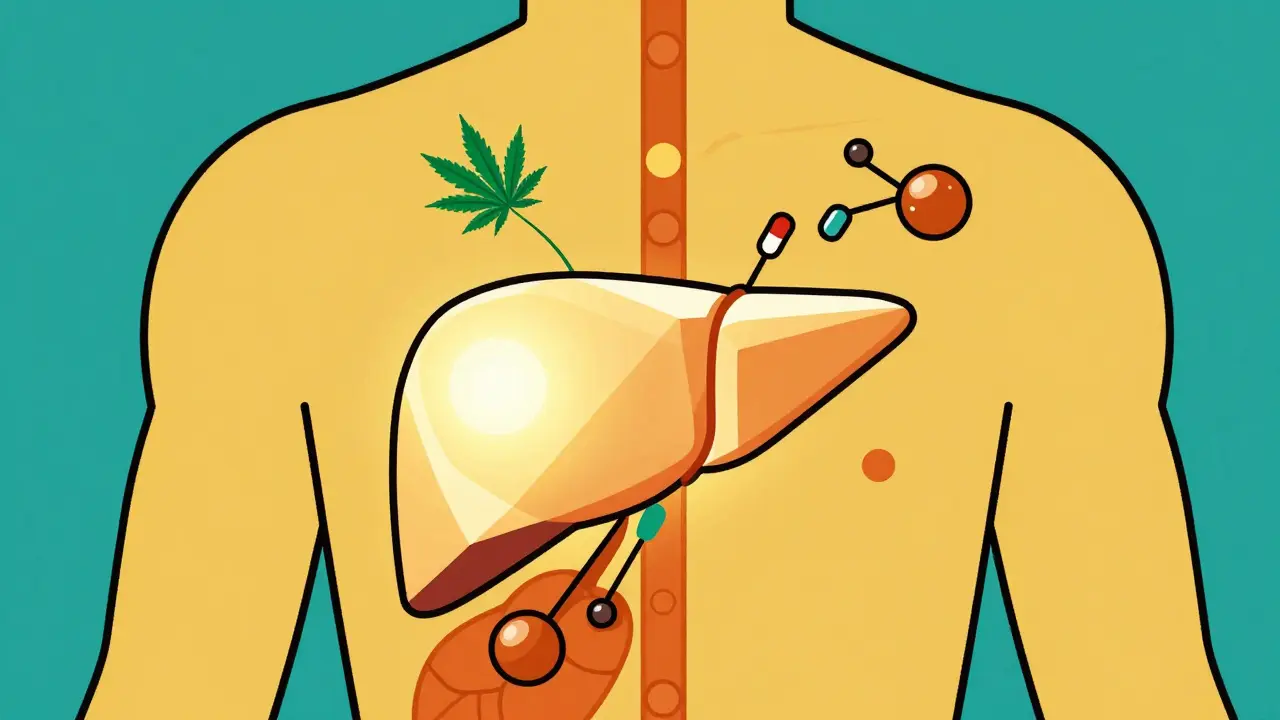
When you swallow a pill, your liver acts as the filter. It uses enzymes to break down the medication so your body can use it or remove it. Cannabis contains compounds like cannabidiol (CBD) and tetrahydrocannabinol (THC) that can block these enzymes. Think of these enzymes as traffic cops directing cars (medications) through an intersection. Cannabis can stop the cops from working, causing a traffic jam. This means the medication stays in your blood longer than intended.
A 2021 review in the Journal of Clinical and Translational Science documented that these enzymes metabolize about 60% of clinical medications. CBD is a potent inhibitor of CYP3A4 and CYP2C19, while THC affects CYP1A2 and CYP2C9. When these pathways are blocked, drug levels in your blood can spike. Conversely, some forms of cannabis use, like smoking, can actually speed up the breakdown of certain drugs like theophylline, lowering their effectiveness. This dual nature makes cannabis drug interactions particularly tricky to predict without professional guidance.
High-Risk Medications to Watch
Not all interactions carry the same weight. Some combinations are dangerous enough to require absolute caution. The American College of Clinical Pharmacy identified specific high-risk scenarios where the consequences can be life-threatening.
- Warfarin: This blood thinner is one of the most common medications affected. Studies show that cannabis can increase the international normalized ratio (INR) by 29-48% within 72 hours. A 2022 systematic review analyzed 17 clinical cases where this led to gastrointestinal bleeding. Even weekend recreational use can increase bleeding risk by 300% within 48 hours.
- Tacrolimus: Used by transplant patients to prevent organ rejection, this drug has a narrow therapeutic index. Case reports from the Cannabis Clinicians Society in 2024 documented trough levels increasing by 300-500% within 72 hours of concurrent cannabis use. This can lead to toxicity or organ damage.
- Clobazam: An antiepileptic drug, clobazam levels can jump by 60-500% when combined with CBD. A 2015 study in Epilepsia noted that this often necessitates dose reductions of 25-50% to avoid excessive sedation.
These examples highlight why you cannot simply assume a natural product is safe just because it is plant-based. The chemical interaction happens at a cellular level, regardless of the source.
Moderate and Low-Risk Combinations
While the high-risk list is short, it is not the only one. Many people take medications that fall into a moderate risk category. These require monitoring and potential dose adjustments but aren't always strictly forbidden.
| Medication Class | Interaction Risk | Potential Effect |
|---|---|---|
| Benzodiazepines | Moderate | Increased sedation, prolonged effects |
| Opioids | Moderate | Reduced clearance, respiratory depression risk |
| Calcium Channel Blockers | Moderate | Lowered blood pressure, hypotension |
| SSRIs | Low | Minor level increase, rarely significant |
| Statins | Low | Level increase, no documented rhabdomyolysis |
For benzodiazepines like alprazolam, levels can increase by 25-35%, prolonging sedation by 2-4 hours. The Pennsylvania Pharmacists Association warned in 2023 that this combination increases fall risk in elderly patients by 47%. Opioids like morphine see a 20-30% decrease in clearance, which raises the risk of respiratory depression. On the other end of the spectrum, SSRIs and statins show low-risk interactions. Sertraline levels might rise by 10-15%, but this is rarely clinically significant. Atorvastatin levels can increase by 20-25%, yet there are no documented cases of muscle breakdown (rhabdomyolysis) solely from this combination.
Real-World Patient Experiences
Statistics tell one story, but patient reports tell another. Analyzing 1,247 posts from Reddit's r/MedicalCannabis between 2020 and 2023 reveals common issues people face. About 38% of users combining cannabis with benzodiazepines reported excessive drowsiness that required dose reduction. Meanwhile, 27% using warfarin noted unusual bruising within 1-2 weeks of starting CBD oil.
However, experiences vary. A 2023 patient survey by the Epilepsy Foundation found that 63% of CBD users taking clobazam experienced increased sedation. One user, u/EpilepsyWarrior, documented a case where CBD increased clobazam levels so much they couldn't walk straight, leading to a 40% dose cut. Conversely, another user reported using 50mg CBD daily with oxycodone for 8 months with no increased drowsiness. This inconsistency is why professional monitoring is essential. What works for one person might be dangerous for another due to individual metabolism differences.

Managing the Risk: A 5-Step Protocol
If you are considering using cannabis while on medication, you need a plan. The DC Health Department's 2023 guidelines recommend a specific 5-step approach to manage these risks safely.
- Screen for Use: Be honest with your doctor about product type (full-spectrum vs. isolate), dose in mg per day, and frequency.
- Consult Databases: Use tools like the University of Washington's Cannabis Drug Interactions tool, which is updated quarterly to reflect new data.
- Baseline Levels: For high-risk meds like warfarin or tacrolimus, get baseline blood levels before you start cannabis.
- Monitor Parameters: Check affected parameters like INR or drug levels 48-72 hours after starting or changing cannabis use.
- Adjust Doses: Adjust medication doses conservatively, typically reducing by 10-25% when adding cannabis.
Pharmacists play a key role here. The American Pharmacists Association reports that 76% of community pharmacists feel inadequately trained to counsel on cannabis interactions, yet 68% encounter such cases monthly. This gap means you might need to ask specific questions rather than waiting for advice. The Mayo Clinic suggests taking CBD products at least 2 hours apart from medications metabolized by CYP3A4 to minimize interaction potential, though evidence for this timing strategy remains limited.
Current Research and Future Outlook
The landscape is changing fast. The FDA launched the Cannabis Clinical Trials Network in 2023 to systematically study drug interactions. Preliminary results expected in late 2025 are beginning to shape new guidelines. A $2.3 million NIH-funded study at the University of Arkansas for Medical Sciences is examining CBD-warfarin interactions in 200 patients. Interim data shows a 37% average INR increase at CBD doses greater than 25mg/day.
Despite progress, gaps remain. A 2024 review in Clinical Pharmacology & Therapeutics identified only 12 studies examining cannabis interactions with diabetes medications, despite 28% of cannabis users having diabetes. We still need more data on newer medications like GLP-1 agonists. The American Society for Clinical Pharmacology and Therapeutics projects that evidence-based guidelines will be available for 85% of high-risk medication combinations by 2027, up from the current 45%. Until then, caution is the best policy.
Can I take CBD with blood thinners like warfarin?
Combining CBD with warfarin is considered high-risk. Studies show it can increase bleeding risk significantly by raising INR levels. You should avoid this combination unless your doctor strictly monitors your blood levels every 3-5 days.
Does smoking cannabis interact with medications differently than oil?
Yes. Inhalation produces peak THC concentrations within 6-10 minutes, creating acute risks with CNS depressants. Oral CBD products reach peak concentrations in 2-4 hours, creating a prolonged interaction window with medications like warfarin.
Are full-spectrum CBD products more risky than isolates?
Research published in the Journal of Cannabis Research in 2023 indicates full-spectrum products demonstrate 22-37% greater CYP3A4 inhibition than CBD isolates at equivalent doses due to the entourage effect.
How quickly do interactions happen after starting cannabis?
For high-risk medications like warfarin, changes can occur within 72 hours. For transplant drugs like tacrolimus, trough levels can increase within 72 hours. Monitoring should begin immediately after initiation.
Is it safe to use cannabis with antidepressants?
SSRIs like sertraline show low-risk interactions with levels increasing by only 10-15%. However, some users report no noticeable effects, while others may experience mild changes. Consult your doctor before combining.
