
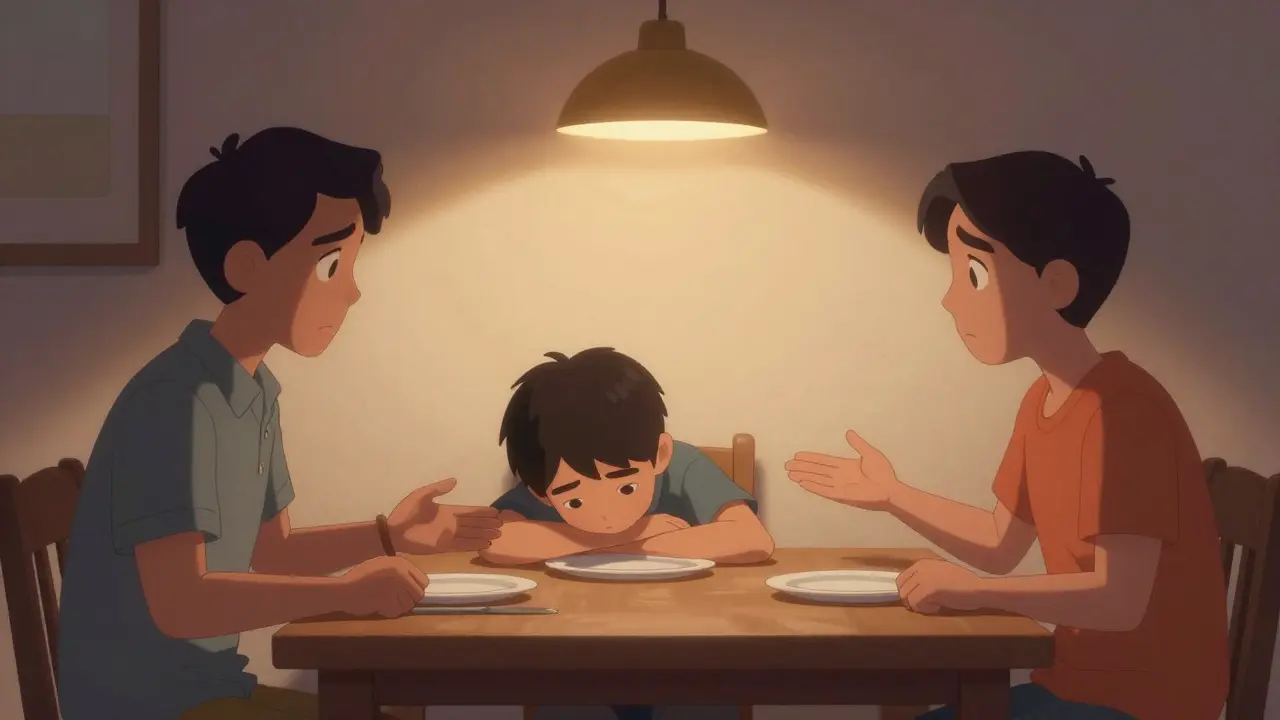
When a teenager stops eating dinner with the family, skips school for days, or says they feel "empty" all the time, it’s not just "going through a phase." Depression in children and teens is real, persistent, and often hidden behind silence or anger. About 1 in 5 adolescents will experience a major depressive episode before turning 18. And while some parents rush to medication, others refuse it entirely-thinking therapy alone will fix it. The truth? Neither approach works best alone. The most effective path for many young people combines family therapy and carefully managed medications.
Why Family Therapy Matters More Than You Think
Most people assume depression is something inside the child’s head. But for teens, the family is the environment where emotions live, grow, or get buried. A 2022 study from Jefferson Digital Commons showed that teens with suicidal thoughts improved significantly faster with Attachment-Based Family Therapy (ABFT) than with standard care. Why? Because ABFT doesn’t just talk about feelings-it rebuilds broken connections between parents and kids. Think of it this way: if a child feels unheard, unsafe, or constantly criticized at home, their depression doesn’t just stay inside. It gets reinforced. Family therapy helps break that cycle. Therapists don’t blame parents. They don’t blame the teen. They look at how the family talks, argues, listens, and reacts. Are meals silent? Do disagreements turn into yelling matches? Is the teen’s sadness treated as weakness? One technique used in strategic family therapy sounds strange but works: therapists might ask a parent to "encourage" the teen to stay depressed for a week, saying something like, "I know you need this time to feel understood." It sounds counterintuitive, but it forces the family to see how their reactions-however well-meaning-might be keeping the depression alive. Another common issue? Power struggles. In structural family therapy, therapists look at who’s in charge. Is the teen controlling the household out of frustration? Are parents too distant or too controlling? Fixing the structure-like giving the teen more autonomy while keeping clear boundaries-can reduce anxiety and hopelessness. Parents who’ve gone through ABFT report real changes: fewer arguments, more eye contact, and moments where their teen actually says, "I feel seen." One mom from Philadelphia told her therapist, "I didn’t realize I kept saying, ‘Just snap out of it,’ until she pointed out how often I said it. Now I ask, ‘What do you need right now?’" That shift alone cut her daughter’s suicidal thoughts in half over 10 weeks.When Medication Is the Right Choice
Not every teen needs pills. But for those with moderate to severe depression-especially if they’re not sleeping, losing weight, or talking about dying-medication can be life-saving. The FDA has only approved two antidepressants for teens: fluoxetine (Prozac) and escitalopram (Lexapro). Others are sometimes prescribed off-label, but these two have the most safety data in adolescents. Dosing is careful: fluoxetine starts at 10 mg a day, often increased to 20 mg after a few weeks. Escitalopram starts at 5-10 mg. It takes 4-6 weeks to work. That’s hard for families waiting for relief. But here’s the catch: in the first 1-2 weeks, some teens feel worse. Their energy comes back before their mood lifts-and that’s when suicidal thoughts can spike. That’s why the FDA requires a black box warning on all antidepressants for under-25s. It’s not to scare people away. It’s to make sure someone is watching. Monthly check-ins with a doctor, daily mood logs, and removing access to harmful items are non-negotiable. In the Treatment for Adolescents with Depression Study, 11-18% of teens on SSRIs had what’s called "activation syndrome"-increased restlessness, irritability, or agitation. Most cases were mild and resolved with dose adjustments. Parents often worry about "changing their child’s personality." That’s not what happens. Teens on medication don’t become zombies. They stop crying all day. They start showing up for school. They laugh again. One 16-year-old told his psychiatrist, "I didn’t know I could feel like this again. I thought this was just how I was going to live."Combining Therapy and Medication Works Best
The Agency for Healthcare Research and Quality reviewed dozens of studies and found one clear pattern: teens who got both therapy and medication improved faster and stayed better longer than those who got just one. Family therapy helps them understand why they feel the way they do. Medication helps them have the energy to use what they learn in therapy. A 2023 meta-analysis of 9 trials found that family therapy alone had a small but consistent benefit. But when paired with SSRIs, the effect doubled. It’s not magic-it’s synergy. Medication lowers the emotional noise. Therapy teaches new ways to respond to it. Some families avoid meds because they fear addiction. Antidepressants aren’t addictive. They don’t give you a high. But stopping them suddenly can cause withdrawal symptoms-dizziness, nausea, mood swings. That’s why tapering off takes weeks, not days, and always happens under a doctor’s care.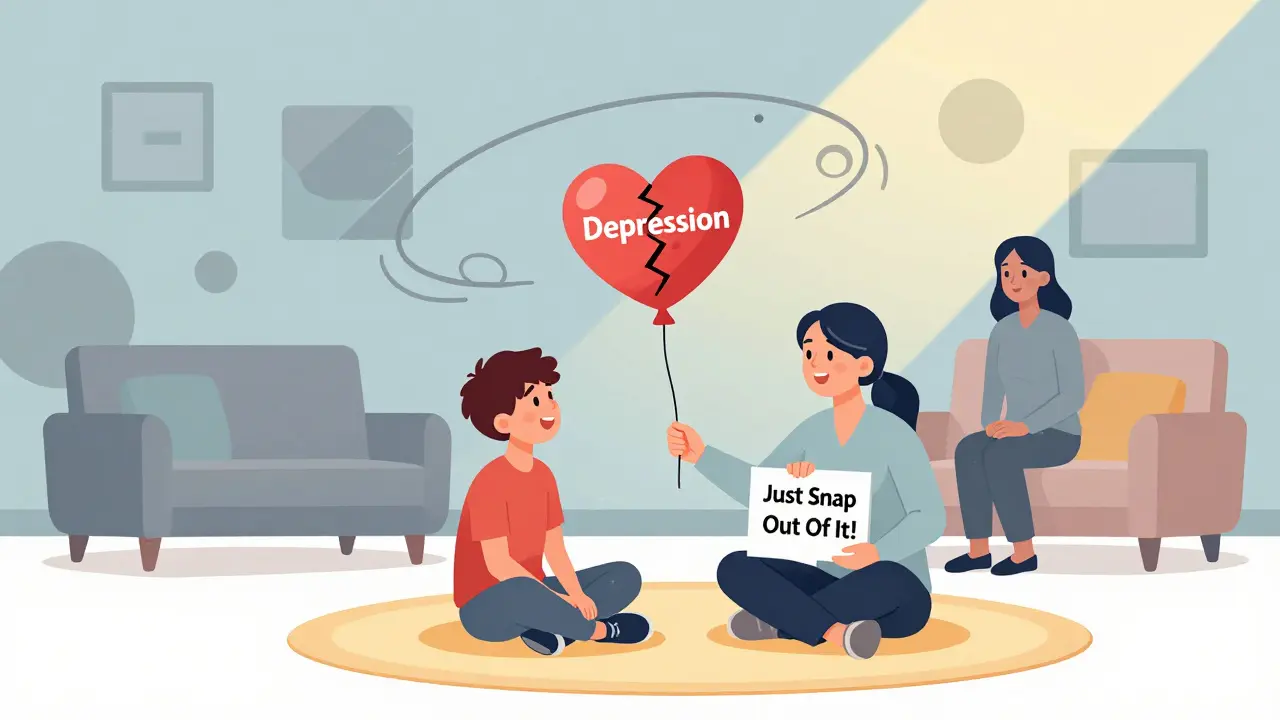
What Doesn’t Work (and Why)
Not all therapy is created equal. Talk therapy with a teen alone-like standard CBT-helps, but it doesn’t fix the family system that may be feeding the depression. If mom keeps yelling, dad checks out, and siblings ignore the problem, the teen will keep feeling alone-even if they learned "positive thinking" in therapy. And not all meds work for everyone. About 32% of teens in clinical trials quit SSRIs because of side effects: headaches, nausea, trouble sleeping. Some teens say they feel "numb." Others say they can’t cry anymore. These aren’t signs of failure. They’re signals to talk to the doctor. Sometimes switching from fluoxetine to escitalopram helps. Sometimes lowering the dose does. Sometimes adding a sleep aid or changing the time of day helps. Family therapy also has hurdles. Scheduling 12-16 sessions with parents, siblings, and a therapist is hard. One dad in Melbourne told me, "I work two jobs. I missed three sessions. My daughter said I didn’t care. I cried for an hour after I got home." That’s the emotional cost of change. But families who stuck with it-even when it was messy-saw results.What Families Are Really Saying
Reddit threads from r/TeenDepression and NAMI forums tell the real story. Out of 87 teens surveyed in 2023 who did family therapy with engaged parents, 68% said it helped a lot. But 32% said it made things worse-usually because one parent refused to participate or blamed the teen. "My mom said I was just lazy," one teen wrote. "She didn’t come to any sessions. I felt more alone than ever." Parents in NAMI forums said the most valuable part of therapy was learning how to speak differently. Instead of "Why are you like this?" they learned to say, "I’m here. Tell me what’s hard right now." And the numbers don’t lie: SAMHSA’s national helpline saw a 27% increase in calls about family therapy from 2020 to 2023. Demand is rising. But supply isn’t keeping up. In the U.S., there are only 8,500 certified child and adolescent family therapists for 42 million teens. Waitlists can be over a year long.What’s New in 2025
The field is evolving. In 2024, the National Institute of Mental Health gave $4.7 million to expand ABFT into 15 community clinics. Early results? A 58% drop in suicidal thoughts in just 12 weeks. Digital tools are helping too. Apps like SparkTorney now offer video-based family therapy sessions. Completion rates are 72%-higher than in-person. Why? Because families can do sessions after school, on weekends, even in the car. One teen in Texas did her session while waiting for her brother’s soccer practice. The FDA also approved the first digital therapeutic for teen depression in 2023: reSET-O. It’s not a replacement for therapy or meds. It’s a companion. It tracks mood, reminds users to take pills, and gives short CBT exercises. Used with a therapist, it cuts relapse rates by nearly 40%. Future research is looking at genetics. The Adolescent Brain Cognitive Development Study found certain gene patterns can predict who responds best to SSRIs-with 68% accuracy. That could mean less trial and error in the future.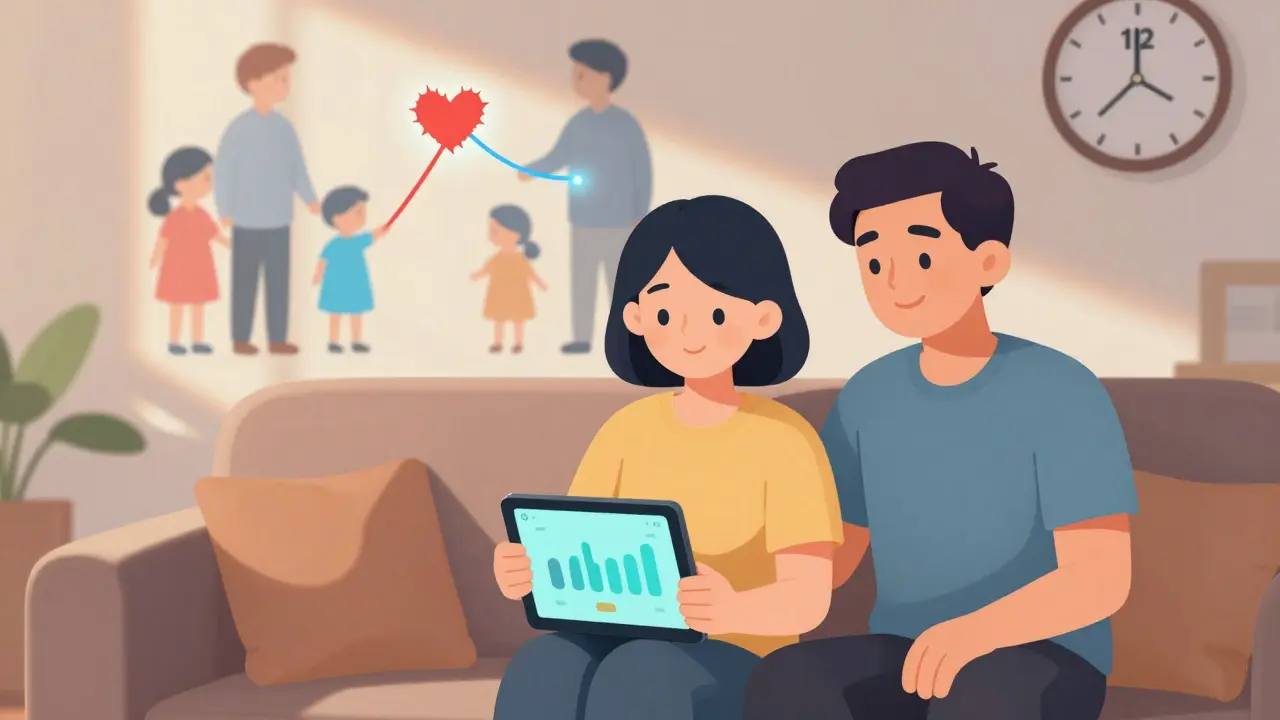
What to Do Now
If you suspect your child or teen is depressed:- Don’t wait. Early intervention matters. The longer depression lasts, the harder it is to treat.
- Start with a pediatrician or school counselor. They can screen for depression using validated tools.
- Ask about family therapy options. Look for therapists trained in ABFT, structural, or strategic family therapy.
- If medication is suggested, ask: "Which one? Why this one? What are the risks? How will we monitor?"
- Join a support group. NAMI and TeenLine offer free parent and teen calls.
- Remember: progress isn’t linear. Bad days happen. That doesn’t mean treatment failed.
When to Get Help Immediately
If your teen talks about dying, gives away belongings, writes goodbye notes, or seems suddenly calm after a long period of despair-these are warning signs. Don’t wait. Call 988, the Suicide & Crisis Lifeline. It’s free, confidential, and available 24/7. In 2023, they handled over 4.4 million calls. You’re not alone.Final Thought
Depression in teens isn’t a character flaw. It’s not laziness. It’s not just hormones. It’s a medical condition shaped by biology, environment, and relationships. The best treatment doesn’t just fix the teen-it heals the system around them. Family therapy doesn’t fix everything. Medication doesn’t fix everything. But together? They give a young person a real shot at coming back to life.Is family therapy effective for teen depression?
Yes, for many teens-especially those with poor family communication, high conflict, or suicidal thoughts. Attachment-Based Family Therapy (ABFT) has shown strong results in reducing both depression and suicidal ideation. A 2022 study found teens in ABFT improved significantly more than those in standard care. It works best when all family members participate honestly and consistently.
What antidepressants are safe for teens?
Only two antidepressants are FDA-approved for teens: fluoxetine (Prozac) and escitalopram (Lexapro). Others may be prescribed off-label, but these two have the most safety data. Dosing starts low and increases slowly. All SSRIs carry a black box warning for increased suicidal thoughts in the first few weeks, so close monitoring by a doctor is required.
Can family therapy replace medication?
For mild depression, yes-family therapy alone can help. But for moderate to severe cases, combining therapy with medication leads to faster and more lasting results. The Agency for Healthcare Research and Quality found combination treatment works better than either alone. Therapy helps change patterns; medication helps create the mental space to change them.
How long does family therapy take?
Most evidence-based family therapy programs last 12 to 16 weekly sessions, each 50-90 minutes long. Strategic and structural approaches often show progress in 8-10 sessions. Attachment-Based Family Therapy usually takes 16-20 sessions because it works deeper into emotional wounds. Progress varies, but many families report noticeable changes in communication within 8 weeks.
What if my teen refuses therapy or medication?
Resistance is common. Start by validating their feelings: "I know this feels unfair. I’m not trying to fix you-I want to understand you." Involve them in choosing the therapist. Let them pick the time of day for sessions. For medication, explain it’s not a punishment-it’s like glasses for your brain. Offer to go to the first doctor’s appointment with them. Small steps build trust. If they still refuse, consider parent-only sessions to learn how to change your own responses. Sometimes that’s enough to shift the dynamic.
Are there alternatives to therapy and meds?
Yes, but they’re not replacements. Regular exercise, especially outdoors, has been shown to reduce depressive symptoms. Sleep hygiene, reducing screen time before bed, and mindfulness practices help too. An eight-week online program focused on gratitude and forgiveness showed modest benefits with no side effects. But for clinical depression, these work best as supports-not primary treatments.
How do I find a qualified family therapist?
Look for therapists certified in family therapy by the American Association for Marriage and Family Therapy (AAMFT). Ask if they specialize in adolescents and use evidence-based models like ABFT, structural, or strategic therapy. Check if they use tools like the Family Assessment Device (FAD) to measure progress. If you’re in a rural area, telehealth options like SparkTorney or Limbix are now widely available and effective.

Paul Ong
January 2, 2026 AT 05:06Just got back from my kid's therapy session and honestly I didn't think it would work but we actually talked without yelling for once
Richard Thomas
January 2, 2026 AT 20:30There's something profoundly human about the idea that depression isn't just an individual malfunction but a systemic collapse of relational trust. The family isn't the cause-it's the wound. ABFT doesn't fix the child, it rebuilds the container that was supposed to hold them. When a parent says "just snap out of it," they're not being cruel, they're terrified. They were never taught how to hold space for pain without fixing it. And that's why the counterintuitive techniques-like asking the teen to stay depressed-work. They expose the invisible contract: if you're sad, we'll fix you. But if you're just allowed to be, maybe we can finally see you. That shift from problem-solving to presence is the real medicine.
Todd Nickel
January 3, 2026 AT 14:49Interesting that the FDA only approved two SSRIs for teens. The clinical trial data is solid, but the real issue is the lack of longitudinal follow-up. Most studies end at 12 weeks, but depression relapse peaks at 6–18 months. We need more data on whether the synergy effect holds over time, especially with varying family dynamics. Also, the genetic predictors from ABCD are promising, but accessibility is a nightmare. If you're in rural Appalachia or a tribal reservation, you're not getting gene testing or ABFT. We're treating a biological condition with a social solution that only the privileged can access.
Ann Romine
January 4, 2026 AT 13:38I'm from the Philippines and we don't really have family therapy here. My cousin's daughter was diagnosed and the whole family just said "she's just sensitive." But when I saw how her dad stopped yelling after watching one ABFT video on YouTube... it changed everything. We don't need fancy clinics. We need translated videos and community leaders who understand this isn't weakness. It's trauma.
gerard najera
January 5, 2026 AT 12:55Medication isn't the answer. Therapy isn't either. It's all corporate.
Austin Mac-Anabraba
January 7, 2026 AT 02:26Let me guess-this is another Big Pharma-funded article disguised as "helpful advice." SSRIs were designed to keep teens docile so they don't question the system. Family therapy? That's just a way to make parents feel guilty so they keep paying for sessions. The real cause of teen depression? Social media, school pressure, and parents who don't teach discipline. Stop medicalizing normal teenage angst.
Phoebe McKenzie
January 7, 2026 AT 19:24My daughter is 15 and I refused meds because I don't want her turned into a zombie. I told her to pray more, get outside, and stop scrolling. Now she's in the hospital after an overdose. I didn't know it was that bad. I thought she was just being dramatic. I'm so ashamed. I wish I'd listened.
Andy Heinlein
January 8, 2026 AT 23:35My son started on Lexapro and at first he was super jittery like a squirrel on espresso but after 3 weeks he actually laughed at a meme. Not a forced laugh. A real one. And we started having dinner without him hiding in his room. I didn't think it was possible. I cried the first time he asked me to watch a movie with him. This isn't magic. It's just… hope.
Stephen Gikuma
January 10, 2026 AT 17:48They want you to believe this is medical but it's cultural decay. Schools are brainwashing kids with woke ideology and then the therapists say "it's your family's fault." The real problem? Parents are too busy working to raise kids. We used to have community. Now we have apps and SSRIs. This is the collapse of the American family. No wonder kids are depressed.
Layla Anna
January 12, 2026 AT 16:06My sister did ABFT and it changed everything. We used to fight every day but now we say "I'm here" instead of "why are you like this?" 😭 I didn't even know how to say that before. My mom cried the first time she said it. We still have bad days but now we don't pretend they don't exist. Thank you for writing this. I needed to see it.
Bobby Collins
January 13, 2026 AT 22:57Did you know the FDA approved reSET-O because the pharmaceutical lobby pushed it? They're selling a digital version of therapy so they can charge more. And now they're using gene data to target teens for meds before they even show symptoms. This isn't healing. It's surveillance capitalism with a therapy label.
Heather Josey
January 15, 2026 AT 14:29As a licensed family therapist, I've seen firsthand how the combination of ABFT and carefully monitored SSRIs transforms lives. The most common misconception is that medication "numbs" emotions. In reality, it often allows suppressed feelings to surface safely-something impossible when the nervous system is in constant survival mode. The real breakthrough isn't in the pills or the techniques-it's in the parent who finally stops trying to fix the pain and simply sits with it. That presence, more than any protocol, is what heals. If you're reading this and you're struggling, please reach out. You are not alone. Support is available. Even if it feels impossible, one conversation can change everything.