
Cyclosporine Level Checker
Your Results
Your cyclosporine levels should stay within the target range for your transplant stage.
Enter your data to see if your levels are safe.
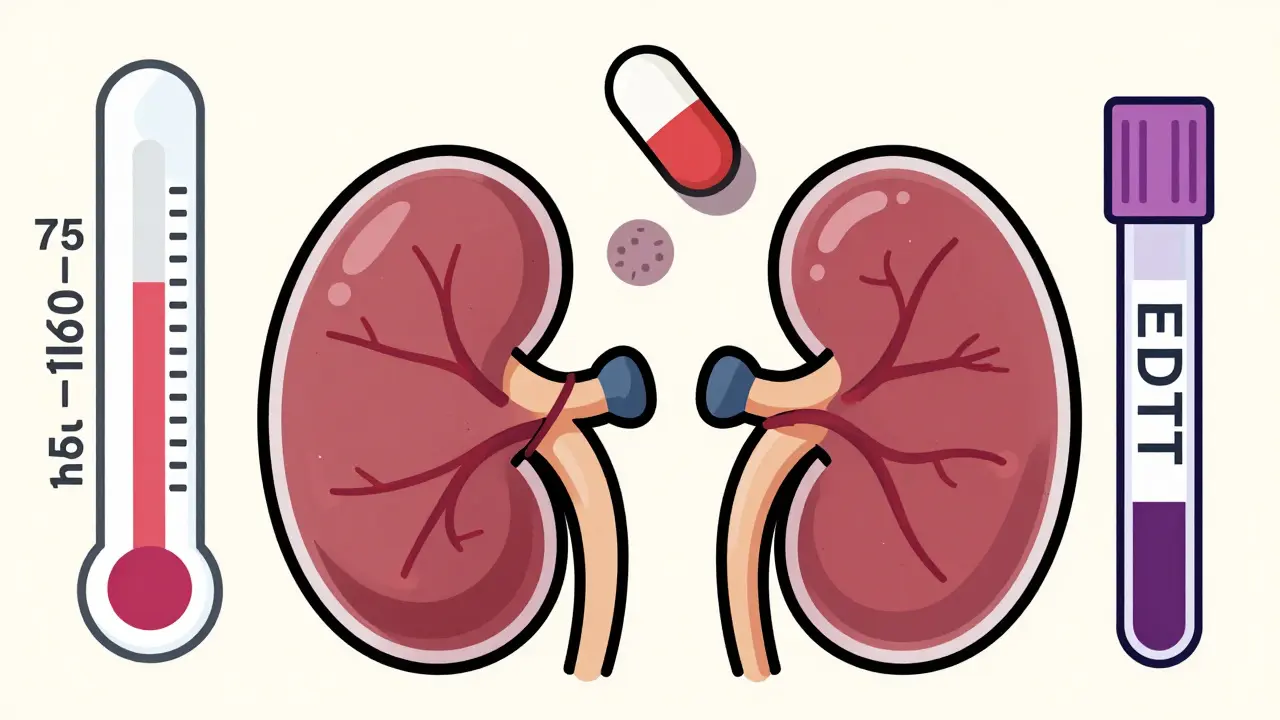
When you take cyclosporine after a transplant, it’s not just about preventing rejection-it’s about staying alive without wrecking your kidneys. This drug saves lives, but it’s also one of the most dangerous medications you can take if not monitored closely. About 30 to 50% of long-term kidney transplant failures are linked to cyclosporine toxicity. That’s not a small risk. It’s the #1 reason transplanted kidneys stop working years down the line. And here’s the scary part: you might not feel anything wrong until it’s too late.
Why Cyclosporine Harms Your Kidneys
Cyclosporine doesn’t attack your kidneys like a virus. It quietly squeezes them. It tightens the blood vessels inside your kidneys, reducing blood flow. That’s called renal vasoconstriction. Over time, this causes scarring in the tiny tubes and arteries inside your kidneys-something doctors call arteriolar hyalinosis and tubular vacuolization. These changes start early, even when you’re on a "safe" dose.What makes this worse is that your body doesn’t always tell you. You won’t suddenly feel pain or swelling. Your urine might look normal. You might still feel fine. That’s why you can’t rely on symptoms. You need hard numbers.
What Blood Levels to Watch
Cyclosporine has a razor-thin window between working and poisoning you. Too low, and your body rejects the new organ. Too high, and your kidneys start shutting down. That’s why doctors don’t guess your dose-they measure it.For kidney transplant patients, here are the target ranges you should be hitting:
- First week after transplant: 200-400 ng/mL
- Week 2 to 6 months: 125-275 ng/mL
- 7 to 12 months: 100-150 ng/mL
- After 1 year: 75-160 ng/mL
Heart and liver transplant patients have slightly different targets, but the principle is the same: tighter control early, looser but still strict later. These numbers aren’t suggestions-they’re survival thresholds.
How Blood Levels Are Measured
Not all tests are created equal. Back in 2002, 85% of labs used immunoassays-fast, cheap, and easy. But they’re flawed. These tests can’t tell the difference between cyclosporine and its metabolites (byproducts your body makes). That means your level might read 250 ng/mL… when the real number is 200. That’s a 25% error. And that’s enough to make your doctor give you too much drug.Today, 92% of U.S. transplant centers use LC-MS/MS (liquid chromatography-tandem mass spectrometry). It’s more accurate, detects levels as low as 5 ng/mL, and doesn’t get fooled by metabolites. It’s the gold standard now. If your lab still uses older immunoassays, ask why. Your life depends on this test being right.
When to Draw Blood: Trough vs. C2 Monitoring
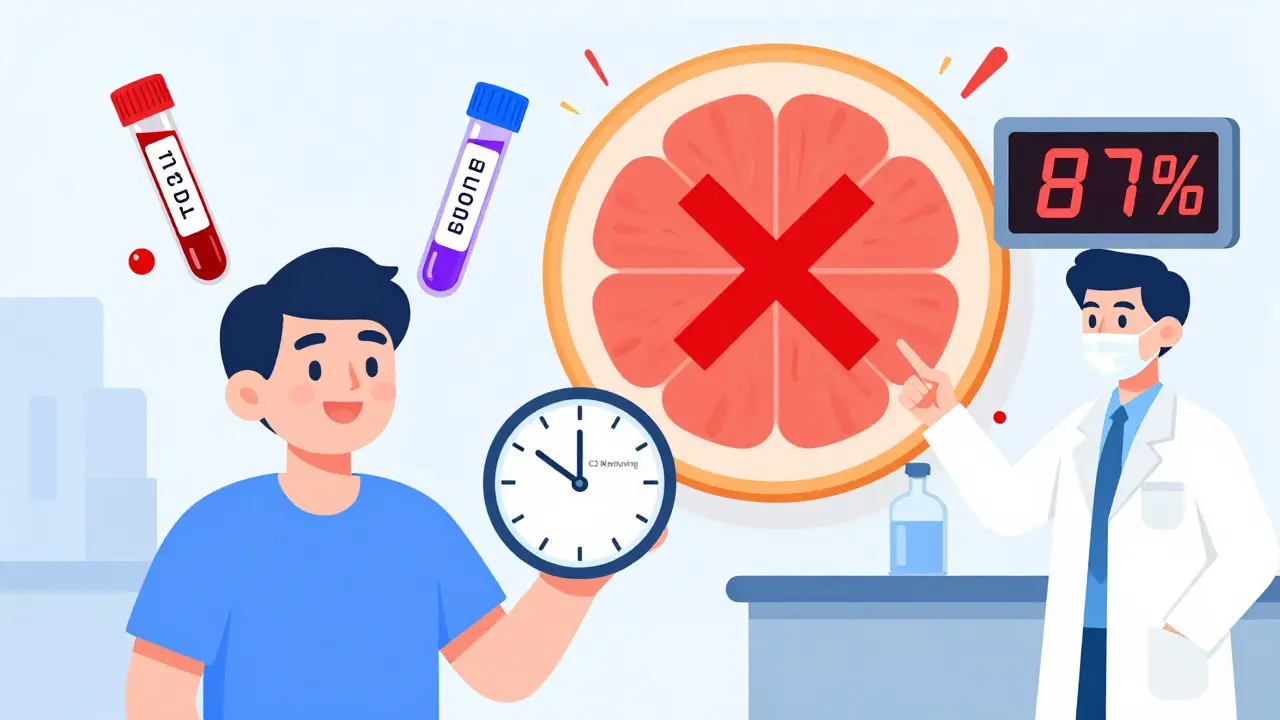
You can’t just grab a blood sample anytime. Timing matters. The old way was to draw blood right before your next dose-that’s called the trough level (C0). But here’s the problem: trough levels don’t tell you how much drug your body actually absorbed over the day.Now, the smarter approach is C2 monitoring: drawing blood 2 hours after you take your dose. Studies show C2 levels correlate 87% with the total drug exposure over 12 hours (AUC), while trough levels only correlate at 63%. That means C2 gives you a much clearer picture of whether you’re under- or overdosed.
Centers using C2 monitoring cut cyclosporine-related kidney damage by over 22%. That’s not a minor improvement-it’s life-changing. If your clinic still only checks trough levels, push for C2. It’s not experimental. It’s standard care in top centers.
What Else to Monitor: Kidney Function Beyond Cyclosporine Levels
Your cyclosporine level is just one piece. You also need to check how your kidneys are actually functioning:- Serum creatinine: Keep it under 1.5 mg/dL. Rising levels mean your kidneys are struggling.
- BUN-to-creatinine ratio: Should be below 20:1. Higher ratios suggest dehydration or reduced kidney blood flow.
- Magnesium: Cyclosporine drains magnesium. Target: 1.7-2.2 mg/dL. Low magnesium means you’re at higher risk for kidney damage.
- Blood pressure: Must stay under 130/80 mmHg. High blood pressure and cyclosporine together accelerate kidney scarring.
Some doctors also check uric acid. But evidence is mixed. Don’t waste time on it unless you have gout or high levels.
Drug Interactions That Can Kill You
Cyclosporine doesn’t play nice with other meds. It’s broken down by liver enzymes called CYP3A4. If you take something that blocks those enzymes, your cyclosporine level can spike. If you take something that speeds them up, your level crashes.Here’s what you must avoid or adjust for:
- Ketoconazole (antifungal): Can raise cyclosporine by 30-50%. Deadly combo.
- Rifampin (antibiotic): Can drop cyclosporine by 40-60%. Risk of rejection.
- Grapefruit juice: Blocks CYP3A4. One glass can push your level too high.
- St. John’s Wort: Speeds up metabolism. Can cause transplant rejection.
If you’re prescribed any new medication-even an OTC one-ask your transplant team: "Will this affect my cyclosporine?" Don’t assume it’s safe.
How Often Should You Get Tested?
Frequency changes as you heal:- First month: Twice a week
- Months 2-6: Once a week
- Months 7-12: Every two weeks
- After 1 year: Monthly or as needed
But here’s the catch: it takes 4 to 6 weeks for your body to reach a steady state after any dose change. That means if your doctor adjusts your pill, don’t expect the next blood test to show the full effect. Wait at least 30 days before judging.
Sample Blood Tube Error That Can Fool Your Doctor
This one’s rarely talked about, but it’s a silent killer. If your blood is drawn into a serum separator tube (the kind with a gel), cyclosporine levels can read 15-20% higher than they really are. Why? The drug sticks to the gel.The only correct tube is EDTA (purple top). Always confirm your phlebotomist uses the right tube. If they don’t know what EDTA is, ask for someone who does.
What Happens If You Don’t Monitor?
Unmonitored cyclosporine use leads to three outcomes:- Acute kidney injury: Sudden drop in function. Often reversible if caught early.
- Chronic nephrotoxicity: Permanent scarring. No cure. Graft failure follows.
- Transplant rejection: If levels drop too low, your immune system attacks the new organ.
One study tracked 12,450 transplant patients. Those with poor monitoring had 22% more dose errors. The clinical difference? Only 3.7% more graft failures. But that 3.7%? That’s people who lost their transplants because someone didn’t check the right test, at the right time, with the right tube.
What’s Next? AI and Point-of-Care Testing
The future is coming fast. Clinical trials are testing AI systems that predict your ideal cyclosporine dose using 17 different factors-genetics, diet, other meds, weight, even gut bacteria. Early results show 89.7% accuracy.And soon, you might not need to go to the lab at all. Point-of-care devices that measure cyclosporine in whole blood in under 15 minutes are in Phase 3 trials. FDA approval is expected by late 2025. Imagine checking your level at home before your morning pill. That’s not science fiction-it’s the next step.
Final Takeaway: You’re in Charge of Your Kidneys
Cyclosporine is a powerful tool. But it’s also a landmine. You can’t outsource your safety to your doctor. You need to know:- Your target blood levels
- When and how your blood is drawn
- Which drugs interfere with it
- What your kidney numbers mean
If your clinic still uses old methods, ask why. Push for LC-MS/MS testing and C2 monitoring. Use only EDTA tubes. Avoid grapefruit. Tell every new doctor you’re on cyclosporine.
Your transplanted kidney is your second chance. Don’t let a simple monitoring mistake take it away.
Can cyclosporine damage my kidneys even if my levels are in range?
Yes. Even within "target" ranges, long-term use can cause slow, cumulative damage. That’s why monitoring kidney function-creatinine, blood pressure, magnesium-is just as important as checking drug levels. The goal isn’t just to stay in range; it’s to catch early signs of harm before it becomes permanent.
Is C2 monitoring really better than trough levels?
Yes. C2 (2-hour post-dose) levels correlate much more strongly with total drug exposure over time than trough levels. Studies show centers using C2 reduce nephrotoxicity by over 22% without increasing rejection rates. If your clinic still only checks trough levels, ask for a switch-it’s now the standard of care in top transplant centers.
Why does my blood need to be drawn in an EDTA tube?
Serum separator tubes (with the gel) cause cyclosporine to bind to the gel, leading to falsely high readings-sometimes by 15-20%. That could make your doctor lower your dose when you actually need more. EDTA tubes (purple top) prevent this. Always confirm your blood is drawn in the right tube.
Can I take grapefruit juice with cyclosporine?
No. Grapefruit juice blocks the liver enzyme that breaks down cyclosporine. This can cause your drug level to spike by 30-50%, increasing your risk of kidney damage. Even one glass can be dangerous. Avoid it completely.
What should I do if my creatinine starts rising?
Don’t panic-but don’t ignore it. Contact your transplant team immediately. A rising creatinine could mean your cyclosporine dose is too high, you’re dehydrated, or you have an infection. Your doctor may adjust your dose, check for drug interactions, or run additional tests. Early action can reverse kidney damage.
Are there alternatives to cyclosporine if my kidneys keep getting damaged?
Yes. Tacrolimus is the most common alternative-it’s more potent and has a lower risk of kidney damage in many patients. Sirolimus and mycophenolate are also options. But switching isn’t simple. It requires careful planning and close monitoring. Never switch on your own. Always discuss alternatives with your transplant team.
How long does it take for kidney damage from cyclosporine to reverse?
Early-stage damage can improve within 3 months of lowering the dose or stopping the drug. But if scarring has already set in-like arteriolar hyalinosis-it’s usually permanent. That’s why early detection is everything. Don’t wait for symptoms. Monitor your labs regularly.

Tommy Watson
December 16, 2025 AT 16:14Donna Hammond
December 16, 2025 AT 23:44Richard Ayres
December 18, 2025 AT 10:07Sheldon Bird
December 20, 2025 AT 06:49Karen Mccullouch
December 22, 2025 AT 03:12Michael Gardner
December 23, 2025 AT 17:57Willie Onst
December 24, 2025 AT 01:59Ronan Lansbury
December 24, 2025 AT 15:22Jennifer Taylor
December 25, 2025 AT 10:26Shelby Ume
December 26, 2025 AT 14:05Jade Hovet
December 27, 2025 AT 07:59nithin Kuntumadugu
December 27, 2025 AT 23:59John Fred
December 29, 2025 AT 14:20Hamza Laassili
December 29, 2025 AT 18:24Rawlson King
December 30, 2025 AT 17:46