

Managing your glucose levels while eating out is all about making intentional choices. Whether you're at a fancy bistro or a quick-service spot, the goal is to keep your post-meal blood sugar within a healthy range-typically below 180 mg/dL. By focusing on diabetes management through smart substitutions and a few simple visual tools, you can enjoy your meal without the stress of a glucose rollercoaster.
The Gold Standard: The Diabetes Plate Method
When you don't have a nutrition label in front of you, guessing grams of carbs is a shot in the dark. That's why healthcare experts, including the American Diabetes Association, recommend a visual approach. The Diabetes Plate Method is a simple way to balance your meal without needing a calculator at the table.
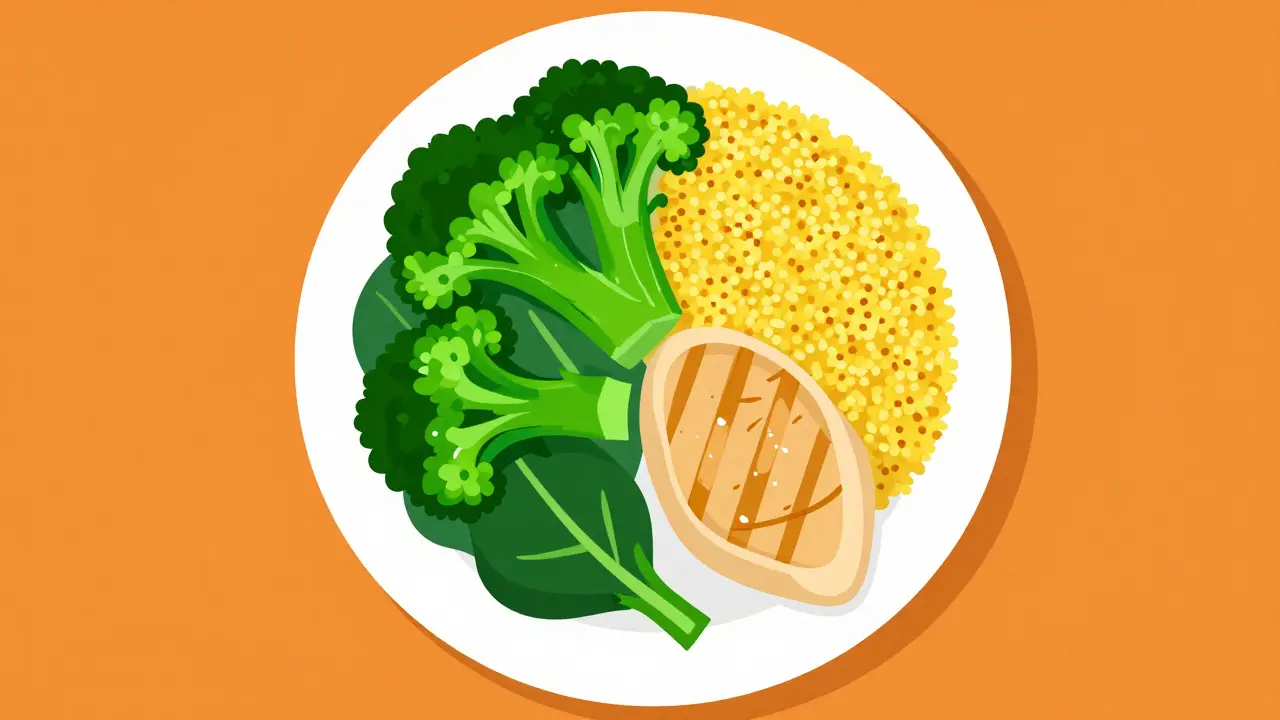
Imagine your dinner plate is a nine-inch circle. Instead of letting the restaurant decide the proportions, you mentally divide it into three sections:
- 50% Non-Starchy Vegetables: Fill half your plate with things like steamed broccoli, leafy greens, asparagus, or bell peppers. These add volume and nutrients without spiking your sugar.
- 25% Lean Protein: A quarter of the plate should be grilled chicken, baked fish, or tofu. Aim for a portion size of about 3 to 4 ounces.
- 25% Carbohydrates: The final quarter is for your starches-think a small scoop of brown rice, a piece of quinoa, or a small sweet potato.
This method is incredibly effective because it prioritizes fiber and protein, which slow down the absorption of glucose into your bloodstream. If a restaurant serves your meal with a massive pile of fries covering your protein, simply move the fries to a side plate and only eat a handful, filling the rest of your space with extra vegetables.
Mastering Carb Counting and Hidden Sugars
While the plate method is great for visuals, Carbohydrate Counting is the most evidence-based way to manage your levels. Most adults are advised to aim for 45 to 60 grams of carbs per meal, but this varies based on your medication and activity level. The real challenge at restaurants isn't the main starch; it's the "hidden" carbs.
Hidden carbohydrates often lurk in sauces, dressings, and glazes. A "healthy" grilled salmon can quickly become a carb bomb if it's topped with a teriyaki glaze or a creamy lemon-butter sauce, potentially adding 15 to 20 grams of sugar without you seeing a single grain of rice. To avoid this, always ask for dressings and sauces on the side. This gives you total control-limiting yourself to two tablespoons can save you a significant amount of glucose impact.
Be on the lookout for "red flag" menu words. Terms like crispy, breaded, creamed, or au gratin are usually code for flour and cornstarch. Substituting a breaded chicken breast for a grilled one can reduce your carb intake by 30 to 45 grams in a single move.
Navigating Different Restaurant Environments
Not all dining experiences are created equal. Some are easy wins, while others require a high level of discipline. Understanding the risks associated with different venue types helps you prepare your strategy.
| Restaurant Type | Risk Level | Biggest Challenge | Pro Strategy |
|---|---|---|---|
| Fast Food | High | Processed flours & hidden sugars | Opt for grilled chicken salads; ditch the bun. |
| Full-Service | Moderate | Overly large portions | Ask for half-portions or share a main. |
| Buffets | Very High | Impulse eating & variety | Fill the plate with greens first; limit to one carb. |
Buffets are particularly tricky. Research shows that blood glucose spikes can be significantly higher after buffet meals because the sheer variety of high-carb options makes it easy to overeat. The best approach here is the "vegetable first" rule: fill your plate with salad and steamed greens before you even look at the pasta or dessert station.
Practical Portion Control Hacks
Let's be honest: restaurant portions are designed to look impressive, not to be nutritionally balanced. A standard serving of pasta at a restaurant can be 2 to 3 times the recommended amount. To combat this, you need a few tactical moves.
One of the easiest tricks is to pack your leftovers before you start eating. Ask for a to-go box as soon as the food arrives and move half of the starch or protein into the box. This removes the visual temptation and prevents the "clean plate club" mentality that often leads to overconsumption.
Another effective strategy is sharing. If you're dining with a partner, split a large entrée and order a side of sautéed spinach. You get a variety of flavors, the portion is naturally cut by 50%, and the social awkwardness is minimized because you're simply sharing a meal.
The Pre-Game: Planning Your Visit
The battle for your blood sugar is won or lost before you even sit down. When you're hungry, your brain craves quick energy (carbs), making it much harder to make a smart choice. This is why arriving "gently hungry"-rather than starving-is crucial. If you're famished, you're far more likely to order the bread basket or a high-carb appetizer.
Take advantage of the digital age. Review the menu online at least 24 hours before your visit. This reduces impulsive ordering and allows you to identify exactly what you'll eat. If the menu doesn't list nutrition facts, use tools like the Restaurant Ready app to get verified carb counts. Having a plan eliminates the stress of the moment and ensures you stay within your targets.
For those using Insulin, timing is everything. Delayed meal service is common, and waiting an hour for a steak can lead to hypoglycemia. Always carry a portable glucose meter and fast-acting glucose tablets (containing at least 15 grams of carbs) to manage any sudden dips while you wait for your meal.
What are the best carb substitutions when eating out?
The most effective substitutions involve replacing refined starches with non-starchy vegetables. For example, swap French fries for steamed broccoli or a side salad. Replace white rice with cauliflower rice or extra greens. If you're eating pizza, choose a thin-crust option with vegetable toppings to significantly lower the total carbohydrate count per slice.
How do I handle social pressure to eat high-carb foods?
Social pressure is a common challenge. The best way to handle it is to be proactive and confident in your choices. You don't need to announce your medical condition if you don't want to; simply stating, "I'm really craving the grilled salmon tonight" or "I'm trying to eat more greens" is usually enough. Sharing a dish is also a great way to enjoy a taste of something without consuming a full, high-carb portion.
Are there specific cuisines that are easier for diabetes management?
Mediterranean and Japanese cuisines often offer more naturally diabetes-friendly options, such as grilled fish, sashimi, and olive-oil-based vegetables. However, be careful with Asian sauces (like teriyaki or hoisin) which often contain high amounts of hidden sugar. Mexican food can be great if you opt for fajitas without the tortillas, focusing on the grilled meat, peppers, and onions.
What should I do if I accidentally overeat carbs at a restaurant?
First, don't panic or feel guilty. Once you realize you've overshot your carb limit, the best immediate action is light physical activity, such as a 15-minute walk after the meal, which helps your muscles use the excess glucose. Check your blood sugar levels more frequently over the next few hours and follow your healthcare provider's guidelines for corrective insulin or medication if necessary.
Is it safe to use the 'Diabetes Plate Method' for every meal?
Yes, the Plate Method is designed as a universal tool for blood glucose control. While individual needs vary-some may need more protein or fewer carbs based on their activity level-the general ratio of 50% vegetables, 25% protein, and 25% carbs is a safe and effective baseline for most adults managing diabetes.
Next Steps for Your Dining Success
If you're just starting out, don't try to be perfect on your first outing. Try these three steps to build your confidence:
- The "One Swap" Rule: For your next meal out, commit to just one substitution (e.g., swap fries for a side salad).
- The "Half-Plate" Test: Practice the Plate Method by mentally dividing your plate before the first bite.
- The Pre-Check: Pick a restaurant you love and look at the menu online today, not the day you go.
If you find that your post-meal glucose levels remain high despite these strategies, keep a dining log. Note what you ate and your glucose reading two hours later. This data is invaluable for your doctor or dietitian to help you fine-tune your carb targets and medication timing.
