
Why Generic Substitution Documentation Matters
Every time a pharmacist swaps a brand-name drug for a generic version, they’re making a decision that can affect a patient’s health-sometimes in ways that aren’t obvious. It’s not just about saving money. It’s about safety, traceability, and legal compliance. In the U.S., nearly 90% of prescriptions filled are for generic drugs. That means pharmacists are making substitution decisions hundreds of times a day. But if those decisions aren’t properly documented, the consequences can be serious.
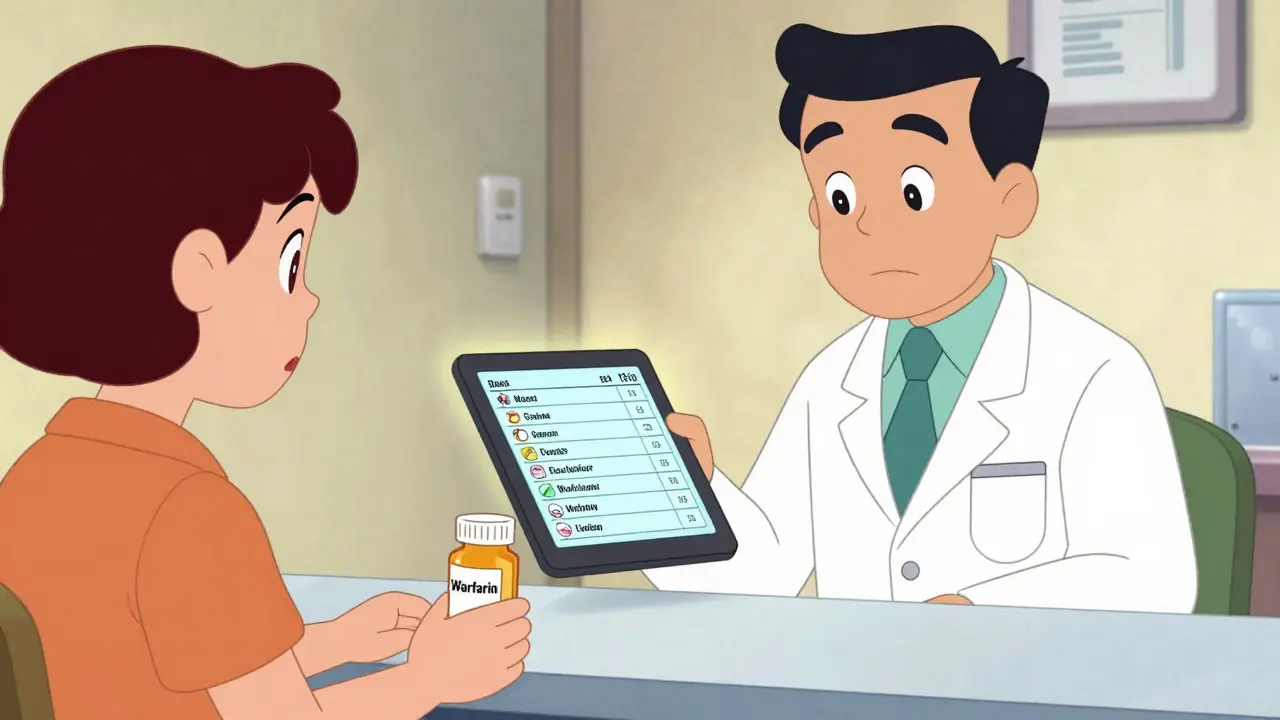
Take warfarin, a blood thinner with a narrow therapeutic index. Even small changes in dosage or manufacturer can cause dangerous fluctuations in INR levels. A 2021 study in the Journal of the American Pharmacists Association found that a lack of clear documentation around a substitution led to a patient being hospitalized. That’s not an outlier. It’s a preventable error-and it happens because documentation is treated as an afterthought.
The truth is, documenting generic substitutions isn’t optional. It’s required by law in every state. But the rules aren’t the same everywhere. That’s where things get messy.
What Exactly Must Be Documented?
There’s a baseline set of information that every pharmacist must record when substituting a generic drug. It’s not complicated, but missing even one piece can trigger an audit issue or insurance denial.
- Brand name prescribed - The exact drug the doctor ordered.
- Generic name dispensed - The active ingredient and formulation you actually gave.
- Manufacturer name - Not just the generic version, but who made it. Different manufacturers can have different fillers or release profiles.
- Lot number - Critical for recalls or adverse event tracking.
- Expiration date - Ensures the patient gets a safe, effective product.
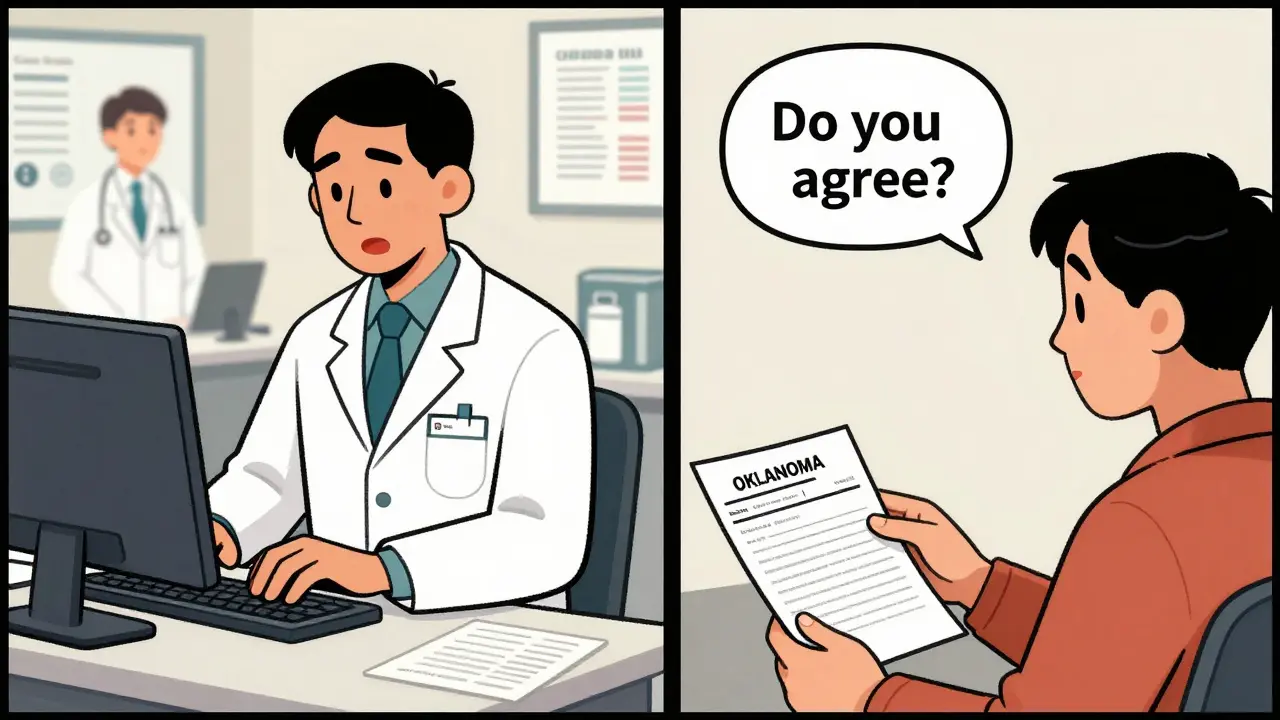
Forty-eight states require all five of these details, according to the National Association of Boards of Pharmacy’s 2022 survey. Some states, like Oklahoma, go further. They demand proof of patient or prescriber consent before any substitution can happen. In California, as of January 1, 2024, substitutions must be documented in real time and made accessible to the prescribing doctor through electronic health records.
And it’s not enough to just write it down. The documentation has to be in the right place-usually the pharmacy’s electronic system-and completed within 24 hours of dispensing. Forty-one states enforce that deadline. Miss it, and you’re out of compliance.
State Laws Vary-Big Time
If you work for a national pharmacy chain, you’ve probably dealt with this headache: one state says you can substitute without asking. Another says you need written consent. A third says you can’t substitute NTI drugs at all without a new prescription.
Here’s how it breaks down:
- 27 states allow pharmacists to substitute generics without patient consent.
- 14 states require explicit patient consent-verbal or written-before substitution.
- 9 states use a hybrid model, where consent is needed for certain drugs or patient types.
Why does this matter? Because states with consent requirements have higher prescription costs after a brand’s patent expires-on average, $15.35 more per script, according to the ASPE. That’s not because generics are more expensive. It’s because patients are less likely to accept substitutions if they’re asked to opt in.
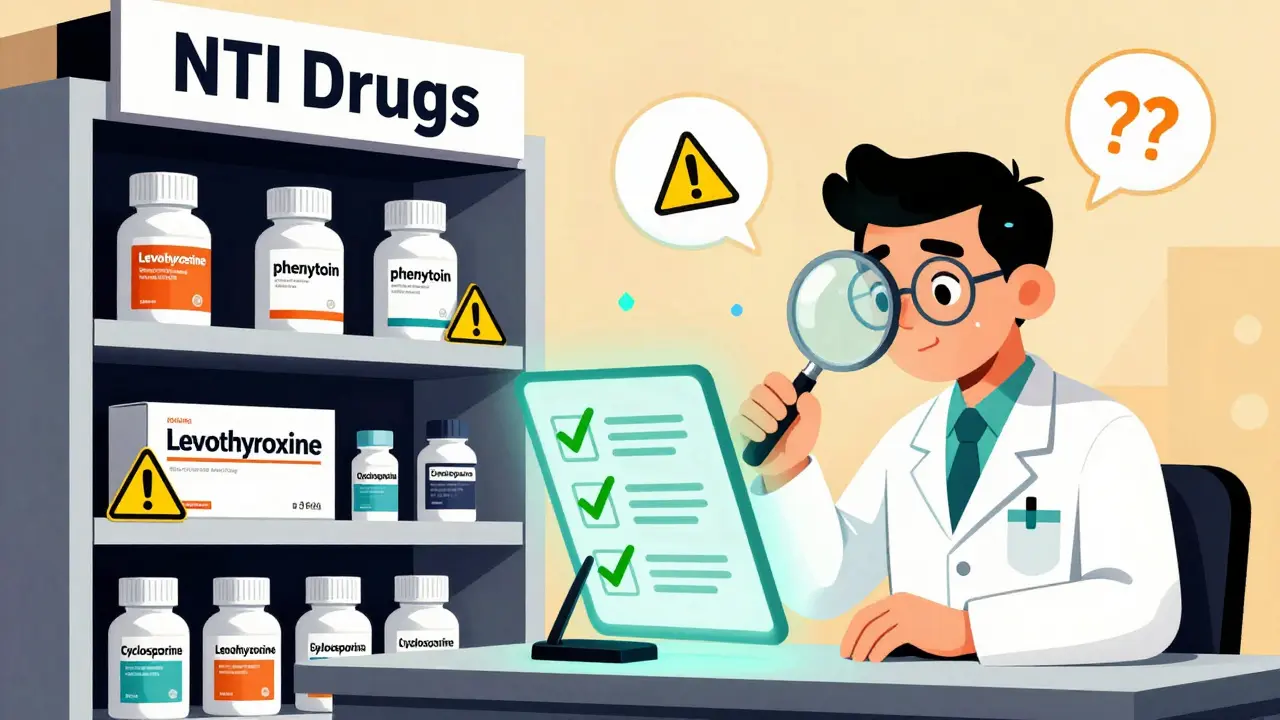
Then there’s the issue of Narrow Therapeutic Index (NTI) drugs. The FDA doesn’t officially label them in the Orange Book, but 17 states have their own rules. For drugs like levothyroxine, phenytoin, or cyclosporine, many states require additional documentation: physician notification, patient counseling, and sometimes even a signed form.
And don’t assume your pharmacy’s software handles it automatically. Epic Systems reported in 2023 that 32% of pharmacies using their platform needed custom configuration just to meet state-specific documentation rules.
When the Prescriber Says No
Doctors can-and often do-write “Dispense as Written” or “Do Not Substitute” on prescriptions. That’s their right. But here’s the catch: if they don’t, and you don’t document why you chose a generic, you’re leaving yourself exposed.
The American Medical Association recommends that physicians clearly document when they prescribe brand-name drugs for medical necessity. Why? So pharmacists don’t accidentally swap out a drug that’s critical for a specific patient. Maybe the patient had a bad reaction to a different manufacturer’s generic. Maybe they’re on a stable regimen and changing anything risks destabilizing their condition.
The World Medical Association’s 2023 update reinforces this: once a patient is stable on a medication-brand or generic-any switch should require the prescriber’s approval. That means if a patient has been on the same brand of levothyroxine for two years, and you switch them to a cheaper generic without checking with the doctor, you’re crossing a line.
Documentation isn’t just about legal protection. It’s about continuity of care.
Electronic Systems Are the New Standard
Handwritten notes? Outdated. Paper logs? Risky. Most pharmacies now use electronic systems to track substitutions-and for good reason.
According to Drug Topics’ 2023 survey, 98% of chain pharmacies and 87% of independent pharmacies use digital documentation. Why? Because it’s faster, more accurate, and audit-ready.
But even digital systems have flaws. If your pharmacy management software doesn’t have a dedicated field for manufacturer, lot number, and substitution reason, you’re forcing staff to make manual entries. That’s where errors creep in. A 2022 study across 150 community pharmacies found that comprehensive electronic documentation reduced medication errors by 17.3% in just six months.
And now, some states are pushing further. California’s SB 564 requires real-time electronic documentation that’s visible to prescribers. Other states are following. The future? Systems that auto-populate substitution data from the prescription, flag NTI drugs, and notify the prescriber if a change is made.
Blockchain pilots by the National Pharmaceutical Council showed a 22% drop in documentation errors. That’s not science fiction. It’s coming.
What Happens When Documentation Fails
Bad documentation doesn’t just lead to fines. It leads to harm.
Consider this: a patient on warfarin gets switched from one generic manufacturer to another. The pharmacist doesn’t document the change. The patient’s INR spikes. They end up in the ER with internal bleeding. The doctor has no idea a substitution happened. The insurance company denies the claim because the record doesn’t match the prescription.
That’s not hypothetical. It’s documented in medical journals.
On the flip side, good documentation prevents these events. The American Pharmacists Association’s 2022 survey found that 23% of pharmacists had prevented an adverse drug event simply by properly recording a substitution. That’s not a small number. That’s lives saved.
And it’s not just about safety. It’s about reimbursement. Insurance companies audit pharmacy claims. If your documentation is incomplete, they’ll deny payment. One pharmacist in Texas told the Pharmacy Technician Community forum that his state’s requirement to log manufacturer and lot number cuts down on claim denials by 40%.
How to Get It Right Every Time
Here’s how to make documentation second nature:
- Know your state’s rules - Visit the National Community Pharmacists Association’s online tool. It’s updated quarterly and shows exactly what you need to document in your state.
- Use templates - Set up your pharmacy software with a substitution checklist. Make it mandatory before finalizing the prescription.
- Train new staff - New pharmacists and technicians need 4 to 6 weeks to get comfortable with state-specific rules. Don’t assume they know.
- Double-check NTI drugs - If it’s a drug with a narrow therapeutic index, pause. Ask: Does my state require extra steps? Did the prescriber allow substitution?
- Document everything-even if you think it’s obvious - If you didn’t write it down, it didn’t happen.
There’s no shortcut. But once you build the habit, it takes less than 30 seconds per script. That’s the cost of doing it right.
The Bigger Picture
Generic substitution saves the U.S. healthcare system billions. The Association for Accessible Medicines estimates $1.69 trillion in savings between 2013 and 2022. But that only works if substitutions are safe, traceable, and well-documented.
Right now, we’re stuck with 50 different sets of rules. That’s inefficient. The Model State Pharmacy Act, updated in 2022, pushes for uniform standards. Twelve states have already adopted them. The federal government is working on national guidelines-draft expected in mid-2024.
When that happens, documentation won’t be a maze. It’ll be a standard. But until then, every pharmacist needs to treat it like their license depends on it-because it does.

Zoe Brooks
January 16, 2026 AT 16:37Kristin Dailey
January 17, 2026 AT 17:54Wendy Claughton
January 18, 2026 AT 17:36Pat Dean
January 18, 2026 AT 20:52Jay Clarke
January 19, 2026 AT 13:06Max Sinclair
January 21, 2026 AT 08:46Nishant Sonuley
January 22, 2026 AT 14:06Emma #########
January 22, 2026 AT 14:47Andrew McLarren
January 22, 2026 AT 15:19