Why Edema Happens in Chronic Kidney Disease
When your kidneys start to fail, they don’t just stop filtering waste-they also lose their ability to manage fluid and salt. That’s when swelling, or edema, shows up. It’s not just a minor inconvenience. In advanced stages of chronic kidney disease (CKD), fluid builds up in your legs, ankles, feet, and sometimes around your eyes or belly. This isn’t normal puffiness. It’s your body holding onto too much water because your kidneys can’t pee it out.
The problem starts with sodium. Your kidneys normally flush out excess salt. But when your eGFR drops below 60 mL/min/1.73m² (that’s stage 3 CKD and worse), sodium sticks around. Water follows sodium, so your blood volume rises. That extra pressure pushes fluid out of your blood vessels and into your tissues. The lower parts of your body feel it first because gravity pulls fluid down. By stage 4 or 5, even small amounts of salt can cause noticeable swelling.
This isn’t just about comfort. Fluid overload increases your risk of high blood pressure, heart strain, and hospitalization. Studies show that people with persistent edema have a 28% higher chance of dying compared to those who manage their fluid balance well. The goal isn’t to eliminate all swelling overnight-it’s to get to your "dry weight," the lightest weight you can safely carry without swelling or low blood pressure.
Diuretics: The Right Drug for the Right Stage
Diuretics are the go-to medicine for removing extra fluid, but not all of them work the same way-or at all-in CKD. Your kidney function determines which one you need.
If your eGFR is above 30, thiazide diuretics like hydrochlorothiazide or chlorthalidone (12.5-25 mg daily) can help. They work in the part of the kidney that’s still functioning well. But once your eGFR falls below 30, those drugs lose their punch. That’s when loop diuretics like furosemide, bumetanide, or torsemide take over. These are stronger. They target a different part of the kidney and can push out more fluid-even when kidney function is poor.
Starting doses for furosemide are usually 40-80 mg a day. If that doesn’t help after a few days, your doctor might increase it by 20-40 mg every 2-3 days. In severe cases, doses can go up to 320 mg daily. But here’s the catch: higher doses don’t always mean better results. A 2016 NIH study found that when furosemide doses exceed 160 mg daily in stage 4 CKD, the risk of sudden kidney injury jumps 4.1 times.
For stubborn cases, doctors sometimes combine a loop diuretic with a thiazide. This is called sequential nephron blockade. It works better than either drug alone-but it also raises the risk of dehydration and kidney damage by 23%. That’s why it’s only used when other options fail.
Spironolactone is another option, especially if you also have heart failure. It helps reduce fluid and lowers death risk in heart failure patients by 30%. But it’s risky in late-stage CKD because it can spike potassium levels. More than 25% of people with stage 4 or 5 CKD who take it develop dangerous hyperkalemia. Blood tests are a must.
And now, there’s a new tool: injectable furosemide. Approved by the FDA in March 2025, it’s designed specifically for advanced CKD. In trials, it cleared fluid 38% faster than oral pills in people with eGFR under 15. That’s huge for those who can’t absorb pills well or need rapid relief.
Salt Restriction: The Most Powerful Tool You Can Use
Medicines help, but salt restriction is the foundation. No diuretic works well if you’re still eating 4,000 mg of sodium a day.
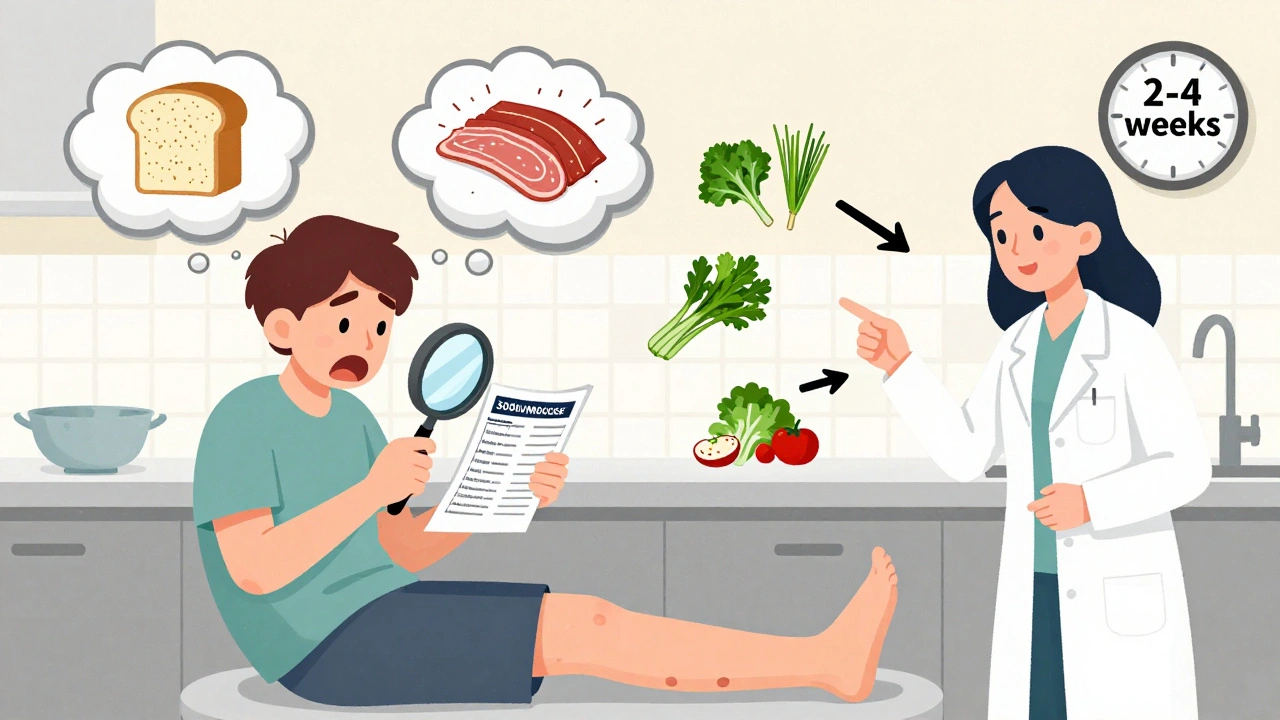
The National Kidney Foundation recommends no more than 2,000 mg of sodium daily for anyone with CKD and edema. For stages 4 and 5, aim for 1,500 mg. That’s less than a teaspoon of salt. But here’s the problem: 75% of sodium doesn’t come from your salt shaker. It’s hidden.
Bread? Two slices = 300-400 mg. Canned soup? One cup = 800-1,200 mg. Deli meat? Two ounces = 500-700 mg. Even yogurt, sauces, and frozen meals are loaded. A 2022 American Kidney Fund survey found that 68% of CKD patients struggle to stick to low-sodium diets. Taste is the biggest barrier-72% say food just doesn’t taste good without salt. Social meals are another hurdle. Family dinners, work lunches, restaurants-it’s hard to control.
But the payoff is real. In early-stage CKD, cutting sodium to 2,000 mg a day can reduce swelling by 30-40% in just 2-4 weeks-without any pills. That’s why working with a renal dietitian is critical. Most programs include 3-4 sessions covering label reading, cooking swaps (like using herbs instead of salt), and finding low-sodium alternatives.
And don’t forget fluids. Water isn’t the only source. Soup, yogurt, fruit like watermelon (it’s 92% water), and even ice cream add up. In advanced CKD, fluid intake is often limited to 1,500-2,000 mL per day. That includes everything you drink and eat that melts into liquid.
Compression Therapy: More Than Just Socks
Diuretics and salt control help your body get rid of fluid. Compression helps it stay gone.
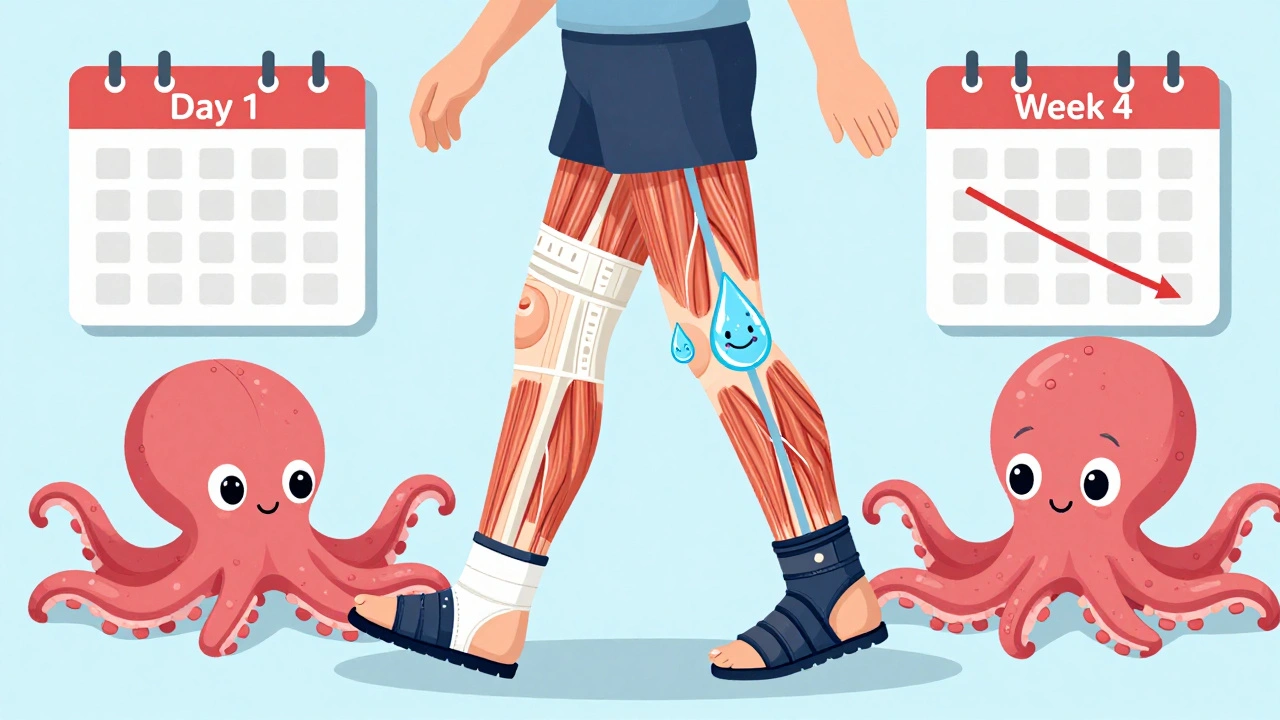
Graduated compression stockings (30-40 mmHg at the ankle) are the gold standard for leg swelling. They squeeze your legs tighter at the bottom and looser at the top, pushing fluid back toward your heart. Studies using water displacement tests show they reduce leg volume by 15-20% after four weeks of daily use.
But wearing them isn’t easy. A 2022 University of Michigan study found only 38% of people kept using them after three months. Why? They’re hard to put on, they itch, and they feel tight. That’s why physical therapy matters. Simple moves-like walking 30 minutes five days a week-boost lymphatic drainage and improve outcomes by 22% compared to just resting.
For severe cases, especially with nephrotic syndrome, intermittent pneumatic compression devices can help. These machines inflate and deflate sleeves around your legs in cycles, mimicking muscle movement. One 2020 study found they reduced leg circumference 35% more than regular stockings alone.
Elevating your legs above heart level for 20-30 minutes a few times a day also helps. It’s free, simple, and works by reducing pressure in your veins.
The Real Challenge: Adherence and Risk
The science is clear: diuretics, salt control, and compression work. But real life gets in the way.
People on diuretics often report sleep disruption because they’re peeing all night. Muscle cramps and dizziness are common. One in five have had a fall or fainting spell from low blood pressure.
Compression therapy? Most people quit because it’s uncomfortable. Diet changes? Many say they give up because they feel deprived.
The key to success? A team. People who see a nephrologist, a renal dietitian, and a physical therapist have a 75% success rate in controlling edema within eight weeks. Those on standard care? Only 45% succeed.
And there’s a bigger picture. While diuretics can speed up kidney decline-studies show users lose 3.2 mL/min/1.73m² of kidney function per year versus 1.7 in non-users-the real danger is doing nothing. Fluid overload kills more people than diuretic side effects.
What’s Next: Better Tools on the Horizon
Research is moving fast. The NIH’s FOCUS trial, ending in December 2025, is testing whether using bioimpedance spectroscopy (BIS) to measure body fluid in real time can guide diuretic dosing better than guesswork. Early results show 32% fewer hospital visits for fluid overload.
New drugs like vaptans (vasopressin blockers) were promising, but liver toxicity halted one major trial in 2024. They’re not ready yet.
The KDIGO 2025 guidelines, still in draft, may shift recommendations toward slower, steadier fluid removal-especially in late-stage CKD-to protect the kidneys while still reducing swelling.
For now, the best approach remains simple: cut salt, use the right diuretic at the right dose, move your legs, and wear your stockings. It’s not glamorous. But it works.


Annie Grajewski
December 5, 2025 AT 04:47Mark Ziegenbein
December 5, 2025 AT 16:23Norene Fulwiler
December 6, 2025 AT 12:58William Chin
December 8, 2025 AT 07:55James Moore
December 8, 2025 AT 20:07Kylee Gregory
December 9, 2025 AT 18:09Laura Saye
December 9, 2025 AT 21:33luke newton
December 10, 2025 AT 14:25