
Medication Cost Savings Estimator
Compare Brand Name vs. Generic costs and see your potential savings
Estimated Savings
By switching to a therapeutically equivalent generic, you could save:
The short answer is that for the vast majority of people, they are identical in how they work. However, the way they look and the labels on the bottle are intentionally different. Understanding therapeutic equivalence is the key to feeling confident about your healthcare spending without worrying about your health outcomes.
The Core of the Matter: What Makes a Drug 'Equivalent'?
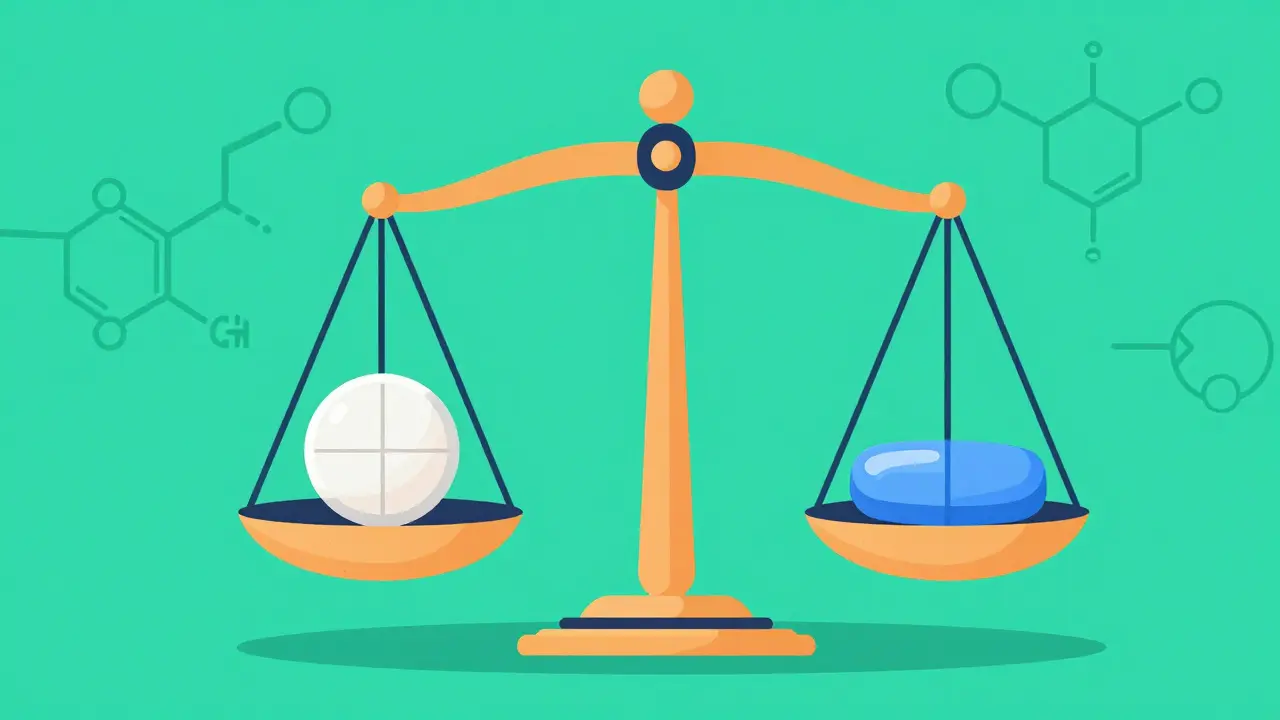
When we talk about Generic Drugs is pharmaceutical versions of brand-name medications that contain the same active ingredients, strength, and dosage form. They are designed to provide the same clinical benefit as the original product but at a fraction of the cost.
To get approval, a generic manufacturer doesn't have to repeat the massive, decade-long clinical trials the original company did. Instead, they use the Abbreviated New Drug Application (ANDA) is a streamlined FDA process that allows generic drugs to be approved by proving they are bioequivalent to the brand-name version . This process, established by the Hatch-Waxman Act, ensures that the generic drug performs the same way in your body as the brand name.
The FDA requires a strict standard called bioequivalence. This means the generic drug must deliver the active ingredient into the bloodstream at a rate and extent that is within 80-125% of the brand-name drug's profile. While that range might sound wide, pharmacists note that it's often tighter than the natural variation you'd see between two different batches of the same brand-name drug.
Decoding the Label: Why They Look Different
If the medicine inside is the same, why does the packaging look like it's from a different planet? There are a few legal and regulatory reasons for this.
First, the name. Brand-name drugs use proprietary names for marketing. For example, you might know the brand Prilosec, but the generic label will simply say omeprazole. The generic label focuses on the chemical name of the active ingredient rather than a catchy brand name.
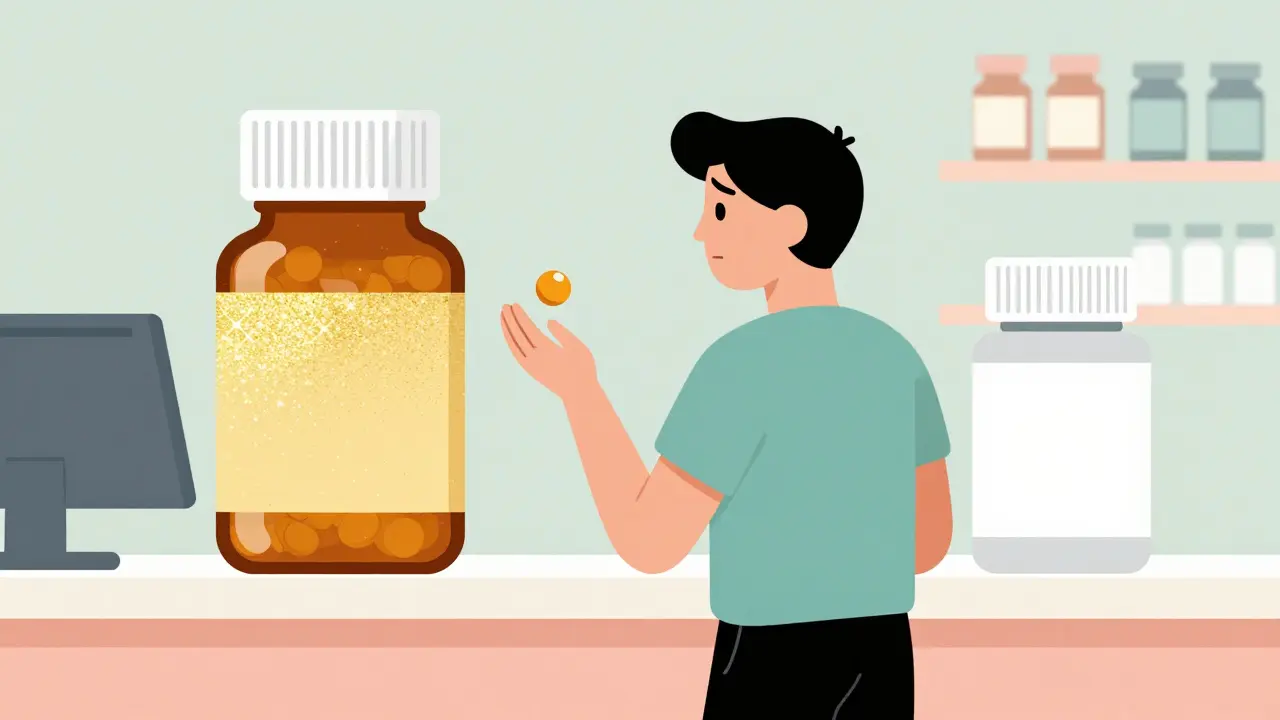
Second, the appearance. U.S. trademark laws actually prevent generic drugs from looking exactly like the brand name. This is why your pill might change from a round white tablet to an oval blue one when you switch to a generic. These changes in color, shape, and size are purely cosmetic and have zero impact on how the medicine treats your condition.
Finally, there are the inactive ingredients. While the active pharmaceutical ingredient (API) must be identical, the "fillers"-known as excipients-can vary. These are the binders, coloring agents, and preservatives that hold the pill together. For 99% of people, these make no difference. However, if you have a specific allergy to a dye or a filler (like lactose), it's worth checking the inactive ingredients list on the generic label.
| Feature | Brand-Name Drug | Generic Equivalent |
|---|---|---|
| Active Ingredient | Same chemical compound | Same chemical compound |
| Inactive Ingredients | Proprietary fillers/dyes | Different fillers/dyes |
| FDA Requirement | Full New Drug Application (NDA) | Bioequivalence (ANDA) |
| Appearance | Unique trademarked look | Must differ from brand |
| Cost | High (covers R&D) | Low (competitive market) |
The 'Orange Book' and Therapeutic Equivalence
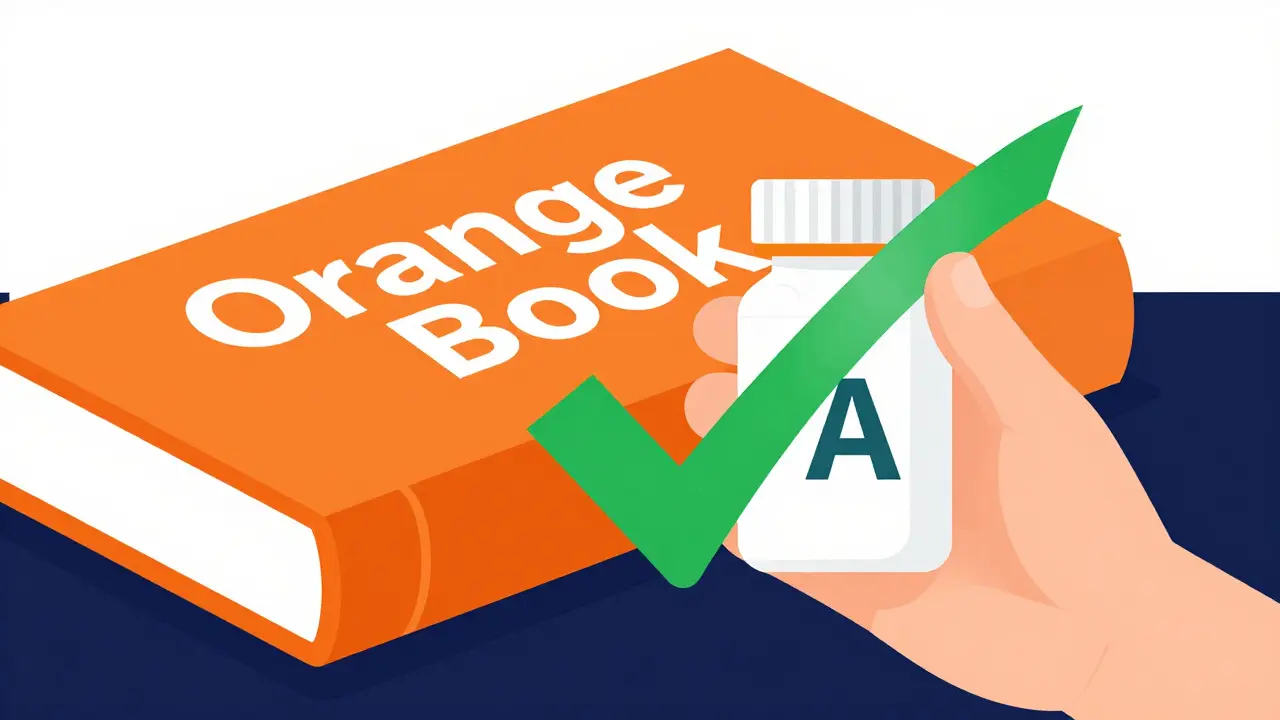
If you want to know for sure if a generic is a safe swap, the gold standard is the FDA Orange Book is the official publication that lists all approved drug products and their therapeutic equivalence ratings . This is the resource doctors and pharmacists use to verify that a generic drug will perform exactly like the brand.
In the Orange Book, you'll see ratings. An "A" rating means the generic is considered therapeutically equivalent. This means it has the same active ingredient, the same strength, the same dosage form, and the same route of administration. When a pharmacist substitutes your medication, they are checking for this equivalence to ensure your treatment doesn't miss a beat.
Are There Exceptions? When to Be Cautious
While generics are a win for most, there are a few cases where you and your doctor should be more careful. These are called Narrow Therapeutic Index (NTI) drugs. With NTI drugs, the window between a dose that works and a dose that is toxic is very small. Even a tiny shift in how the drug is absorbed can cause a problem.
Examples of NTI drugs include warfarin (a blood thinner), levothyroxine (for thyroid issues), and phenytoin (for seizures). If you are taking these, you shouldn't jump between different generic manufacturers frequently. Switching from one generic brand to another can slightly alter your blood levels, which might require a dosage adjustment or more frequent blood tests (like monitoring TSH levels for thyroid patients).
Additionally, some complex medications, like certain insulins or monoclonal antibodies, aren't "generics" in the traditional sense. They are called biosimilars because they are made from living cells and are much harder to copy exactly. These require a different set of FDA approvals and may not be interchangeable without a doctor's specific order.
The Real-World Impact: Savings and Adherence
The move toward generics isn't just about saving a few bucks; it's about whether people can afford their medicine at all. Data shows that generics now account for about 90% of all prescriptions filled in the U.S., yet they only make up about a quarter of the total spending. This is a massive shift that has saved the healthcare system trillions of dollars.
Take a real-world example: atorvastatin. The brand name, Lipitor, can cost hundreds of dollars a month. The generic version can be as low as $4. For a patient with high cholesterol, this price difference is the difference between taking their medication every day or skipping doses because they can't afford the refill. When medication becomes affordable, patient adherence goes up, and overall health outcomes improve.
Practical Tips for Your Next Pharmacy Visit
Navigating the pharmacy counter can be confusing, especially if your pill looks different this month. Here are a few ways to handle the switch smoothly:
- Ask for the 'A' Rating: If you're nervous, ask your pharmacist if the generic is listed as therapeutically equivalent in the Orange Book.
- Check the Active Ingredient: Look past the brand name. If the active ingredient (like lisinopril or metformin) is the same, you're getting the same medicine.
- Discuss NTI Drugs: If you are taking a medication for a very sensitive condition (like seizures or thyroid), ask your doctor if you should stick to one specific manufacturer to avoid blood level fluctuations.
- Verify the 'Dispense as Written' (DAW) Note: If your doctor specifically wrote "DAW" on your prescription, it means they want you to have the brand name for a medical reason. If they didn't, your pharmacist can usually switch you to a generic automatically.
Are generic drugs less potent than brand names?
No. The FDA requires generic drugs to have the same active ingredient, strength, purity, and potency as the brand-name version. Bioequivalence testing ensures that the drug reaches the bloodstream at a nearly identical rate and concentration.
Why does my generic pill look different from the brand name?
Trademark law prohibits generic drugs from looking exactly like the original brand. Because of this, generics must differ in color, shape, or size, but these changes do not affect how the medication works.
Can I always switch from a brand name to a generic?
In most cases, yes. However, for Narrow Therapeutic Index (NTI) drugs-like warfarin or levothyroxine-you should consult your doctor first, as small variations in absorption can require dosage adjustments.
What is the FDA Orange Book?
The Orange Book is the official FDA publication that lists approved drug products and provides ratings on whether a generic is therapeutically equivalent to a brand-name drug.
Why are generics so much cheaper?
Brand-name companies spend billions on research, development, and clinical trials. Once the patent expires, generic companies can enter the market without those initial costs, leading to competition that drives prices down.
Next Steps for Patients
If you're currently on a brand-name medication, your next step should be a simple conversation with your provider. Ask, "Is there a therapeutically equivalent generic for this medication that would be safe for me?" If you are already on a generic and notice the pill's appearance changes after a refill, don't panic-it usually just means the pharmacy switched to a different equivalent manufacturer. Just verify the active ingredient on the label to put your mind at ease.
