
When you pick up a prescription, do you ever wonder why one drug costs $5 and another costs $80-even if they treat the same condition? The answer lies in something most people don’t think about: insurance formularies. These are the lists pharmacies and insurers use to decide which drugs they’ll cover, and how much you’ll pay. At the heart of this system is a simple but powerful divide: generics versus brand-name drugs. While they may seem like the same thing, how insurance treats them is worlds apart.
What’s the Real Difference Between Generics and Brands?
On paper, generics are supposed to be exact copies of brand-name drugs. They contain the same active ingredient, work the same way, and meet the same safety standards set by the FDA. That’s not just marketing-it’s the law. But here’s where things get messy: insurance companies treat them like completely different products.
Brand-name drugs are the original. The company that invented them spent years and millions on research, clinical trials, and marketing. Once their patent runs out, other manufacturers can make copies. These copies are generics. They don’t have to repeat expensive trials because they only need to prove they work the same way. That’s why they cost 80% to 85% less. But your insurance doesn’t care about how much the drug cost to make. It cares about what tier it’s on.
How Formularies Stack the Deck
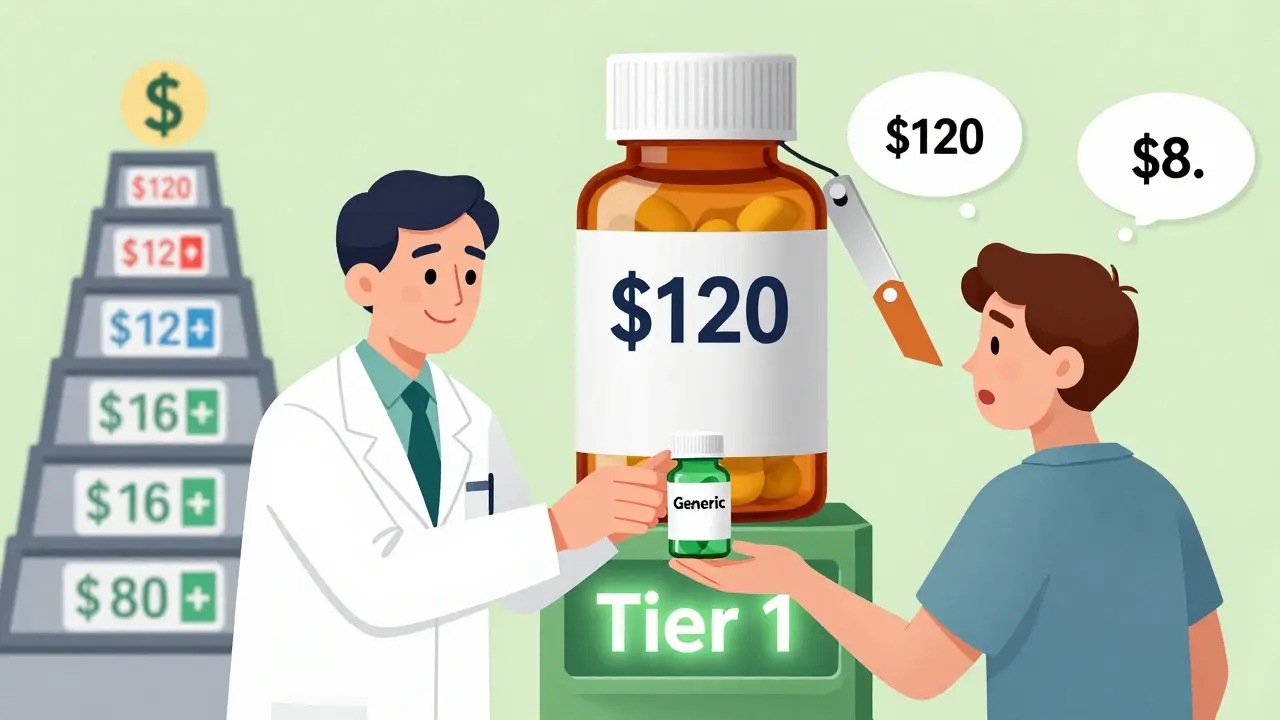
Most insurance plans use a tiered system to control costs. Think of it like a pricing ladder:
- Tier 1: Generics. Copays are usually $5-$15 for a 30-day supply.
- Tier 2: Preferred brand-name drugs. Copays jump to $30-$60.
- Tier 3: Non-preferred brands. You might pay $80 or more-or even a percentage of the total cost (coinsurance).
- Tier 4: Specialty drugs. Often no generics available. Copays can hit $100+ or 30-50% of the price.
Generics almost always land on Tier 1. Brands? They’re pushed up. And if there’s a generic available for your brand-name drug, your insurer will make you try the generic first. If you insist on the brand, you’ll pay the difference. For example, if your brand costs $120 and the generic is $8, you’ll pay $8 (the generic copay) plus $112 out of pocket. That’s not a mistake-it’s policy.
Why Insurers Push Generics So Hard
It’s not about controlling your choices. It’s about saving money-big money. In 2022, 90% of all prescriptions filled in the U.S. were generics. But those generics made up only 23% of total drug spending. That means for every $100 spent on prescriptions, $77 went to brand-name drugs. Generics saved the system $370 billion that year alone.
Medicare Part D plans, for instance, filled 91% of prescriptions with generics in 2022. Why? Because they’re required to. The law says pharmacists must substitute a generic unless the doctor writes “do not substitute.” Even then, you might still pay more. Some plans require you to pay the full brand price if you skip the generic-even if your doctor says it’s fine.
Pharmacy benefit managers (PBMs)-the middlemen between insurers and pharmacies-also push generics. They negotiate discounts with drugmakers. But those discounts are only available if you pick the generic. If you choose the brand, the PBM gets nothing. So they design policies to steer you away.
The Hidden Rules: Prior Authorization and Step Therapy
It’s not enough to just pick the cheaper option. Insurers often add extra hoops. Two big ones: prior authorization and step therapy.
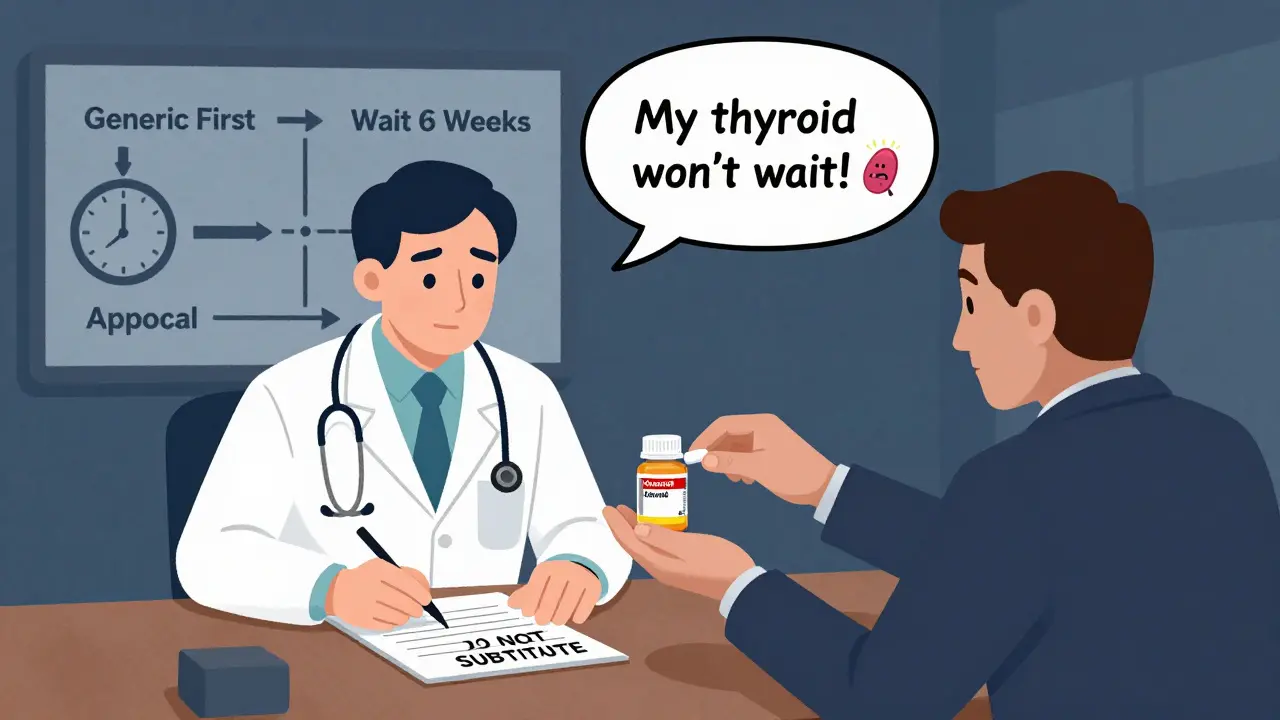
Step therapy means you have to try the generic first. If it doesn’t work-or causes side effects-you can appeal to use the brand. But that process can take weeks. One study found patients waited 6-8 weeks on average to get approval for a brand-name drug after two failed generic trials. For someone with chronic pain or epilepsy, that delay can be dangerous.
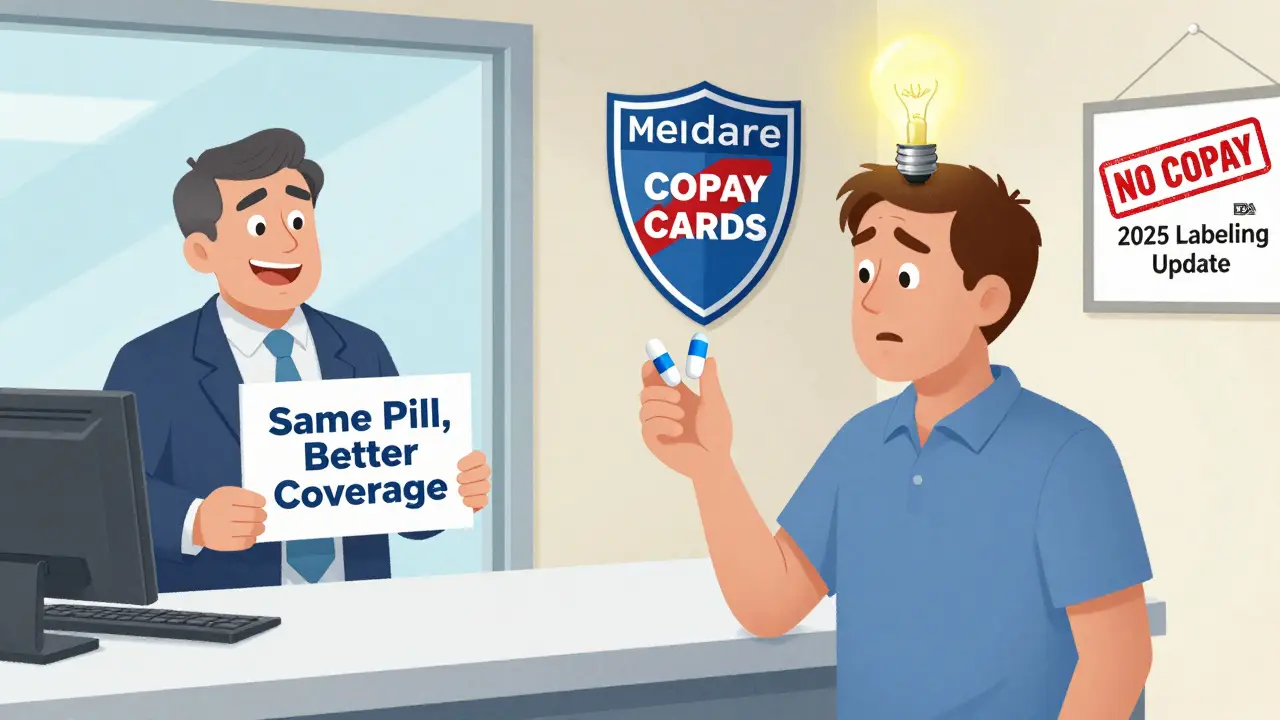
Prior authorization is even worse. For brand-name drugs, 22.7% require pre-approval. For generics? Only 2.1%. That means if you’re on a brand drug with no generic, your doctor has to fill out paperwork, wait for a response, and often call multiple times. The average wait? 3.2 business days. And if you’re on Medicare or Medicaid, you can’t use copay cards from drugmakers to lower your cost. Those are illegal for government plans.
When Generics Don’t Work-And What to Do
Here’s the uncomfortable truth: for some people, generics just don’t work the same way. Why? Because while the active ingredient is identical, the inactive ingredients-fillers, dyes, coatings-are different. These can affect how the drug is absorbed.
Thyroid medications like levothyroxine are a classic example. A 2022 study found patients switching from brand to generic had a 12.3% higher chance of abnormal thyroid levels. Same active ingredient. Different results. That’s why 27 states have special rules for drugs like this. In California, if a generic causes side effects, insurers must cover the brand. In Texas, they can’t cover the brand unless no generic exists.
And it’s not just thyroid. People report issues with epilepsy meds like Lamictal, ADHD drugs like Concerta, and antidepressants like Wellbutrin XL. On forums like Drugs.com, thousands of users describe sudden mood swings, seizures, or fatigue after switching to generics. These aren’t rare. They’re common enough that doctors now routinely write “do not substitute” on prescriptions for these drugs.
What You Can Do: Navigating Your Coverage
Here’s the reality: you’re not powerless. You can fight back.
- Ask your pharmacist: “Is there a generic? If so, what’s the copay difference?”
- Ask your doctor: “Can I get a ‘do not substitute’ note on my prescription?”
- Check your plan’s formulary online. Most insurers list it under “Drug List” or “Formulary.”
- If you’re denied, file an appeal. Use the phrase “medical necessity.” Include your doctor’s note.
- If you’re on Medicare, use the Plan Finder tool. It shows which drugs are covered and at what cost.
- For brand-name drugs, ask if the manufacturer offers a patient assistance program. Some give free or $0 copays-though not if you’re on Medicaid or Medicare.
And if you’re confused? You’re not alone. A 2022 AARP survey found only 28% of Medicare beneficiaries understood their plan’s generic substitution rules. Nearly half thought generics were less effective. That myth costs people money-and health.
The Bigger Picture: What’s Changing
Policy is shifting fast. The FDA is updating labeling in 2025 to clearly show which generics are truly interchangeable. Medicare is tightening prior authorization rules to cap approval times at 72 hours. And with more specialty drugs hitting the market-like biologics and injectables-there’s less room for generics. That means insurers will have to adapt.
Meanwhile, brand-name companies are playing the game too. Many now make their own “authorized generics”-exact copies sold under their brand name. These get better coverage than third-party generics because insurers see them as the same drug. It’s a loophole, but it works.
One thing’s clear: the system isn’t broken. It’s working exactly as designed-to save money. But for some patients, that design fails. And when it does, knowing your rights, your plan, and your options can mean the difference between getting better-and falling through the cracks.
Why do insurance companies make me try generics first?
Insurance companies require you to try generics first because they’re significantly cheaper-often 80-85% less than the brand. This saves the insurer money, which helps keep premiums lower for everyone. It’s a cost-control strategy built into most formularies. If the generic doesn’t work or causes side effects, you can appeal for the brand-name drug, but you’ll need documentation from your doctor.
Can I be forced to switch from my brand-name drug to a generic?
Yes, if your insurance plan lists a generic alternative and your doctor hasn’t written “do not substitute” on the prescription. Pharmacists are legally allowed to substitute generics unless told otherwise. But you can refuse the switch at the pharmacy counter. If you do, you’ll pay the full brand price unless your plan has a policy that covers the difference. Always check with your insurer before refusing a substitution.
Why do some people have bad reactions to generics?
Generics must contain the same active ingredient as the brand, but they can use different inactive ingredients-like fillers, dyes, or coatings. These can affect how the drug dissolves in your body. For drugs with a narrow therapeutic index-like levothyroxine, warfarin, or phenytoin-even small changes can cause side effects or reduced effectiveness. If you notice new symptoms after switching, talk to your doctor. You may qualify for a medical necessity exception.
What’s the difference between a generic and an authorized generic?
An authorized generic is made by the original brand-name company but sold under a generic label. It’s identical to the brand in every way, including inactive ingredients. These often get better insurance coverage than third-party generics because insurers treat them as the same product. For example, if your brand is made by Pfizer, the authorized generic might be made by Pfizer too-but sold under a different name. It’s cheaper than the brand but just as reliable.
Do Medicare and Medicaid cover brand-name drugs if generics exist?
Yes-but only if there’s a medical necessity. Medicare Part D requires pharmacists to substitute generics unless your doctor writes “do not substitute” or provides documentation that the generic caused problems. Medicaid follows similar rules but pays far less for generics, so they’re even more aggressive about substitution. You can’t use manufacturer copay cards on these programs, so your out-of-pocket cost for a brand-name drug can be very high unless you qualify for an exception.

Callum Duffy
March 3, 2026 AT 09:18It's fascinating how the system is engineered to prioritize cost over individual health outcomes. I've seen friends struggle with thyroid medication switches - same active ingredient, different fillers, and suddenly they're exhausted, depressed, or worse. The law says generics are equivalent, but biology doesn't care about regulatory definitions. Insurance policies treat patients like numbers, not humans. And yet, we're told to be grateful for savings.
It's not anti-generic to want consistency. It's human.
Chris Beckman
March 4, 2026 AT 12:36lol so basically insurance companies are just scamming us by makin us pay more for the same damn drug? i mean if its the same chemically why do they even have tiers???
Levi Viloria
March 5, 2026 AT 04:39There's something deeply ironic in how we've turned healthcare into a cost optimization puzzle. Generics aren't just cheaper - they're a symbol of systemic efficiency. But efficiency doesn't always mean equity. For some, the difference between a brand and a generic isn't financial - it's neurological, physiological, even existential.
The system isn't broken. It's optimized for the majority. And that’s the tragedy.
Richard Elric5111
March 6, 2026 AT 17:45The moral economy of pharmaceuticals reveals a fundamental tension: between collective resource allocation and individual autonomy. Insurers, as fiduciaries of pooled risk, are ethically obligated to minimize expenditure; yet, in doing so, they impose epistemic authority over therapeutic efficacy - an authority not grounded in clinical science but in actuarial modeling.
The substitution paradigm, while economically rational, constitutes a form of epistemic injustice: the dismissal of patient-reported outcomes as anecdotal, when in fact they constitute the very data upon which personalized medicine must be built.
Dean Jones
March 7, 2026 AT 13:22Let’s be real here - the entire structure is designed to make you feel like you’re getting a deal while quietly forcing you into a box. The tier system? It’s not about health. It’s about profit margins disguised as policy. And don’t get me started on PBMs - they’re the real villains. They negotiate rebates from drug companies, but those rebates only happen if you pick the generic. So they create policies that punish you for wanting the drug your body actually responds to.
And then there’s step therapy - a bureaucratic nightmare where you have to fail at something before you’re allowed to try what actually works. It’s like being told you can’t drive a Tesla until you’ve crashed three Toyotas. This isn’t healthcare. It’s a performance art piece about corporate control.
Meanwhile, the FDA is slowly waking up, but they’re still playing by the same rules. The authorized generics loophole? That’s the industry outsmarting itself. Pfizer makes a generic version of its own drug and calls it ‘authorized’ - suddenly, it’s covered better than the third-party generic. Because in this system, trust is currency, and brands still have more of it than anyone else.
The real solution? Abolish tiers. Make all generics and brands equal in coverage. Let doctors decide. Let patients decide. Let science, not spreadsheets, guide treatment. But that would require removing profit from the equation - and no one’s willing to do that.
Betsy Silverman
March 8, 2026 AT 22:41I work in a clinic and see this every day. A patient on levothyroxine switches to generic, gets dizzy, can’t focus, thinks they’re ‘going crazy.’ They come in terrified. We test them - TSH is way off. Switch back to brand - normal in two weeks. No one’s making this up. It’s not about ‘being picky.’ It’s about physiology.
And the worst part? Pharmacists are told to substitute unless the doctor says otherwise - but most patients don’t even know they have that right. We spend half our time educating people on how to fight their own insurance.
It’s exhausting. And it shouldn’t be this hard to get well.
Ivan Viktor
March 10, 2026 AT 11:35So insurance companies are basically the world’s most annoying parents: ‘Try the generic first, then we’ll talk.’ Like, no, I don’t want to try the knockoff of my seizure med. I want to not die.
Also, why is this even a thing? We’re not choosing between a Honda and a Toyota here. We’re choosing between ‘feels fine’ and ‘seizure in aisle 3.’
Zacharia Reda
March 11, 2026 AT 06:24Just read the part about Medicare not allowing copay cards - that’s brutal. You’re literally penalized for being on public insurance. Private patients can get $0 copays with manufacturer help, but if you’re on Medicare? Tough luck. You pay full price unless you qualify for a hardship exception.
And yet, we still act like this is a fair system. It’s not. It’s class-based healthcare dressed up as fiscal responsibility.
Jeff Card
March 11, 2026 AT 19:26My mom had to fight for three months to get her brand-name epilepsy med covered after the generic made her lose coordination. She’s 72. She had to get her neurologist to write a 3-page letter, call the insurer twice, and file a formal appeal. They finally approved it - but only after she nearly fell down the stairs.
I didn’t know any of this was even a thing until it happened to her. People need to talk about this more.
Matt Alexander
March 13, 2026 AT 18:08If your doctor says ‘do not substitute,’ just make sure the pharmacy sees it. Sometimes they miss it. Call them. Ask for the prescription to be flagged. And if they still give you the generic, walk out and ask for a new one. You’re not being difficult - you’re being smart.