
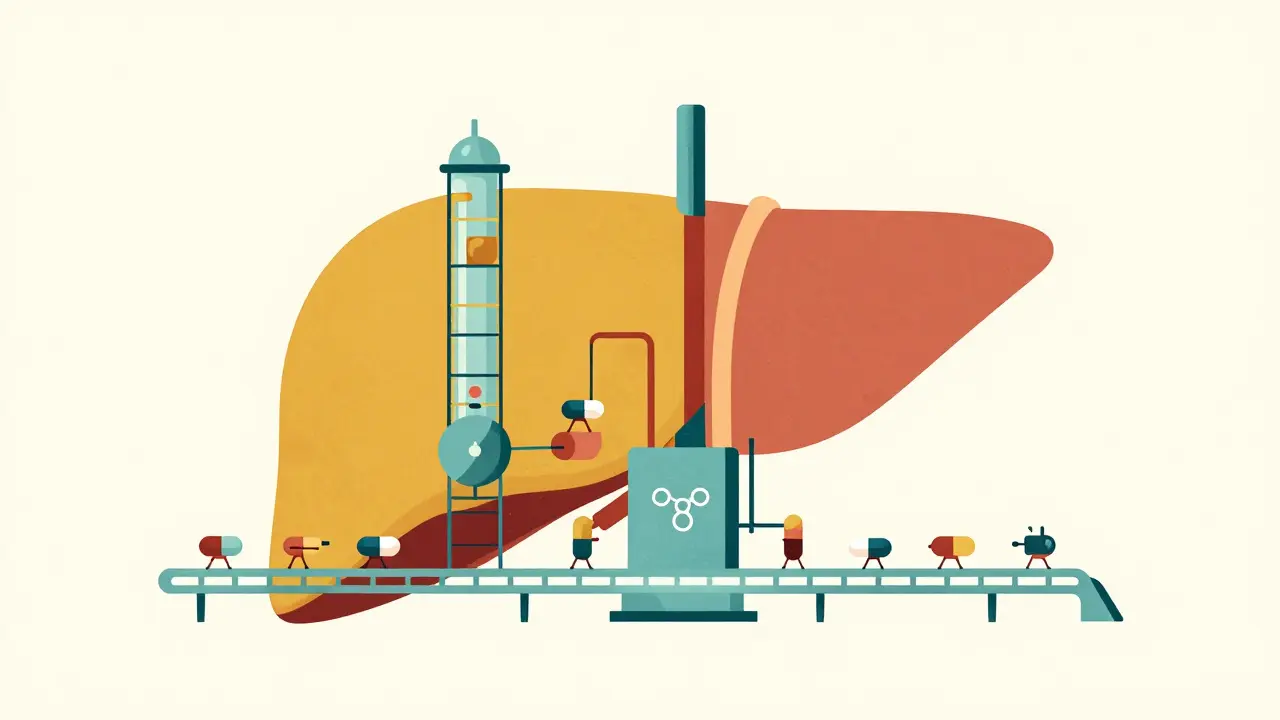
Taking an antibiotic while on HIV treatment might seem like a straightforward fix for a sudden infection, but the chemistry happening inside your body is anything but simple. The real danger isn't just that the drugs might not work; it's that they can either amplify each other to toxic levels or cancel each other out entirely. When you mix HIV medications and antibiotics, you're dealing with a high-stakes game of molecular chemistry where a single wrong prescription can lead to treatment failure or severe organ damage.
The core of the problem lies in how your body processes these chemicals. Most antiretrovirals aren't water-soluble, meaning they can't just be flushed out of your system. They need a "processing plant" to break them down first. That plant is the Cytochrome P450 is a family of enzymes in the liver responsible for metabolizing a vast array of medications, including most HIV drugs and many antibiotics. Specifically, an enzyme called CYP3A4 does the heavy lifting. When an antibiotic interferes with this enzyme, it creates a bottleneck or a shortcut that changes how much medicine stays in your bloodstream.
How Different HIV Drug Classes React
Not all HIV medications are created equal when it comes to interactions. Depending on which class of drugs you're taking, a new antibiotic could be a non-issue or a major clinical risk. For instance, NRTIs (Nucleoside Reverse Transcriptase Inhibitors) and INSTIs (Integrase Strand Transfer Inhibitors) generally have a "quiet" profile. Because they don't rely heavily on the CYP450 system for metabolism, they are often the preferred choice when a patient needs frequent antibiotics.
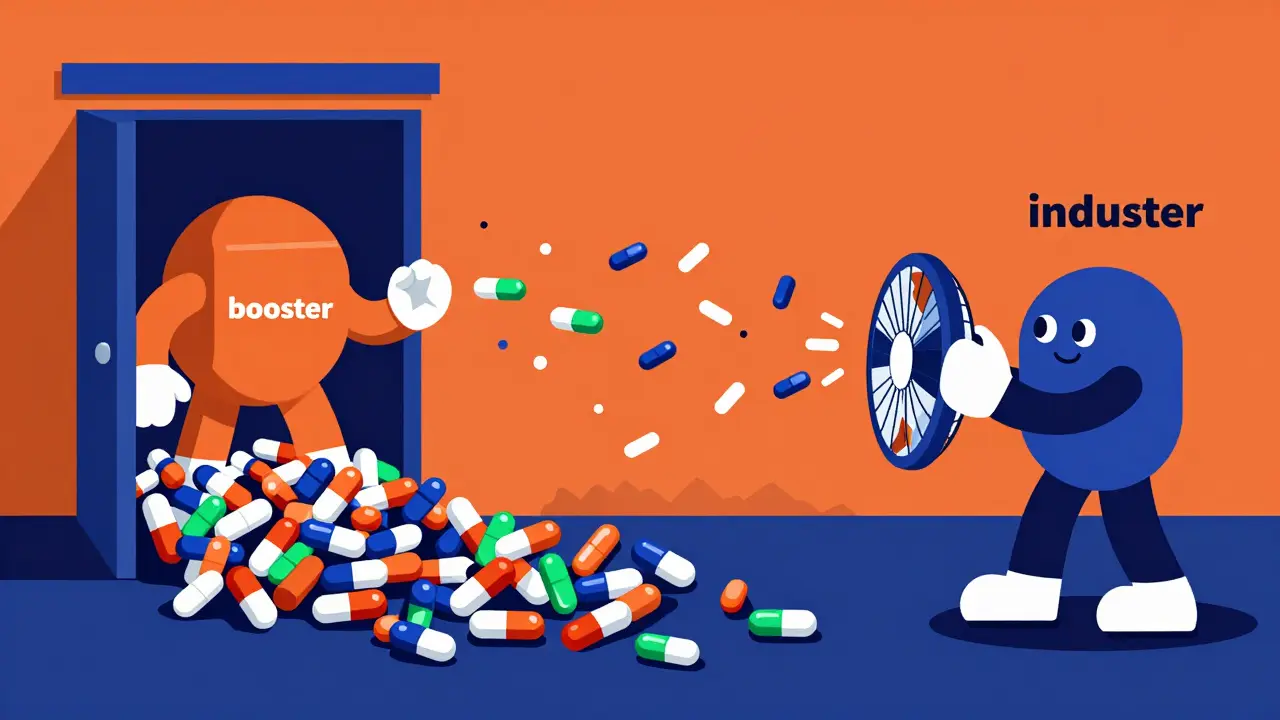
On the flip side, Protease Inhibitors (PIs) and Nonnucleoside Reverse Transcriptase Inhibitors (NNRTIs) are highly reactive. Protease inhibitors often use "boosters" like Cobicistat or Ritonavir. These boosters are designed to shut down the CYP3A4 enzyme to keep the main HIV drug at a high, effective level. However, if you take an antibiotic that also uses that same pathway, the booster can cause the antibiotic levels to skyrocket. For example, taking clarithromycin with a boosted protease inhibitor can increase the antibiotic's exposure in your body by as much as 80%, potentially increasing side effects.
| Drug Class | Interaction Risk | Primary Mechanism | Example/Note |
|---|---|---|---|
| INSTIs (e.g., Dolutegravir) | Low | Minimal CYP450 use | Preferred for polypharmacy |
| NRTIs (e.g., Tenofovir) | Low | Renal excretion | Watch for additive kidney toxicity |
| Protease Inhibitors (PIs) | High | CYP3A4 Inhibition/Induction | Often requires "boosting" |
| NNRTIs | Moderate to High | CYP450 Metabolism | Susceptible to enzyme inducers |
The Danger of Enzyme Induction: The Rifampin Problem
While inhibitors slow things down, "inducers" do the opposite-they rev up the liver's enzymes, causing the body to chew through medication far too quickly. The most notorious example here is Rifampin is a potent antibiotic used primarily to treat tuberculosis that strongly induces the CYP3A4 enzyme.
If you take Rifampin while on a boosted protease inhibitor or most NNRTIs, the Rifampin tells your liver to work overtime. This can slash the concentration of your HIV medication in your blood by up to 80%. When your medication levels drop that low, the virus can begin to replicate again, often leading to drug resistance. This is why Rifampin is generally contraindicated for people on these specific regimens. In cases where tuberculosis treatment is mandatory, doctors often switch to Rifabutin, which is less aggressive, though it still requires careful monitoring of drug levels.
Additive Toxicity: When the Damage Doubles
Sometimes the interaction isn't about the liver at all, but about where the drug ends up. Some medications are "nephrotoxic," meaning they can be hard on the kidneys. When you combine two drugs that both stress the kidneys, you risk acute kidney injury (AKI).
A clear example of this is the combination of fluoroquinolone antibiotics and Tenofovir Disoproxil Fumarate (TDF). Research has shown that using these together can increase the risk of kidney failure by more than three times compared to using them separately. It's not that one drug changes the level of the other; it's that they are both attacking the same organ. If you're on TDF, your doctor might opt for a different class of antibiotic to keep your kidneys safe.

Long-Acting Injectables: The "Hidden" Interaction
The shift toward long-acting injectable HIV medications, such as Cabotegravir or Rilpivirine, has changed the game. In the past, if you had a bad interaction, you could just stop taking your pill for a few days. With injectables, that's not an option. These drugs stay in your system for weeks-sometimes up to 56 days.
This means if you start a powerful antibiotic that interacts with your injectable, the interaction will persist for months, even after you've finished the course of antibiotics. This "long tail" of interaction requires a much more cautious approach to prescribing. Doctors have to consider not just what you're taking today, but what you'll be taking for the next two months.
Practical Strategies for Safe Management
Navigating these interactions requires a systematic approach. Because different medical databases-like Micromedex and the Liverpool HIV database-sometimes disagree on how severe an interaction is, the best defense is a combination of specialized tools and a detailed medication history.
- Use Specialized Checkers: Generic drug checkers often miss the nuances of HIV therapy. The University of Liverpool's HIV Drug Interactions tool is widely considered the gold standard because it's tailored specifically for ART.
- Prioritize "Clean" Antibiotics: When treating common infections, doctors often choose antibiotics that avoid the CYP450 pathway. For example, using Azithromycin instead of Clarithromycin for pneumonia avoids the CYP3A4 bottleneck entirely.
- Monitor Kidney Function: If you're on Tenofovir and starting a new antibiotic, requesting a creatinine clearance test can help ensure your kidneys are handling the load.
- Full Disclosure: This includes herbal supplements (like St. John's Wort, which is a potent inducer) and over-the-counter meds, as these can interfere with your HIV treatment just as much as a prescription antibiotic.
Can I take any antibiotic if I'm on HIV medication?
No. While many antibiotics are safe, others-especially those that affect the CYP3A4 enzyme like Rifampin or Clarithromycin-can either make your HIV meds less effective or cause the antibiotic to reach toxic levels in your blood. Always consult your HIV specialist before starting a new antimicrobial.
What happens if an interaction makes my HIV meds less effective?
If an antibiotic (like a potent inducer) lowers the concentration of your antiretrovirals, your viral load may increase. The biggest risk here is the development of drug resistance, meaning the HIV medication you've been using may stop working entirely, forcing a switch to a more complex regimen.
Why are "boosters" like Ritonavir a problem for antibiotics?
Boosters are designed to block the CYP3A4 enzyme to keep HIV meds in your system longer. However, since many antibiotics also rely on this enzyme to be broken down, the booster blocks the "exit door" for the antibiotic, leading to dangerously high levels of that antibiotic in your body.
Are there any antibiotics that are generally safer for HIV patients?
Yes, antibiotics that do not rely on the Cytochrome P450 system for metabolism are generally safer. For example, Azithromycin is often preferred over Clarithromycin because it doesn't interfere with CYP3A4. However, safety depends entirely on your specific HIV drug regimen.
Do long-acting injectables have different interaction rules?
Yes. Because injectables stay in the body for weeks or months, any interaction with an antibiotic will last as long as the injectable is present. You cannot simply "stop" the medication to resolve an interaction, making the initial choice of antibiotic critical.
