
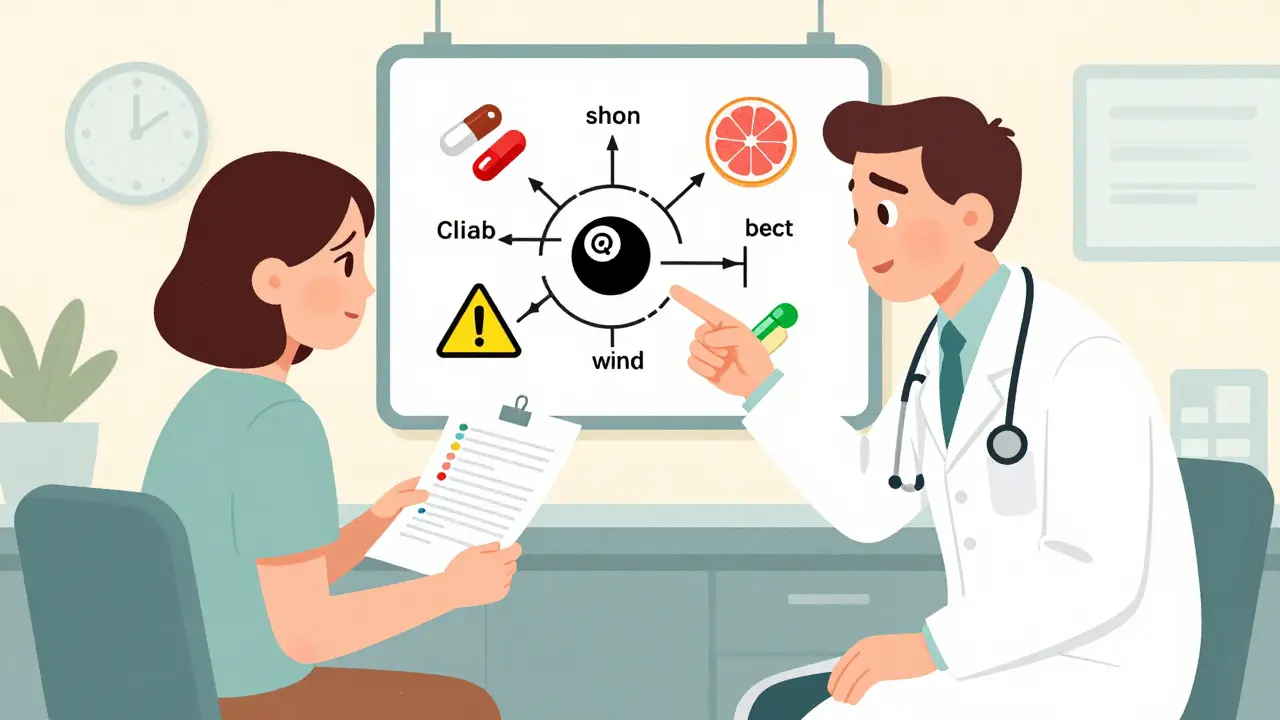
Getting a new prescription can feel overwhelming. You’re handed a pill bottle, a leaflet with tiny print, and maybe a quick explanation from your doctor. But one critical question often goes unasked: Will this interact with anything else I’m taking? It’s not just about avoiding a stomach upset-it’s about preventing hospital visits, dangerous bleeding, or even death. Every year in the U.S., over 1.3 million people end up in emergency rooms because of drug interactions. Many of these could have been avoided with a simple conversation.
Why Drug Interactions Are More Common Than You Think
Most people don’t realize how many substances they’re mixing daily. It’s not just prescription drugs. It’s the ibuprofen you take for headaches, the fish oil supplement you swallow with breakfast, the grapefruit juice you drink every morning, or even the over-the-counter cold medicine you grab when you feel a sniffle coming on. According to the National Center for Health Statistics, nearly half of American adults take at least one prescription medication. One in five take three or more. And one in eight take five or more. The more meds you take, the higher the chance something will clash. Drug interactions fall into four main types:- Drug-drug: When two or more medications affect each other-like warfarin and ciprofloxacin, which together can cause dangerous bleeding.
- Drug-food: Grapefruit juice can stop your body from breaking down statins, leading to toxic levels. Dairy products can block absorption of thyroid medication like Synthroid.
- Drug-supplement: St. John’s wort can make birth control, antidepressants, or blood thinners less effective.
- Drug-condition: Decongestants like pseudoephedrine can spike blood pressure in people with hypertension. Antihistamines can worsen glaucoma or an enlarged prostate.
The FDA tracks about 300 serious drug-drug interactions that require warning labels. Of those, 150 are life-threatening. And that’s just what’s officially listed. Real-world data shows that 83% of serious drug interactions could be prevented if patients simply talked more openly with their providers.
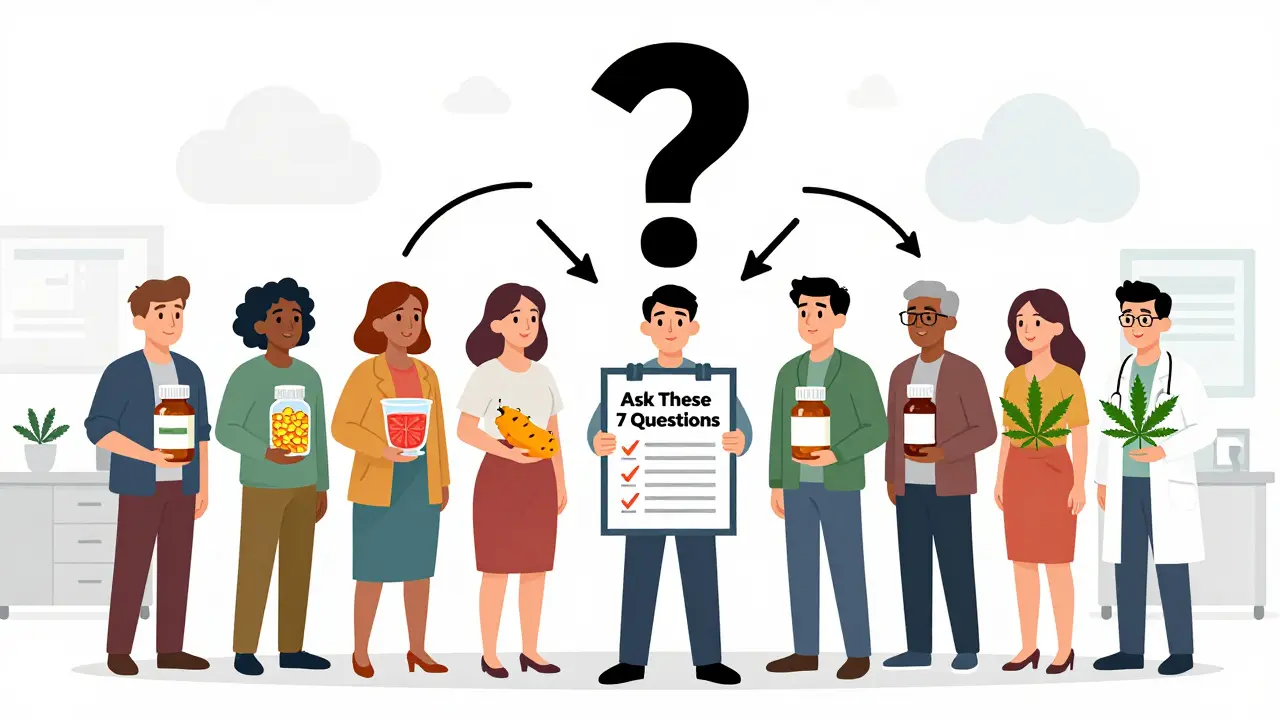
Seven Questions You Must Ask Your Doctor or Pharmacist
Don’t wait for them to ask you. Bring your own list of questions. Here are the seven most important ones, backed by the FDA, Cleveland Clinic, and major pharmacy networks:- Will this interact with my other medications, supplements, or vitamins? This is non-negotiable. Don’t assume your doctor knows everything you’re taking. Many patients forget to mention herbal teas, magnesium pills, or melatonin.
- Should I avoid certain foods, drinks, or products while taking this? Grapefruit juice, alcohol, caffeine, and even high-sodium foods can interfere with common drugs. Ask specifically.
- What side effects should I watch for-and which ones mean I need to go to the ER? Not all side effects are equal. Nausea might be annoying. Chest pain or sudden bruising? That’s urgent.
- Will this make my existing conditions worse? If you have heart disease, diabetes, kidney issues, or liver problems, ask if this drug could make them harder to control.
- Can I take this with my other meds at the same time? Some drugs need to be spaced out. For example, calcium supplements and thyroid meds should be taken at least four hours apart.
- Is there a safer or more effective alternative for my situation? Sometimes there’s another drug with fewer interactions. Don’t assume this is the only option.
- Have you checked my genetic profile for how I metabolize drugs? More doctors are now using pharmacogenetic testing. It can tell you if you’re a slow or fast metabolizer of certain drugs-which changes your risk for side effects or overdose.
Bring a Real List-Not Just Your Memory
Your memory is not reliable. You might forget that you took a new supplement last week. Or that you switched from one painkiller to another. Or that you started taking magnesium for sleep.Before your appointment, write down everything you take:
- All prescription drugs (including doses and how often)
- All over-the-counter meds (Tylenol, Advil, antacids, sleep aids)
- All vitamins, minerals, and supplements (even if you think they’re harmless)
- All herbal remedies (turmeric, echinacea, ginseng, etc.)
- Any recreational substances (alcohol, tobacco, cannabis)
Keep two copies: one at home, one in your wallet or phone. The Cleveland Clinic found that 68% of medication errors happen because the provider didn’t have a complete list. Don’t be a statistic.
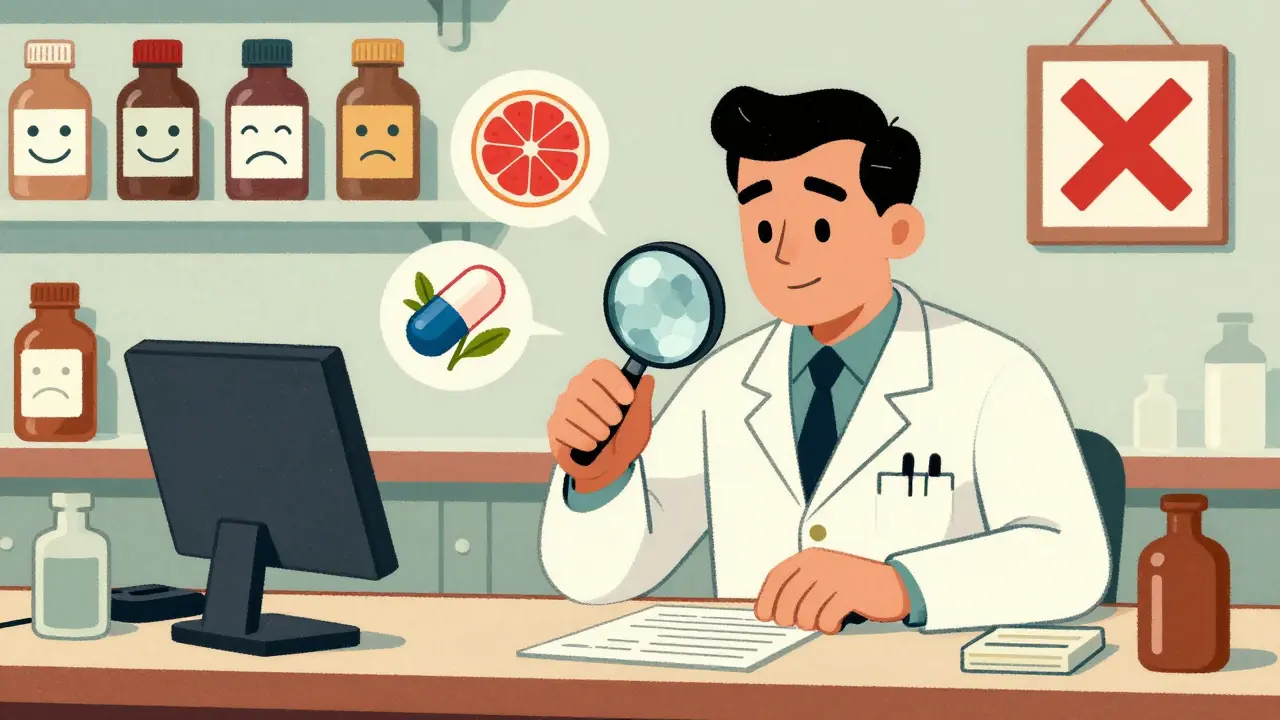
Your Pharmacist Is Your Best Ally
Your doctor writes the script. Your pharmacist checks it for safety. In fact, 92% of pharmacists perform full drug interaction screenings before dispensing any prescription. They’re trained to catch what doctors miss.When you pick up your new med, don’t just walk out. Ask your pharmacist:
- “Can you check this against everything else I take?”
- “Do you have a printed package insert I can keep?”
- “Is there a better time of day to take this to avoid interactions?”
Pharmacists also have access to advanced screening tools that flag interactions in real time. If something looks risky, they’ll call your doctor right away. That’s standard practice at major pharmacy chains like CVS, Walgreens, and Express Scripts.
What Happens When You Don’t Ask
The consequences aren’t theoretical. A 68-year-old man in Ohio started taking ciprofloxacin for a UTI. He was already on warfarin for atrial fibrillation. No one asked about the interaction. Within days, he started bleeding internally. He ended up in the ER, needed a blood transfusion, and spent a week in the hospital.That’s not rare. The CDC reports that drug interactions cause 700,000 emergency visits and 100,000 hospitalizations every year. Anticoagulants, diabetes drugs, and heart medications are the most common culprits. And it’s not just about pills. Over-the-counter decongestants like pseudoephedrine sent over 4,200 people to the ER in 2021 because they raised blood pressure in people who already had hypertension.
What’s Changing Now-and What’s Coming
The field is evolving. In 2015, only 5% of new drugs included genetic information about how they’re processed. By 2023, that number jumped to 28%. More pharmacies now use software that checks for gene-drug interactions alongside drug-drug ones. Companies like Genomind offer tools that combine your genetic profile with your medication list to predict risks.Within five years, experts predict genetic testing for medication metabolism will become standard for high-risk drugs like blood thinners, antidepressants, and painkillers. But here’s the catch: technology can’t replace conversation. The FDA says communication is still the most effective tool. No algorithm will know if you’ve been drinking more wine lately, or if you started taking turmeric because your friend said it helps arthritis.
What to Do Right Now
If you’re getting a new prescription today, do this before you leave the clinic:- 拿出你的药物清单(包括所有补充剂)
- Ask the doctor: “Will this interact with anything else I’m taking?”
- Ask the pharmacist: “Can you check this against my full list?”
- Ask: “What’s the one side effect I should never ignore?”
- Ask: “Is there a different option if this causes problems?”
Don’t be shy. You’re not wasting their time-you’re saving your life. Most doctors and pharmacists appreciate patients who ask smart questions. It makes their job easier and safer.
Medications are powerful. They can heal. But they can also harm-if you don’t know how they’re working together. A few minutes of honest talk today could prevent months of pain-or even death-tomorrow.
What should I do if I realize I missed telling my doctor about a supplement I take?
Call your doctor’s office or pharmacy as soon as possible. Even if you’ve already started the new medication, it’s not too late. Many interactions can be managed by adjusting the dose, timing, or switching to a different drug. Don’t wait for symptoms to appear-act early.
Can I rely on online drug interaction checkers like WebMD?
They’re helpful for general awareness, but not a substitute for professional advice. WebMD’s tool covers over 24,000 medications and 4,000 supplements, but it doesn’t know your full medical history. It won’t know if you have kidney disease or if you’re taking a low-dose aspirin your cardiologist prescribed. Always confirm with your pharmacist or doctor.
Do I need to tell my doctor about alcohol or cannabis use?
Yes. Alcohol can intensify sedatives, painkillers, and antidepressants. Cannabis can affect blood pressure, heart rate, and how your liver processes certain drugs. Doctors need this info to avoid dangerous combinations. They’re not there to judge-they’re there to keep you safe.
What if my doctor says there’s no interaction, but I still feel strange?
Trust your body. Symptoms like dizziness, unusual bruising, rapid heartbeat, confusion, or nausea after starting a new drug should never be ignored. Call your pharmacist-they can check your full list and advise if it’s a known interaction. If symptoms are severe, go to urgent care. It’s better to be safe than sorry.
Are natural supplements really dangerous with prescription drugs?
Absolutely. Many people assume “natural” means safe, but that’s not true. St. John’s wort can make birth control fail. Garlic and ginkgo can increase bleeding risk with blood thinners. Turmeric can interfere with diabetes meds. Always list them-even if you think they’re “just herbs.”
Can I ask for a different medication if the interaction risk is high?
Yes, and you should. Doctors often prescribe the first-line drug without knowing your full history. If you have multiple conditions or take several meds, ask: “Is there another option with fewer interactions?” There are often alternatives with similar benefits but lower risk.
How often should I update my medication list?
Every time you start, stop, or change a medication-even a vitamin. Keep your list updated in your phone and wallet. Bring it to every appointment, even if you think nothing’s changed. Small changes add up, and interactions can build over time.

Jake Kelly
January 9, 2026 AT 22:00Just started a new blood thinner and I forgot to mention my daily turmeric shot. Learned the hard way when I bruised like a grape. Always bring the list. Always.
lisa Bajram
January 9, 2026 AT 23:31OMG YES. I used to think 'natural' meant 'safe' until my pharmacist pulled me aside after I took St. John’s wort with my antidepressant. She looked at me like I’d just tried to microwave a fork. Now I hand her my entire medicine cabinet every time. She’s my guardian angel in a white coat. 🙏
Michael Marchio
January 10, 2026 AT 06:39People still don’t get it. It’s not rocket science. You’re not special. You’re not exempt. You take five meds, a dozen supplements, drink grapefruit juice like it’s water, and then wonder why you’re dizzy or bleeding internally. The data is clear. The warnings are everywhere. You’re not too busy to list your meds-you’re just too lazy to care. And now you’re risking your life because you didn’t want to write down that you take melatonin or fish oil. Wake up. This isn’t a suggestion. It’s a survival checklist. And if your doctor doesn’t ask, ask them. Hard. And then ask again. Because your life isn’t a game of Russian roulette with pharmacology.
Ashlee Montgomery
January 11, 2026 AT 08:02I used to think my doctor knew everything I took. Then I realized he didn’t even know I’d stopped taking my blood pressure med last month because I ran out and forgot to refill. Now I keep a physical card in my wallet and update it every Sunday. I even include the brand of my multivitamin. It’s not about being obsessive-it’s about being alive. The system doesn’t work unless you’re the one holding the pieces together.
neeraj maor
January 11, 2026 AT 19:01They don’t want you to know this but the FDA only lists 300 interactions because the rest are covered up. Big Pharma doesn’t want you to know how many drugs are designed to fail together so you need more meds. The real danger isn’t grapefruit-it’s the corporate algorithm that profits when you end up in the ER. They track your prescriptions, your supplements, your coffee intake. They know you’re vulnerable. And they’re not helping. They’re harvesting.
McCarthy Halverson
January 13, 2026 AT 04:05Pharmacist check is non-negotiable. Always. Even if you think it’s just a simple antibiotic. I’ve seen too many people get sent home with a script that clashes with their statin. Five minutes at the counter saves a hospital trip. Do it.
Paul Bear
January 14, 2026 AT 22:37It’s statistically indefensible to not maintain a dynamic, timestamped, cross-referenced medication inventory. The CDC’s 1.3 million ER visits are not anecdotes-they are preventable data points resulting from cognitive neglect. You are not a patient. You are a pharmacokinetic variable. Treat yourself accordingly. And for God’s sake, capitalize ‘I’ and use serial commas.
Dwayne Dickson
January 15, 2026 AT 16:08Wow. Another post telling people to ‘just ask your doctor.’ As if the average person has 45 minutes to sit through a 12-minute appointment where the doctor scrolls through their phone while nodding. And then you go to the pharmacist who’s rushing 17 people ahead of you. This isn’t advice. It’s a luxury for people who don’t work two jobs and have no healthcare access. The real solution? Universal pharmacovigilance. Not ‘ask more questions.’
Aurora Memo
January 17, 2026 AT 07:55I’m 72 and on eight meds. I used to be terrified to say anything. Now I bring my list. I ask the questions. I don’t apologize. I’ve saved myself from two bad interactions already. You’re not being difficult-you’re being responsible. And that’s something to be proud of.
Ted Conerly
January 18, 2026 AT 09:44Just had my pharmacist call my doctor because my new painkiller clashed with my thyroid med. She didn’t just check-she called them on the spot. That’s the kind of care you pay for but don’t always get. Don’t walk out without asking. Seriously.
Ritwik Bose
January 19, 2026 AT 11:24Dear friends, I am from India, and here, many people take Ayurvedic herbs without telling doctors. I once saw a man collapse after mixing ashwagandha with his heart medication. Please, no matter where you are, always disclose everything. Safety has no borders. 🙏
Bradford Beardall
January 20, 2026 AT 10:40I work in a pharmacy and see this every day. People say ‘I only take one thing’ and then pull out five bottles from their purse. One guy had 17 different supplements. I asked him why. He said, ‘Because the internet told me to.’ That’s not healthcare. That’s a buffet of risk. Please. Just write it down.
Kunal Majumder
January 20, 2026 AT 17:01My dad died because he didn’t tell his doctor he was taking garlic pills with his blood thinner. It took three weeks for them to figure out why he was bleeding internally. Don’t wait. Talk. Write. Ask. Please.
chandra tan
January 21, 2026 AT 07:31Bro, I just told my doc I smoke weed daily. He didn’t blink. Just asked if I took my antidepressants at night. We adjusted my dose. No judgment. Just care. You’d be surprised how normal this stuff is to them.
Faith Edwards
January 21, 2026 AT 23:55It’s frankly embarrassing that we’ve reached a point where patients must arm themselves with spreadsheets and flashcards just to avoid being poisoned by the very system meant to heal them. The fact that this post even needs to exist is a indictment of modern healthcare’s systemic collapse. You’re not the problem. The system is.