
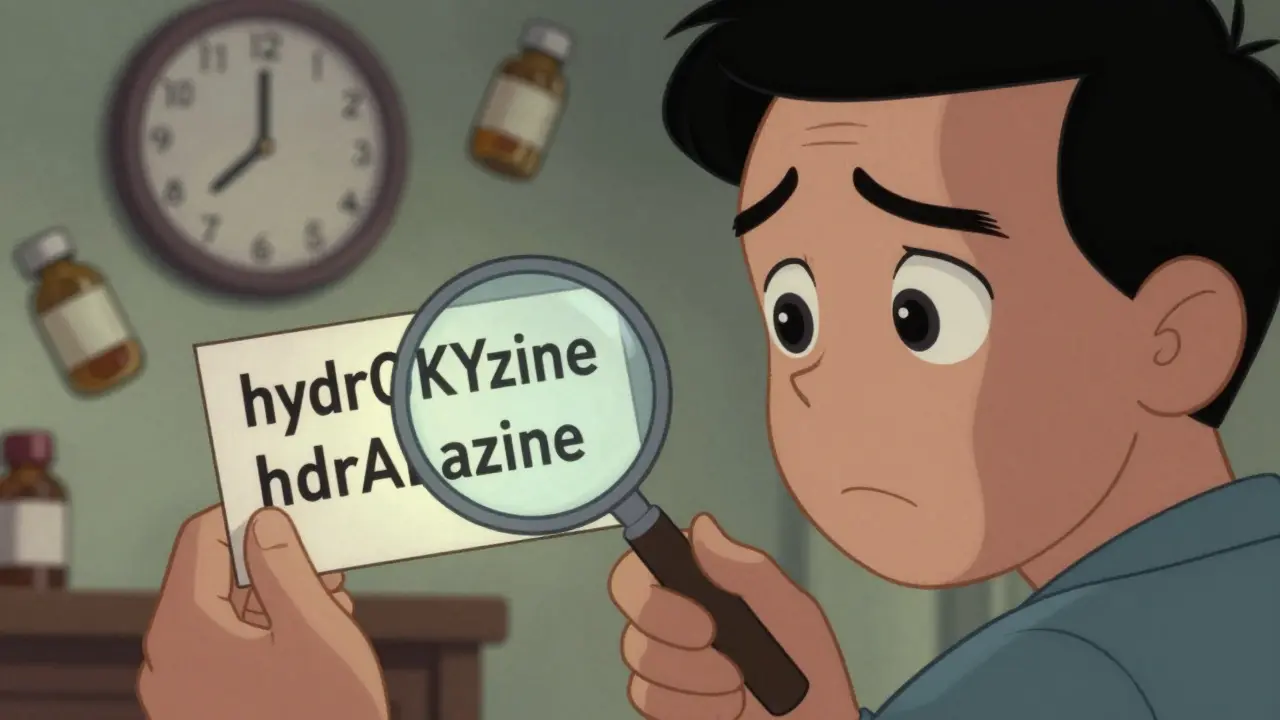
Why Look-Alike Drug Names Are a Silent Threat
Imagine picking up a prescription for hydroCODONE-but the label accidentally says hydroALAzine. One letter difference. Same size font. Same color. One could be for pain, the other for high blood pressure. Mix them up, and you’re not just risking a bad reaction-you’re risking hospitalization or worse.
This isn’t hypothetical. Every year, thousands of patients in the U.S. and Australia are affected by look-alike and sound-alike (LASA) drug names. The Institute for Safe Medication Practices says about 1 in 4 medication errors comes from names that look or sound too similar. These aren’t typos. They’re design flaws in how drugs are named-and they’re still happening today, even with technology in place.
Some of the most dangerous pairs include:
- HydrOXYzine (for allergies) vs. hydrALAzine (for high blood pressure)
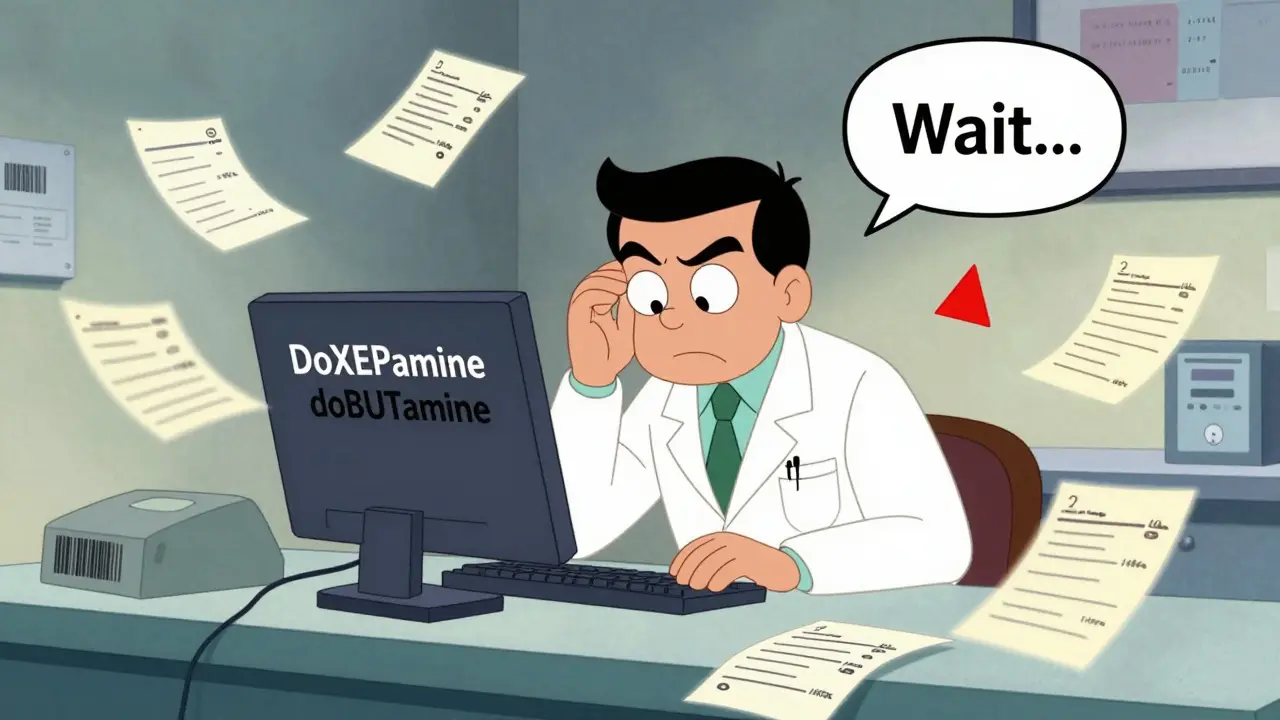
- DoXEPamine (for depression) vs. doBUTamine (for heart failure)
- CISplatin (for cancer) vs. CARBOplatin (also for cancer, but different dosing)
- Valtrex (valACYclovir) vs. Valcyte (valGANciclovir)
These aren’t random mistakes. They’re the result of drug companies naming new medications without enough scrutiny. And when pharmacists, nurses, or even patients are rushing-especially during late-night shifts or busy clinic hours-these tiny differences disappear in the noise.
What Is Tall Man Lettering-and How It Helps
The biggest tool we have to fight this problem is called tall man lettering. It’s simple: you capitalize the parts of the drug name that are different. So instead of writing "hydroxyzine" and "hydralazine," you write hydrOXYzine and hydrALAzine.
This isn’t just a suggestion. It’s a standard. The U.S. Food and Drug Administration (FDA) has been pushing this since 2001. By 2023, they officially recommended tall man lettering for 35 high-risk drug pairs. Hospitals, pharmacies, and electronic health systems are required to use it.
Studies show it works. One 2006 study found that when tall man lettering was used, visual confusion dropped by 32%. That might not sound like much-but in a hospital that handles 5,000 prescriptions a week, that’s over 150 errors prevented every week.
But here’s the catch: tall man lettering only works if it’s applied everywhere. If your EHR system shows hydrOXYzine, but the printed label from the pharmacy doesn’t, you’re back to square one. Nurses in ICU units have reported this exact problem-switching between screens and paper labels, and getting confused because the formatting doesn’t match.
How to Spot Look-Alike Names Like a Pro
You don’t need to be a pharmacist to catch these errors. Here’s how to train yourself to spot them:
- Look for the first 3-5 letters. Most confusing pairs share the same start. For example, both clonIDINE and clonAZepam begin with "clon." That’s your red flag.
- Check the ending. Many errors happen because the last syllable sounds similar. metOPROlol and metFORMIN look nothing alike-but if someone says them fast, they can sound alike. Say them out loud.
- Use tall man lettering as your guide. If you see a drug name with some letters in uppercase, pause. That’s the system telling you: "This one is dangerous if mixed up." Memorize the most common pairs in your setting.
- Compare brand and generic names. Sometimes, brand names hide the danger. Valtrex (valACYclovir) and Valcyte (valGANciclovir) both start with "Val." If you only know the brand name, you won’t see the risk. Always check the generic too.
- Don’t trust memory. Even experienced staff get tricked. One pharmacist told me he’d been working for 15 years and still mixed up oxyCODONE and oxyBUTin once-because he’d seen "oxy" so many times.
Keep a printed list of the top 10 LASA pairs used in your clinic or pharmacy. Tape it to your workstation. Review it every Monday. It takes 30 seconds-and it could save a life.
Why Technology Alone Isn’t Enough
Many hospitals think they’re safe because they use electronic prescribing or barcode scanning. But technology can create a false sense of security.
Barcode scanning prevents 89% of errors-if it’s used correctly. But if a nurse scans the wrong vial because the label is blurry, or if the system doesn’t flag the pair because it’s not programmed to, the error still happens.
Computer alerts? They’re useful-but they’re also annoying. A 2021 study in JAMA Internal Medicine found that clinicians ignore nearly half of all LASA alerts because they get too many. It’s like crying wolf. If every alert is for something minor, you stop listening.
And handwritten prescriptions? They’re still everywhere. A 2023 survey found that 41% of LASA errors happened because a doctor scribbled a name that looked like another. No tall man lettering. No barcode. Just a shaky pen.
The truth? No single tool fixes this. You need a system: tall man lettering + barcode scanning + clear labeling + staff training + double-checking. Skip one, and the risk creeps back in.
What You Can Do Right Now
Whether you’re a patient, caregiver, or healthcare worker, here’s what you can do today:
- Always read the full label. Don’t just glance at the top. Read the generic name, the strength, and the instructions. If it’s written in all caps or has strange capitalization, ask why.
- Ask: "What is this for?" If you’re given a drug you don’t recognize, ask the pharmacist: "What condition is this treating?" Adding the purpose to the label-like "for seizures" or "for high blood pressure"-cuts errors by 59%, according to a 2022 study.
- Use the 3-step rule: 1) Read the label when you pick it up. 2) Read it again when you hand it to someone else. 3) Read it one last time before taking it. This reduces errors by over 50%.
- Report inconsistencies. If you see a drug name without tall man lettering on a label, tell the pharmacy. If your EHR shows two similar names side by side, report it. These systems improve only when people speak up.
- Teach others. Show your family members how to read a prescription label. If your parent takes 5 medications, they need to know the difference between levoTHYROXINE and levoDOPA.
The Bigger Picture: What’s Changing
The fight against LASA errors isn’t slowing down. In September 2023, the FDA added 12 new drug pairs to its tall man lettering list. By December 2024, all U.S. healthcare systems must use it. Australia is following suit.
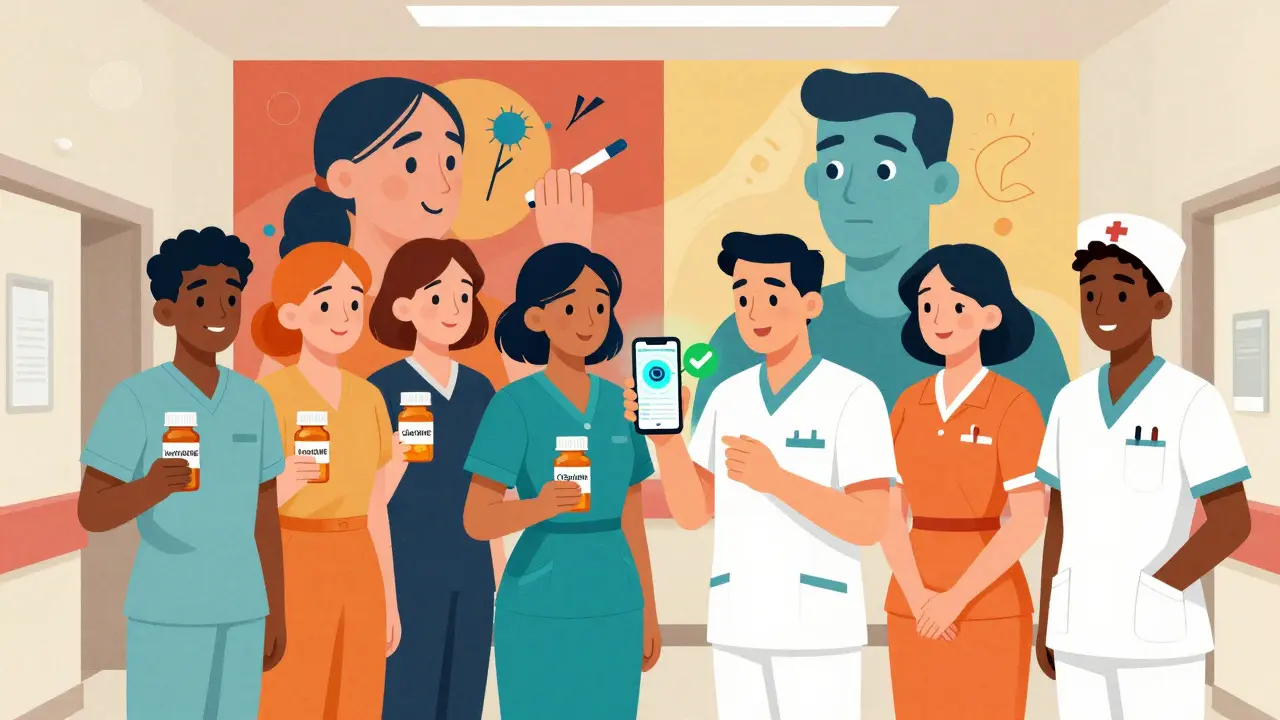
New tools are coming too. Google Health’s AI model, Med-PaLM 2, can now predict which drug names are likely to be confused with 89% accuracy. Hospitals are testing smartphone apps that use your camera to scan pill bottles and flag look-alikes in real time.
But the biggest change? The shift from blaming people to fixing systems. In the past, if someone mixed up two drugs, they were blamed. Now, hospitals are asking: "Why did the system let this happen?" They’re redesigning labels, retraining staff, and forcing software vendors to fix their databases.
It’s working. Johns Hopkins Hospital cut LASA errors by 67% in two years by combining tall man lettering, purpose-of-treatment notes, and better alerts. That’s not luck. That’s design.
Final Thought: Your Eyes Are Your Best Tool
Technology helps. Systems matter. But in the end, the person holding the bottle or scanning the barcode is still the last line of defense.
Take a breath. Slow down. Read the whole label. Look for the capital letters. Ask the question. Don’t assume. Don’t rush.
Because in medicine, a single letter can change everything.

Solomon Ahonsi
February 2, 2026 AT 11:54George Firican
February 4, 2026 AT 09:41Matt W
February 4, 2026 AT 18:32Anthony Massirman
February 6, 2026 AT 15:10Brittany Marioni
February 6, 2026 AT 21:36phara don
February 7, 2026 AT 19:37Bob Hynes
February 9, 2026 AT 00:17Eli Kiseop
February 9, 2026 AT 19:38