
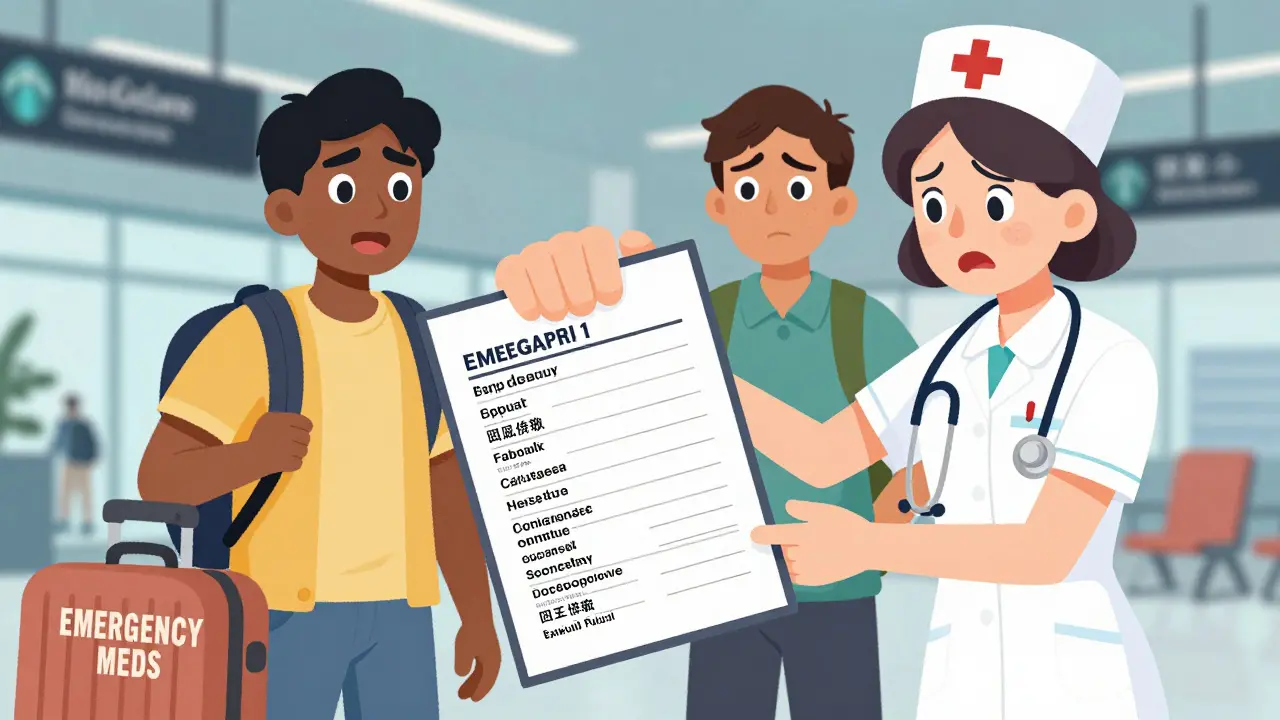
When you’re traveling abroad and suddenly feel unwell, the last thing you want is to struggle to explain what medicines you take. A heart pill. A blood thinner. An allergy medication. If the ER staff doesn’t understand your words, they might miss something critical - and time is everything.
That’s why a multilingual medication list isn’t just helpful. It’s life-saving.
You don’t need to be fluent in French, Spanish, or Mandarin to stay safe overseas. You just need a simple, clear, printed or digital list that tells healthcare workers exactly what you’re taking - in their language.
Why a Multilingual Medication List Matters
Studies show that patients who can’t communicate their medications during emergencies face a 50% higher risk of medication errors. In one 2020 study published in JAMA Internal Medicine, patients with a translated medication list had 28% fewer mistakes when admitted to the hospital. That’s not a small number. That’s the difference between getting the right treatment and nearly dying.
Language barriers aren’t just about speaking differently. They’re about misunderstanding. A word like “aspirin” might be clear in English, but in some countries, people refer to it as “acetylsalicylic acid” - a term that sounds like a chemical formula, not medicine. Or worse, a patient might say they take “herbal tea for blood pressure,” but the doctor hears “supplement” and assumes it’s harmless. That’s dangerous.
And it’s not rare. In the U.S. alone, over 25 million people have limited English proficiency. Globally, millions more travel each year with chronic conditions - diabetes, epilepsy, high blood pressure - and carry no way to explain their treatment.
What to Include on Your Medication List
A good list doesn’t need to be fancy. It needs to be complete. Here’s what every version should have:
- Medication name - Use the brand name and generic name. Example: Metformin (Glucophage)
- Dosage - How much? 500 mg, 10 mg, 1 tablet
- Frequency - When? Once daily, twice a day, every 8 hours
- Purpose - Why are you taking it? “For high blood pressure,” “For type 2 diabetes”
- Prescribing doctor - Name and clinic, if possible
- Start date - When did you begin this medication?
- Allergies - Penicillin? Sulfa? Any reaction? Write it clearly.
- Herbs and supplements - Turmeric, ginseng, fish oil - these matter too. Many doctors don’t ask.
Don’t forget: If you take insulin, write the type (e.g., Lantus, Humalog) and how you inject it. If you use an inhaler, note the brand and how many puffs per day. Details save lives.
Where to Find Reliable Multilingual Lists
You don’t have to translate this yourself. Several trusted organizations already offer free, professionally translated templates.
The Tennessee Pharmacists Association’s Universal Medication List (UML) is one of the most widely used. It’s available in 10 languages: English, Spanish, Chinese, Vietnamese, Korean, Arabic, Russian, Somali, Nepali, and French. Each version matches the exact same layout, so no matter which language you use, the structure stays the same. It’s printable, free, and designed for emergency rooms.
NPS MedicineWise, from Australia, offers a digital app that’s easy to use. The app lets you enter your meds, set reminders, and switch between 11 languages including Arabic, Chinese, Hindi, Korean, Persian, Punjabi, Spanish, Tamil, and Vietnamese. It works offline, so you don’t need Wi-Fi in a foreign hospital. The app has been used by over 1.2 million people since 2015.
MedlinePlus, run by the U.S. National Library of Medicine, provides health info - including medication guides - in over 40 languages. While it doesn’t have a fillable form, you can download their medication fact sheets and adapt them into your own list.
The British Red Cross Emergency Multilingual Phrasebook isn’t a medication list, but it’s a powerful backup. It includes phrases like “I take medication for high blood pressure,” “I am allergic to penicillin,” and “I need my medicine now.” Translated into 36 languages, it’s perfect for handing to a nurse or paramedic when you’re too sick to speak.
Digital vs. Paper: Which Should You Use?
Both have strengths. Many people use both.
Digital options like the MedicineWise app are great because they’re always with you - on your phone. You can update them instantly. They can send reminders. They store photos of your prescriptions. But what if your phone dies? Or you lose it? Or the hospital doesn’t let you use your phone?
Printed copies are foolproof. Keep one in your wallet. One in your travel bag. One taped inside your passport. Give one to a travel companion. Make sure it’s laminated or in a plastic sleeve so it doesn’t get ruined by rain or sweat.
Pro tip: Take a photo of your printed list and email it to yourself. That way, if you lose the paper, you can pull it up from any device.
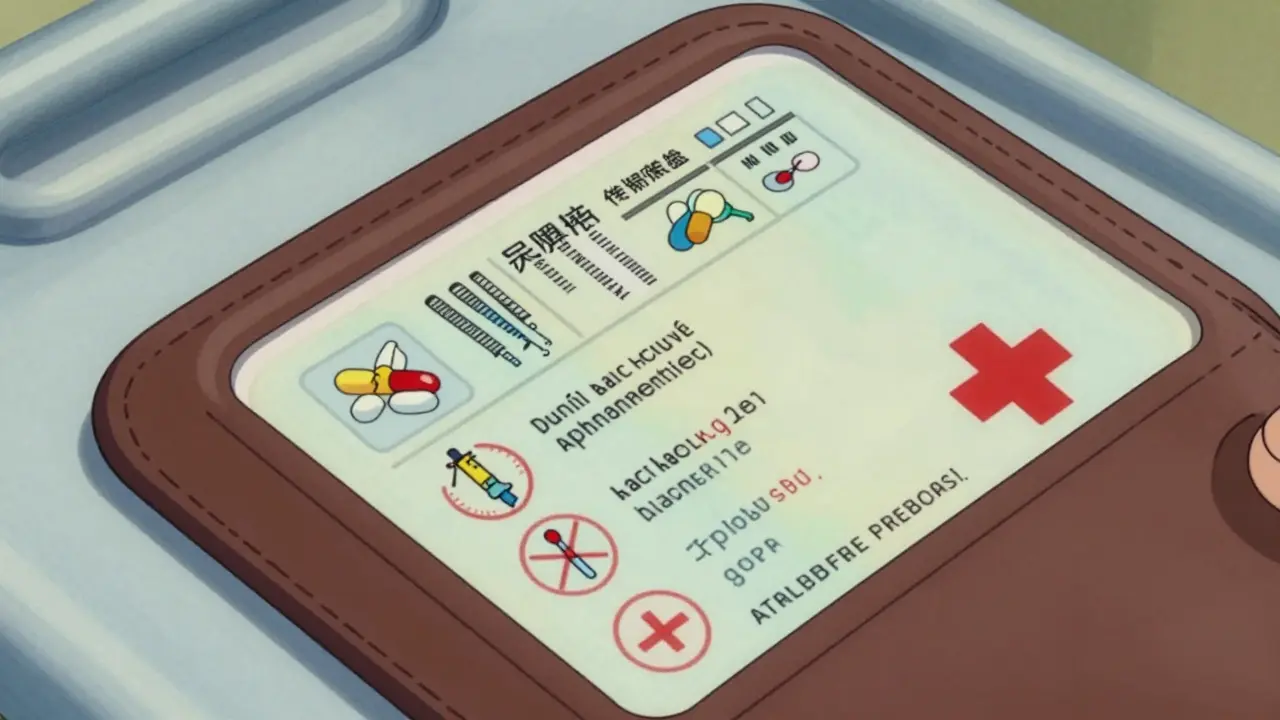
Don’t Forget Cultural and Regional Differences
Translation isn’t enough. Sometimes, the same word means different things in different places.
For example: In some countries, “paracetamol” is the common name for what Americans call “acetaminophen.” In others, “Tylenol” is the only name people know. If your list says “acetaminophen” but the doctor only knows “paracetamol,” they might think you’re not taking anything.
Also, many people take traditional medicines - herbal teas, Ayurvedic pills, Chinese tonics. These aren’t always listed on Western prescriptions. But they can interact dangerously with modern drugs. Write them down. Even if you think they’re “just herbs.”
One woman from Vietnam shared on Reddit that her grandmother took a traditional rice wine remedy for circulation. The ER staff in Australia didn’t know what it was. They assumed it was alcohol. The interaction with her blood thinner nearly caused a stroke. If she’d written it on her list - in Vietnamese and English - they could’ve checked the risk.
How to Use Your List in an Emergency
When you’re in trouble - chest pain, dizziness, severe rash - don’t wait to be asked. Hand over your list immediately.
Here’s how:
- Stay calm. Breathe.
- Find the nearest staff member - nurse, orderly, doctor.
- Hand them your printed list or show them your phone screen.
- Say: “I take these medications. I am allergic to [name].”
- Point to the relevant items.
If they don’t speak your language, point to the translated version. If they still seem confused, use the British Red Cross phrasebook. Say: “I need help with my medicine.”
Don’t assume they’ll ask. Don’t wait for an interpreter. You’re the expert on your own body. Be the first to speak up.
Update It Like You Update Your Passport
Your medication list isn’t a one-time thing. It changes. New drugs. Stopped pills. Changed doses.
Set a reminder: Every time you see your doctor, pharmacist, or nurse, ask them to review your list. Update it right then. Keep the old version and mark it “OLD.”
People who update their lists regularly are 47% more likely to use them correctly during emergencies, according to the U.S. Office of Minority Health. That’s because they’re not guessing. They’re reading what’s current.
And if you’re traveling for more than a few weeks? Make a new printed copy before you leave. Double-check that all languages are still accurate. Some translations get updated.
What to Do If You Can’t Find Your Language
Not every language is covered. If your native tongue isn’t in the list - say, Hmong, Karen, or Amharic - you still have options.
Use Google Translate or DeepL to translate your English list into your language. Then, ask a trusted bilingual friend to check it. Don’t rely on machine translation alone - medical terms can go wrong.
Or, write your list in English and create a simple glossary on the back:
- Metformin = ยาเม็ดควบคุมน้ำตาล (Thai for “sugar control pill”)
- Warfarin = ยาป้องกันลิ่มเลือด (Thai for “blood clot prevention pill”)
This isn’t perfect - but it’s better than nothing.
And if you’re part of a community group, church, or cultural association? Talk to your local pharmacist. Ask them to help create a version in your language. Many will do it for free.
Final Tip: Make It Visible
Don’t tuck your list away in a folder. Make it impossible to miss.
- Put a copy in your wallet, next to your ID.
- Keep one in your carry-on bag, easily accessible.
- Stick a small version on your phone’s lock screen as a wallpaper.
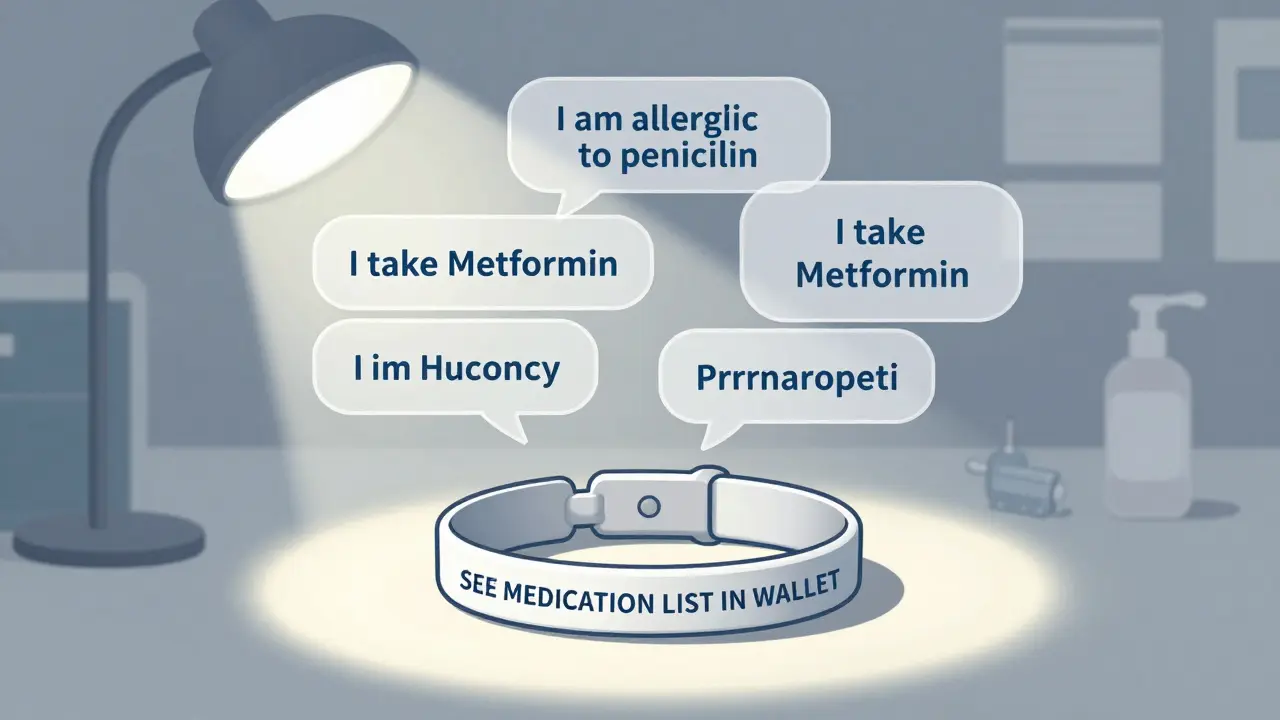
- Wear a medical alert bracelet that says: “See Medication List in Wallet.”
Emergency responders are trained to check wallets and bracelets. If they see that note, they’ll look - and they’ll find your list.
It’s not complicated. It’s not expensive. But it’s one of the smartest things you can do before you leave home.
Do I need a multilingual list if I speak English?
Yes. Even if you speak English, you might not be able to speak clearly during an emergency - due to pain, confusion, or medication side effects. A printed list ensures your information is understood even if you can’t speak. Also, emergency staff may not be native English speakers, especially in tourist areas or international hospitals.
Can I use a smartphone app instead of a printed list?
Apps like MedicineWise are excellent, but never rely on them alone. Phones die. Screens crack. Hospitals may not allow phone use. Always carry a printed backup. Use the app for updates and reminders, but print the list before you travel.
What if my medication names are different in another country?
Always include both the brand name and generic name. For example: “Lipitor (atorvastatin).” Many countries use different brand names, but the generic name is universal. If you’re unsure, ask your pharmacist to write the generic name in parentheses on your list.
Should I include vitamins and supplements?
Yes. Supplements like fish oil, ginkgo, or St. John’s Wort can interact with prescription drugs and cause bleeding, low blood pressure, or heart issues. Emergency staff need to know everything you take - even if you think it’s “natural” or “harmless.”
How often should I update my multilingual medication list?
Update it every time you see your doctor or pharmacist - at least every 3 to 6 months. If you start, stop, or change a medication, update it immediately. Never wait for your next appointment. Your list should always reflect your current regimen.
Is there a free template I can download?
Yes. The Tennessee Pharmacists Association offers a free, printable Universal Medication List in 10 languages at their website. NPS MedicineWise also offers downloadable templates in 11 languages. Both are trusted by hospitals and pharmacies worldwide.
Next Steps: Start Today
Don’t wait until you’re sick or halfway across the world. Open your phone right now. Find the MedicineWise app or download the Tennessee UML PDF. Open your medicine cabinet. Write down every pill, patch, and injection. Translate it into one or two languages you might need.
Print it. Laminate it. Put it in your wallet.
That one small step could be the reason someone saves your life.
