
Why Dose Verification Matters More Than Ever
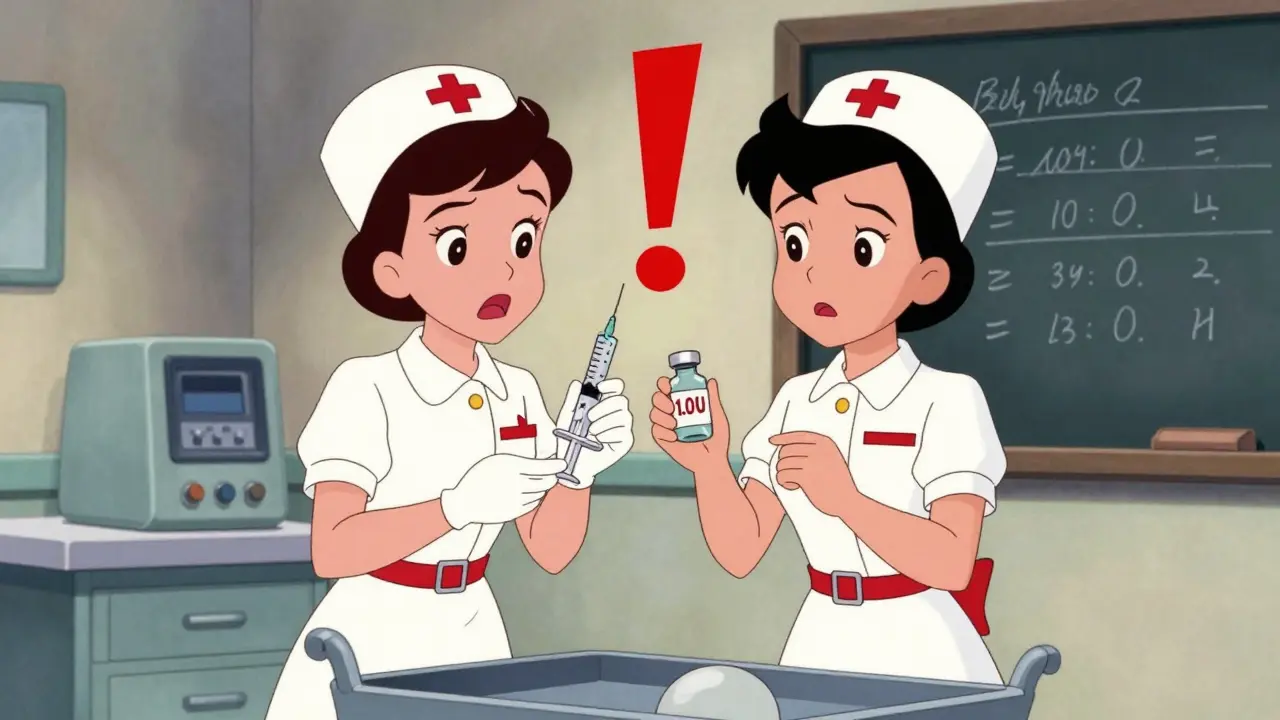
Every year, over 1,200 patient harm incidents in U.S. hospitals are linked to incorrect medication doses - and nearly all of them could have been stopped. The problem isn’t always the prescription. It’s what happens between the time a doctor writes a dose change and when the nurse gives it to the patient. A simple typo - ‘10U’ instead of ‘1.0U’ - can mean ten times the insulin. A rushed handoff during shift change can skip a critical check. In 2023, the ECRI Institute ranked ‘inadequate verification of dose changes’ as the third biggest health technology hazard. This isn’t theoretical. It’s happening in real time, in hospitals, clinics, and pharmacies across the country.
The 5 Rights Aren’t Enough - Here’s What Actually Works
Everyone learns the ‘Five Rights’ in nursing school: right patient, right drug, right dose, right route, right time. But studies show that just checking these boxes doesn’t stop most errors. The real safety net comes from dose verification - a deliberate, redundant process that doesn’t rely on memory or assumptions.
Independent double checks are still the gold standard for high-alert medications like insulin, heparin, and opioids. But here’s the catch: they only work if done right. Two nurses must verify the dose independently - no talking, no looking at each other’s calculations. One reads the order. The other pulls the medication and recalculates the dose from scratch. Only then do they compare. This method caught 100% of wrong-vial errors in sepsis simulations, according to a 2018 study. It’s not about trust. It’s about building layers so one mistake doesn’t become a tragedy.
Barcode Scanning Isn’t Magic - But It’s Essential
Barcode medication administration (BCMA) systems scan the patient’s wristband, the drug, and the dose before giving it. Sounds simple. But here’s what most people don’t realize: BCMA prevents 86% of errors in drug selection and patient matching - but it’s useless if the dose is entered wrong in the system. One pharmacist in a Pharmacy Times forum described how their BCMA system failed to flag a 10-fold overdose because the concentration was typed correctly, but the dose was off by a decimal. The system didn’t know it was wrong. Only a human did.
That’s why BCMA should never be used alone. The American Society of Health-System Pharmacists (ASHP) says the safest approach combines barcode scanning with an independent double check for high-alert drugs. In hospitals that do this, dose error rates drop by 28.9%. That’s not a small gain - it’s life or death.
When Human Error Is the Biggest Risk
Technology helps, but people still make the mistakes. Nurses skip checks because they’re overwhelmed. A 2022 American Nurses Association survey found 73% of nurses admitted to skipping verification steps during high-pressure shifts. The result? A 22% spike in medication errors during 12-hour shifts.
And it’s not just fatigue. Communication breakdowns during handoffs are responsible for 65% of serious medication errors, according to The Joint Commission. A nurse leaves a note: ‘Increase insulin to 10U.’ The next nurse reads it as ‘10 units’ - not realizing the doctor meant ‘1.0 unit’ because the patient’s blood sugar was dropping. No one caught it. The patient went into hypoglycemia.
That’s where tools like SBAR (Situation, Background, Assessment, Recommendation) come in. A 2020 study showed SBAR reduces miscommunication during dose changes by 41%. Instead of saying, ‘Change the insulin,’ a nurse says: ‘The patient’s morning glucose is 280. He’s on 8 units of Lantus. I recommend increasing to 10 units, but I want to confirm the target range with the provider.’ Clear. Structured. Verifiable.
High-Alert Medications Need High-Alert Protocols
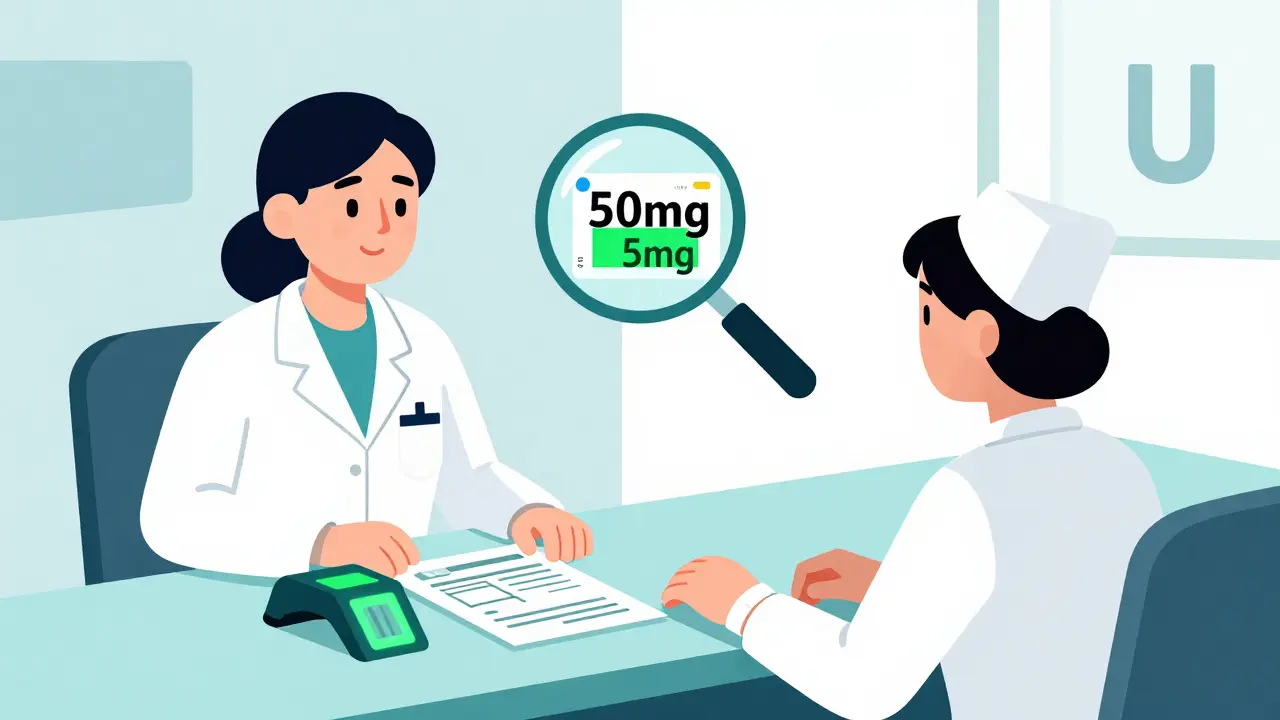
The Institute for Safe Medication Practices (ISMP) lists 19 high-alert medications that need extra scrutiny. These aren’t just strong drugs - they’re drugs where a small mistake can kill. Insulin, heparin, morphine, potassium chloride, and sodium nitroprusside are on that list.
For insulin, the verification protocol must include:
- Confirming the dose is weight-based (if applicable), calculated to 0.1 units/kg
- Checking the patient’s last two blood glucose readings
- Verifying the concentration - is it U-100 or U-500?
- Double-checking the syringe or pump settings
For heparin, you need to check the aPTT trend and verify the infusion rate matches the protocol. For opioids, you need to confirm the patient’s respiratory rate and pain score before and after the dose. These aren’t optional steps. They’re the difference between a controlled adjustment and a code blue.
Verification Is a Process - Not a One-Time Check
Many teams think verification happens once - when the med is given. But the real safety window opens before the order is even written. A good verification process has three steps:
- Independent calculation - Two people do the math separately. Takes 2-3 minutes.
- Context check - Is the patient’s kidney function stable? Are they dehydrated? Are they on other drugs that interact? This adds 1-2 minutes.
- Bedside verification - Scan the barcode, confirm the patient, and check the dose one final time. Takes 30-60 seconds.
This entire process takes less than 7 minutes. But skipping even one step increases error risk by 30%. At Johns Hopkins, adding a dedicated 15-minute ‘safety time’ per nurse shift cut dose errors by 37%. That’s not extra work - it’s smart workflow design.
Why Double Checks Fail - And How to Fix Them
Here’s the uncomfortable truth: double checks often feel like busywork. Nurses on Reddit say they’ve turned them into a ritual - nodding, signing off, checking boxes without really thinking. That’s called ‘complacency.’ And it’s dangerous.
Dr. Michael Cohen of ISMP says overusing double checks makes them useless. You don’t need to double-check every antibiotic. You need to double-check the insulin, the heparin, the morphine. That’s risk-stratified verification. It’s not about doing more - it’s about doing the right checks at the right time.
Successful hospitals now use tools to flag high-risk orders automatically. Epic’s DoseRange Advisor, for example, analyzes patient history and flags doses that are outside normal ranges. In a 12-hospital study, it reduced inappropriate dose changes by 52%. That’s AI helping humans focus on what matters.
What Happens When Verification Fails
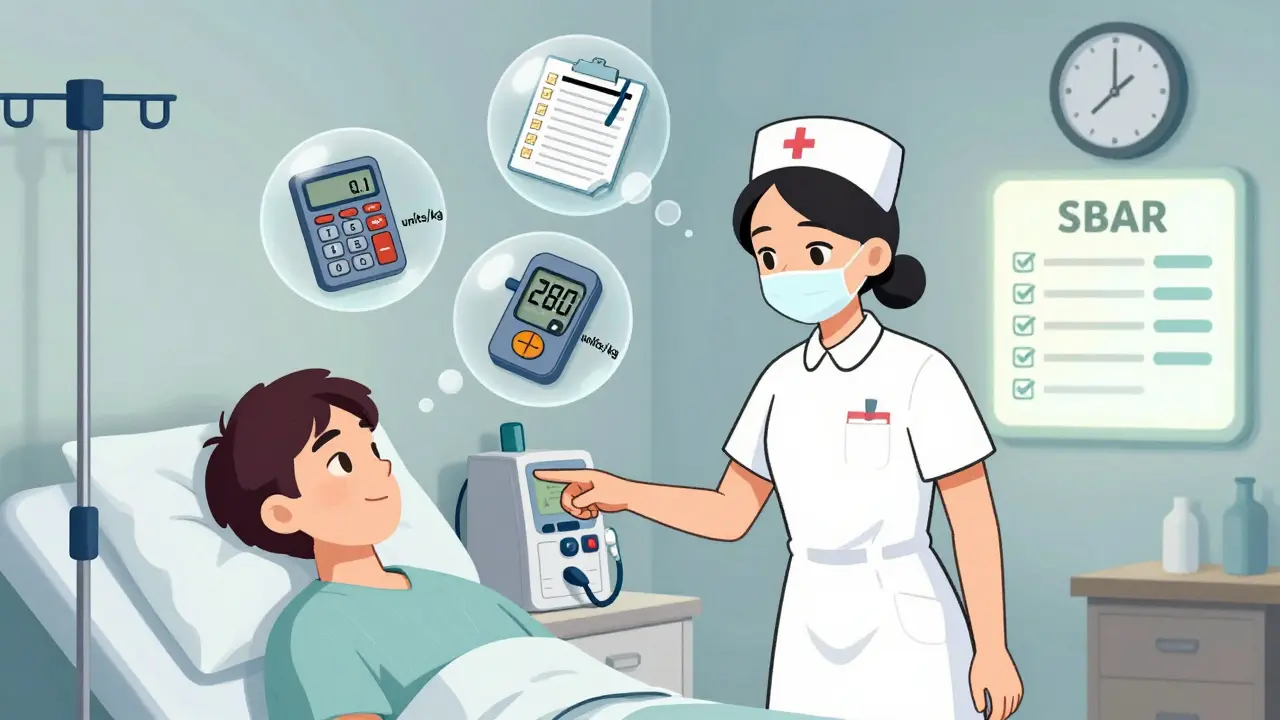
One nurse in Melbourne told me about a case she still thinks about. A patient on dialysis was prescribed 5 mg of furosemide. The order said ‘5mg.’ But the pharmacy label read ‘50mg’ - the concentration was mislabeled. The nurse scanned the barcode. It matched. The double checker signed off. The patient got the 50mg. Within an hour, he had severe hypotension. He nearly died.
The root cause? The label was wrong, and no one checked the original order. The barcode system only verifies what’s in the system - not whether the system is right. That’s why verification must include cross-checking the electronic order against the original prescription - every time.
What You Can Do Today
You don’t need a fancy new system to make a difference. Start here:
- For high-alert drugs: Always do an independent double check - no shortcuts.
- Use SBAR for handoffs. Say the dose, the reason, and the expected outcome.
- Verify concentrations. Insulin U-100 is not the same as U-500. Heparin 1000 units/mL is not the same as 10,000.
- Never trust a handwritten order. If it says ‘10U,’ ask for clarification. Write it out: ‘10 units’ or ‘1.0 unit.’
- Report near-misses. If you catch an error before it happens, tell someone. That’s how systems improve.
Verification isn’t about blame. It’s about building a culture where safety is non-negotiable. Every check, every question, every pause - it’s not slowing you down. It’s saving lives.
What’s Next for Dose Safety
By 2027, the global market for medication safety tech will hit $5.2 billion. Voice recognition systems are being tested to cut documentation time by 65%. Blockchain is being piloted to create tamper-proof logs of every dose change. AI will soon predict which patients are at highest risk for dosing errors before the order is even written.
But no matter how advanced the tech gets, the human element remains. The nurse who asks, ‘Are you sure?’ The pharmacist who double-checks the math. The doctor who writes ‘1.0 unit’ instead of ‘10U.’ Those are the things that still matter most.
What’s the most common cause of dose verification failures?
The most common cause is miscommunication during handoffs - especially between shifts. Poorly written orders, unclear abbreviations (like ‘U’ for units), and rushed transitions lead to 65% of serious errors. Using structured tools like SBAR and requiring verbal confirmation can cut this risk significantly.
Do barcode scanners really prevent errors?
Yes - but only for the right errors. Barcode systems prevent 86% of wrong-drug and wrong-patient errors. But they can’t catch wrong-dose errors if the system has the wrong data. That’s why they must be paired with human double checks, especially for high-alert medications.
Which medications need the strictest verification?
The Institute for Safe Medication Practices identifies 19 high-alert medications, including insulin, heparin, opioids, potassium chloride, and sodium nitroprusside. These drugs have narrow safety margins - even small mistakes can be fatal. Verification for these must include independent double checks, concentration checks, and bedside scanning.
Why do nurses skip verification steps?
Time pressure is the biggest reason. During peak hours, nurses report skipping checks because they’re overwhelmed. Studies show adherence drops to 45% during high-census shifts. The solution isn’t to punish them - it’s to design workflows that make safety easier, not harder. Dedicated safety time and automated alerts help.
Is independent double checking still necessary with modern tech?
Absolutely. Technology catches different types of errors than humans. Barcode systems miss infusion pump programming mistakes and concentration errors. Human double checks catch those - and also spot illegible handwriting, miscommunication, and system glitches. The safest approach is using both: tech for speed and consistency, humans for judgment and context.

steve rumsford
January 7, 2026 AT 01:12Andrew N
January 7, 2026 AT 21:01Aparna karwande
January 9, 2026 AT 17:42Jessie Ann Lambrecht
January 9, 2026 AT 18:01Vince Nairn
January 9, 2026 AT 22:22Ayodeji Williams
January 10, 2026 AT 09:34Kyle King
January 11, 2026 AT 19:17Kamlesh Chauhan
January 13, 2026 AT 05:07Rachel Steward
January 13, 2026 AT 21:00