
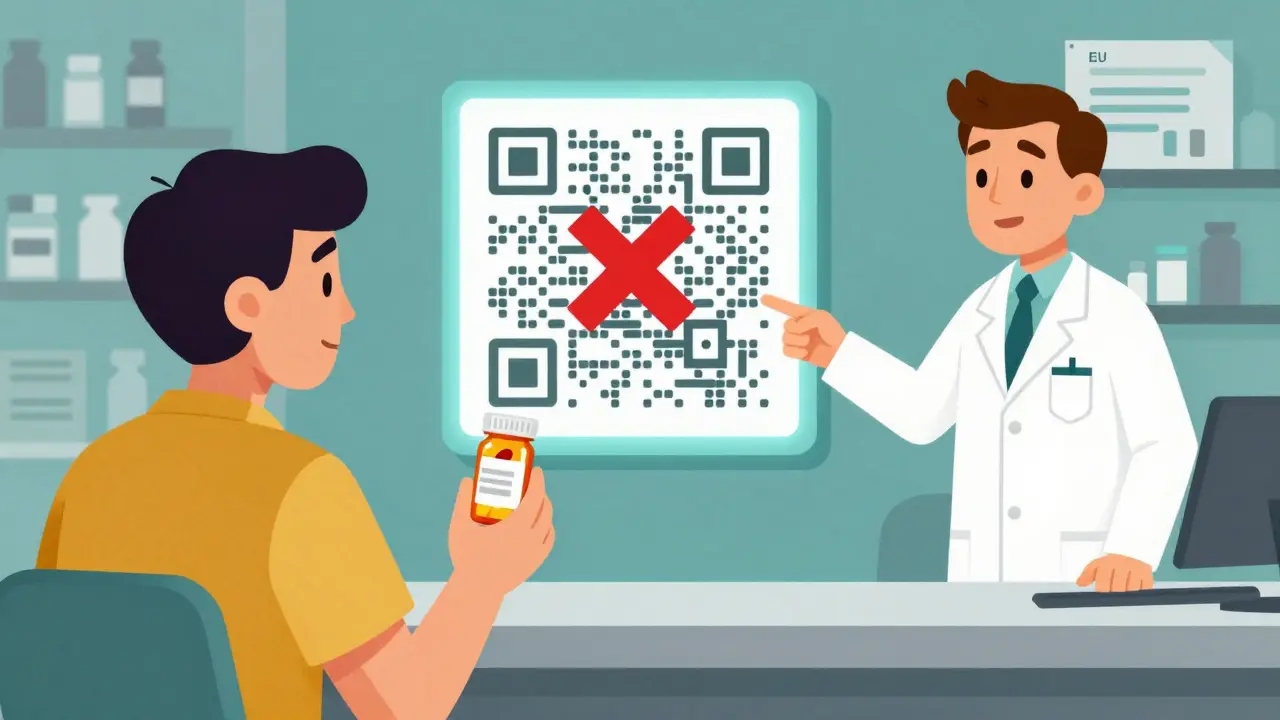
Every year, millions of people around the world take medicine they think is real - but it might not be. Counterfeit drugs don’t just fail to work. They can contain toxic chemicals, wrong doses, or no active ingredient at all. The World Health Organization says 1 in 10 medical products in low- and middle-income countries is fake. Even in wealthy nations, the risk is real. That’s why knowing how to verify drug authenticity isn’t just helpful - it’s life-saving.
What Makes a Drug Fake?
A counterfeit drug isn’t always obvious. It might look identical to the real thing - same packaging, same logo, same color. But inside, it could have chalk, rat poison, or a fraction of the needed medicine. The FDA warns that fake medications may contain the wrong ingredients, incorrect dosages, or even no active drug at all. Some are made in unregulated labs with no quality control. Others are repackaged expired drugs sold as new. The consequences? Treatment failure, antibiotic resistance, organ damage, or death.Official Systems: EU FMD and US DSCSA
Two major systems are leading the fight against fake drugs: the European Union’s Falsified Medicines Directive (FMD) and the U.S. Drug Supply Chain Security Act (DSCSA). The EU’s FMD, active since February 2019, requires every prescription medicine package to have a unique 12-digit serial code. That code is scanned at the pharmacy before the drug is handed to the patient. The system checks the code against a central EU database. If the code is invalid, duplicated, or the product is expired, the system blocks the sale. Over 70% of NHS pharmacists say it’s quick and easy to use. The system has cut counterfeit drugs in Europe by nearly 80% since rollout. In the U.S., the DSCSA doesn’t require scanning at the pharmacy. Instead, it focuses on tracking drugs as they move between wholesalers, distributors, and manufacturers. Each package gets a unique identifier, but there’s no mandatory check when you pick it up from the counter. That’s a gap - and the FDA admits it. Their 2022 report called it a "critical vulnerability." But new rules proposed in September 2023 aim to fix that by requiring patient-level verification by 2027.How to Check Your Medicine at Home
If you’re worried about a drug you’ve bought - especially if you ordered it online or from a non-pharmacy source - here’s what you can do. Check the packaging. Look for a tamper-evident seal. Is it broken? Are the fonts blurry? Is the batch number missing or inconsistent with the website? Fake drugs often have spelling errors, poor print quality, or mismatched colors. Use QR codes. Many legitimate medicines now have 2D barcodes. Use your phone’s camera or a free barcode scanner app to scan it. If it links to the manufacturer’s official site with batch details, it’s likely real. If it takes you to a random website or says "invalid code," stop. The International Barcode Association found smartphone scans are 92% accurate when the system is properly set up. Verify through official portals. In the EU, you can use the European Medicines Verification System (EMVS) portal to check serial codes. In the U.S., while there’s no public portal yet, you can call the manufacturer’s customer service line with the batch number and expiration date. Most major companies like Pfizer, Merck, and Novartis have dedicated verification lines.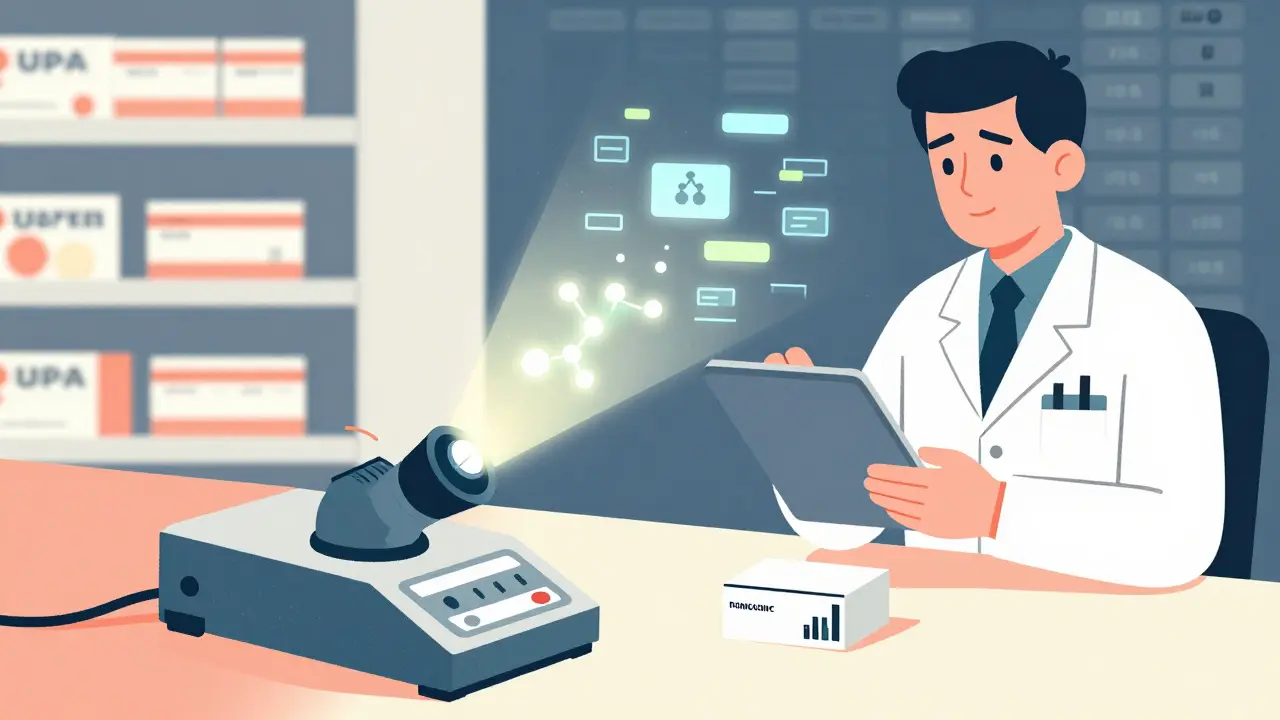
Advanced Tools Used by Professionals
Pharmacists and regulators don’t just rely on codes. They use high-tech tools to confirm authenticity. Spectroscopy devices - handheld tools that shine light on the pill and analyze its chemical signature - are becoming common in pharmacies. These devices use near-infrared (NIR) or Raman spectroscopy to compare the drug’s molecular pattern to a known database. Accuracy in labs is over 98%, and field accuracy has jumped from 78% in 2018 to 92% in 2022, according to USP data. Molecular taggants are tiny, invisible markers added during manufacturing. They can be DNA-like sequences or special chemicals that only specialized scanners can detect. These are nearly impossible to copy. One company, Alveron Pharma, is testing DNA barcodes that can identify a single pill’s origin with 99.9% accuracy. Blockchain is being used by Pfizer and others to create a tamper-proof digital trail from factory to pharmacy. It doesn’t replace scanning - it supports it. Each step in the supply chain is recorded on a secure ledger. If a package appears out of sequence, the system flags it.What to Do If You Suspect a Fake
If you think your medicine is fake:- Stop taking it immediately.
- Keep the packaging - don’t throw it away.
- Contact your pharmacist or doctor.
- Report it to your country’s health authority. In the U.S., use the FDA’s MedWatch program. In the EU, contact your national medicines agency.
- If you bought it online, report the seller to the platform and local consumer protection agency.
Why Online Pharmacies Are Risky
Buying medicine online without a prescription is dangerous. The WHO estimates that 50% of drugs sold on websites that hide their physical address are fake. Even sites that look professional - with SSL certificates, good design, and fake reviews - can be scams. Look for the Verified Internet Pharmacy Practice Sites (VIPPS) seal in the U.S., or the EU’s green cross logo for licensed online pharmacies. If you can’t find a physical address, phone number, or licensed pharmacist on staff, walk away.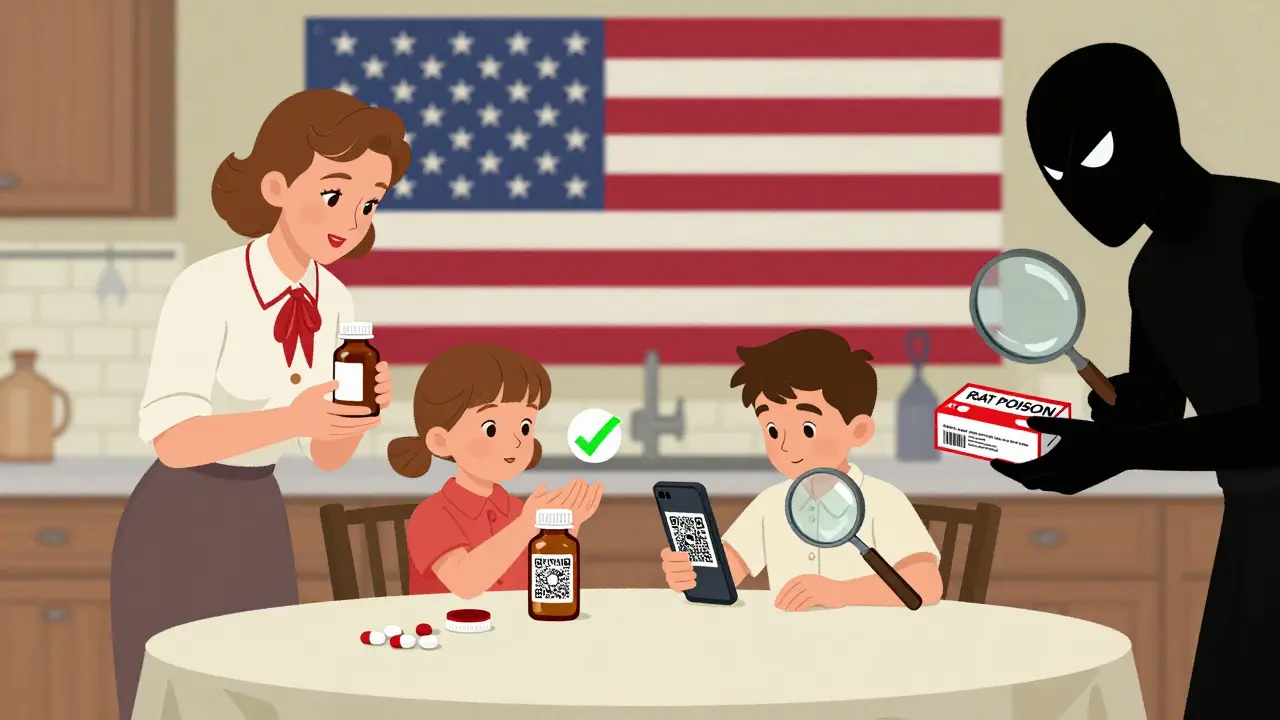
What’s Coming Next
The future of drug verification is faster, smarter, and more accessible. The FDA and USP are building a public library of spectral data for 1,200 essential medicines by 2025. That means future apps might let you scan a pill and instantly compare it to a trusted database - no special device needed. AI is being tested in hospitals to spot patterns in verification data. At 23 NHS hospitals, AI flagged suspicious packages 40% better than humans alone. And in places with poor internet - like rural Africa - new solutions are emerging. Solar-powered handheld spectrometers, trained to work offline, are being rolled out to community health workers. Training takes 28 hours, but accuracy hits 87%.What You Can Do Today
You don’t need a lab to protect yourself. Here’s a simple checklist:- Always buy from licensed pharmacies - in person or online.
- Check for tamper seals and print quality on packaging.
- Scan QR codes or serial numbers with your phone.
- Call the manufacturer if something looks off.
- Report anything suspicious - your report could save someone’s life.
Counterfeit drugs thrive in silence. The more people ask questions, the harder it is for fakes to survive.
How can I tell if my medicine is fake just by looking at it?
You can spot some red flags: blurry printing, misspelled words, mismatched colors, missing batch or expiration dates, or broken seals. But fake drugs are getting better at copying real ones - so visual checks alone aren’t enough. Always combine them with code scanning or manufacturer verification.
Is it safe to buy medicine from websites that offer it without a prescription?
No. Websites selling prescription drugs without a valid prescription are almost always illegal and often sell counterfeit products. The FDA and WHO warn that half of all drugs from such sites are fake. Always use licensed pharmacies with a physical address and a licensed pharmacist on staff.
Do all countries have the same drug verification systems?
No. The EU requires every prescription drug to be scanned at the pharmacy. The U.S. only requires tracking between businesses - not at the patient level - though that’s changing. Low-income countries often rely on SMS-based systems, which are unreliable due to poor mobile coverage. Always check your country’s official health authority for local guidelines.
Can I use my phone to verify a drug’s authenticity?
Yes - if the drug has a QR code or 2D barcode linked to a verified system. Scanning it with your phone’s camera or a free app can confirm the serial number against the manufacturer’s database. Accuracy is around 92% when the system is properly implemented. But if there’s no code, or the link leads to a suspicious site, don’t trust it.
What should I do if I find a counterfeit drug?
Stop using it. Keep the packaging. Contact your pharmacist or doctor immediately. Report it to your national health authority - in the U.S., use the FDA’s MedWatch program. In the EU, contact your country’s medicines regulator. Your report helps track fake drug networks and prevents others from being harmed.
Are there free tools or apps to check if a drug is real?
There are no universal free apps yet, but many manufacturers offer verification tools on their official websites. Some countries have public portals - like the EU’s EMVS - where you can enter a serial code. Always go directly to the manufacturer’s site or your national health agency’s site. Avoid third-party apps that claim to verify drugs unless they’re officially endorsed.
Why doesn’t the U.S. scan drugs at the pharmacy like the EU does?
The U.S. DSCSA was designed to track drugs as they move through the supply chain - between manufacturers, distributors, and wholesalers - not at the point of sale. It was built around industry logistics, not patient safety. But after years of criticism, the FDA now plans to require pharmacy-level scanning by 2027 to close this gap.
How accurate are handheld devices used by pharmacists to check drugs?
Handheld spectrometers - like those using NIR or Raman technology - are over 98% accurate in labs. In real-world pharmacy settings, accuracy is 85-92%, depending on training and device quality. They’re not perfect, but they’re far more reliable than visual checks alone. Many are now being used in community pharmacies across Europe and the U.S.

Aishah Bango
January 24, 2026 AT 17:15This post is dangerously incomplete if you're not warning people about the rise of AI-generated counterfeit pills that look identical to real oxycodone or Adderall. The FDA just issued a warning last month about fentanyl-laced counterfeit pills sold as Xanax on Instagram and TikTok. People die within minutes. This isn't about blurry printing - it's about organized crime using deepfakes to replicate packaging with 99% accuracy. If you're buying anything online without a prescription, you're playing Russian roulette with your brain.
Uche Okoro
January 24, 2026 AT 22:34The structural inefficiencies in the DSCSA framework represent a systemic failure of regulatory capture. The absence of patient-level serialization introduces a critical vulnerability in the supply chain’s cryptographic integrity. While blockchain implementation by Pfizer demonstrates cryptographic non-repudiation, the lack of interoperability between national verification infrastructures creates siloed trust architectures. Until global harmonization of serialization protocols - aligned with ISO 15459-1 and GS1 standards - the current paradigm remains epistemologically fragile.
shivam utkresth
January 25, 2026 AT 04:12Bro, I got my diabetes meds from a shady site in Goa last year - looked legit, scanned the QR, said 'verified.' Took it for two weeks, felt like I was walking through syrup. Called Pfizer, they said the batch was fake. Turns out the code was cloned from a real box that got stolen in Mumbai. Now I only buy from the hospital pharmacy or the official portal. Even if it costs more, I’d rather pay extra than end up in the ICU. Also, the guy at the counter in Delhi? He knows every batch number by heart. Real people still matter.
Josh josh
January 25, 2026 AT 10:58just scanned my blood pressure pill with my phone and it said legit but the cap was a little loose lmao
Simran Kaur
January 25, 2026 AT 12:07I’m from Kerala and my aunt in rural Tamil Nadu got fake insulin last year. She didn’t know how to check anything - no smartphone, no internet, just a local shop that said it was 'the same as the hospital.' They didn’t even have a batch number printed clearly. I sent her a solar-powered spectrometer from a NGO project - it’s tiny, runs on sunlight, and beeps if it’s fake. She cried when it told her the truth. We need these tools everywhere, not just in cities. Tech means nothing if it doesn’t reach the people who need it most. This isn’t just about safety - it’s about dignity.
Rakesh Kakkad
January 27, 2026 AT 12:01As someone who has spent over a decade working in pharmaceutical logistics across South Asia, I can confirm that the most dangerous counterfeit drugs are not those with chalk or rat poison - they’re the ones that contain 80% of the correct active ingredient. Patients feel slightly better, assume it’s working, and delay real treatment. The real killer isn’t the fake drug - it’s the false confidence it creates. The EU system works because it forces accountability at every node. In India, we have over 12,000 unlicensed pharmacies. No scanning, no tracking, no consequences. Until the government treats this like a public health emergency - not a compliance issue - nothing will change. The WHO statistic of 1 in 10 is optimistic.
Faisal Mohamed
January 28, 2026 AT 17:53It’s fascinating how we’ve outsourced our biological sovereignty to corporate supply chains governed by proprietary algorithms and blockchain ledgers that no layperson can audit. The illusion of security through QR codes and manufacturer portals is a neoliberal fantasy - we’re being pacified by techno-solutionism while the real power remains opaque. Authenticity isn’t verified by machines; it’s reclaimed by collective vigilance. The real revolution isn’t in spectroscopy - it’s in refusing to buy from systems that commodify life itself.
Peter Sharplin
January 30, 2026 AT 16:47Just wanted to add something practical: if you’re in the US and you’re worried about a drug you got from a pharmacy, call the manufacturer. Most have toll-free numbers on the box. I once called Merck about a weird-looking metformin tablet - turned out it was a new batch with a different dye. They sent me a free replacement and a letter explaining the change. They care more than you think. Also, if you see a pharmacy without a licensed pharmacist on-site, walk out. No exceptions.