
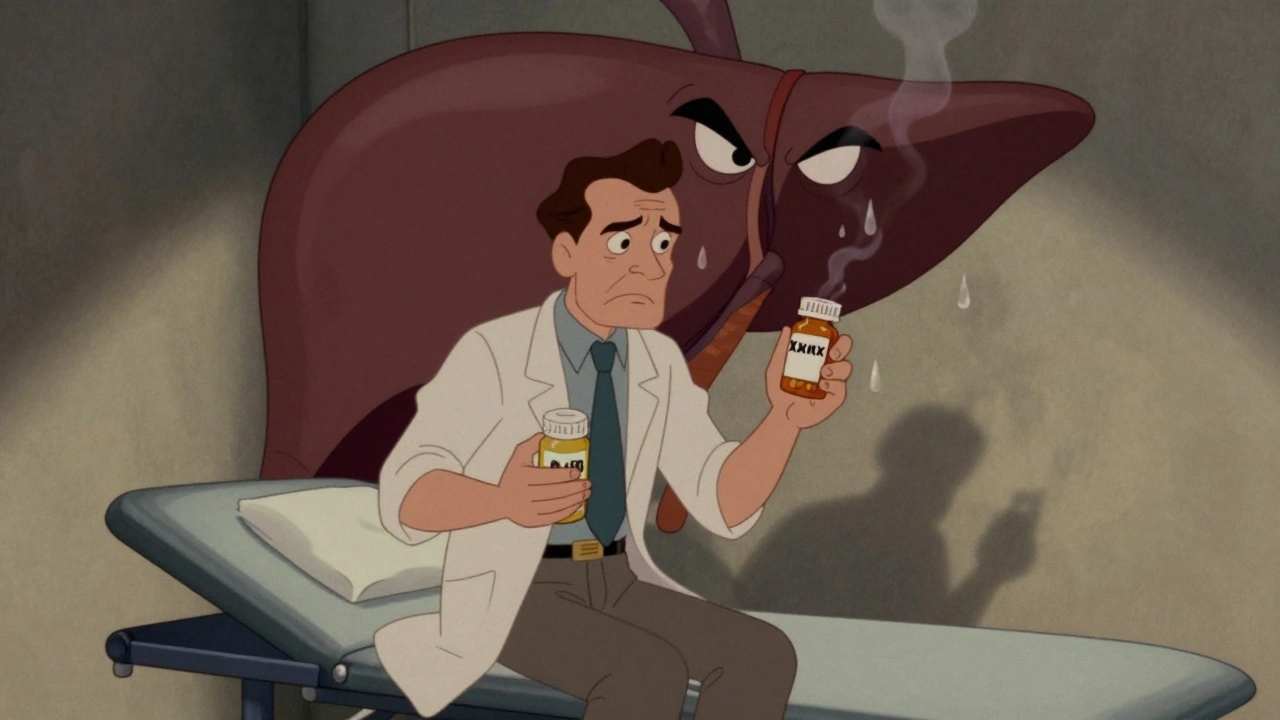
Combining kava with sedative medications can be dangerous - and many people don’t realize it until it’s too late. Kava, a plant-based supplement often used for anxiety or relaxation, might seem harmless because it’s natural. But when mixed with prescription sleep aids, anti-anxiety drugs, or even alcohol, it can slow your breathing, wreck your liver, or leave you too drowsy to stand. This isn’t theoretical. Real people have ended up in the hospital - some needing liver transplants - after taking kava alongside their regular meds.
How Kava Works in Your Body
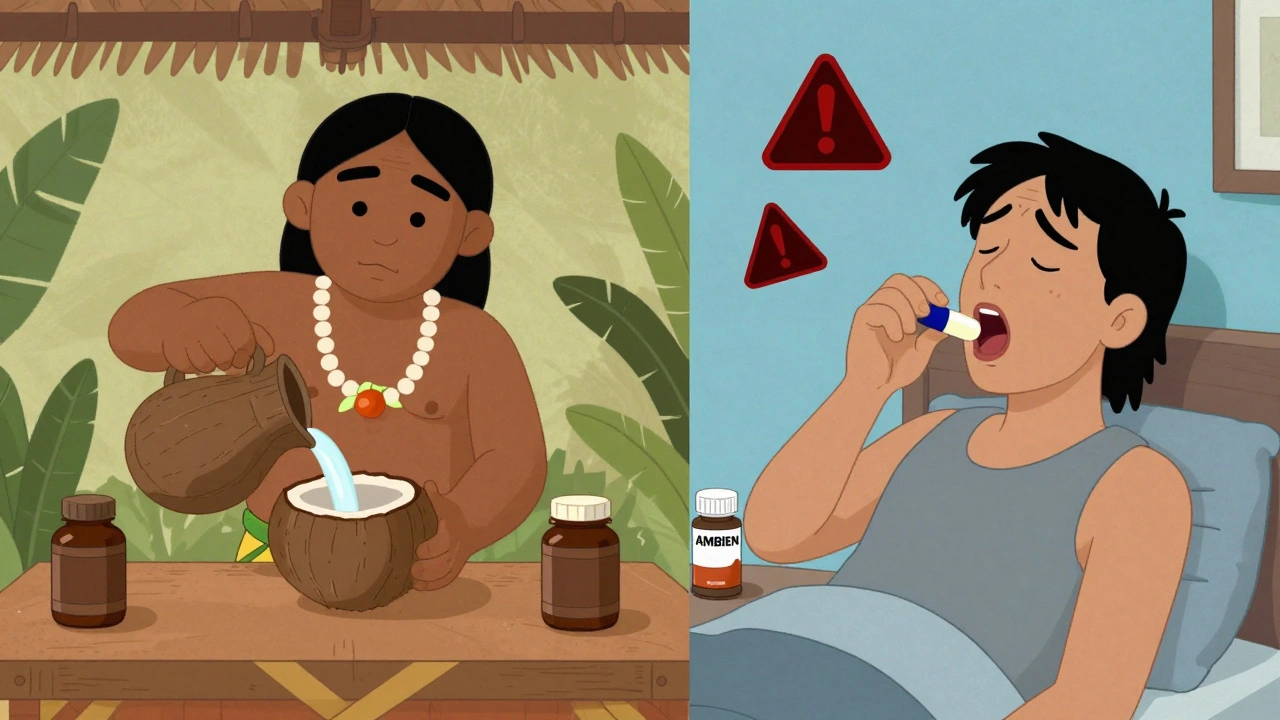
Kava comes from the roots of Piper methysticum, a plant native to Pacific islands. Its active compounds, called kavalactones, cross the blood-brain barrier in under 15 minutes. Once there, they calm nerve activity by affecting sodium and calcium channels, similar to how some prescription drugs work. This is why people use it for anxiety, stress, or sleep. A typical dose ranges from 70 to 250 mg of kavalactones per day. Traditional water-based preparations deliver about 150-250 mg per serving. But commercial pills, tinctures, or extracts? Those can pack up to 300 mg - and often without clear labeling.
Unlike prescription drugs, kava isn’t regulated for purity or dosage. One bottle might have 80 mg of kavalactones. Another from the same brand could have 280 mg. That’s not a typo - it’s the reality of dietary supplements in the U.S. The FDA doesn’t test them before they hit shelves. And because kava isn’t a drug, manufacturers aren’t required to prove it’s safe for long-term use or when mixed with other substances.
Why Kava and Sedatives Don’t Mix
If you’re taking benzodiazepines like alprazolam (Xanax), lorazepam (Ativan), or diazepam (Valium), or sleep aids like zolpidem (Ambien), kava can turn mild drowsiness into dangerous sedation. Studies show kava increases the concentration of these drugs in your blood. One study found kava raised midazolam levels by 27% - enough to cause extreme drowsiness, confusion, or even loss of consciousness.
Case reports tell the real story. In Sacramento County, a 42-year-old woman took 300 mg of kava daily with 2 mg of alprazolam. Within 90 days, her liver enzymes spiked to 2,840 U/L (normal is under 40). She developed jaundice and was hospitalized. Another patient, 56, took 250 mg kava with 10 mg diazepam and ended up with a dangerously high INR of 4.2 - meaning his blood couldn’t clot properly. Both cases were directly linked to the combination.
Reddit users describe similar experiences. One person wrote: “Took kava with 0.5 mg lorazepam. Couldn’t stand for 8 hours. Speech was slurred. Felt like I was drunk but hadn’t had a drink.” This isn’t rare. Over 37 reports in the FDA’s adverse event database between 2019 and 2023 involved excessive sedation from kava plus prescription meds. Twelve of those cases required emergency care.
The Liver Risk: More Than Just a Warning
The FDA issued a warning about kava and liver damage back in 2002. Since then, over 25 international cases have been documented - some ending in liver failure and transplant. The European Union, Canada, and the UK banned kava as a medicine in 2002. Switzerland followed. The U.S. still sells it, but the FDA’s warning remains active.
Why does this happen? Kava interferes with liver enzymes - specifically CYP2D6, CYP2C9, and CYP3A4. These enzymes break down over 80% of all prescription drugs. When kava blocks them, drugs build up in your system. That’s bad enough on its own. But kava also seems to directly stress liver cells. The exact mechanism isn’t fully understood, but the pattern is clear: people who take kava regularly - especially in high doses or with other liver-stressing substances - develop hepatitis, cirrhosis, or acute liver failure.
Experts disagree on how often this happens. Some say it’s rare - less than 1 in a million daily doses. Others point out that underreporting is massive. Most people don’t tell their doctor they’re taking kava. Sacramento County found only 22% of patients with liver problems mentioned kava use when asked. That means the real number could be much higher.
Who’s at Highest Risk?
Not everyone who takes kava gets hurt. But certain groups are far more vulnerable:
- People on sedatives: Benzodiazepines, barbiturates, sleep aids, opioids - any CNS depressant. The combination multiplies risk.
- People with existing liver conditions: Fatty liver, hepatitis, or even past alcohol abuse. The CDC says avoid kava entirely if your liver isn’t healthy.
- Long-term users: Taking kava daily for months or years increases risk. Most liver injuries show up after 1-4 months of use.
- Users of non-traditional extracts: Alcohol or acetone-based tinctures and pills are far more toxic than traditional water-based brews. WHO data shows water-prepared kava has 9 times fewer adverse events.
- People who drink alcohol: Alcohol and kava both stress the liver. Together, they’re a recipe for damage.
Even if you’re healthy, don’t assume you’re safe. One woman in Oregon took 150 mg of kava daily for three months with no other meds. Her ALT level jumped to 1,200 U/L. She stopped, and her liver recovered. But she didn’t have any risk factors - just bad luck with a supplement.
What You Should Do
If you’re taking sedative medications - even over-the-counter ones like diphenhydramine (Benadryl) or melatonin - do not take kava. The risk isn’t worth it. There are safer ways to manage anxiety or sleep.
If you’re already using kava:
- Stop immediately if you’re on any sedative or have liver disease.
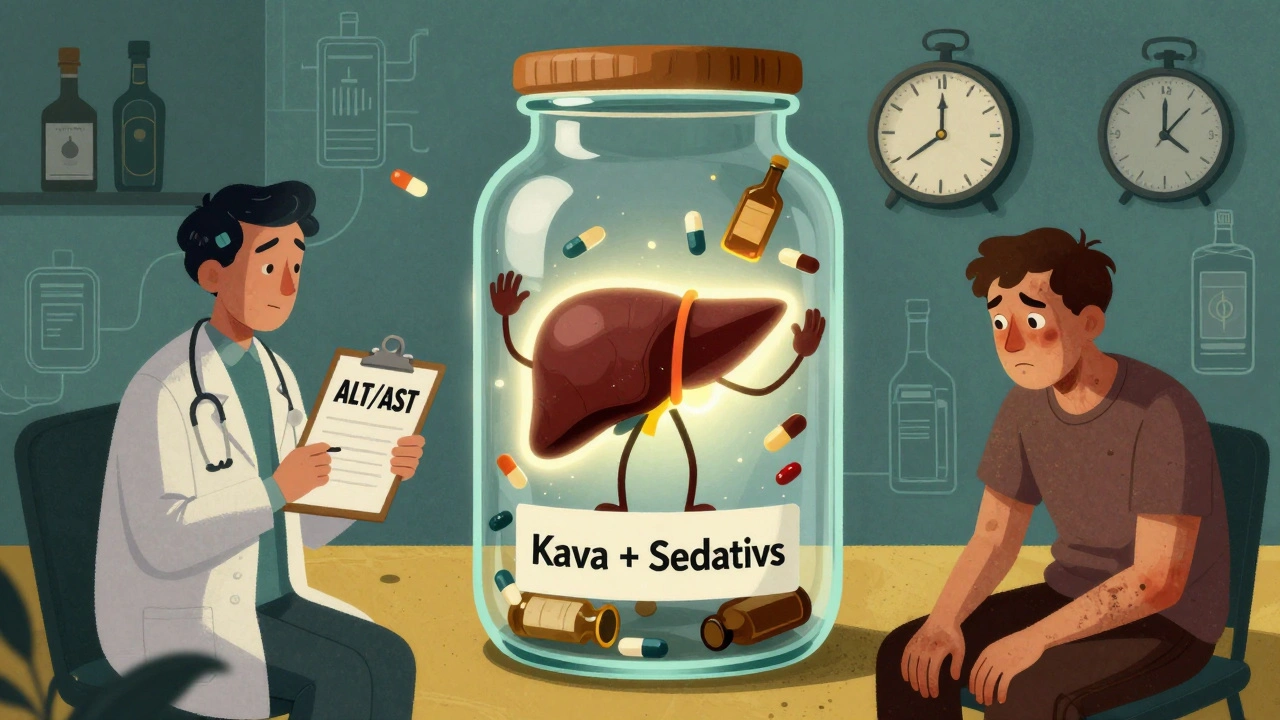
- Get a liver function test if you’ve taken kava for more than 30 days. ALT and AST levels are the first warning signs.
- Talk to your doctor or pharmacist - even if you think it’s “just a herb.”
- Switch to water-based kava only if you insist on using it. Avoid pills, tinctures, or extracts.
- Never exceed 70 mg of kavalactones per day if you’re on any other medication.
Doctors and pharmacists need to ask about kava - but they won’t unless you tell them. Don’t assume they know. Don’t downplay it. Say it clearly: “I take kava for anxiety.”
Alternatives to Kava for Anxiety and Sleep
If you’re using kava for anxiety or sleep, there are better, safer options:
- Therapy: CBT (cognitive behavioral therapy) is proven to reduce anxiety as effectively as medication - without side effects.
- Melatonin: For sleep, 0.5-3 mg taken 30 minutes before bed is effective and low-risk.
- Valerian root: Unlike kava, it has minimal drug interactions and no known liver toxicity.
- Magnesium glycinate: Helps calm the nervous system. 200-400 mg at night can improve sleep quality.
- Prescription alternatives: Buspirone (Buspar) is a non-sedating anti-anxiety drug with no liver risk and no interaction with kava.
None of these are perfect. But they’re far safer than kava when combined with other meds.
What’s Changing? The Future of Kava
Kava’s future is uncertain. The FDA is reviewing its stance. In 2023, they issued draft guidance calling for “enhanced hepatic safety monitoring” in any future clinical trials. Oregon State University received $2.4 million to study whether traditional “noble” kava varieties are safer than commercial extracts. Early results suggest they might be - but that doesn’t mean you should take them with sedatives.
Meanwhile, states are acting. California issued formal warnings in May 2024. New York is pushing a law to require liver toxicity labels on all kava products. Sales are already dropping - the Global Wellness Institute predicts a 22% decline by 2026.
But here’s the catch: traditional kava bars are still thriving. In the U.S., there are 312 of them as of early 2024. These places serve water-based kava in ceremonial settings. They don’t sell pills. They don’t push daily use. And so far, no liver cases have been linked to this form.
The lesson? It’s not kava itself that’s deadly. It’s the combination - with drugs, with extracts, with long-term use. Traditional use in context is different from popping a capsule every night while on Xanax.
Final Word
Kava isn’t a villain. But it’s not a harmless herb either. When mixed with sedative medications, it becomes a silent threat - one that attacks your liver and slows your brain without warning. The data is clear: avoid kava if you take any prescription or over-the-counter sedatives. Don’t wait for symptoms. Don’t assume you’re fine because you’ve taken it for months. Liver damage doesn’t hurt until it’s too late.
If you’re using kava for anxiety or sleep, talk to your doctor. There are safer, proven ways to feel better - without risking your liver or your life.
Can I take kava with Xanax or Valium?
No. Combining kava with benzodiazepines like Xanax or Valium can cause dangerous sedation, slowed breathing, and increased risk of liver damage. Studies show kava can raise blood levels of these drugs by up to 27%. This combination has led to hospitalizations and liver failure. Avoid it entirely.
Does kava cause liver damage even without other meds?
Yes. While the risk is higher with other medications, liver injury has occurred in people taking kava alone. Over 25 international cases have been documented, some requiring transplants. The damage often appears after 1-4 months of daily use. Even moderate doses (150 mg/day) can trigger elevated liver enzymes in sensitive individuals.
Is water-based kava safer than pills or tinctures?
Yes. Traditional water-extracted kava has significantly lower risk. The WHO reports 9 times fewer adverse events compared to alcohol or acetone-based extracts. Commercial supplements often use solvents that pull out more toxic compounds. Stick to water-based brews if you choose to use kava - but still avoid it if you’re on any medication.
How do I know if kava is hurting my liver?
Early signs include fatigue, nausea, dark urine, loss of appetite, and yellowing of the skin or eyes (jaundice). These symptoms usually appear 1-4 months after starting kava. The only way to confirm liver damage is a blood test checking ALT and AST levels. If you’ve taken kava for more than 30 days, get tested - even if you feel fine.
Can I take kava if I’m on antidepressants?
It depends. Kava can interact with SSRIs and SNRIs, especially if they’re metabolized by CYP2D6 or CYP3A4 enzymes. While the sedation risk is lower than with benzodiazepines, liver damage risk remains. If you’re on antidepressants, talk to your doctor before using kava. Safer alternatives like therapy, magnesium, or valerian root exist.
Are there any safe doses of kava if I’m on sedatives?
No. There is no established safe dose of kava when combined with sedative medications. Even 70 mg per day - the lowest recommended dose - can interfere with drug metabolism and increase sedation. The CDC and FDA advise complete avoidance in this scenario. The risk is not worth the potential benefit.

Doris Lee
December 10, 2025 AT 06:09Michaux Hyatt
December 10, 2025 AT 12:10Raj Rsvpraj
December 11, 2025 AT 18:51Jack Appleby
December 12, 2025 AT 21:45Frank Nouwens
December 12, 2025 AT 22:54Kaitlynn nail
December 13, 2025 AT 18:52Aileen Ferris
December 14, 2025 AT 08:56Rebecca Dong
December 14, 2025 AT 10:08Michelle Edwards
December 16, 2025 AT 02:30Sarah Clifford
December 17, 2025 AT 03:22Regan Mears
December 18, 2025 AT 18:03