
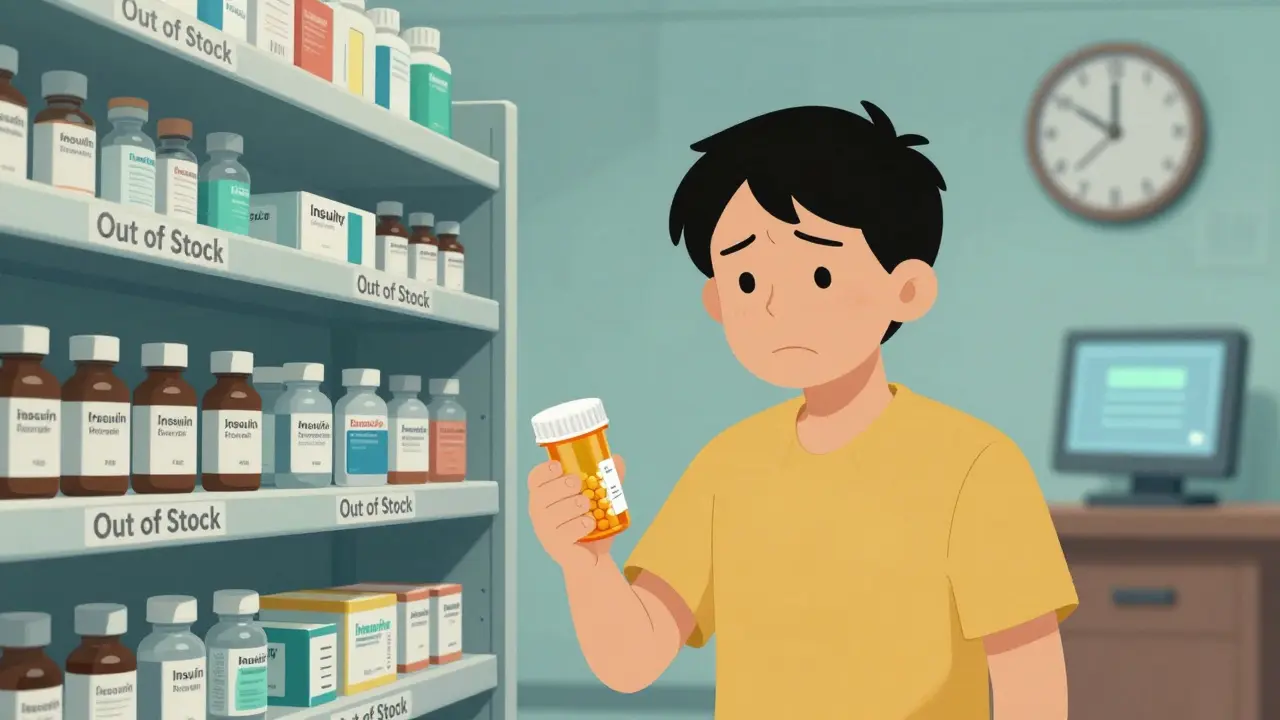
When your prescription runs out and no pharmacy has it in stock, it’s not just inconvenient-it’s dangerous. In 2025, over 1,900 prescription drugs were in shortage across the U.S., including life-saving insulin, chemotherapy agents, and even basic antibiotics like amoxicillin. These aren’t temporary hiccups. Many have lasted over two years. You can’t wait for the system to fix itself. You need a plan-now.
Why Medication Shortages Happen (And Why They Won’t Go Away)
It’s not just bad luck. Most shortages come from a broken supply chain. Eighty-five percent of generic drugs are made by just five manufacturers. If one factory has a quality issue, or shuts down for repairs, it can knock out half the country’s supply of a drug overnight. That’s what happened with insulin glargine (Semglee) in early 2025. One production delay left thousands without access.
Manufacturing problems, raw material shortages, and low profit margins on generics are the real culprits. The FDA has responded by increasing inspections to monthly instead of quarterly-but that’s still reactive. The system doesn’t predict shortages; it reacts to them. And when it does, patients are left scrambling.
What You Can Do Right Now
Don’t wait until your last pill is gone. Start preparing now. Here’s what works:
- Check the FDA Drug Shortage Database-it’s free, updated daily, and lists active shortages along with approved alternatives. If your drug is listed, it’ll tell you what other brands or generics are considered therapeutically equivalent.
- Call multiple pharmacies-including mail-order and big chains like CVS, Walgreens, and Walmart. Don’t assume one store has it. One patient in Florida spent three days calling seven pharmacies before finding Semglee for their child.
- Contact your manufacturer. Companies like Pfizer and Eli Lilly often post updates on their websites about when production will resume. Some even offer patient assistance programs to help bridge the gap.
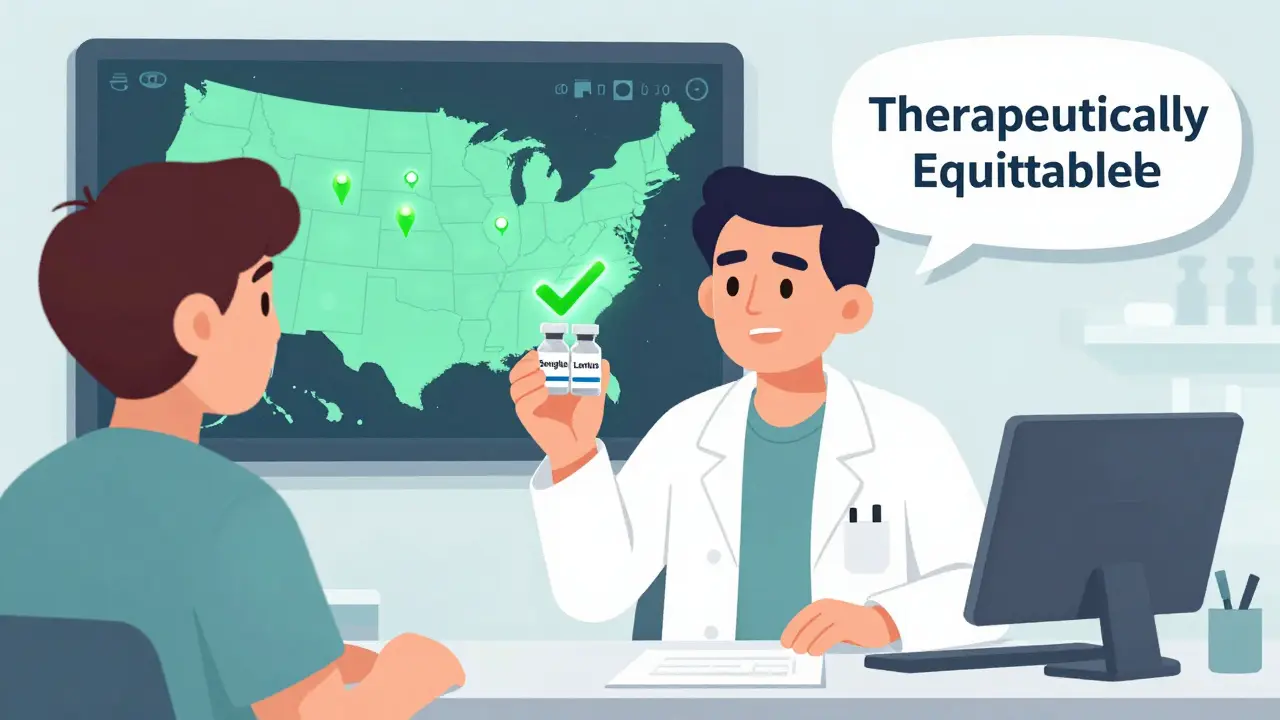
For insulin shortages, Blue Cross NC made a key change in March 2025: they allowed pharmacists to swap Semglee for Lantus without a new prescription. Why? Because they’re biosimilar-meaning they work the same way in your body. That’s not always the case, so always confirm with your doctor or pharmacist.
Therapeutic Alternatives: Not All Swaps Are Safe
Just because two drugs treat the same condition doesn’t mean you can switch them freely.
For example, during amoxicillin shortages, doctors started prescribing azithromycin instead. But azithromycin is a different class of antibiotic. It doesn’t work for every infection, and overuse increases antibiotic resistance. In hospitals, some teams switched to different anticoagulants when alteplase ran out-but outcomes varied. In Germany, use rose from 18.6% to 27.9%. In Finland, only 6.7%. That’s not a guarantee of safety.
In oncology, the stakes are higher. Between 2023 and 2025, 15 cancer drugs were in shortage, 12 of them critical for pediatric treatments. You can’t just swap one chemo drug for another. Dosing, timing, and side effects are all different. These decisions must be made by your oncology team, not your pharmacist.
For autoimmune drugs like sarilumab, patients in Finland and the Netherlands saw their monthly doses drop by 70% during shortages. Some stopped treatment entirely. That’s not a workaround-it’s a health risk.
What Your Pharmacist Can Do for You
Pharmacists are your best ally during a shortage. Eighty-nine percent of major pharmacy chains now have dedicated shortage support teams. They can:
- Check inventory across multiple locations in real time
- Find equivalent drugs that are covered by your insurance
- Help you get prior authorizations waived if your plan changed coverage during the shortage
- Connect you with patient assistance programs
In New Jersey, a new law lets pharmacists dispense emergency insulin without a prescription during shortages. In Hawaii, Medicaid now covers drugs approved in Canada or the EU-something the FDA temporarily allows under Section 804. These are state-level fixes, but they show what’s possible.
Insurance and Formulary Hurdles
Even if an alternative exists, your insurance might not cover it. During the Semglee shortage, 57% of Blue Cross NC patients were confused about whether Lantus was covered under their plan. That’s because insurers changed formularies on the fly-removing prior auth requirements, lifting non-formulary restrictions, or switching tiers.
Always call your insurer directly. Ask: “Is there an alternative drug on my formulary that’s covered without prior authorization?” Write down the rep’s name and reference number. If they say no, ask for a coverage exception. Many insurers approve these when you provide medical justification.
What NOT to Do
Don’t skip doses. Don’t cut pills in half. Don’t buy from random online sellers. Thirty-two percent of patients in a 2025 survey admitted to stopping their meds during shortages. That led to worsened conditions, ER visits, and hospitalizations.
Also, avoid unapproved alternatives. Some patients turn to foreign pharmacies or unregulated suppliers. These drugs may be fake, expired, or improperly stored. In 2024, the FDA warned against counterfeit insulin sold on social media. It killed two people.
Long-Term Solutions: What’s Changing
Change is coming-but slowly. Fourteen states now stockpile critical drugs like insulin and epinephrine. New York is developing a public database that shows which pharmacies have what in stock. Pilot programs at 47 major health systems are using AI to predict shortages before they happen, cutting decision time by 28%.
But the real fix? Supply chain diversity. Right now, we rely too much on a handful of factories. Experts say we need more manufacturers, better inventory tracking, and financial incentives to keep making low-profit but essential drugs.
Until then, your best defense is knowledge and action. Know your drug. Know your options. Know your pharmacist. And never assume someone else will fix it for you.
What to Ask Your Doctor
When you’re facing a shortage, these are the questions to ask:
- Is there a therapeutically equivalent alternative?
- Will my insurance cover it without prior authorization?
- Do I need to adjust my dose or timing?
- Are there any clinical studies showing how this alternative affects outcomes like mine?
- Can you write a letter of medical necessity if my insurer denies coverage?
Don’t settle for “I don’t know.” Push for specifics. Your health depends on it.

Joanna Brancewicz
January 9, 2026 AT 05:02Insulin glargine shortage hit my sister hard. FDA’s database saved us-listed Semglee alternatives with therapeutic equivalence flags. Pharmacist called three chains; found stock at a CVS in Ohio. No more guessing. Knowledge is power.
Kristina Felixita
January 11, 2026 AT 04:46OMG YES!! I was panic-calling pharmacies for my kid’s amoxicillin last month… like, 17 times??!!?? And guess what?? Walgreens had it buried under 30 other prescriptions!! 🙌 Pharmacist was a LEGEND-got me a swap that insurance covered without prior auth!! Don’t give up!!
Evan Smith
January 11, 2026 AT 15:07So let me get this straight… we have a national crisis where people can’t get antibiotics or insulin… and the solution is to call more pharmacies? Wow. Real innovative. I’m sure the guy in Nebraska who’s missing his chemo drug is just thrilled he gets to play phone tag with CVS. Maybe next they’ll hand out typewriters and ask us to write letters to Congress?
Prakash Sharma
January 12, 2026 AT 16:08USA always crying about shortages. In India, we get generic drugs from 200 factories, not five. You think your system is broken? It’s designed to fail. Why do you trust Big Pharma when your own government lets them control everything? No wonder your people die waiting.
Donny Airlangga
January 13, 2026 AT 12:00I had to switch from sarilumab to adalimumab during the shortage. My rheumatologist warned me about the dosing difference-cutting my dose by 30% was the only safe option. Took three months to stabilize. It’s not just about availability-it’s about how your body reacts. Don’t assume all swaps are equal.
Molly Silvernale
January 14, 2026 AT 02:42Medication shortages feel like the universe’s quiet scream-when your body demands one thing, the system whispers back, ‘maybe tomorrow.’ We’ve turned survival into a scavenger hunt, where the map is written in bureaucratic jargon and the treasure is a vial of hope. And still, we keep walking. Because what else is there?
Luke Crump
January 14, 2026 AT 16:47Oh, so now we’re supposed to ‘take action’? Like, what, pray to the FDA gods? Maybe if we all light candles and chant ‘insulin is a human right’ while holding a Walmart receipt, the supply chain will magically fix itself. This isn’t a guide-it’s a cry for help from people who’ve been abandoned by the system. And you’re telling them to call CVS?
Manish Kumar
January 15, 2026 AT 22:24You know, in my village in Uttar Pradesh, we’ve been using herbal alternatives for decades when modern drugs weren’t available. Turmeric for inflammation, neem for infections, ashwagandha for stress-these aren’t just folk tales, they’re ancestral wisdom. Why do we keep chasing patents and profit when nature already gave us the answers? The real crisis isn’t the shortage-it’s our loss of connection to the earth.
Aubrey Mallory
January 16, 2026 AT 13:40Stop normalizing this. This isn’t ‘personal responsibility’-it’s systemic neglect. If your insurance won’t cover a life-saving drug, that’s not your fault. If your pharmacist has to hunt across three states, that’s not diligence-it’s failure. You’re not supposed to be a detective. You’re supposed to be a patient. And the system owes you better.
Dave Old-Wolf
January 16, 2026 AT 20:19My dad’s on chemo. We found an alternative through the FDA database, but insurance said no. We filed an exception. Took 11 days. He missed two treatments. The pharmacist helped us get a free sample from the manufacturer. I’m not saying it’s easy. I’m saying it’s possible. And you’re not alone.