
PED Risk Assessment Tool
Assess Your Risk
Your Risk Assessment
Key Health Risks
When you see an athlete crush a personal record or bulk up in weeks, it’s easy to assume it’s all hard work. But behind many of those transformations are medications - not prescribed for illness, but taken to push past natural limits. For athletes, whether elite or weekend warriors, the line between training hard and taking something dangerous is blurrier than ever.
What Are Performance-Enhancing Drugs Really Doing?
Performance-enhancing drugs (PEDs) aren’t magic pills. They’re chemicals that hijack your body’s natural systems. Anabolic steroids, for example, mimic testosterone to force muscle growth. Stimulants like amphetamines or high-dose caffeine jack up your nervous system to delay fatigue. Blood doping boosts oxygen delivery by increasing red blood cells. And peptides like HGH trick your body into repairing tissue faster.
The results? In controlled studies, users gain 4.5 to 11 pounds of muscle in just 10 weeks - far beyond what natural training can achieve. Recovery times drop by 30-50%, letting athletes train harder and more often. Endurance athletes using blood doping see VO2 max jumps of 5-15%, meaning they can sustain high effort longer.
But these gains don’t come free. Every boost comes with a cost your body pays later.
The Hidden Health Toll
Most people think the risks are just about getting caught. They’re not. The real danger is what happens inside your body.
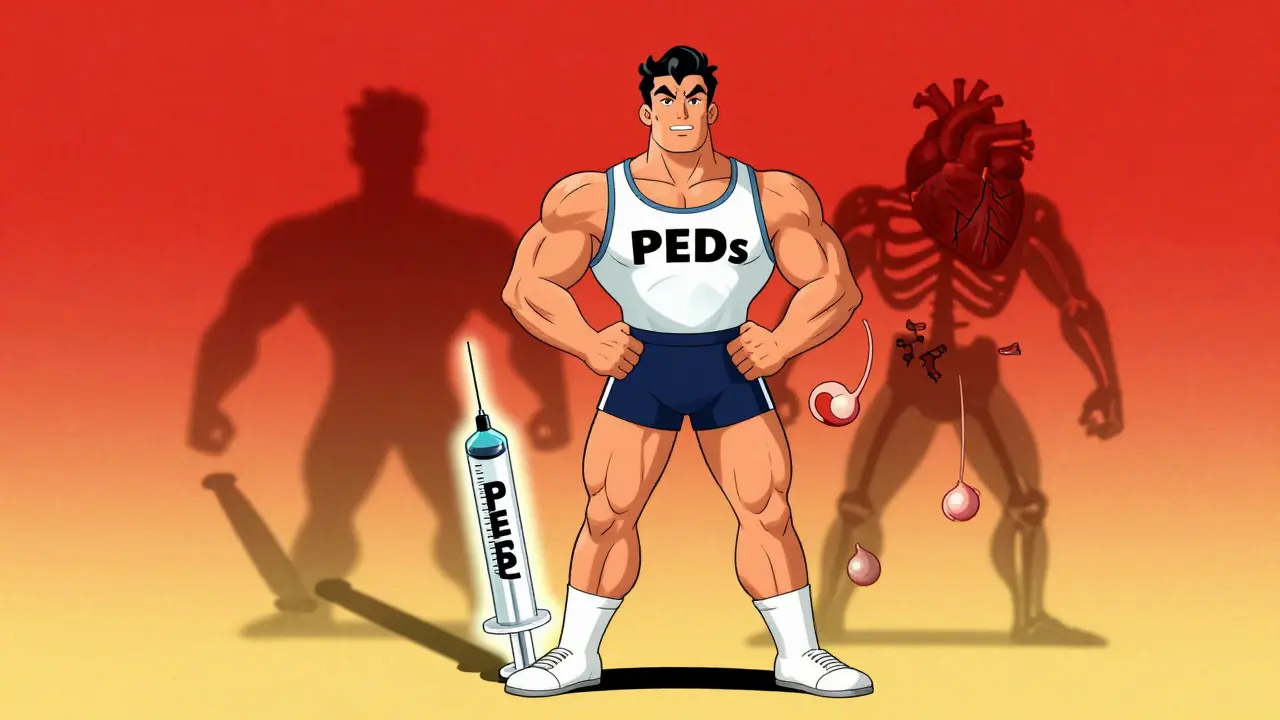
Cardiovascular damage is the most serious. Studies show steroid users have 27-45% more heart muscle mass than non-users, even after accounting for size and age. That extra muscle doesn’t make the heart stronger - it makes it stiffer. Ejection fractions drop by 8-12%, meaning the heart pumps less blood with each beat. The American Heart Association confirms steroid use raises the risk of major heart events by 36%.
Liver damage is common with oral steroids. In 68% of users, liver enzymes (ALT and AST) spike, signaling stress or injury. Some develop liver tumors or peliosis hepatis - blood-filled cysts that can rupture.
For men, testosterone production shuts down. After just 8 weeks of use, 90% of users drop below 300 ng/dL - the clinical threshold for hypogonadism. Testicles shrink to 2-4 mL (normal is 15-25 mL). Sperm counts plunge below 1 million/mL. Many never fully recover. One Reddit user wrote: “I did 12 weeks, came off, waited 8 months. Still couldn’t get my levels back. Needed injections just to feel normal.”
Women face irreversible changes: voice deepening in 35% of users, clitoral enlargement over 2.5 cm, and facial hair growth. These aren’t temporary. Once they happen, they don’t reverse.
Tendons and ligaments don’t grow as fast as muscles. That imbalance leads to ruptures - even at 70% of the load the body should handle. Athletes have torn Achilles tendons during light squats, not because they were weak, but because their connective tissue couldn’t keep up.
It’s Not Just Steroids Anymore
The old days of clear-cut doping are gone. Today’s market is flooded with new compounds designed to slip through tests.
Selective Androgen Receptor Modulators (SARMs) are marketed as “safer steroids.” But FDA tests found 89% of SARMs products contain something else entirely - often untested chemicals with unknown toxicity. Some users report severe liver failure after just a few weeks.
Peptide hormones like HGH and EPO are growing fast. They’re harder to detect, so they’re popular among recreational users. But they come with their own risks: joint pain, fluid retention, and increased cancer risk due to unchecked cell growth.
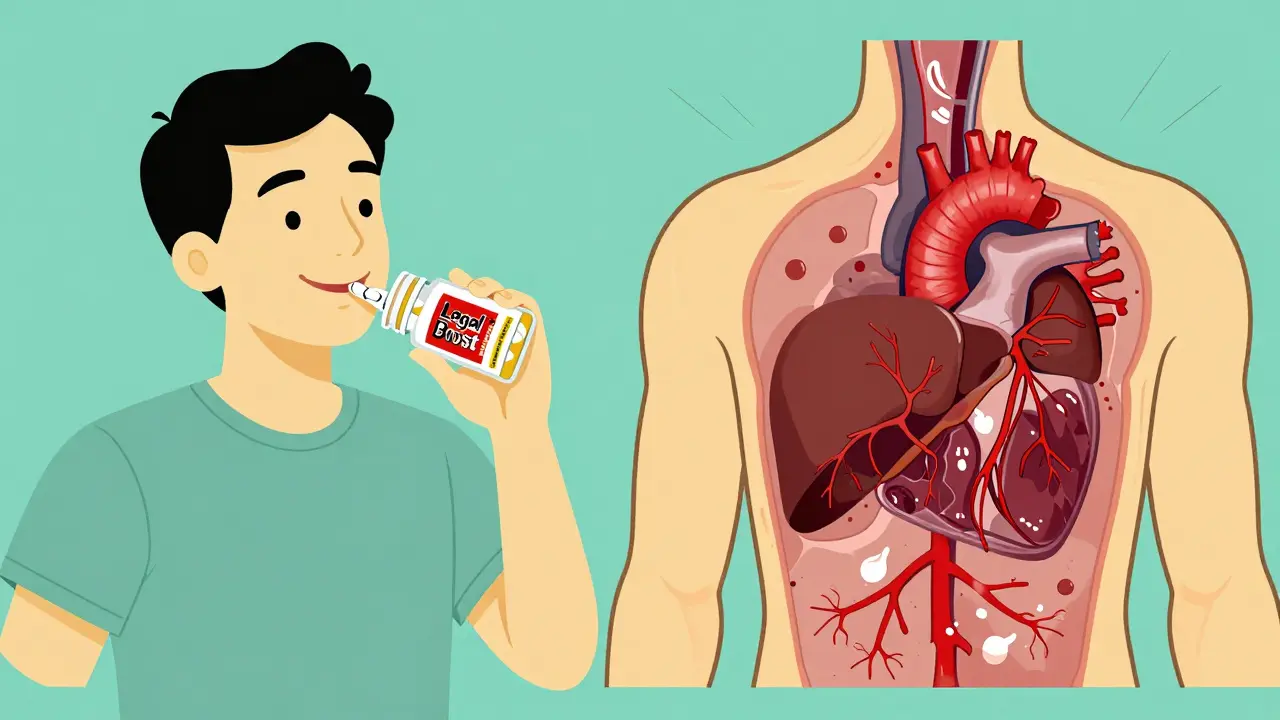
Even over-the-counter supplements are dangerous. A 2023 study found 30% of pre-workout powders sold in gyms contained banned stimulants like DMAA or methylhexaneamine - ingredients banned by WADA since 2010. People think they’re just taking a “legal boost.” They’re not.
Who’s Really Using These Drugs?
Most people assume it’s Olympians or pro athletes. It’s not.
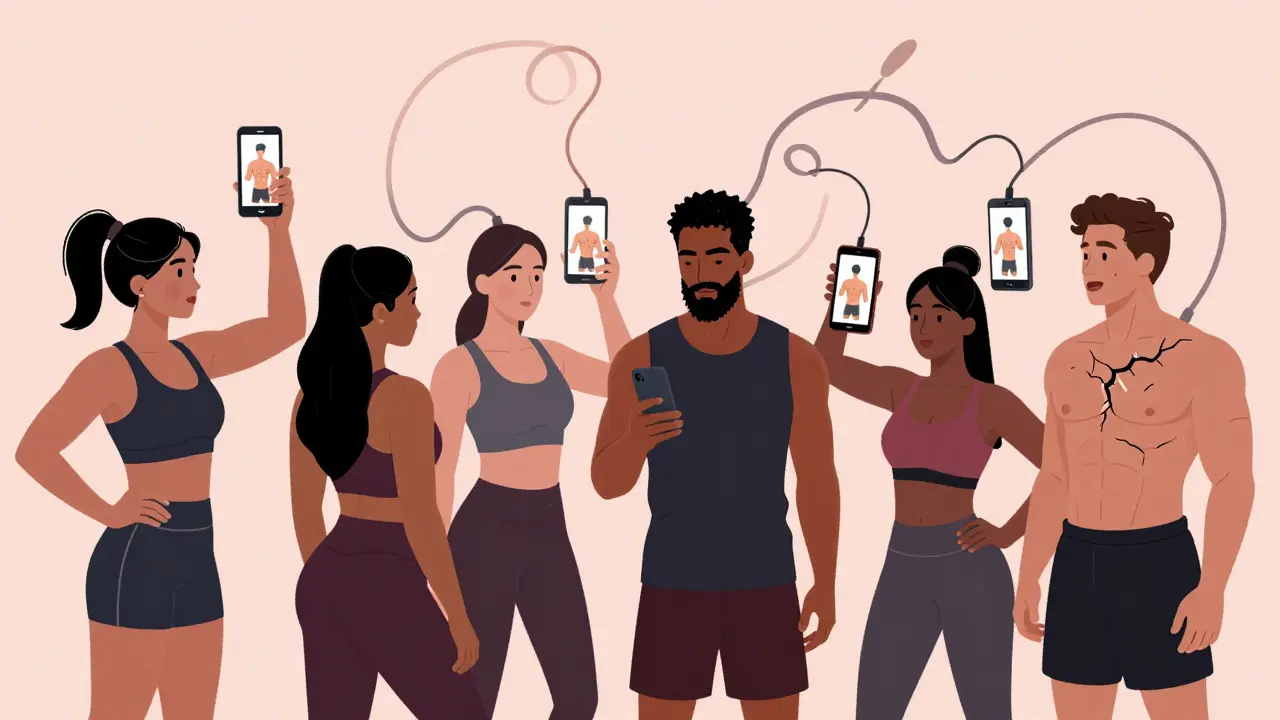
Elite athletes now make up only 15-20% of PED users. The majority - 65-70% - are recreational gym-goers. Men and women in their 20s and 30s, scrolling Instagram, seeing “transformations,” thinking they need to chemically catch up.
One 2023 University of Michigan survey found 58% of regular gym users had no moral issue with using PEDs for non-competitive purposes. “I’m not competing,” one user said. “I just want to look better.”
Even worse, wellness clinics are quietly fueling this trend. Many offer “bio-identical hormone replacement” for aging or low energy - but include testosterone, HGH, or other banned substances. Patients think they’re getting medical care. They’re being doped.
Why Doctors Miss It
Here’s the scary part: your doctor probably doesn’t know you’re using these drugs.
American Academy of Family Physicians found 7 out of 10 family doctors fail to recognize PED use in routine exams. Why? Because users don’t tell them. And the symptoms - mood swings, acne, low libido, fatigue - look like stress, depression, or normal aging.
Only 12% of users admit PED use to their doctor. Most fear judgment, legal trouble, or losing access to their gym community.
But without disclosure, doctors can’t monitor for damage. No one checks liver enzymes. No one tracks testosterone levels. No one warns about heart strain. By the time someone ends up in the ER with a heart attack at 28, the damage is already done.
The Rollercoaster: Gains, Losses, and Mental Health
It’s not just physical. The mental toll is brutal.
Users describe a cycle: during the cycle, they feel invincible - confident, energetic, aggressive. Off-cycle, it crashes. Depression hits hard. One user wrote: “I gained 25 lbs of muscle in 10 weeks. Lost it all in 8 weeks off. Then I couldn’t get out of bed for months.”
Studies show 83% of users experience severe mood swings. 67% develop clinical depression during off-cycles. Suicide risk rises. Anxiety spikes. Irritability becomes uncontrollable.
And then there’s the shame. Many users feel trapped. They know the risks. They see the damage. But they’re scared to stop - afraid they’ll lose everything they built.
What Should Athletes Do Instead?
You don’t need a needle or a pill to get strong. Natural training works - it just takes longer.
Real gains come from consistency: progressive overload, proper sleep, balanced nutrition, and recovery. Elite athletes who win without PEDs don’t have better genes. They have better habits.
Supplements like creatine, protein, and beta-alanine are safe, legal, and backed by science. They don’t force your body to change - they just support what it already does.
And if you’re struggling with body image or motivation? Talk to someone. A coach, a therapist, a trusted friend. The pressure to look a certain way isn’t real. It’s manufactured by algorithms and ads.
Final Thought: Your Body Isn’t a Project
Every time you inject, swallow, or snort something to get ahead, you’re betting your long-term health against short-term results. And the odds are stacked against you.
Heart attacks. Liver failure. Infertility. Depression. Permanent physical changes. These aren’t rare outcomes. They’re documented, predictable, and avoidable.
If you’re using PEDs, you’re not alone. But you’re not winning. You’re just delaying the bill.
The real performance boost? Knowing you earned it - without chemicals, without risk, without regret.
Can you get caught using performance-enhancing drugs even if you’re not a professional athlete?
Yes. While most testing targets elite athletes, random testing can happen in amateur leagues, university sports, and even some gym memberships that partner with anti-doping agencies. Also, if you seek medical care for side effects like heart issues or low testosterone, doctors may order blood tests that reveal drug use - even if you didn’t tell them. In some countries, possession of banned substances without a prescription is illegal, regardless of athletic status.
Are SARMs really safer than steroids?
No. SARMs are marketed as safer, but they’re not approved for human use by any major health agency. FDA testing shows 89% of SARMs products contain undisclosed chemicals - some linked to liver toxicity and cancer. They still suppress natural testosterone and can cause the same heart and hormonal damage as steroids. There’s no long-term safety data because they haven’t been studied in humans for more than a few months.
How long does it take for your body to recover after stopping steroids?
Recovery varies. Testosterone levels can take 6-12 months to return to normal, and in 38% of chronic users, they never fully recover without medical intervention. Muscle mass drops quickly after stopping - often 30-50% within 8-12 weeks. Fertility may take up to 18 months to rebound. Heart and liver damage may improve but not always reverse. Fibrosis in the heart and liver can be permanent. The sooner you stop, the better your chances.
Can you legally use testosterone or HGH for fitness?
No. In nearly all countries, including Australia, the U.S., and the UK, using testosterone or HGH for performance enhancement or muscle gain without a diagnosed medical condition (like hypogonadism or growth hormone deficiency) is illegal. Even if prescribed for legitimate reasons, using it to improve athletic performance violates anti-doping rules. Therapeutic Use Exemptions (TUEs) are only granted for verified medical conditions - not for anti-aging, energy boosts, or bodybuilding.
What should you do if you suspect a friend or teammate is using PEDs?
Approach them with concern, not judgment. Many users are ashamed and scared. Say something like, “I’ve noticed you’ve changed a lot lately - are you okay?” Offer support, not advice. Encourage them to talk to a doctor or counselor. Don’t report them unless there’s immediate danger - like suicidal thoughts or severe physical symptoms. Your goal is to help them see the risks, not punish them.

Chloe Hadland
January 22, 2026 AT 18:42ive seen so many guys go from zero to hero with steroids then vanish by 30
its not worth it man your body isnt a project to fix its a home to live in
Amelia Williams
January 24, 2026 AT 03:38you know what i love most about this post? it doesnt just scare you with stats it shows you the quiet pain behind every gain
that guy who said he needed injections just to feel normal? thats my cousin
he thought he was winning until he lost himself
you dont need to be an olympian to lose your body
its happening in every gym in america right now
Sharon Biggins
January 25, 2026 AT 14:18my brother did sarms for 6 months thought he was being smart
got liver damage and now he cant even lift his coffee cup without feeling tired
he still says he’d do it again if he could go back
thats the worst part
its not the side effects its the mindset
you start believing your worth is in your muscle size
not who you are
Himanshu Singh
January 27, 2026 AT 07:27we live in a world where your value is measured by how fast you can change your appearance
but no one teaches you how to sit with yourself when the mirror stops lying
the real drug isn’t the steroid
its the belief that you’re not enough as you are
take a breath
you’re already whole
Husain Atther
January 29, 2026 AT 07:16the normalization of performance enhancement in recreational fitness is deeply concerning
the medicalization of vanity through bio-identical hormone clinics represents a systemic failure in public health education
individuals are being exploited under the guise of wellness
this requires policy intervention and widespread awareness campaigns
Marlon Mentolaroc
January 30, 2026 AT 23:10lol at people acting like steroids are some new evil
you think the jacked guy at the gym got there by doing yoga?
everyone’s doping
the only difference is who got caught
if you’re not on something you’re just behind
get over it
the system rewards winners not purity
Don Foster
February 1, 2026 AT 10:01the 83 percent mood swing stat is laughable
anyone who takes steroids knows you’re gonna be a rage monster
thats the point
you want to feel unstoppable
you want to be feared
the real tragedy is the weak minded who think they can just pop pills and stay chill
you dont get gains without paying
and the price is your sanity
deal with it
siva lingam
February 1, 2026 AT 11:30so you wrote a 2000 word essay on why not to take drugs
congrats
you win the nobel prize for obviousness
next time try telling people to stop breathing
its bad for your lungs too