
When you’re pregnant, every pill, supplement, or over-the-counter remedy feels like a high-stakes decision. You want to feel better - maybe you have a headache, a rash, or a stubborn infection - but you’re terrified of harming your baby. The truth is, some medications are safe. Others? They can cause serious birth defects. And it’s not just about prescription drugs. Even common painkillers or acne treatments can carry hidden risks.
What Makes a Medication Teratogenic?
A teratogen is any substance that interferes with fetal development and causes birth defects. The word comes from the Greek for "monster," and it’s not an exaggeration. In the late 1950s, thousands of babies were born with missing or shortened limbs after their mothers took thalidomide for morning sickness. That tragedy changed medicine forever. Today, we know that the most dangerous time for exposure is between weeks 3 and 8 of pregnancy - when your baby’s organs are forming. After that, the risk shifts from physical deformities to problems with brain development, growth, or organ function. The CDC estimates that about 4% to 5% of birth defects are caused by medications. That sounds low, but when you’re the one taking the drug, it’s not a statistic - it’s a life.Medications You Must Avoid During Pregnancy
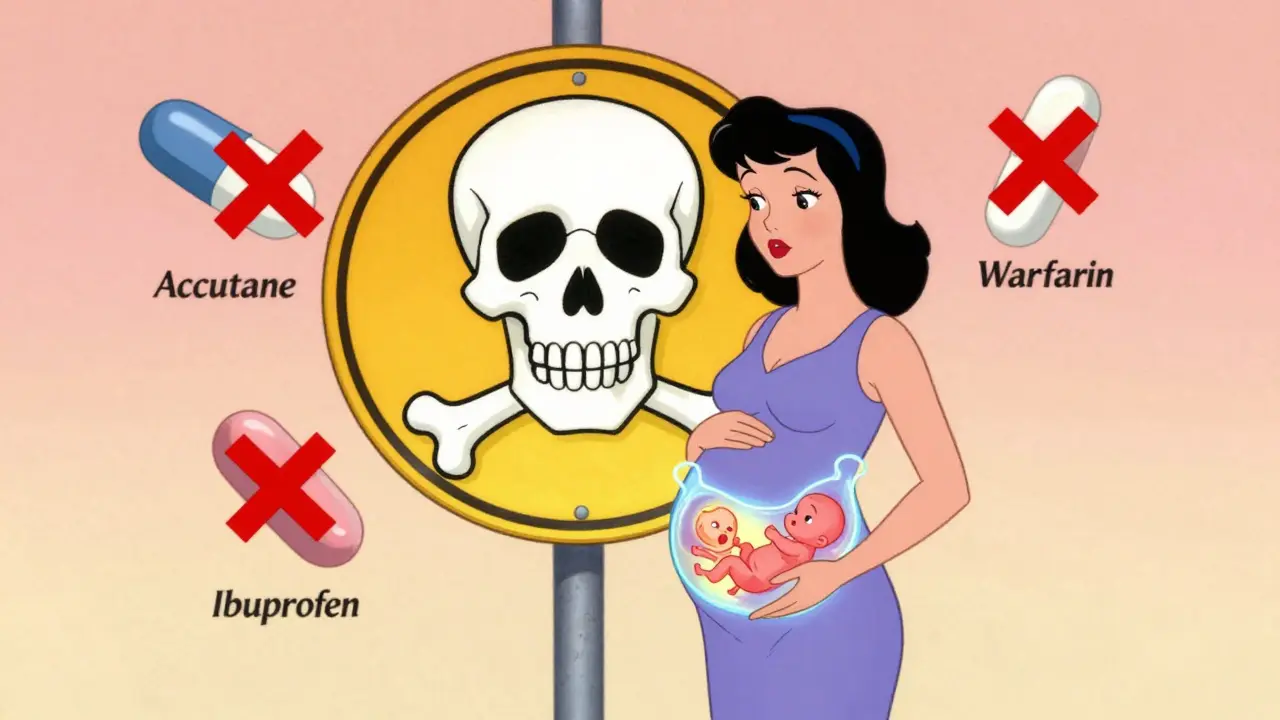
Some drugs are so dangerous they’re labeled Category X - meaning the risks far outweigh any possible benefit. These are absolute no-gos during pregnancy.- Isotretinoin (Accutane): Used for severe acne, this drug can cause brain, heart, and facial deformities. Even one dose can be enough. The iPLEDGE program requires two negative pregnancy tests, monthly counseling, and two forms of birth control - but still, 67 pregnancies occurred in 2022 among women enrolled in the program.
- Warfarin (Coumadin): This blood thinner crosses the placenta and can cause fetal warfarin syndrome, leading to nasal deformities, bone problems, and intellectual disability. Low-molecular-weight heparin is the safe alternative.
- Thalidomide: Still used today for leprosy and multiple myeloma, it’s banned for any use in women who could become pregnant unless under strict, monitored conditions.
- Tetracyclines and fluoroquinolones: Antibiotics like doxycycline and ciprofloxacin can stain developing teeth and affect bone growth. They’re linked to kidney and nervous system damage in the fetus.
- Sulfamethoxazole/trimethoprim (Bactrim): Avoid in the first trimester due to neural tube defect risk, and after 32 weeks because it can cause kernicterus - a dangerous buildup of bilirubin in the baby’s brain.
- NSAIDs (ibuprofen, naproxen): These should be avoided after 20 weeks. They can cause premature closure of a vital fetal blood vessel (ductus arteriosus) and reduce amniotic fluid levels.
Even some antifungals and acne treatments are risky. Ketoconazole, griseofulvin, and flucytosine have shown harm in animal studies. While human data is limited, the risk isn’t worth it.
Safe Alternatives for Common Pregnancy Complaints
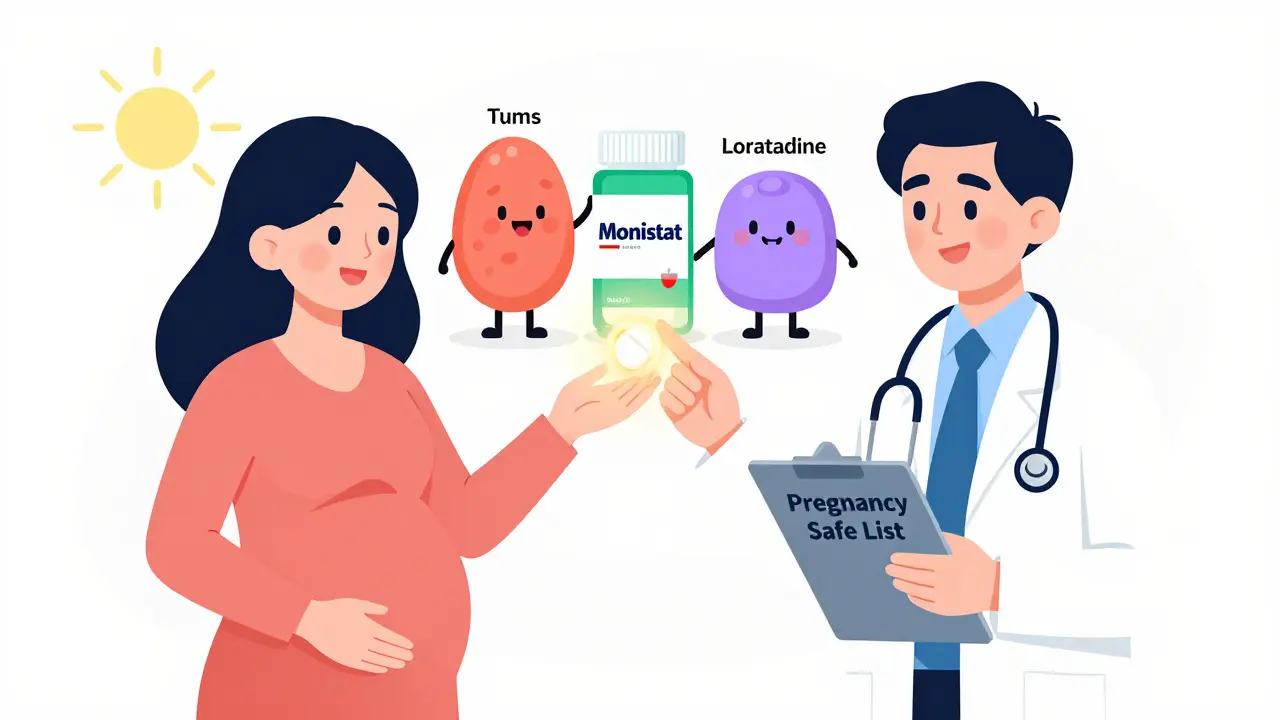
You don’t have to suffer. There are safe, effective options for most symptoms.- Pain and fever: Acetaminophen (Tylenol) is the gold standard. It’s been studied in over 100,000 pregnancies and is consistently recommended by the American Academy of Family Physicians and Mayo Clinic. Avoid aspirin and NSAIDs.
- Allergies and runny nose: Second-generation antihistamines like loratadine (Claritin) and cetirizine (Zyrtec) are preferred. First-generation ones like diphenhydramine (Benadryl) can cause drowsiness and may affect fetal heart rate.
- Heartburn: Calcium carbonate antacids (Tums) and magnesium-based ones are safe. Avoid bismuth subsalicylate (Pepto-Bismol) - it contains salicylates, which act like aspirin.
- Yeast infections: Clotrimazole (Monistat) is safe. Topical azoles are preferred over oral fluconazole, which has been linked to rare birth defects.
- High blood pressure: Labetalol and nifedipine are first-line. Methyldopa is also well-studied and safe. Never stop blood pressure meds without your doctor’s guidance - uncontrolled hypertension is far more dangerous than the medication.
- Depression or anxiety: SSRIs like sertraline and citalopram are often used during pregnancy. Untreated depression carries risks too - including preterm birth and low birth weight. Work with your OB and psychiatrist to find the safest option.
- Seizures: If you have epilepsy, stopping your medication can trigger seizures, which pose a 10-15% risk of fetal injury. Medications like lamotrigine and levetiracetam are considered safer. Never adjust doses on your own.
Timing Matters More Than You Think
Most women don’t realize they’re pregnant until week 5 or 6. By then, the baby’s heart, brain, and limbs are already forming. A 2023 study found that 72% of teratogenic exposures happened before prenatal care even started - and 68% happened before the woman knew she was pregnant. That’s why planning matters. If you’re trying to conceive, sit down with your doctor 3 to 6 months ahead. Review every medication you take - even supplements, herbal teas, or acne creams. Some medications need to be switched months in advance to reduce risk.What About Over-the-Counter and Herbal Remedies?
Just because something’s sold without a prescription doesn’t mean it’s safe. Many herbal products aren’t tested in pregnancy. Goldenseal, black cohosh, and dong quai can stimulate contractions. High-dose vitamin A (over 10,000 IU/day) is a known teratogen - and it’s in many multivitamins. Always check with your provider before taking anything new. Even something as simple as a cold remedy can contain hidden NSAIDs or decongestants like pseudoephedrine, which can restrict blood flow to the placenta.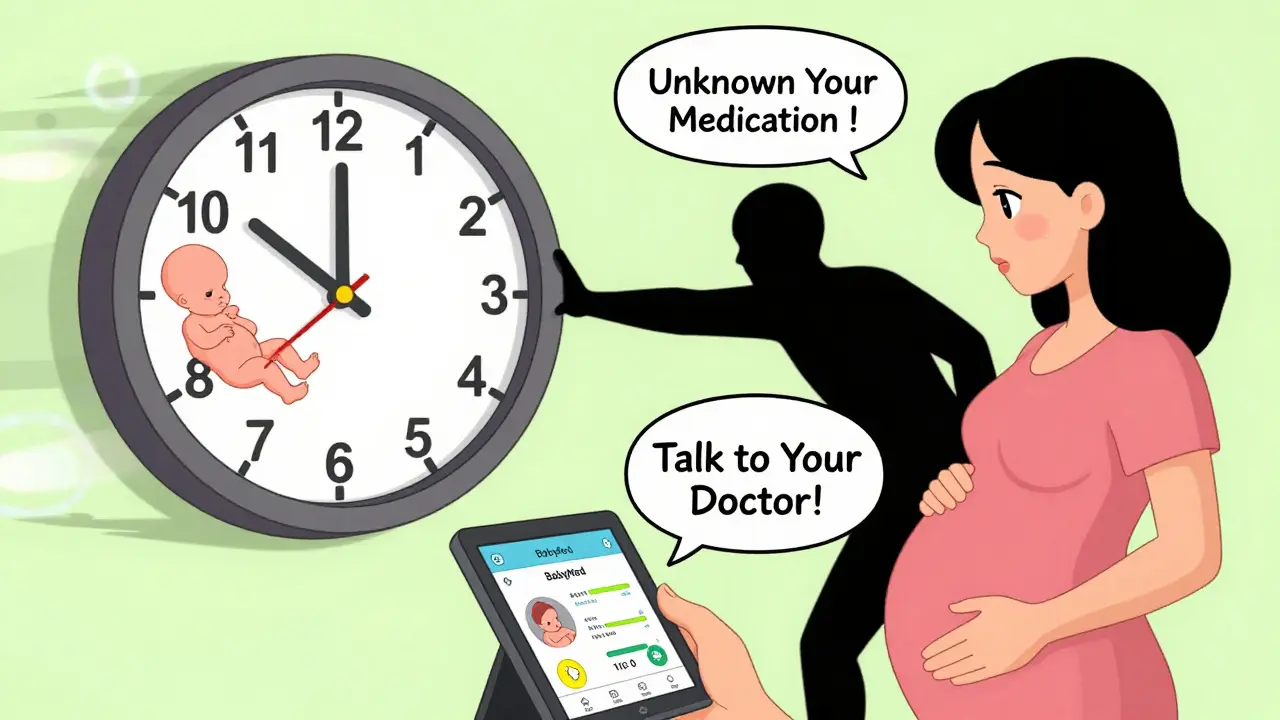
How to Make Smart Decisions
The best tool you have is information - and your care team. Follow these five steps:- Confirm pregnancy - even if you’re just thinking about it.
- Determine gestational age - knowing how far along you are tells you what risks are most relevant.
- Ask: Is this drug necessary? - Can you manage symptoms without it? Can it be delayed until after delivery?
- Check the risk - Use trusted sources like the Organization of Teratology Information Specialists (OTIS) or the BabyMed app (launched in January 2024), which gives real-time risk assessments based on your week of pregnancy.
- Discuss risk vs. benefit - Sometimes, the risk of not treating a condition (like epilepsy or high blood pressure) is higher than the medication’s risk.
Recent research shows promise. A February 2024 study in the New England Journal of Medicine found that switching to bedtime-release prednisone reduced major birth defects by 73% in women with autoimmune diseases. That’s not just a small improvement - it’s a game-changer.
What’s New in Pregnancy Drug Safety
The FDA stopped using the old A, B, C, D, X categories in 2015 because they were too simplistic. Now, labels give detailed explanations about risks, animal data, and human studies. It’s more work to read - but it’s more honest. The FDA is also expanding its REMS programs to cover more drugs, and new pregnancy registries are using real-world data from electronic health records to spot risks faster. By late 2024, these systems should cut detection time for new dangers by 40%.Final Thought: You’re Not Alone
It’s easy to feel guilty if you took something before you knew you were pregnant. But most exposures don’t cause harm. The vast majority of babies are born healthy, even when moms take medications. What matters is what you do next. Talk to your provider. Don’t stop meds suddenly. Don’t guess. Use trusted resources. And remember - managing your health during pregnancy isn’t about perfection. It’s about making informed choices, one step at a time.Is acetaminophen really safe during pregnancy?
Yes. Acetaminophen (Tylenol) is the most recommended pain reliever and fever reducer during pregnancy. Multiple large studies, including those from the American Academy of Family Physicians and Mayo Clinic, show no increased risk of birth defects when used at recommended doses. It’s considered safe in all three trimesters. Avoid long-term, high-dose use, but occasional use for headaches or fever is fine.
Can I take ibuprofen while pregnant?
Avoid ibuprofen and other NSAIDs after 20 weeks of pregnancy. Before that, occasional use is sometimes okay, but it’s not recommended. NSAIDs can cause the baby’s heart vessel to close too early and reduce amniotic fluid. Acetaminophen is always the safer choice. If you’ve taken ibuprofen before knowing you were pregnant, don’t panic - one or two doses are unlikely to cause harm.
Is it safe to use acne treatments like benzoyl peroxide?
Yes. Topical benzoyl peroxide and azelaic acid are considered safe during pregnancy. They’re absorbed minimally through the skin and haven’t been linked to birth defects. Avoid oral isotretinoin (Accutane) and topical retinoids like tretinoin - these are proven teratogens. Stick to gentle, non-prescription topicals and consult your dermatologist if your acne is severe.
What should I do if I took a risky medication before knowing I was pregnant?
Don’t panic. Most medications don’t cause harm, and many birth defects have other causes. Call your OB or a teratology specialist - organizations like OTIS offer free consultations. Tell them the name of the drug, when you took it, and your gestational age. They’ll assess the risk based on timing and dose. In most cases, the risk is low or negligible. Avoid self-diagnosing with online forums - rely on medical experts.
Are herbal supplements safe during pregnancy?
No, not without approval. Herbal products aren’t regulated like drugs, and many have unknown effects on pregnancy. Herbs like black cohosh, dong quai, and goldenseal can trigger contractions. High doses of vitamin A, found in some supplements, can cause birth defects. Always check with your provider before taking any supplement, even ones labeled "natural" or "organic."
Can I continue my antidepressants during pregnancy?
Many women safely continue antidepressants during pregnancy. SSRIs like sertraline and citalopram are the most studied and generally considered low-risk. Untreated depression can lead to poor nutrition, missed prenatal visits, and preterm birth - which are also dangerous. Never stop cold turkey. Work with your OB and psychiatrist to find the lowest effective dose and monitor your mental health closely.
What’s the safest way to treat a UTI while pregnant?
Nitrofurantoin and cephalexin are first-line choices for urinary tract infections in pregnancy. While nitrofurantoin was once thought to carry a small risk of heart defects, recent data shows the risk is very low if used before 32 weeks. Avoid sulfamethoxazole/trimethoprim in the first trimester and after 32 weeks. Always finish your full course - untreated UTIs can lead to kidney infections and preterm labor.

David Chase
December 30, 2025 AT 13:02THIS IS WHY AMERICA IS FALLING APART!!! 😤 People think they can just pop pills like candy and then cry when something goes wrong?!?!? I had a cousin who took Tylenol for a headache and her kid was born with a cleft palate-NO COINCIDENCE!!! 🤬 The FDA is a joke, and doctors are just profit-driven robots!!! 🚨
Emma Duquemin
January 1, 2026 AT 02:27OMG I JUST READ THIS AND I’M CRYING-NOT FROM FEAR, BUT FROM RELIEF!!! 🥹 I was terrified I’d messed up my baby by taking ibuprofen for a migraine at 8 weeks… but now I know it was probably fine?? 😭 Thank you for breaking this down like a superhero with a clipboard!! 🦸♀️💊 I’m telling EVERY pregnant friend I know to read this. You just saved a million future panic attacks.
Kevin Lopez
January 2, 2026 AT 12:59Teratogenic exposure window: 3–8 weeks LMP. NSAIDs contraindicated after 20 WGA due to ductus arteriosus constriction. Acetaminophen remains first-line. SSRIs: sertraline preferred. Avoid Class X agents. OTIS registry data supports low-risk profiles for most common exposures. Evidence-based.
Duncan Careless
January 4, 2026 AT 04:55Thanks for this. Really helpful. I didn’t realize how many OTC things could be risky. I took some Pepto-Bismol last month before I knew I was preg-hope it’s ok. I’ll definitely check with my midwife before taking anything else. 🙏
Samar Khan
January 5, 2026 AT 17:18Russell Thomas
January 7, 2026 AT 07:42So let me get this straight… I can’t take Advil after 20 weeks, but I can take Tylenol… which is basically just a fancy name for ‘poison that’s slightly less bad’? 😏 And you’re telling me to ‘consult my doctor’? Yeah, my OB literally told me to ‘do what feels right.’ Thanks for the science, I guess?
Joe Kwon
January 8, 2026 AT 08:14Great breakdown. I appreciate the nuance-especially the part about not stopping meds cold turkey. My wife’s on sertraline and we were terrified to continue, but the risk of untreated depression is real. The BabyMed app was a game-changer for us. Also, huge props for mentioning the FDA’s new labeling system. It’s clunky, but way more honest than A/B/C/D/X.
Nicole K.
January 10, 2026 AT 05:03How can you even think it’s okay to take ANY medicine while pregnant? God gives us natural ways to heal. If you’re sick, pray. Rest. Drink water. Don’t poison your baby with chemicals. I had 3 kids without ever taking a pill and they’re all perfect. You’re playing with fire.
Fabian Riewe
January 12, 2026 AT 00:44Just wanted to say thank you for writing this. I’m 12 weeks and I was about to start taking melatonin for sleep because I was exhausted. Now I’m not. I’m gonna try magnesium glycinate instead. Also, I had no idea about the vitamin A in multivitamins-yikes! This is the kind of info that actually helps. No judgment, just facts. 👏
Amy Cannon
January 12, 2026 AT 12:57As a cultural anthropologist specializing in maternal health practices across global communities, I must emphasize the profound epistemological dissonance between Western pharmacological paradigms and indigenous healing modalities, particularly in South Asian and Sub-Saharan African contexts where botanical remedies are not merely therapeutic but embedded within cosmological frameworks of fetal well-being. The reductionist framing of ‘teratogenic risk’ overlooks the socio-cultural efficacy of traditional practices, such as turmeric-infused poultices for inflammation or neem leaf decoctions for dermatological conditions, which have demonstrated empirical safety over millennia. Moreover, the privileging of FDA regulatory frameworks as universal standards ignores the colonial underpinnings of medical authority-particularly when women in low-resource settings are denied access to even basic analgesics, yet are admonished against herbal alternatives. A truly ethical approach requires epistemic pluralism, not just pharmacological checklists.