
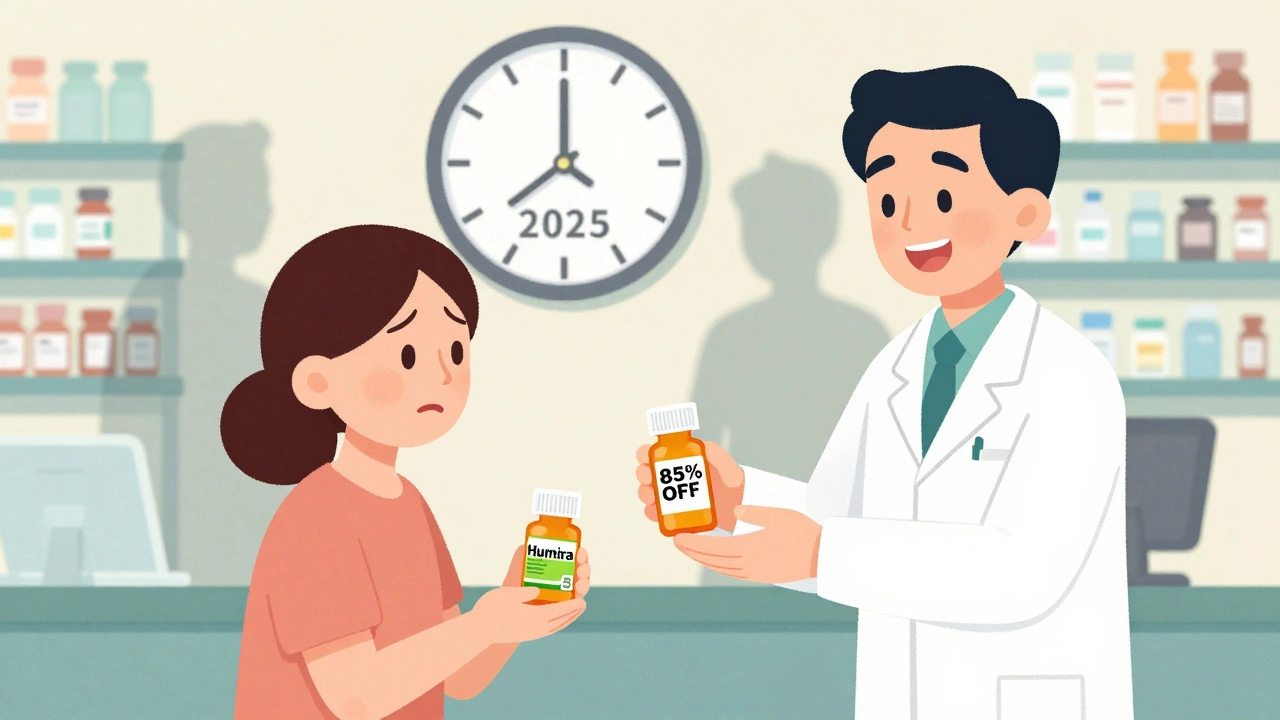
When a drug’s patent runs out, prices don’t just drop-they collapse. But not everyone is ready.
Imagine taking a daily pill for high blood pressure or rheumatoid arthritis. It works. It’s stable. Then one day, your pharmacy says, "We’re switching you to a different version." You don’t know why. You don’t know if it’s the same. You’re worried. You’ve heard stories about side effects. This isn’t science fiction. This is what happens every single day as drug patents expire.
By 2029, over $90 billion in brand-name drug sales in the U.S. alone will be up for grabs. That’s not just a number-it’s millions of patients switching medications, pharmacies scrambling to restock, insurers renegotiating contracts, and hospitals trying to cut costs without hurting care. The big question isn’t whether this will happen-it’s whether you, your doctor, or your health system are prepared for it.
Why patent expiry matters more than you think
Most people think a drug patent lasts 20 years. That’s technically true-but it’s misleading. The clock starts ticking when the drug is first filed, not when it hits shelves. By the time the FDA approves it, after years of testing, only 7 to 10 years of real market exclusivity remain. That’s why so many drugs hit their expiry date around the same time now.
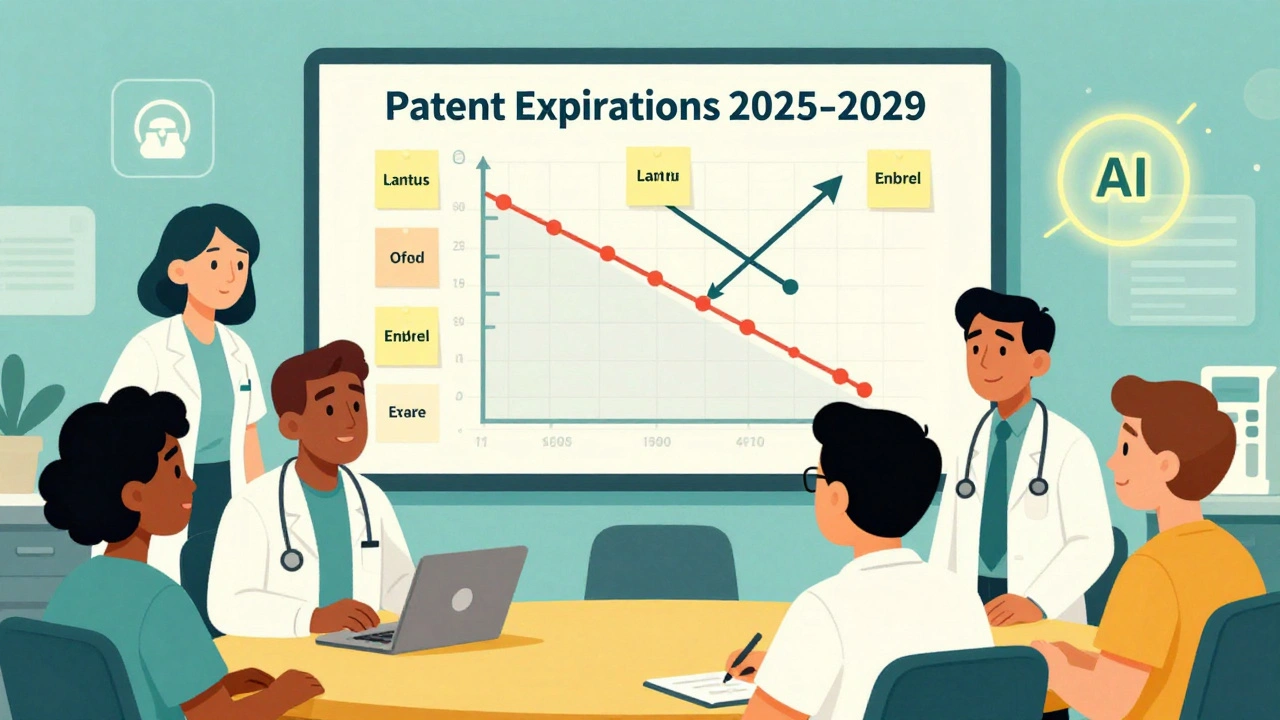
Between 2025 and 2029, over 200 small-molecule drugs and 45 biologics will lose patent protection. That includes big names like Humira, Enbrel, and Lantus-drugs that millions rely on. When these patents expire, generic versions flood the market. And here’s the kicker: generics cost 80 to 85% less than the brand-name version within a year.
But here’s the catch: not all generics are created equal. Some are made by the same company that made the original. Others come from overseas factories with less oversight. And biosimilars-generic versions of complex biologic drugs-are even trickier. They’re not exact copies. They’re similar. And that difference can matter for patients with autoimmune diseases or cancer.
What patients should do before their drug goes generic
If you’re on a brand-name drug with a patent expiry coming up, don’t wait for your pharmacy to notify you. Take action now.
- Ask your doctor: "Is there a generic version coming? When? Will it work the same for me?" Don’t assume it’s automatic. Some patients react differently to inactive ingredients-like fillers or dyes-that change between brands.
- Check your insurance formulary: Your plan may switch you without asking. Look up your drug on your insurer’s website. See if there’s a preferred generic. If there’s a co-pay difference, find out how much you’ll save-or lose.
- Track your symptoms: If you’ve been stable on your current medication, note how you feel. If you switch and start having new side effects-fatigue, rashes, dizziness-document them. Bring this to your doctor. It’s not "all in your head." Bioequivalence rules allow generics to vary by up to 25% in how much drug enters your bloodstream. That’s legal. But it’s not always safe for everyone.
- Know your rights: You can refuse a switch. If your doctor says the brand is medically necessary, they can write a prior authorization. Keep copies of all paperwork.
One patient in Melbourne, on a biologic for psoriasis, switched to a biosimilar after her insurer mandated it. Within two weeks, her skin flared up. She went back to her original drug-and her doctor helped her appeal the change. She’s not alone. A 2022 Kaiser Family Foundation survey found 37% of patients reported adverse effects after switching to generics-even though they met FDA standards.
How healthcare systems are (and aren’t) preparing
Hospitals and health networks are under pressure to cut costs. Generic drugs are the easiest way to do that. But many aren’t ready.
Successful systems start planning two years before a patent expires. That’s not a suggestion-it’s a requirement. Here’s what they do:
- Track expirations: There are over 1,400 patent expirations in the U.S. each year. Top hospitals use software like Symphony Health’s PatentSight to monitor them. Smaller clinics? Many still use spreadsheets-and miss critical dates.
- Build a team: A dedicated LOE (Loss of Exclusivity) task force includes pharmacists, doctors, finance staff, and contract negotiators. They don’t wait until the last minute. They analyze the pipeline: Which generics are coming? Are they approved? Are there delays? Are there pay-for-delay deals blocking competition?
- Negotiate early: The moment a generic is approved, prices start dropping. But the lowest price isn’t always the best. Rebates, contracts, and formulary placement can hide the real cost. Systems that lock in deals 12 months out save 22% more than those who wait.
- Update clinical guidelines: If your hospital’s protocol still says "use brand-name insulin," it’s outdated. Update it 9 months before expiry. Train staff. Educate patients.
But here’s the problem: 58% of smaller medical groups say they don’t have the staff or tools to track multiple expirations at once. And 45% report being blindsided by unexpected patent extensions-like when a company files a new patent on a slightly different pill coating or delivery method to delay generics.
The biosimilar gap: Why some drugs won’t get cheaper anytime soon
Not all drugs are the same. Small-molecule drugs-like statins or metformin-are relatively easy to copy. Their generics hit the market fast. But biologics? These are complex proteins made in living cells. Think Humira, Enbrel, or Rituxan. Copying them isn’t like copying aspirin.
Biosimilars take years to develop, cost millions to test, and face more regulatory hurdles. Even when they’re approved, doctors are hesitant to switch. And patients? Many are scared. The result? Only 38% of biologic prescriptions switch to biosimilars within two years of expiry. Compare that to 90%+ for small-molecule generics.
That’s changing-but slowly. Oncology biosimilars are seeing faster adoption (45% within a year) because hospitals are under pressure to cut cancer treatment costs. But for autoimmune diseases? Adoption is stuck at 18%. Why? Delivery systems. Many biologics require injections or infusions. If the biosimilar comes in a different pen or vial, nurses need retraining. Patients need new instructions. It’s not just about price-it’s about logistics.
What’s changing in 2025 and beyond
The rules are shifting. The Inflation Reduction Act, passed in 2022, lets Medicare negotiate prices for some drugs after they lose patent protection. Starting in 2026, 10 to 20 drugs per year will be affected. That’s a game-changer. It means even if a drug has no generic, Medicare might force the price down.
The 2023 CREATES Act cracked down on "product hopping"-when companies tweak a drug just enough to get a new patent and push patients off the old version. The FTC says pay-for-delay deals are down 35% since 2022. That’s good news.
And AI is helping. Health systems using AI tools to predict patent expirations now have 89% accuracy-up from 65%. That means fewer surprises.
But challenges remain. Gene therapies and other next-gen drugs don’t fit the old patent model. Their protection timelines are unclear. And the U.S. still lacks a reference pricing system like Europe’s, where prices drop to 30-40% of original levels right away. Here, prices fall more slowly-60-70% over 18-24 months-because of rebates and middlemen.
What you can do today
You don’t need to be a pharmacist or hospital administrator to act. Here’s your simple checklist:
- Find out if your drug’s patent is expiring soon. Search the FDA’s Orange Book or ask your pharmacist. Many drugs have expiry dates listed on sites like GoodRx or Drugs.com.
- Call your insurer. Ask: "Will my drug switch to a generic? When? What will my co-pay be?"
- Talk to your doctor. Don’t assume the switch is safe. Ask: "Is there any reason I should stay on the brand?"
- Monitor your body. If you feel different after switching, document it. Keep a symptom journal.
- Speak up. If you’re forced to switch and it causes problems, file a complaint with your insurer. You’re not alone.
Health systems that plan early save an average of $4.7 million per drug. Patients who ask questions avoid unnecessary side effects. The system isn’t perfect-but you have more power than you think.
Frequently Asked Questions
What happens to the price of a drug after its patent expires?
After a drug’s patent expires, generic versions enter the market and prices typically drop by 80 to 85% within the first year. For small-molecule drugs, competition drives prices down fast. For complex drugs like biosimilars, the drop is slower-usually 20 to 40%-because development and approval take longer.
Can I refuse to switch to a generic drug?
Yes. You have the right to refuse a switch. If your doctor believes the brand-name drug is medically necessary-for example, because you’ve had side effects with generics or your condition is unstable-they can submit a prior authorization request to your insurer. Keep records of any adverse reactions.
Are generic drugs as safe as brand-name drugs?
Yes, by FDA standards. Generics must prove they deliver the same active ingredient at the same rate and strength as the brand. But they can have different inactive ingredients-like fillers or dyes-which sometimes cause reactions in sensitive patients. If you notice new side effects after switching, report them to your doctor.
What’s the difference between a generic and a biosimilar?
Generics are exact copies of small-molecule drugs, like pills or tablets. Biosimilars are highly similar-but not identical-to complex biologic drugs made from living cells. They’re not interchangeable by default. A biosimilar must go through extra testing and often requires a doctor’s approval before switching.
Why do some drug companies delay generic entry?
Some companies use tactics like "patent thickets"-filing dozens of minor patents on packaging, dosing, or formulations-to block generics. Others pay generic makers to delay launch ("pay-for-delay"). These practices are being challenged by the FTC and new laws like the CREATES Act, which aim to stop anti-competitive behavior.
How can I find out when my drug’s patent expires?
Check the FDA’s Orange Book online, or ask your pharmacist. Sites like GoodRx and Drugs.com often list upcoming patent expirations. If you’re on Medicare, your plan’s formulary updates may also notify you. Planning ahead-ideally two years before expiry-gives you time to prepare.
Next steps for patients and systems
If you’re a patient: Start today. Look up your top three medications. Check their patent status. Talk to your doctor. Write down your questions. Don’t wait for a letter from your insurer.
If you’re part of a healthcare system: Don’t rely on spreadsheets. Invest in tracking software. Build a cross-functional team. Start planning 24 months before expiry. Track savings. Measure patient outcomes. The savings aren’t just financial-they’re in better care, fewer errors, and less patient anxiety.
The patent cliff isn’t coming. It’s here. And the people who prepare-whether they’re patients, doctors, or administrators-are the ones who come out ahead.

Richard Eite
December 7, 2025 AT 14:47Katherine Chan
December 8, 2025 AT 14:27Philippa Barraclough
December 8, 2025 AT 23:57Tim Tinh
December 9, 2025 AT 14:08Olivia Portier
December 10, 2025 AT 20:01Rich Paul
December 11, 2025 AT 14:06Lauren Dare
December 11, 2025 AT 22:18Gilbert Lacasandile
December 12, 2025 AT 05:24William Umstattd
December 12, 2025 AT 17:14