
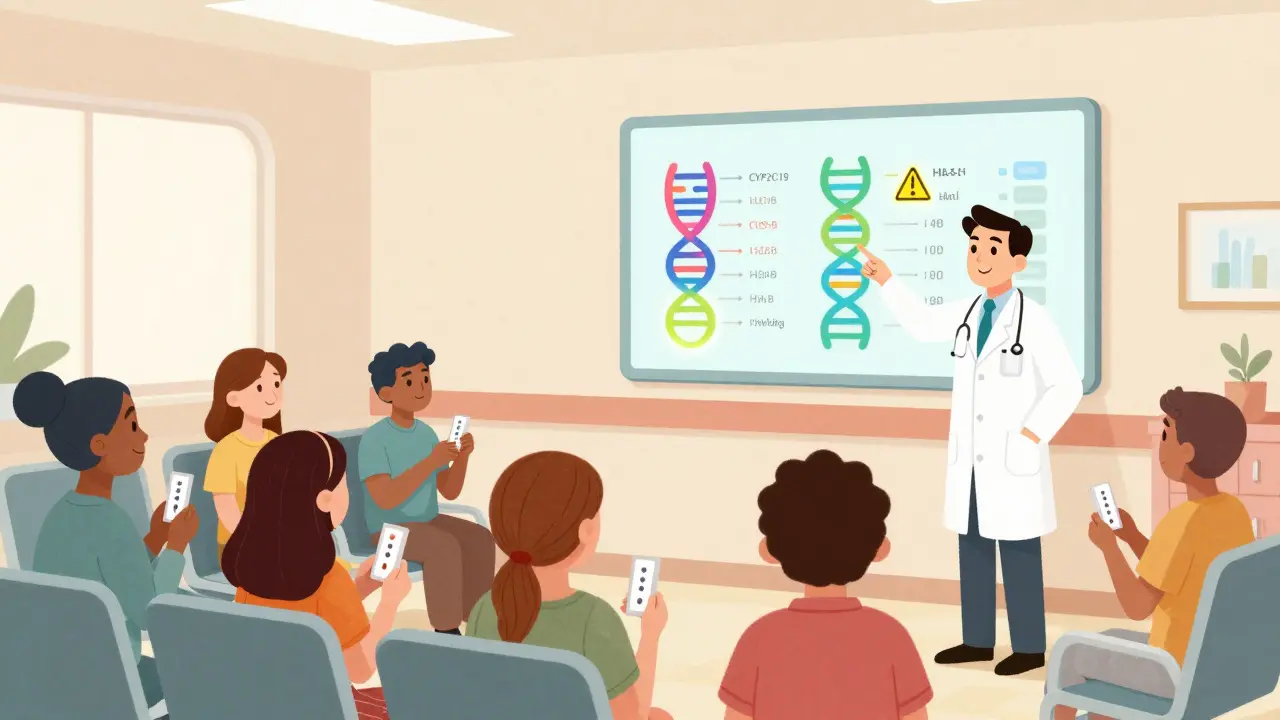
Every year, millions of people end up in hospitals not because their condition got worse, but because the medicine meant to help them made things worse. These are called adverse drug reactions - unexpected, harmful responses to medications that aren’t due to overdose or misuse. In Australia, the UK, and the US, up to 7% of hospital admissions are linked to these reactions. Many of them are preventable. And the key to stopping them isn’t more caution or better labeling - it’s your genes.
How Your Genes Control How Drugs Work
Your body doesn’t process every drug the same way. Two people can take the exact same pill, at the same dose, and one might feel fine while the other ends up in the ER. Why? Because your DNA tells your body how to break down, absorb, and respond to medications. This is pharmacogenetics - the study of how inherited genetic differences affect drug response. Take CYP2C19, a gene that helps metabolize common drugs like clopidogrel (used after heart attacks) and certain antidepressants. About 30% of people of Asian descent carry a variant that makes them slow metabolizers. If they take clopidogrel, the drug doesn’t work well, raising their risk of another heart attack. But if they’re tested first, doctors can switch them to a different drug - like ticagrelor - and avoid the danger entirely. Another example: carbamazepine, a seizure and nerve pain medication. In people with the HLA-B*1502 gene variant - common in Southeast Asian populations - this drug can trigger Stevens-Johnson syndrome, a life-threatening skin reaction. Testing for this variant before prescribing reduces that risk by 95%. That’s not a small improvement. That’s near-total prevention.The Landmark Study That Changed Everything
In 2023, the PREPARE study published results in The Lancet that changed how we think about drug safety. Researchers followed nearly 7,000 patients across seven European countries who were tested for 12 key genes before starting new medications. The genes included CYP2D6, TPMT, SLCO1B1, and HLA-B - all linked to reactions from drugs like statins, chemotherapy, and painkillers. The result? A 30% drop in serious adverse drug reactions. That’s not a 30% reduction in minor side effects. That’s fewer heart attacks, fewer liver failures, fewer hospitalizations. The study proved what many suspected: if you test patients before prescribing, you prevent harm before it starts. What made PREPARE different was that it wasn’t done in a lab. It was done in real hospitals, with real doctors, using real electronic health records. When a doctor tried to prescribe a drug that clashed with a patient’s genetic profile, the system popped up a warning - like a seatbelt reminder, but for your genes.Which Drugs and Genes Matter Most?
You don’t need to test for every gene under the sun. The most clinically useful panels focus on 10-12 genes linked to over 100 common medications. Here are the top ones:- CYP2C19: Affects clopidogrel, antidepressants (like citalopram), and proton pump inhibitors. Poor metabolizers need alternative drugs.
- TPMT: Used before giving azathioprine or mercaptopurine (used for autoimmune diseases and leukemia). Low activity = high risk of deadly bone marrow suppression.
- SLCO1B1: Predicts muscle pain from statins. If you’re a slow transporter, even low-dose simvastatin can cause rhabdomyolysis.
- DPYD: Critical before giving fluorouracil or capecitabine (chemotherapy). Deficiency = severe toxicity, sometimes fatal.
- HLA-B*1502: Mandatory before carbamazepine in Asian populations.
- CYP2D6: Impacts codeine, tramadol, tamoxifen, and many antidepressants. Ultra-rapid metabolizers can turn codeine into dangerous levels of morphine.
How Testing Works - From Blood to Action
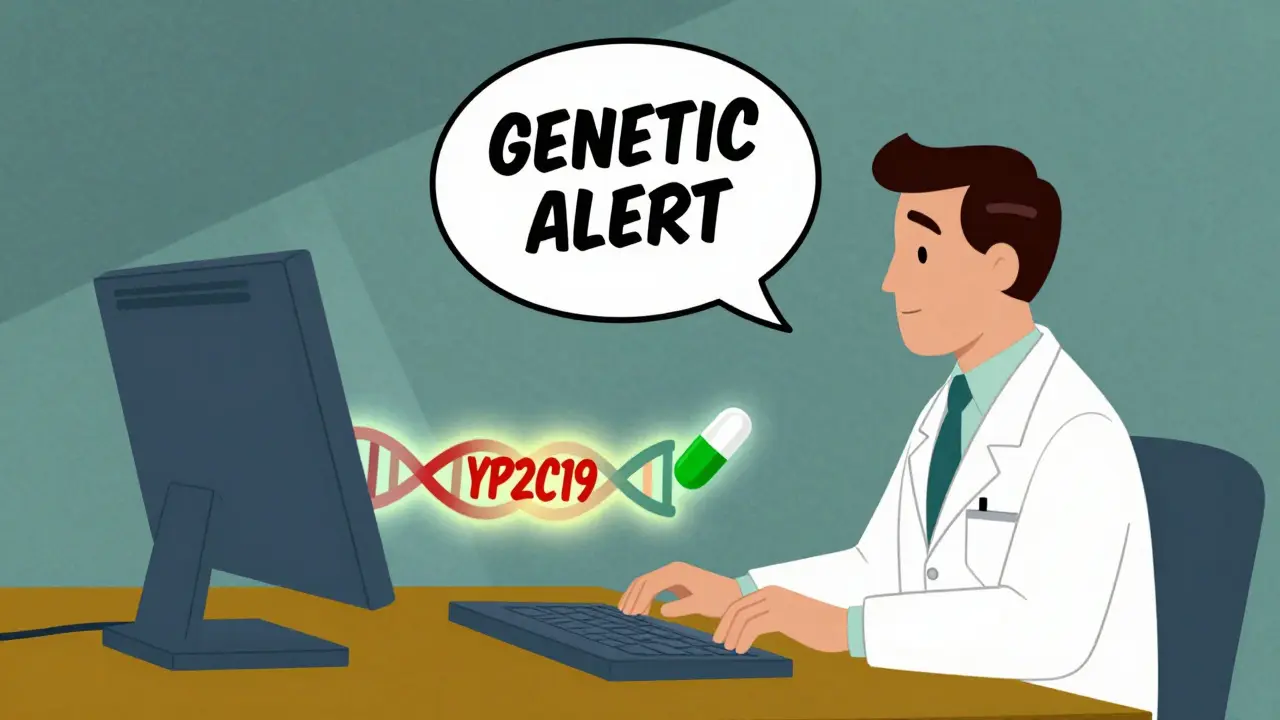
Getting tested is simple. A swab from your cheek or a blood sample is sent to a lab. Results come back in 24 to 72 hours. The lab doesn’t just say “you’re a slow metabolizer.” It gives a clear, clinical interpretation: “Avoid drug X,” “Use half dose of Y,” or “Choose alternative Z.” These results get added to your electronic health record. When a doctor prescribes a drug, the system checks your profile automatically. If there’s a match - like a patient with CYP2C19 poor metabolism being prescribed clopidogrel - a warning flashes on screen. The doctor can then choose a safer option without needing to remember every gene-drug interaction. This isn’t science fiction. Hospitals like University of Florida Health have been doing this since 2012. They saw a 75% drop in ADR-related ER visits among tested patients. The initial cost? $1.2 million. The payback? Less than two years.Why This Isn’t Everywhere Yet
If it works so well, why aren’t all doctors using it? First, cost. A full panel runs $200-$500. That’s a barrier in systems without funding. But compared to the average cost of an ADR-related hospital stay - which can exceed $15,000 - it’s a bargain. In the UK, ADRs cost the NHS £500 million a year. Preventing just 10% of those saves $50 million. Second, knowledge gaps. Only 37% of doctors feel confident interpreting pharmacogenetic results. That’s changing. Training programs, like those from the Clinical Pharmacogenetics Implementation Consortium (CPIC), offer free, updated guidelines for 34 gene-drug pairs. Every quarter, they release new evidence. Third, complexity. What if you’re on five drugs? What if your genes suggest conflicting advice? That’s where clinical decision support tools help. They don’t replace doctors - they give them better data to make smarter calls.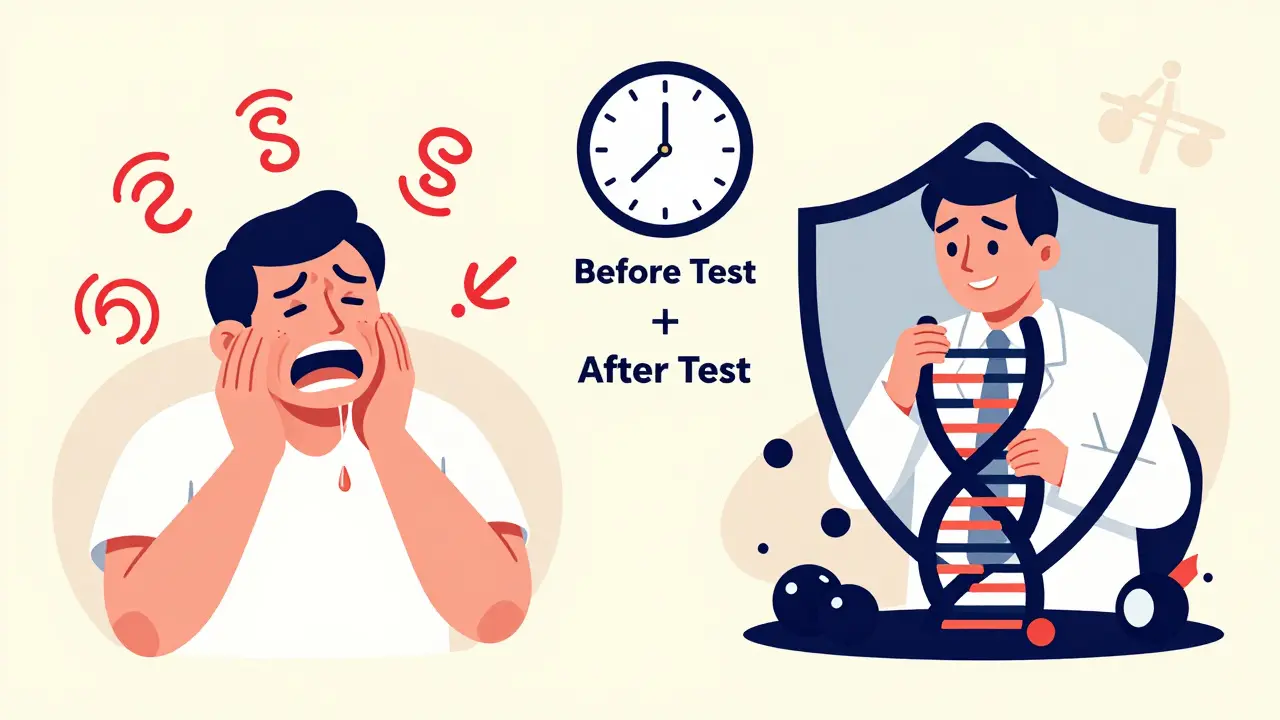
Who Benefits the Most?
People on multiple medications - especially older adults - are at highest risk. But the biggest gains are in specific groups:- Cancer patients: Testing for DPYD before chemotherapy prevents life-threatening toxicity. Studies show over 100 prevented ADRs per 1,000 patients.
- Psychiatric patients: A trial with 685 people showed a sharp drop in side effects after genotype-guided antidepressant prescribing.
- Cardiovascular patients: CYP2C19 testing prevents stent failures and heart attacks.
- People of Asian, African, or Indigenous descent: Many gene variants are more common in these populations, and standard dosing can be dangerous without testing.
What’s Next?
The field is moving fast. The FDA now lists 329 gene-drug pairs in its official database - up from 287 just two years ago. The European Union is investing €150 million to roll out preemptive testing by 2027. In the US, Medicare now covers CYP2C19 and TPMT testing for specific drugs. Soon, testing may become routine - like checking blood pressure before prescribing a new drug. Point-of-care tests are being developed that could cut costs to under $100 by 2026. And researchers are now building polygenic risk scores - combining dozens of gene variants to predict response more accurately than single genes ever could. But the biggest shift isn’t technological. It’s cultural. We’re moving from a one-size-fits-all model of medicine to one that says: “Your body is unique. Your drugs should be too.”What You Can Do Today
If you’re on long-term medication - especially antidepressants, painkillers, blood thinners, or chemotherapy - ask your doctor: “Could my genes affect how I respond to this?” If you’re about to start a new drug, ask if pharmacogenetic testing is available. Some private clinics and hospitals offer it as part of routine care. In Australia, private insurers are starting to cover it for high-risk prescriptions. And if you’ve had a bad reaction to a drug before - even if it was years ago - that’s a red flag. Your genes might be trying to tell you something. This isn’t about predicting the future. It’s about preventing the past from repeating.Is pharmacogenetic testing covered by insurance?
In the US, Medicare and some private insurers cover testing for specific high-risk gene-drug pairs like CYP2C19 before clopidogrel and TPMT before azathioprine. In Australia and the UK, coverage is limited to research settings or private clinics, but it’s expanding. Always check with your provider - costs vary, but many labs offer self-pay options under $300.
How accurate is pharmacogenetic testing?
Modern genotyping tests are over 99.9% accurate for detecting the variants they’re designed to find. But accuracy depends on the panel used. A 12-gene panel like the one in the PREPARE study is far more reliable than a single-gene test. Results are also interpreted using clinical guidelines (like CPIC or DPWG), which are updated regularly based on new evidence.
Does this test reveal other health risks?
No. Pharmacogenetic tests for drug response look only at genes that affect how your body processes medications. They don’t screen for cancer risk, Alzheimer’s, or inherited diseases. The focus is narrow: drug safety. If you’re concerned about other genetic risks, separate tests are available - but they’re not part of standard pharmacogenetic panels.
What if my test shows I’m a slow metabolizer?
It doesn’t mean you can’t take the drug - it means you need a different dose or alternative. For example, if you’re a slow CYP2D6 metabolizer, codeine won’t work well and could be dangerous. Your doctor might switch you to oxycodone instead. Or if you’re a slow CYP2C19 metabolizer, you’ll get a different antiplatelet than clopidogrel. The goal isn’t to avoid meds - it’s to use them safely.
Can I get tested before I need a prescription?
Yes. Preemptive testing - done before you even need a drug - is becoming more common. Your results are stored in your medical record and used whenever a new medication is prescribed. This avoids repeating tests and gives you lifelong protection. Hospitals like Mayo Clinic and Vanderbilt offer preemptive panels as part of routine care.
Are there privacy concerns with genetic testing?
Yes, and they’re valid. But pharmacogenetic testing is regulated under the same privacy laws as other medical data. In Australia and the US, your genetic results are protected under HIPAA and the Privacy Act. They can’t be used to deny insurance or employment. Most labs don’t store your raw DNA - just the specific variants they need. Still, ask how your data is stored and who has access before testing.

suhani mathur
December 25, 2025 AT 09:20Oh wow, so my grandma’s bad reaction to clopidogrel wasn’t just bad luck? Turns out her genes were screaming at her like a traffic cop with a whistle. Why did it take 20 years and two hospital stays for someone to figure this out? I’m just glad we’re finally catching up to biology instead of pretending it’s a suggestion box.
Diana Alime
December 25, 2025 AT 12:07so like… i got my 23andme done and it said i’m a ultra fast cyp2d6 metabolizer?? does that mean i’m basically a human drug factory?? like i could take 3 codeine and still feel nothing?? also why is my doctor never told me this??
Bartholomew Henry Allen
December 26, 2025 AT 11:04This is why American medicine leads the world. No other country has the infrastructure to implement precision pharmacology at scale. We don’t wait for Europe to catch up. We build the future. The data speaks for itself. No more guesswork. No more politics. Just science. And it works.
Raja P
December 28, 2025 AT 04:59My uncle in Jaipur got his gene test done last year before starting his blood thinner. Doctor switched him to rivaroxaban and he hasn’t had a single bleed since. It’s not magic. It’s just common sense. Why are we still guessing when we can know?
niharika hardikar
December 28, 2025 AT 15:18While the clinical utility of pharmacogenomic screening is empirically substantiated, the epistemological framework underpinning its adoption remains contingent upon institutional scalability and regulatory harmonization. The conflation of genotype-phenotype correlation with therapeutic efficacy, absent longitudinal validation, risks precipitating iatrogenic overreliance on algorithmic decision support systems devoid of clinical nuance.
John Pearce CP
December 28, 2025 AT 16:21Europe spends billions on this. We have the tech. We have the data. But we let bureaucracy strangle progress. The FDA has the list. The labs have the kits. Doctors have the training. Yet we still treat patients like lab rats. This isn't innovation. It's negligence dressed up as caution.
EMMANUEL EMEKAOGBOR
December 29, 2025 AT 13:08In Nigeria, we don’t have the labs. But I’ve seen people die from drugs that should’ve been avoided. If this can save one life in Lagos, it’s worth every dollar. Let’s not wait for perfect systems. Let’s start with what we can do now. A swab. A report. A life saved.
CHETAN MANDLECHA
December 30, 2025 AT 21:32My cousin got tested before chemo. Turns out she’s DPYD deficient. They changed her drug. She’s still here. I didn’t even know this was a thing. Why isn’t this on every prescription? This isn’t sci-fi. This is basic safety.
Jillian Angus
January 1, 2026 AT 03:25My mom had a bad reaction to statins and they thought it was just aging. Turns out she’s SLCO1B1 slow. They switched her and she’s fine now. Why didn’t anyone ever tell us this was a thing?
Ajay Sangani
January 2, 2026 AT 20:52if we can map our genes to predict how drugs work… then maybe we’re not just treating disease… we’re finally learning how to listen to our bodies. it’s not about control. it’s about harmony. we’ve been fighting biology for centuries. maybe it’s time to stop yelling and start asking nicely
Pankaj Chaudhary IPS
January 4, 2026 AT 01:27As a public health officer, I’ve seen too many preventable tragedies. Pharmacogenetic testing is not a luxury-it is a moral imperative. We owe it to every patient, especially in marginalized communities, to equip clinicians with tools that save lives. India must lead in affordable implementation. This is not science fiction. It is public health justice.