
Probiotic Dosage Calculator for Antibiotic Therapy
How This Tool Works
Based on clinical research, taking 5-10 billion CFUs daily of specific probiotic strains can reduce antibiotic-associated diarrhea risk by up to 66%.
Important: For maximum effectiveness, take probiotics 2-3 hours apart from antibiotics. Start on day 1 of antibiotic treatment and continue for at least 1 week after finishing.
Recommended Probiotic Regimen
Probiotic Strain Recommendations: Lactobacillus rhamnosus GG and Saccharomyces boulardii are the most effective strains. Check your supplement for specific strain names.
Please enter valid numbers. Antibiotic duration should be between 1-30 days. Capsules per day should be between 1-3.
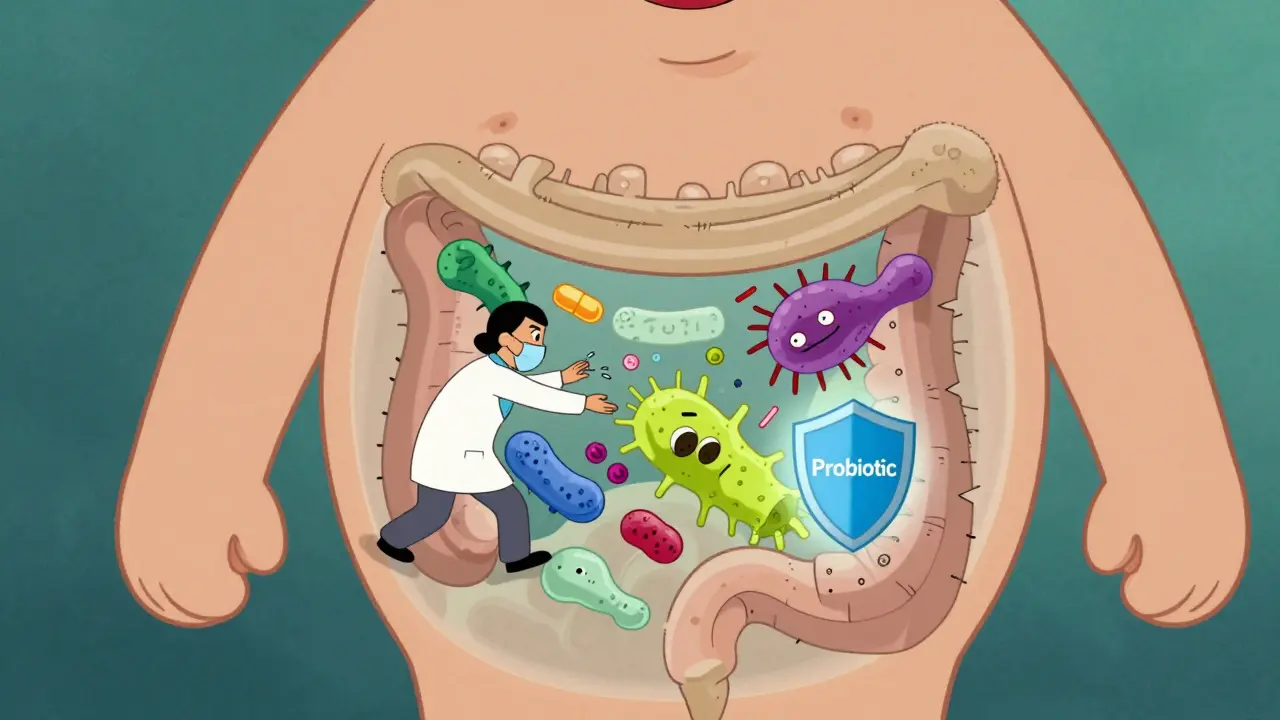
When you’re on antibiotics, you might expect to feel better - but instead, you get bloating, cramps, or worse, watery diarrhea. It’s not just bad luck. Antibiotics don’t just kill the bad bacteria; they wipe out the good ones too. Your gut is home to over 100 trillion bacteria that help digest food, support your immune system, and keep things running smoothly. When antibiotics throw that system into chaos, side effects follow. About one in five people on antibiotics end up with diarrhea. For some, it’s mild. For others, it’s a dangerous infection like Clostridioides difficile - a hospital-acquired bug that can turn a short course of pills into a life-threatening situation.
Why Probiotics Help During Antibiotic Treatment
Probiotics are live bacteria and yeasts that can help restore balance in your gut. They’re not magic pills, but they’re backed by solid science. A major 2020 Cochrane review analyzed 23 studies with over 4,000 participants and found that people who took probiotics while on antibiotics had less than one-third the risk of developing C. diff-associated diarrhea compared to those who didn’t. That’s not a small win. In high-risk groups - like older adults or hospital patients - the drop was from 11.6% to just 3.1%. The most effective strains? Lactobacillus rhamnosus GG and Saccharomyces boulardii. These aren’t just random bugs you find in yogurt. They’re specifically studied, isolated, and tested. S. boulardii, a yeast, survived antibiotic exposure in trials and cut antibiotic-associated diarrhea by half. L. rhamnosus GG - the strain in Culturelle - showed similar results in multiple studies. They work by crowding out harmful bacteria, strengthening your gut lining, and calming inflammation.Not All Probiotics Are Created Equal
Here’s the catch: not every probiotic supplement does the same thing. A bottle labeled “probiotic” might contain 10 different strains, but only one or two might actually help with antibiotic side effects. Most products on the shelf aren’t regulated like drugs. In the U.S., they’re sold as dietary supplements under DSHEA rules - meaning manufacturers don’t have to prove they work or even that they contain what’s on the label. ConsumerLab tested 20 popular probiotic brands in 2022. Thirty percent didn’t have enough live bacteria to match their claims. Fifteen percent had extra strains not listed at all. That’s a problem when you’re trying to prevent a serious infection. If you’re buying a multi-strain blend because it sounds “more powerful,” you might be wasting money - or worse, exposing yourself to untested organisms. Stick to strains with real evidence:- Lactobacillus rhamnosus GG - best for preventing diarrhea
- Saccharomyces boulardii - yeast strain, survives antibiotics, reduces C. diff risk
- Bifidobacterium lactis - helps with general bloating and gas
- Multi-strain formulas with at least one of the above - if they include proven strains
When and How to Take Them
Timing matters. Antibiotics can kill probiotics if you take them together. The fix? Space them out. Most experts recommend taking your probiotic 2 to 3 hours after your antibiotic dose. That gives the antibiotic time to do its job without wiping out the good bugs you’re trying to reintroduce. Take your probiotic daily - not just when you feel sick. Start on day one of your antibiotic course and keep going for at least a week after you finish. Some studies suggest continuing for two weeks to give your gut time to rebuild. As for whether to take it with food or on an empty stomach? It depends on the strain. Acid-resistant strains like L. rhamnosus GG can handle stomach acid better, so taking them on an empty stomach might help them reach your gut faster. Others work better with food. Check the label - if it doesn’t say, take it with a light meal to reduce stomach upset.Dosage: More Isn’t Always Better
You’ll see probiotics advertised with 50 billion, 100 billion, even 500 billion CFUs (colony-forming units). But you don’t need that much. Studies showing the strongest results used doses between 5 and 10 billion CFUs per day. Higher doses don’t mean better results - and might even cause more gas or bloating at first. Start low if you’re new to probiotics. A 5 billion CFU dose is enough to test how your body reacts. If you feel fine after a few days, you can increase to 10 billion. Don’t jump to 50 billion right away - your gut doesn’t need a shock.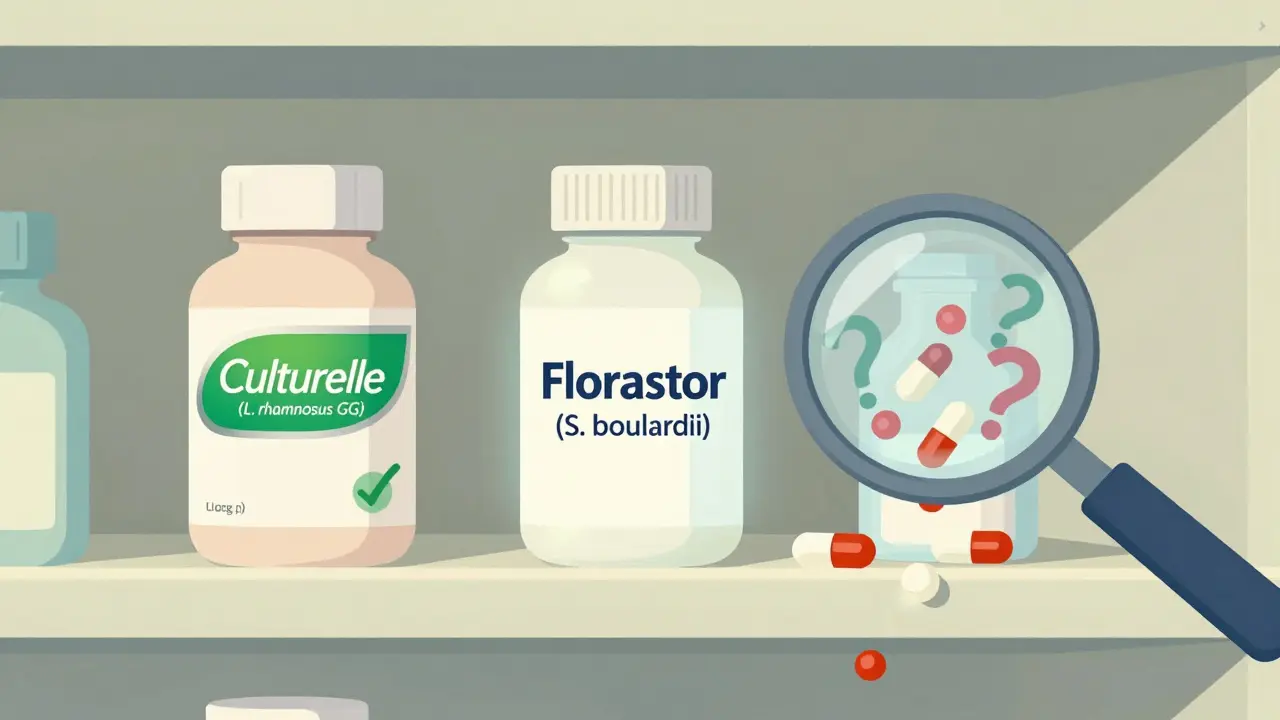
What You Might Feel at First
It’s normal to feel a little off when you start. Many people report increased gas, bloating, or even mild constipation in the first 2-3 days. That’s your gut adjusting. These symptoms usually fade within a week. If they get worse or last longer, stop and talk to your doctor. Some people - especially those with IBS or sensitive guts - find probiotics make symptoms worse. That’s not uncommon. If you’ve had bad reactions to fiber or fermented foods in the past, proceed cautiously. Try a single-strain product first, not a complex blend.Who Should Avoid Probiotics
Probiotics are generally safe for healthy adults. But they’re not risk-free. There have been rare but serious cases of:- Bloodstream infections from Lactobacillus in people with weakened immune systems
- Fungal infections from Saccharomyces boulardii in ICU patients
- Endocarditis linked to probiotic strains in people with heart valve issues
- Immunocompromised (HIV, chemotherapy, organ transplant)
- Recently had surgery
- Severely ill or in the ICU
- Have a central IV line
Food vs. Supplements
Yogurt, kefir, sauerkraut, and kimchi contain natural probiotics. That’s great for daily gut health. But when you’re on antibiotics, you need a targeted, high-dose approach. A serving of yogurt might have 1 billion CFUs - not enough to make a measurable difference against antibiotic damage. Supplements give you a controlled, consistent dose of proven strains. For this specific purpose, supplements are the better tool.
What the Research Doesn’t Say
There’s a growing concern: probiotics might slow down your gut’s natural recovery after antibiotics. A 2021 study in Nature found that people who took probiotics after antibiotics took longer to return to their original gut microbiome than those who didn’t take anything. Their gut flora stayed altered for months. That doesn’t mean probiotics are bad - it means they’re not a one-size-fits-all fix. The science is still evolving. For now, the best approach is simple: use probiotics to prevent diarrhea, especially if you’re at higher risk. Don’t expect them to “reset” your gut or cure long-term imbalance. They’re a shield, not a repair kit.What to Look for When Buying
Here’s a quick checklist before you buy:- Check the strain names - must include L. rhamnosus GG or S. boulardii
- Look for 5-10 billion CFUs per dose
- Choose a brand that lists the strain and CFU count on the label - no vague “proprietary blend”
- Check expiration date - live cultures die over time
- Store properly - many need refrigeration
- Look for third-party testing seals (USP, NSF, ConsumerLab)
Final Takeaway
Antibiotics are necessary. But they come with side effects that can ruin your week - or worse. Probiotics, when chosen wisely, can help. They won’t fix everything, but they can cut your risk of diarrhea in half. Pick the right strain. Take it at the right time. Don’t overdo the dose. And if you’re immunocompromised, skip it - talk to your doctor first. This isn’t about taking supplements because they’re trendy. It’s about using science to protect your gut while your body fights infection. Do it right, and you’ll feel better - faster.Can I take probiotics and antibiotics at the same time?
It’s not recommended to take them at the exact same time. Antibiotics can kill the live bacteria in probiotics before they reach your gut. Space them out by 2 to 3 hours. Take your antibiotic first, then the probiotic later in the day. This gives the antibiotic time to work without wiping out the good bacteria you’re trying to restore.
Which probiotic strain is best for antibiotic diarrhea?
The two best-studied strains are Lactobacillus rhamnosus GG and Saccharomyces boulardii. L. rhamnosus GG is the strain in Culturelle and has been shown to reduce diarrhea risk by up to 50%. S. boulardii is a yeast that survives antibiotics and is especially effective at preventing C. diff-associated diarrhea. Avoid multi-strain products unless they include one of these proven strains.
How long should I take probiotics after finishing antibiotics?
Continue taking probiotics for at least 1 to 2 weeks after your antibiotic course ends. Your gut microbiome takes time to recover, and stopping too soon may leave you vulnerable to lingering side effects like bloating or irregular bowel movements. Some people benefit from continuing for up to 4 weeks, especially if they had severe diarrhea during treatment.
Are probiotics safe for everyone?
No. People with weakened immune systems - such as those on chemotherapy, organ transplant recipients, or those with HIV - should avoid probiotics. There have been rare cases of serious infections, including bloodstream infections and fungal sepsis, linked to probiotic use in these groups. If you’re critically ill, have a central IV line, or recently had surgery, talk to your doctor before taking any probiotic.
Do probiotics really work, or is it just hype?
For preventing antibiotic-associated diarrhea - especially in high-risk individuals - yes, the evidence is strong. Multiple high-quality reviews, including a Cochrane analysis of over 4,000 people, show clear benefit. But probiotics aren’t a cure-all. They don’t prevent all side effects, and they don’t restore your gut to its original state. Their main job is to reduce diarrhea risk. Choose the right strain, take the right dose, and manage expectations.
Can I get enough probiotics from yogurt instead of supplements?
Yogurt and fermented foods are great for daily gut health, but they usually don’t contain enough live bacteria to help during antibiotic therapy. Most yogurts have around 1 billion CFUs per serving - studies show you need 5-10 billion CFUs daily to reduce diarrhea risk. Supplements give you a targeted, reliable dose of proven strains. For this specific purpose, supplements are more effective.
What if probiotics make my stomach worse?
It’s common to feel more bloated or gassy at first - this usually passes in a few days. But if symptoms get worse or last longer than a week, stop taking the probiotic. Some people with IBS or sensitive guts react poorly to certain strains. Try switching to a different strain (like S. boulardii instead of L. rhamnosus GG) or lower the dose. If symptoms persist, talk to your doctor - it might not be the probiotic, but your gut is signaling something else is wrong.

George Bridges
January 12, 2026 AT 18:34I've been on antibiotics twice this year, and probiotics made all the difference. I started with Culturelle and stuck to the 2-hour rule. No diarrhea, no drama. Just felt normal. I didn't even think about it until my buddy asked why I wasn't stuck to the toilet.
Now I tell everyone. Simple, science-backed, and cheap compared to ER visits.
Faith Wright
January 14, 2026 AT 09:55Oh wow, a whole essay on probiotics like we’re all about to join a cult.
Meanwhile, my grandma took yogurt with her penicillin in the 70s and lived to 98. Maybe we just need to stop overcomplicating everything and eat real food?
Also, ‘proprietary blend’? Yeah, that’s just corporate speak for ‘we don’t know what’s in it either.’
Rebekah Cobbson
January 15, 2026 AT 04:43For anyone new to this: start slow. I went from zero to 50 billion CFUs on day one and spent 3 days feeling like a balloon full of soda.
Switched to 5 billion of L. rhamnosus GG, took it 2 hours after my antibiotic, and boom - no more bloating. It’s not magic, it’s timing and dose.
Also - refrigeration matters. I learned that the hard way when my bottle sat in my car for a week. Dead bugs. No help. Just expensive dust.
Audu ikhlas
January 15, 2026 AT 23:45USA always overmedicate everything. In Nigeria we just drink garri water and pray. No fancy pills. No labels. No billion CFUs. You think your gut is weak? Mine survived 3 wars and no probiotics.
These supplements? Capitalist scam. Your body knows how to heal. Stop buying lies.
Also, why is everything in English? We have our own wisdom here. Lactobacillus? Sounds like a brand of sneakers.
Sonal Guha
January 16, 2026 AT 00:53Study says 1/5 get diarrhea. Probiotics cut C. diff risk by 70%. Strains matter. Dose matters. Timing matters. Supplements are not food. Yogurt has 1B CFU. You need 5-10B. Proprietary blends are useless. Third-party testing is non-negotiable. Stop wasting money. Read the label. Or suffer. Simple.
Also S. boulardii is yeast. Not bacteria. Stop calling it bacteria. It’s not. Stop being lazy with terminology.
TiM Vince
January 16, 2026 AT 02:27I didn't believe in probiotics until I had to take a 10-day course of amoxicillin. I was scared of the diarrhea everyone warned about. So I bought Culturelle. Took it 2 hours after my pill. Didn't feel a thing.
Not magic. Just smart. I’m not a science guy but even I could follow this. If you’re on antibiotics, just do this one thing. It’s free advice from someone who’s been there.
gary ysturiz
January 17, 2026 AT 22:37Guys. Just take the probiotic. Don’t overthink it. I used to stress about timing and strains and CFUs and now I just grab Florastor, take it after dinner, and forget it.
My gut thanked me. I didn’t get sick. I didn’t miss work. I didn’t cry in the bathroom.
Simple life. Simple fix. You don’t need a PhD to protect your gut. Just a little common sense and a bottle of something that actually works.
Jessica Bnouzalim
January 18, 2026 AT 20:00Okay but what about the 2021 Nature study that said probiotics might actually SLOW DOWN your gut’s recovery??
I read that and now I’m paranoid. Like… if I take these, am I just delaying my gut from healing itself??
Also, why is everyone so obsessed with CFUs?? I feel like we’re treating our guts like phone batteries now - ‘need 10 billion charge!’
Can we just… chill??
laura manning
January 19, 2026 AT 12:14It is imperative to note that the efficacy of probiotic supplementation in the context of antibiotic-associated gastrointestinal disturbances remains contingent upon the precise identification of microbial strains, the quantification of viable colony-forming units, and the temporal separation of administration from concomitant antibiotic ingestion. Furthermore, the absence of regulatory oversight under DSHEA renders many commercial products unreliable, as evidenced by third-party testing discrepancies. One must exercise extreme caution, particularly in immunocompromised populations, where the risk of fungemia or bacteremia, though rare, is nontrivial. The assertion that probiotics are universally beneficial is not scientifically tenable.
Therefore, I recommend a case-by-case clinical evaluation prior to any intervention.
Bryan Wolfe
January 21, 2026 AT 08:48Hey Jessica - you’re not wrong about the Nature study. I read it too. It’s wild, right? Like, we’re trying to fix something, but maybe we’re just putting a bandaid on a broken bone.
But here’s the thing - if you’re at risk for C. diff? That’s a life-or-death situation. The probiotics aren’t there to ‘reset’ your gut. They’re there to keep you out of the hospital.
So yes, maybe your microbiome takes longer to bounce back naturally. But if you avoid the diarrhea, you’re still winning. Think of it like a seatbelt - doesn’t make the crash less bad, but it keeps you alive to deal with the aftermath.
And Laura? You’re right about the regulation. But that’s why you look for USP or NSF. Don’t just grab the cheapest one on Amazon. I learned that the hard way. Now I only buy what’s labeled with the strain and the seal. Worth every penny.