
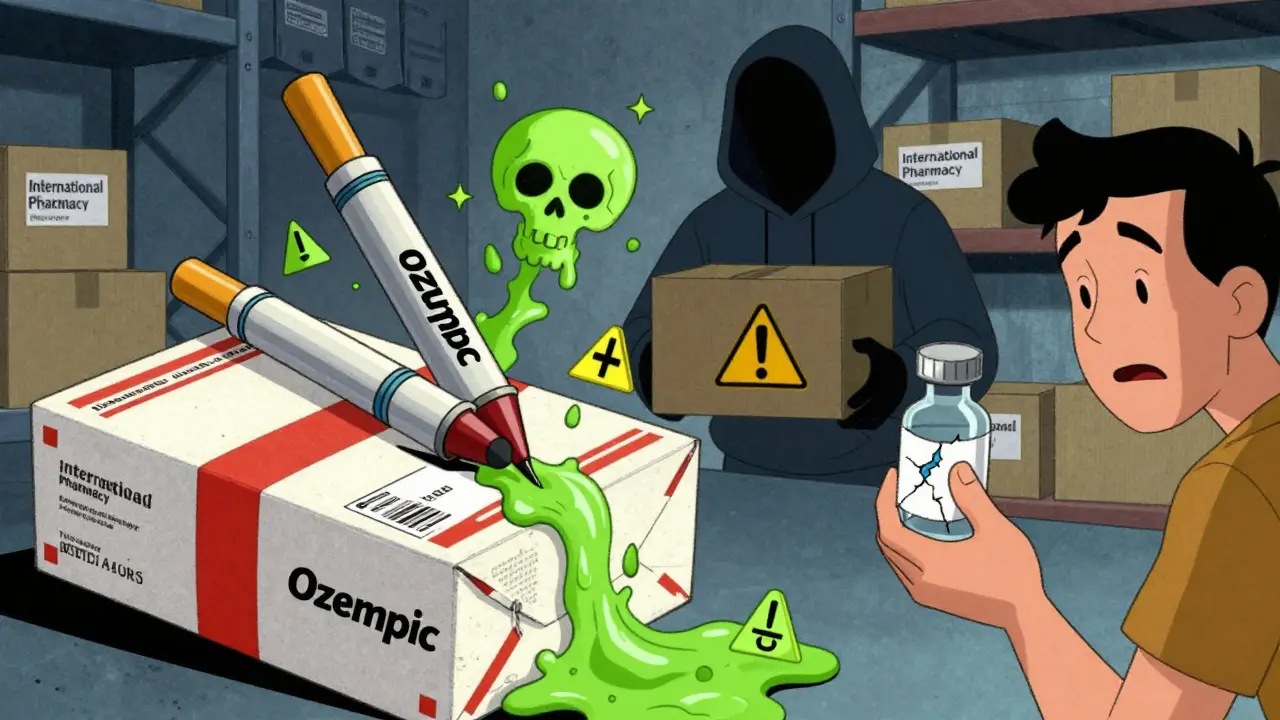
Every year, millions of fake pills, injected liquids, and packaged drugs slip through borders, online marketplaces, and unlicensed pharmacies - all pretending to be life-saving medicine. In 2025, law enforcement seized over 50 million doses of counterfeit medications in a single global operation. These aren’t just fake brands. They’re dangerous. Some contain no active ingredient. Others are laced with fentanyl, heavy metals, or industrial solvents. And people are buying them because they’re cheaper, easier to find online, and look just like the real thing.
What Gets Counterfeited - And Why
Counterfeiters don’t waste time on cheap antibiotics. They go after the high-demand, high-profit drugs. In 2025, the top targets were weight-loss medications like Ozempic, Semaglutide, and Tirzepatide. These drugs sell for hundreds of dollars per pen on the black market, and the cost to produce a fake is under $2. The same goes for erectile dysfunction pills, Botox, dermal fillers, and HIV treatments. These aren’t just cosmetic or lifestyle drugs - they’re often used by people with chronic conditions who can’t afford the real thing or are too embarrassed to ask for help.In August 2025, U.S. Customs intercepted over 16,700 counterfeit pre-filled injectable pens. Most came from Hong Kong, China, Colombia, and South Korea. The packaging? Nearly perfect. The labels? Legally printed. Even the batch numbers matched. But inside? Some pens had saline water. Others had toxic chemicals that caused severe infections, nerve damage, and organ failure.
How These Fakes Get to You
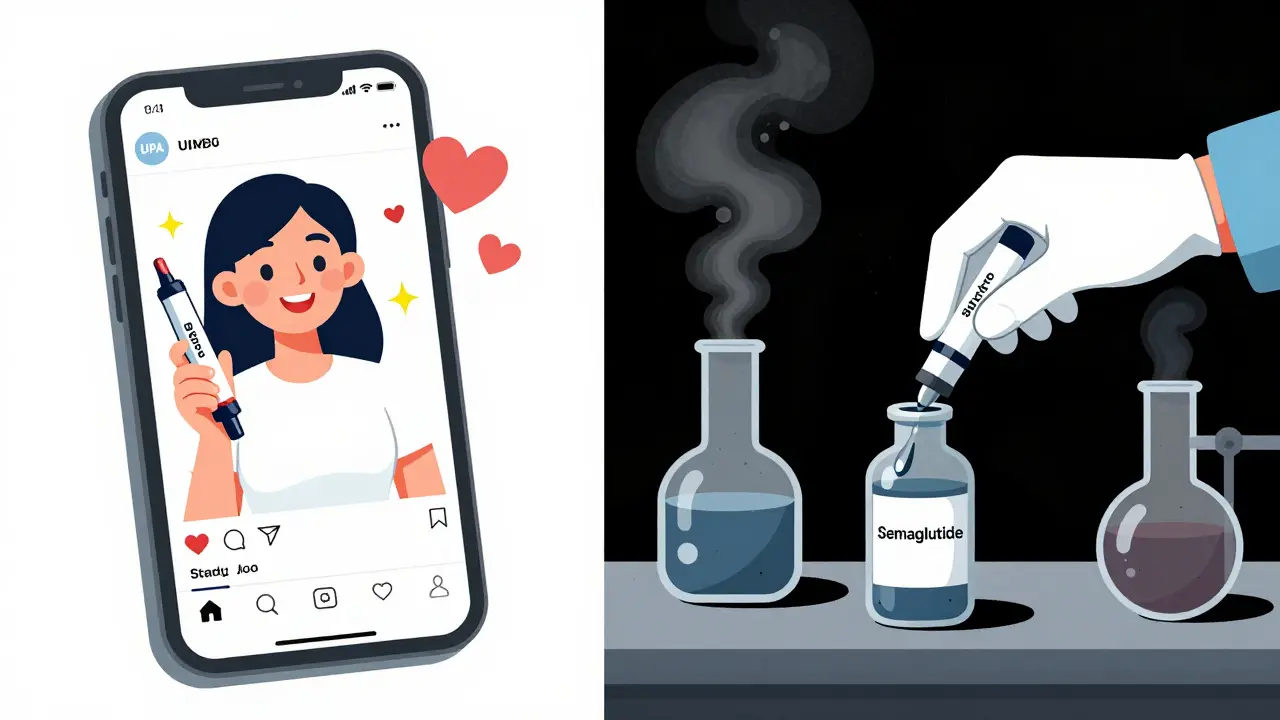
You won’t find counterfeit drugs in licensed pharmacies. They’re sold where regulation doesn’t reach: online marketplaces, social media ads, and shady websites disguised as pharmacies. According to the National Association of Boards of Pharmacy, 47% of fake GLP-1 medications are sold on Etsy. Another 31% come from direct orders to underground labs. The rest are shipped from foreign providers who claim to be “international pharmacies.”One patient in Iowa bought what they thought was Ozempic from a Facebook ad. The packaging looked official. The receipt had a logo. But after the first injection, they developed a fever, swelling, and a spreading skin infection. Lab tests showed the liquid contained propylene glycol - a chemical used in antifreeze - and no semaglutide at all. That’s not a mistake. That’s a crime.
Even more alarming: counterfeiters are now shipping unassembled parts. A box might contain empty pens, fake labels, and sealed caps - then be assembled in a warehouse near the buyer. This makes detection nearly impossible at customs. By the time the product reaches the patient, it’s already in the hands of someone who trusts the brand.
Global Seizures: The Numbers Don’t Lie
In 2024, global law enforcement recorded over 6,400 incidents of pharmaceutical theft, diversion, and counterfeiting across 136 countries. That’s not a typo - over six thousand cases. And that’s just what was caught.Interpol’s Pangea XVI operation in 2025 shut down 13,000 illegal websites, arrested 769 people, and dismantled 123 criminal networks. They seized 50.4 million doses - enough to treat millions of patients. But here’s the catch: 65% of these seizures came from small parcels mailed through postal services. Not cargo ships. Not trucks. Tiny packages slipped through the cracks because no one was looking.
In the U.S., Cincinnati CBP seized $3.5 million in fake drugs in one day. In South Africa, police found R2.2 million worth of counterfeit insulin and HIV meds in a warehouse. In Nigeria, a herbal medicine factory was shut down after producing unregulated “cures” for diabetes and cancer - all made with unknown powders and colored water.
The Regulatory Gap
Here’s something most people don’t know: U.S. Customs can’t seize a drug just because it’s imported illegally. They can only seize it if it’s counterfeit - meaning it’s deliberately mislabeled, forged, or contains the wrong ingredients. If a drug is real but imported without a prescription? That’s a violation of the Food, Drug, and Cosmetic Act - but not a seizure-worthy offense.Dr. Carmen Catizone of the NABP put it bluntly: “CBP cannot seize medications that violate only the FDCA - they must be counterfeit to be seized.” That means tons of unsafe, unapproved drugs slip through every day. A patient might get a real version of Ozempic from a foreign pharmacy - but without proper storage, testing, or labeling. It’s not counterfeit. But it’s still dangerous.
The Human Cost
Behind every seizure number is a person who got sick - or worse.In 2025, the FDA’s MedWatch system saw a 43% jump in adverse event reports tied to suspected counterfeit drugs. Most involved weight-loss injectables and cosmetic fillers. One Reddit user, a registered pharmacist, shared a case where a patient developed cellulitis after using fake dermal filler bought off Instagram. The product looked real. The seller had five-star reviews. But the vial contained unknown particulates that triggered a severe immune reaction. The patient needed surgery.
Another case involved a man in Texas who bought counterfeit HIV medication online to save money. He didn’t know the pills had no antiretrovirals. His viral load spiked. He was hospitalized. His insurance denied coverage because the meds weren’t prescribed by a licensed provider. He lost his job. His family lost their home.
These aren’t rare. They’re predictable.
What’s Being Done - And What’s Not
Pharmaceutical companies like Pfizer have trained law enforcement in 183 countries to spot fake packaging - mismatched fonts, wrong color codes, missing holograms. Blockchain tracking systems have reduced counterfeit incidents by 37% in pilot programs. Some companies now embed microchips in blister packs that can be scanned to verify authenticity.But technology alone won’t fix this. Criminal networks adapt faster than regulators. When one website gets shut down, five pop up. When one lab is raided, another opens in a different country. And enforcement is still patchy. In many developing nations, there’s no drug safety agency at all.
The U.S. Department of Justice prosecuted a ring of 70+ defendants who defrauded Medicaid of $17 million by selling fake HIV meds through online pharmacies. They got prison time. But how many more are still out there?
What You Can Do
You can’t stop counterfeit drugs alone. But you can protect yourself and others:- Only buy medication from licensed pharmacies. Look for the VIPPS seal (Verified Internet Pharmacy Practice Sites).
- Never buy injectables from Etsy, Instagram, or Facebook Marketplace. No legitimate provider sells them there.
- Check the packaging. Compare it to photos of the real product on the manufacturer’s official site. Tiny differences matter.
- Ask your pharmacist to verify the source. If they can’t tell you where the drug came from, walk away.
- Report suspicious sites or sellers to the FDA’s MedWatch program or your country’s drug regulator.
If you’re struggling to afford medication, talk to your doctor. There are patient assistance programs, generic alternatives, and nonprofit support networks. You don’t have to risk your life to save money.
The Future Is Still in Our Hands
The counterfeit drug trade is growing. The OECD predicts a 15-20% annual increase in incidents unless global cooperation improves. Biologics - complex, expensive drugs made from living cells - are now the new target. Counterfeiting these is harder, but the profit is higher. And the risks? Even greater.But we’ve also seen what works: international operations like Pangea, blockchain tracking, public awareness, and whistleblower reports. The tools exist. What’s missing is consistent enforcement and public pressure.
Every time someone buys a fake drug, they’re not just risking their own health. They’re funding organized crime, undermining real healthcare, and making it harder for others to get safe medicine. The next seizure might save your life - or someone you love. But it shouldn’t take a raid to make sure your pills are real.

Glendon Cone
December 31, 2025 AT 13:21Just saw a post on r/Pharmacy about someone who bought 'Ozempic' off Instagram and ended up in the ER with chemical burns. 😳 The packaging looked legit - even had a QR code that linked to a fake manufacturer site. Scary how good these fakes are now. We need better public education, not just raids. People are desperate, and criminals know it.
kelly tracy
January 2, 2026 AT 03:57Stop pretending this is about healthcare. It's about lazy people refusing to pay for real medicine and then blaming the system when they get poisoned. If you can't afford your meds, go on disability or get a second job. Don't risk your life buying junk off Facebook. This isn't a tragedy - it's negligence.
srishti Jain
January 2, 2026 AT 11:07Same thing happens with fake insulin in India. People buy it from roadside shops. No testing. No labels. Just a vial and a prayer. They die quietly. No news. No justice. Just another number.
Cheyenne Sims
January 4, 2026 AT 02:52The U.S. Customs and Border Protection has clear statutory limitations under the FDCA. It is not a failure of enforcement, but rather a failure of legislative clarity. Counterfeit is a legal term, not a moral one. Until Congress amends Title 21, U.S.C. § 331, seizures will remain inconsistent and legally vulnerable.
Shae Chapman
January 5, 2026 AT 20:55This broke my heart. 😭 I work in a clinic and saw a woman cry because she had to choose between her insulin and her rent. She bought fake meds online because her copay was $400. No one should have to risk their life because they’re poor. We need better systems, not more blame.
Kelly Gerrard
January 6, 2026 AT 15:27People keep saying 'affordability' like it's an excuse. It's not. It's a systemic failure. The pharmaceutical industry has priced life-saving drugs like luxury goods. The counterfeit market is a symptom. Fix the root cause or we'll keep burying people.
Henry Ward
January 8, 2026 AT 02:15Anyone who buys meds off Etsy deserves what they get. No sympathy. No second chances. You think you're saving money? You're funding cartels and killing people like you. You're not a victim - you're an enabler.
Nadia Spira
January 8, 2026 AT 22:58Capitalism commodifies suffering. The counterfeit drug trade is merely the necro-economic feedback loop of late-stage pharmaceutical monopolies. The real crime isn't the fentanyl-laced saline - it's the patent system that turns insulin into a speculative asset. We're not fighting traffickers. We're fighting a market logic that devalues life.
henry mateo
January 10, 2026 AT 20:46my cousin bought fake semaglutide last year. he lost 20 lbs in 2 weeks then got super sick. turned out the pen had like 3% of the drug and a bunch of glycerin. he’s okay now but scared to even go to the doctor. i wish there was a way to report these sellers without getting flagged.
Kunal Karakoti
January 12, 2026 AT 15:59Perhaps the real question isn’t how to stop counterfeit drugs, but why society has allowed access to essential medicine to become a privilege rather than a right. The fakes are merely the shadow of a system that abandoned its most vulnerable. Until we heal that, the counterfeiters will always have a market.