

Sertraline GI Side Effect Tracker
Your Symptoms
Results
Estimated symptom resolution
Your symptoms may last 3-4 weeks
Recommended actions
- Take sertraline with food (reduces nausea by 35-40%)
- Try ginger tea or candies
- Stay hydrated with water or broth
- Avoid caffeine and spicy foods
Starting sertraline can feel like a leap into the unknown. You’re trying to feel better, but your stomach has other ideas. Nausea, loose stools, stomach cramps - these aren’t rare side effects. They’re common. In fact, about 25-30% of people taking sertraline experience digestive issues in the first few weeks. And if you’re one of them, you’re not alone. More than 38 million prescriptions for sertraline were filled in the U.S. alone in 2022, and nearly a third of those users dealt with nausea or diarrhea. The good news? These side effects usually fade. The better news? There are real, proven ways to manage them - without quitting the medication.
Why Sertraline Hits Your Gut First
Most people think antidepressants work only in the brain. But here’s the twist: about 95% of your body’s serotonin is actually in your gut. Sertraline doesn’t just boost serotonin in your brain - it floods your digestive system with it too. That extra serotonin speeds up gut movement and changes how fluids are secreted. The result? Nausea and diarrhea. It’s not a coincidence. It’s biology.Among SSRIs, sertraline has the highest risk of GI side effects. A 2022 analysis of over 5,000 patients found it was 11.5% more likely to cause digestive problems than fluoxetine, and significantly more than escitalopram or paroxetine. That’s why many doctors now start patients on escitalopram instead - it’s just gentler on the stomach. But if you’re on sertraline, you don’t have to suffer through it.
What You’re Likely to Feel (And When It Gets Better)
Nausea is the #1 complaint. Around 25% of users report it. Diarrhea affects at least 10%, and sometimes more. You might also notice stomach cramps, gas, heartburn, or loss of appetite. These aren’t signs that something’s wrong with you - they’re signs your body is adjusting.The clock is your friend here. Clinical data shows 87% of people see their symptoms fade within 4 to 6 weeks. A 2021 study found that 68% of those with nausea felt better within 14 days. If you’re still struggling after 3 weeks, it’s time to tweak your strategy - not your medication.
Simple, Proven Ways to Reduce Nausea
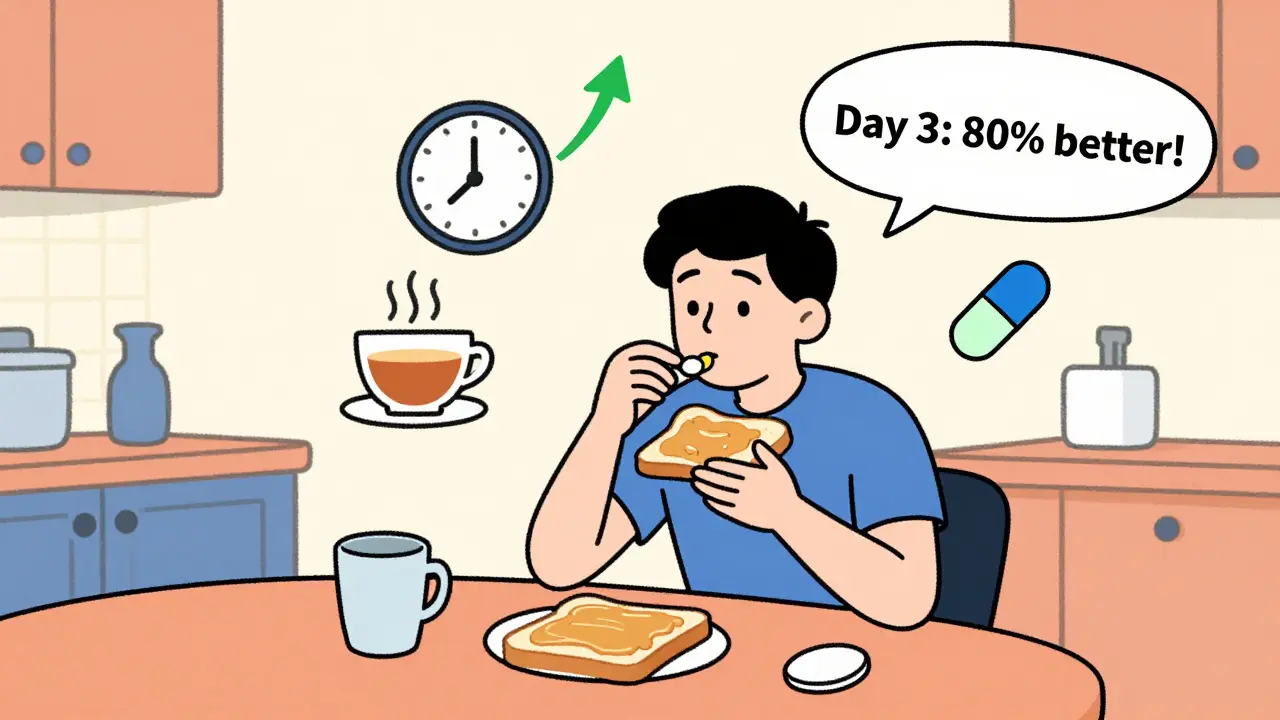
Take it with food. This isn’t just advice - it’s science. A 2022 study in the Journal of Clinical Psychiatry found that taking sertraline with a full meal cut nausea by 35-40%. You don’t need a big meal. A sandwich, some toast, or even a handful of crackers works. Protein helps. Fat helps. Avoid empty carbs.Try ginger. Ginger tea, capsules, or even ginger candies have been shown to reduce nausea severity by 27% compared to placebo. It’s not magic, but it’s backed by a 2021 randomized trial in the Journal of Psychopharmacology. Keep a small bottle of ginger tea at your desk or a few ginger chews in your bag.
Go small, go slow. Eat smaller meals more often. Large meals stretch your stomach and trigger nausea. Sucking on sugar-free hard candy can also help. It stimulates saliva, which calms your stomach. This method showed statistically significant relief in a 2019 meta-analysis.
How to Handle Diarrhea Without Stopping Sertraline
Diarrhea can be frustrating - constant trips to the bathroom, social anxiety, discomfort. But it’s manageable.Avoid triggers. Cut back on caffeine, alcohol, fried foods, and spicy meals. A 2020 Gut journal study found that patients who avoided these items saw their diarrhea resolve 45% faster. You don’t need to go on a strict diet - just be mindful for the first few weeks.
Stay hydrated. Diarrhea pulls water from your body. Drink water, broth, or oral rehydration solutions. Coconut water works too. Avoid sugary drinks - they can make diarrhea worse.
Consider probiotics. While not a magic fix, some users report less frequent bowel movements after taking a daily probiotic with Lactobacillus strains. It’s not guaranteed, but low-risk and worth trying.
When It’s Time to Talk to Your Doctor
Most side effects fade. But if they don’t, it’s not weakness - it’s a signal.If nausea lasts more than 3 weeks, your doctor might lower your dose to 25-50mg and slowly ramp it back up. This gives your gut time to adapt. A 2023 American Psychiatric Association guideline recommends this over quitting cold turkey.
If diarrhea lasts over 4 weeks, especially if it’s watery, urgent, or bloody, talk to your doctor immediately. There’s a rare but documented link between long-term sertraline use and microscopic colitis - a type of gut inflammation. It’s uncommon, but real. The TGA and American College of Gastroenterology both warn about this. Your doctor may test for it or suggest switching to an antidepressant with fewer GI side effects, like escitalopram.
What Alternatives Exist?
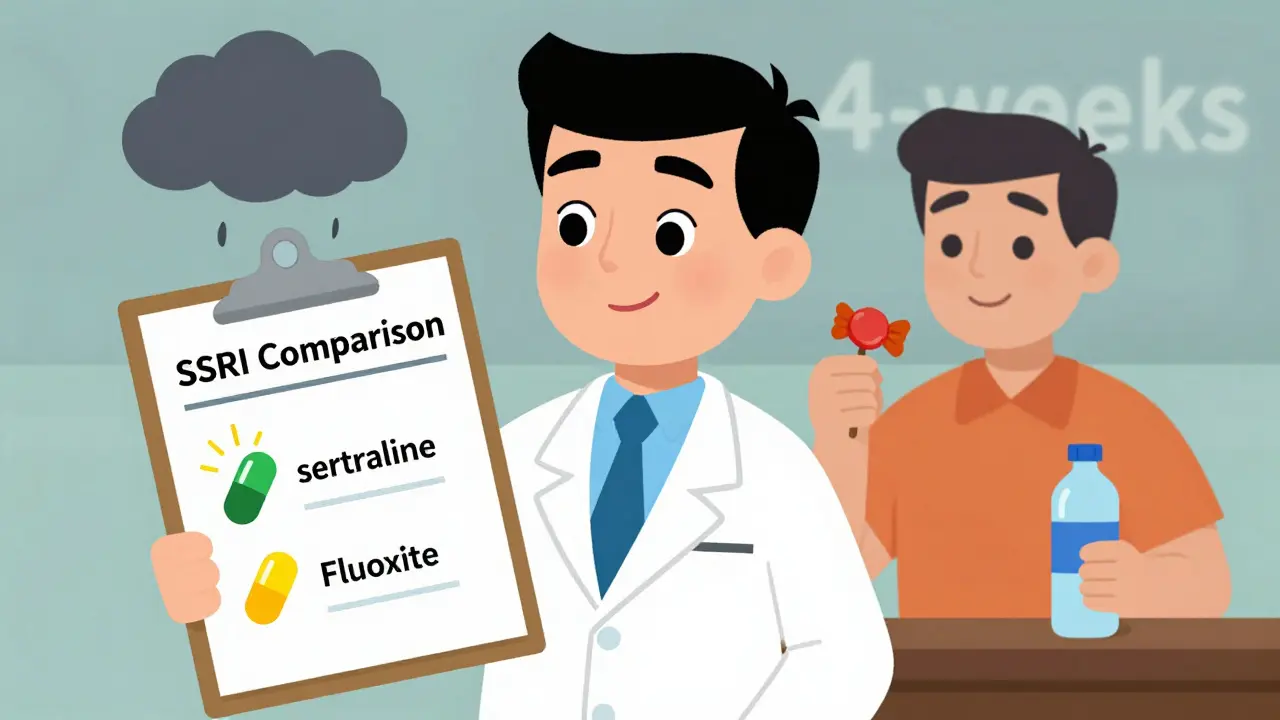
If your gut just won’t adjust, there are other options. Escitalopram (Lexapro) has the lowest GI side effect rate among SSRIs. Fluoxetine (Prozac) is also gentler than sertraline. Bupropion (Wellbutrin) isn’t an SSRI, so it rarely causes nausea or diarrhea - though it can cause other issues like insomnia or jitteriness.Switching isn’t failure. It’s smart. In fact, a 2023 report in the Journal of Clinical Psychiatry found that 34.7% of primary care doctors now choose escitalopram as their first SSRI - up from just 22% in 2018 - because patients stick with it longer.
Real Stories, Real Relief
On Reddit’s r/SSRI community, over 47,000 people share their experiences. One user wrote: "Took sertraline on an empty stomach - felt like I was going to throw up all day. Switched to taking it with my dinner. Within 3 days, nausea dropped by 80%." Another: "Ginger tea every morning. Not a miracle, but it made the first 10 days bearable."A Drugs.com review of 2,847 users found that 68% had nausea improve within 2 weeks. Only 23% needed to change medications. That’s the pattern: most people adapt. You just need the right tools.
What’s Coming Next?
Scientists are already working on solutions. A new drug called TD-8142, currently in Phase II trials, targets serotonin in the brain but leaves the gut alone. Early results show a 62% reduction in GI side effects - while keeping the antidepressant effect. If it works, it could change how we treat depression.Researchers are also studying genes. A large study called SERTRAL-2025 is looking at whether certain DNA variations make people more likely to get nausea from sertraline. In the future, a simple genetic test might tell you if sertraline is the right fit - before you even start.
How long does sertraline-induced nausea last?
For most people, nausea improves within 10 to 14 days. Around 68% of users report noticeable relief by the second week. By 4 to 6 weeks, 87% of patients no longer experience significant nausea. If it lasts longer than 3 weeks, talk to your doctor about adjusting your dose or switching medications.
Can I take sertraline without food?
You can, but it’s not recommended. Taking sertraline on an empty stomach increases your risk of nausea by 35-40%. Always take it with food - even a small snack like crackers or a banana. Protein-rich meals work best. If you can’t eat a full meal, at least have something light before taking your pill.
Is diarrhea from sertraline dangerous?
Usually not - it’s a temporary side effect. But if diarrhea lasts more than 4 weeks, becomes severe, or includes blood, it could be a sign of microscopic colitis - a rare but documented condition linked to sertraline. See your doctor for evaluation. Don’t assume it’s just "normal." Persistent diarrhea needs medical attention.
Should I stop sertraline if I have diarrhea?
No - not unless your doctor says so. Stopping suddenly can cause withdrawal symptoms like dizziness, anxiety, or brain zaps. Instead, focus on dietary changes, hydration, and timing. If symptoms persist past 4 weeks, your doctor may lower your dose or switch you to a different antidepressant like escitalopram.
What’s the best SSRI for people with sensitive stomachs?
Escitalopram (Lexapro) has the lowest rate of GI side effects among SSRIs. Fluoxetine (Prozac) is also gentler than sertraline. Studies show escitalopram causes nausea and diarrhea in about half as many patients as sertraline. If your gut is sensitive, ask your doctor if switching is an option - it’s often the smartest move for long-term adherence.

Dan Mayer
March 10, 2026 AT 20:55Neeti Rustagi
March 11, 2026 AT 10:58Janelle Pearl
March 13, 2026 AT 04:35ps. ginger candies from the drugstore are my secret weapon. 🙏
Ray Foret Jr.
March 13, 2026 AT 06:59Samantha Fierro
March 14, 2026 AT 20:31Philip Mattawashish
March 15, 2026 AT 23:57Erica Santos
March 16, 2026 AT 11:40George Vou
March 16, 2026 AT 12:50Scott Easterling
March 16, 2026 AT 13:04Mantooth Lehto
March 18, 2026 AT 00:31Melba Miller
March 19, 2026 AT 03:02