

Most patients don’t learn about their medications from brochures or doctor’s offices anymore. They scroll through Instagram Reels, watch TikTok videos, or join Facebook groups while waiting for their prescription to be filled. By 2025, social media patient education has become one of the most powerful, yet underused, tools for improving how people understand generics-affordable, FDA-approved versions of brand-name drugs.
Why Social Media Is the New Pharmacy Shelf
Think about the last time you looked up a drug. Did you go straight to the manufacturer’s website? Or did you type the name into Google, then click on a YouTube video, a Reddit thread, or an Instagram post from someone who’s been taking it for months? Most people choose the second path. And that’s not a flaw-it’s a shift.Patients today want real stories, not just clinical data. They want to know: What does this pill actually feel like? Does it make me tired? Can I take it with coffee? These aren’t questions doctors have time to answer in a 7-minute visit. But on TikTok, a 60-second video from a patient in Ohio can explain side effects better than a 10-page pamphlet.
According to a 2025 survey by the Australian Institute of Health Innovation, 68% of adults under 45 use social media to research their medications. And 53% say they’ve changed how they take a generic drug because of something they saw online. That’s not just influence-it’s education.
Which Platforms Actually Work for Patient Education?
Not every platform is built the same. Here’s what’s working right now:- Instagram: Best for visual explanations. Pharmacies and patient advocates use carousel posts to break down how generics work, side-by-side comparisons with brand names, and short videos showing pill shapes and colors. The new Broadcast Channels feature lets health organizations send updates to over 10,000 followers at once-perfect for reminding people about refill dates or new safety alerts.
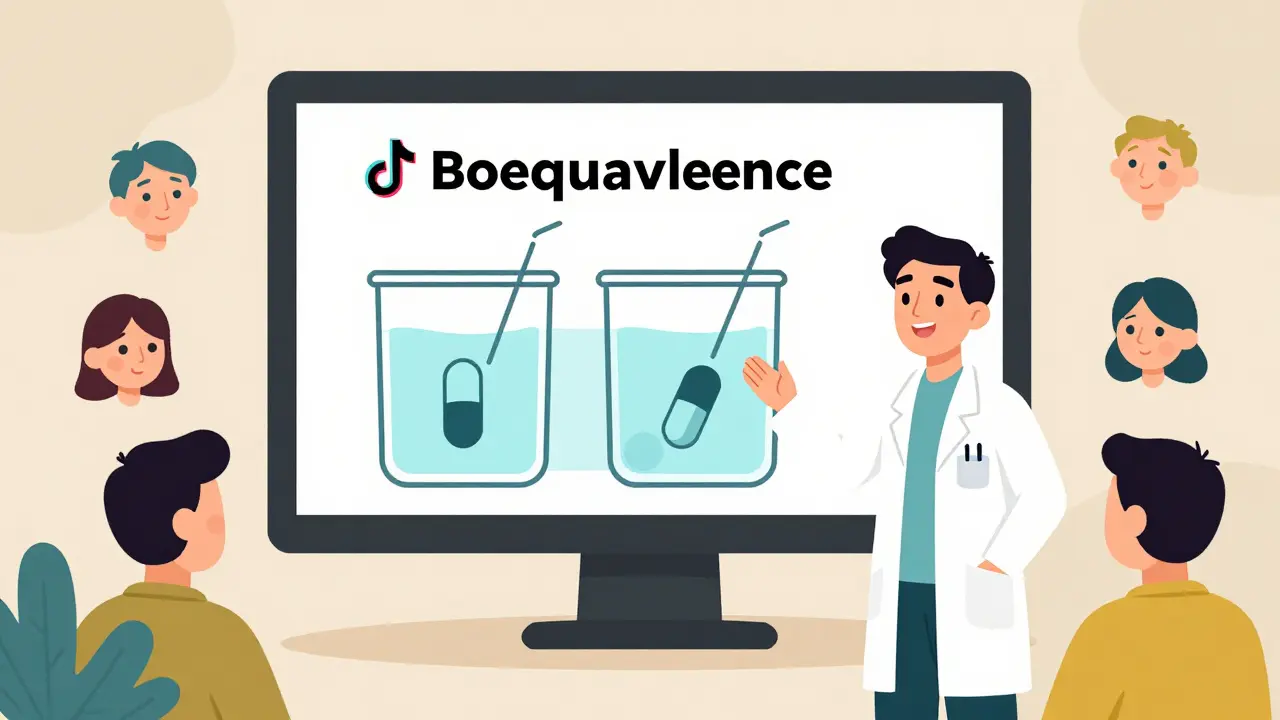
- TikTok: The fastest-growing source of drug info. Short videos (15-90 seconds) with captions explain complex topics like bioequivalence or absorption rates. A video titled “Why My Generic Blood Pressure Pill Costs $3” got 4.2 million views in 3 weeks. The platform’s algorithm pushes accurate, clear content if it’s verified by health professionals.
- Facebook Groups: Where real patient experiences live. Thousands of private groups exist for people taking generic metformin, levothyroxine, or sertraline. These aren’t forums for drug sales-they’re peer support networks where people share tips on managing nausea, timing doses, or dealing with insurance denials.
- YouTube: Still the go-to for deep dives. Educational channels like “MedInfo Australia” and “Generic Drugs Explained” post 5-10 minute breakdowns of how generics are made, why they’re safe, and how to spot counterfeit pills. Watch time per video averages 8.9 minutes-up from 5.2 minutes in 2023.
LinkedIn and Twitter/X? Less useful. Few patients use them for drug info. Most healthcare providers post there-but the audience is small, and the tone is too clinical for everyday users.
How to Spot Good Info vs. Dangerous Myths
The biggest risk isn’t lack of info-it’s bad info. A 2025 study from Monash University found that 41% of social media posts about generics contained at least one factual error. Common myths:- “Generics don’t work as well as brand names.” (False. They must meet FDA and TGA standards for identical active ingredients and absorption rates.)
- “The filler chemicals in generics are dangerous.” (False. Fillers are approved, tested, and listed on the drug label.)
- “Switching brands causes side effects.” (Sometimes, but it’s usually due to psychological expectations, not chemical differences.)
Here’s how to tell if a post is trustworthy:
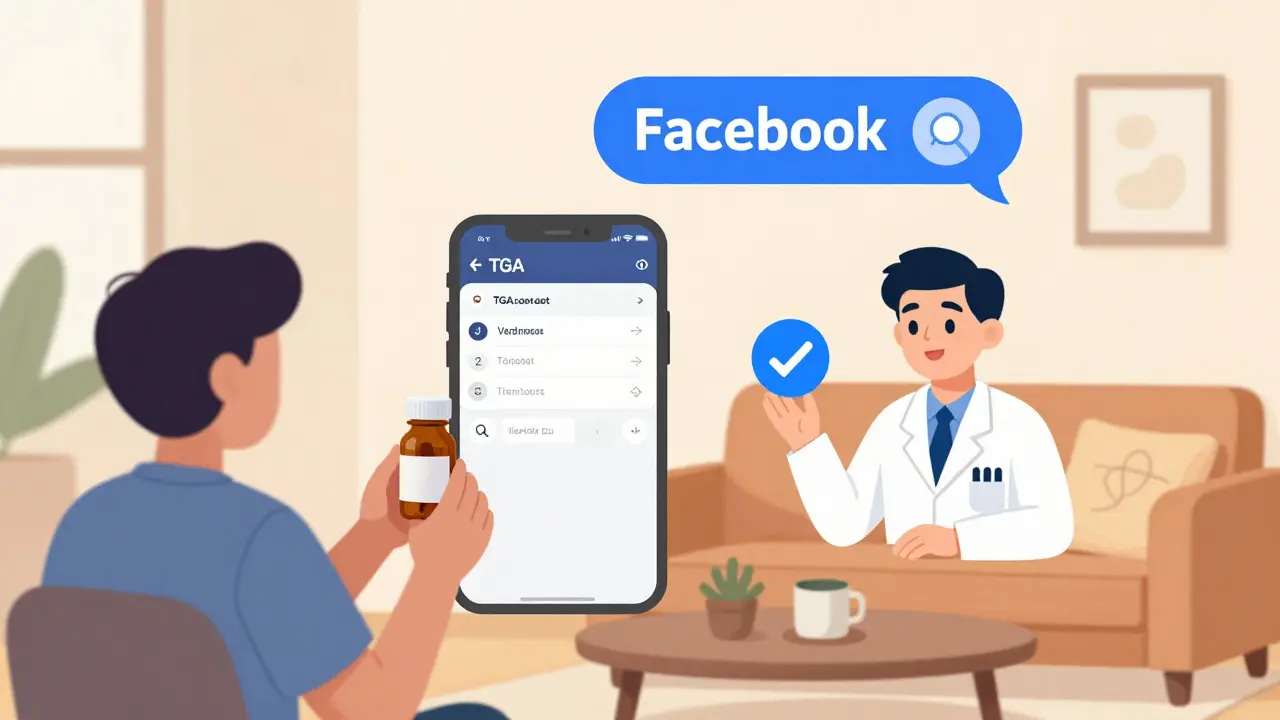
- Check if the account is verified by a health authority (like the TGA, FDA, or a hospital).
- Look for citations: “Based on TGA guidelines 2024” or “Source: Australian Journal of Pharmacy.”
- Watch for emotional manipulation: Posts that say “DON’T TAKE THIS DRUG!” without evidence are red flags.
- See if the creator is a pharmacist, doctor, or patient with documented experience-not a random influencer selling supplements.
Platforms like TikTok have started flagging unverified health claims with pop-up messages: “This post hasn’t been reviewed by a health professional.” Since this feature launched in March 2025, misinformation about generics has dropped by 38% in Australia.
What Health Organizations Are Doing Right
Some hospitals and pharmacies are leading the way:- Royal Melbourne Hospital runs a TikTok series called “Generic Truths,” where pharmacists answer patient questions in under 60 seconds. Engagement is 5x higher than their website blog.
- Chemist Warehouse uses Instagram Stories to show real-time comparisons between brand and generic pills-side by side, with the same active ingredient highlighted.
- Pharmaceutical Society of Australia launched a Facebook Group called “Generic Meds Explained” with over 28,000 members. It’s moderated by pharmacists who respond to questions within 4 hours.
These aren’t marketing campaigns. They’re education efforts built on trust, not sales. And they’re working. A 2025 survey showed patients who followed these accounts were 47% more likely to stick to their generic prescriptions-and 32% less likely to report side effects they didn’t understand.
How Patients Can Start Using Social Media for Better Health
You don’t need to be a tech expert. Here’s how to use social media wisely:- Follow one trusted health account on Instagram or TikTok-like @tga.gov.au or @pharmaceuticalsaustralia.
- Search for your medication + “#genericmeds” or “#medicationtips.” Look for videos with over 10,000 views and comments from other patients.
- Join a Facebook group for your condition. Read the rules. Ask questions. Don’t believe everything-ask others: “Has anyone else had this reaction?”
- Take screenshots of helpful posts and bring them to your next doctor’s visit. Say: “I saw this online. Can you help me understand it?”
- Report misleading posts. Most platforms have a “Report” button. Use it.
The Big Picture: Social Media Is Now Part of Your Health Plan
Generic drugs save Australia over $1.2 billion every year. But if patients don’t trust them, they won’t take them. And that costs more than money-it costs health.Social media isn’t replacing doctors. It’s filling the gaps between visits. It’s giving people the language to ask better questions. It’s turning passive recipients of prescriptions into active participants in their care.
The future isn’t about banning misinformation. It’s about flooding the space with clear, simple, real stories. One video at a time.
Can social media really help me understand my generic medication?
Yes, if you use it wisely. Platforms like Instagram, TikTok, and Facebook groups are filled with real patient experiences and verified health content from pharmacists and hospitals. Many people learn more about their meds from a 60-second video than from a 10-page leaflet. Just check the source-look for official health accounts, citations, and comments from other users with similar experiences.
Are generic drugs really the same as brand names?
Yes. In Australia, the Therapeutic Goods Administration (TGA) requires generics to contain the same active ingredient, strength, dosage form, and absorption rate as the brand-name version. The only differences are in inactive ingredients (like fillers or dyes), which don’t affect how the drug works. Most side effects people blame on generics are actually due to psychological expectations, not chemistry.
Why do some people say generics make them feel worse?
This is often called the “nocebo effect.” If you believe a cheaper pill won’t work as well, your brain can make you feel worse-even if the drug is identical. Switching from a brand to a generic can also mean a different pill shape, color, or size, which can trigger anxiety. If you notice changes after switching, talk to your pharmacist. They can help you determine if it’s the medication or your expectations.
How do I know if a social media post about my drug is accurate?
Look for these signs: 1) The account is verified by a health authority (TGA, hospital, pharmacy). 2) The post cites a source like a journal, guideline, or official website. 3) It doesn’t use fear tactics like “STOP TAKING THIS!” 4) It has comments from other patients with similar experiences. If it’s all hype and no evidence, skip it.
Should I trust influencers who promote generic drugs?
Be cautious. Most influencers aren’t medical professionals. Even if they’re well-meaning, they may not understand drug interactions, dosing, or contraindications. Look for content from pharmacists, nurses, or verified health organizations instead. If an influencer says “This generic saved me!”-that’s fine. But if they say “This is the only one you should take,” that’s a red flag.
What should I do if I see false info about generics online?
Report it. Most platforms have a “Report” button under posts. Choose “False Medical Information.” You can also comment with a trusted source: “According to the TGA, this is incorrect.” Don’t argue-just share facts. Many people reading that post won’t know the truth unless someone speaks up.
Can I use social media to talk to my doctor about my meds?
Absolutely. Bring screenshots, videos, or links to your appointment. Say: “I saw this online and wanted to check if it’s right.” Most doctors appreciate patients who are informed. It makes conversations more productive. Just don’t use social media to replace medical advice-use it to prepare for it.
What’s Next for Social Media and Patient Education?
By 2027, AI tools will start suggesting personalized drug info based on your profile. If you follow accounts about diabetes, your feed might start showing videos about generic metformin. Platforms will flag misinformation faster. Hospitals will train patients to run their own social media pages.The goal isn’t to make everyone a pharmacist. It’s to make sure no one takes a pill without understanding it. And social media-used right-is becoming the most effective way to do that.

christian ebongue
December 27, 2025 AT 13:22So let me get this straight-people trust a 23-year-old TikToker with 3k followers more than their pharmacist? Cool. Cool cool cool.
Joanne Smith
December 29, 2025 AT 03:03I once spent 47 minutes scrolling through Instagram carousels trying to figure out if my generic metformin was secretly a placebo. Turns out, no-it just looked like a sad beige pebble. Now I keep a photo of the pill next to my coffee mug. It’s my daily reminder that medicine doesn’t need glitter to work.
Prasanthi Kontemukkala
December 30, 2025 AT 15:39For anyone new to this-joining a Facebook group for your medication isn’t about replacing your doctor, it’s about finding people who’ve walked the same path. I was terrified switching to generic sertraline. Then I read 200 comments from folks who’d been there. One person wrote, ‘It felt weird at first, but my anxiety didn’t care what the pill looked like.’ That’s the kind of truth you won’t find in a pamphlet.
Matthew Ingersoll
January 1, 2026 AT 01:38The fact that TikTok’s algorithm rewards clarity over clickbait is quietly revolutionary. A pharmacist in Perth explaining bioequivalence with a whiteboard and a coffee mug got 2 million views. That’s more than the FDA’s entire YouTube channel combined. The medium is the message-and right now, the message is working.
carissa projo
January 2, 2026 AT 11:45There’s something quietly beautiful about how social media turns isolation into community. You’re not just learning about your meds-you’re learning you’re not alone in wondering if the new pill color means something’s wrong. Or if the nausea is the drug or the existential dread of modern life. The internet doesn’t fix biology, but it fixes the loneliness that comes with it. And maybe that’s the real prescription.
josue robert figueroa salazar
January 3, 2026 AT 10:21Generics are fine until you’re the one who gets the batch with the weird filler that makes your tongue feel like you licked a battery. Then you realize the FDA doesn’t care how you feel. Just that the active ingredient matches. Good luck explaining that to your therapist.
david jackson
January 5, 2026 AT 00:55Let’s be real-this isn’t just about education. It’s about power. For decades, the medical establishment held the keys to knowledge: the brochures, the jargon, the 7-minute visits. Now, patients are grabbing the mic. A woman in Ohio films a 60-second video about how her generic blood pressure pill made her feel like a zombie, and suddenly thousands of people say, ‘Me too.’ That’s not misinformation-that’s collective consciousness. And the system? It’s scrambling to catch up. The real threat isn’t TikTok-it’s the silence that used to rule the pharmacy shelf.
Jody Kennedy
January 6, 2026 AT 01:10My mom took her first TikTok video last week-just her holding up her generic levothyroxine and saying, ‘This is what my thyroid looks like after 5 years.’ 12k views. 800 comments from people who said, ‘I thought I was the only one.’ That’s not marketing. That’s medicine with heart. We need more of this. Not less.
jesse chen
January 6, 2026 AT 18:04I’ve been in a Facebook group for generic metformin users for three years. I’ve seen people go from terrified to empowered. I’ve seen pharmacists jump in to correct myths. I’ve seen someone post, ‘I think my pill is fake,’ and another person reply with a photo of the TGA’s official pill database. That’s the kind of trust you can’t buy. And it’s happening-right now-in real time, in real communities. We’re not just talking about drugs. We’re rebuilding how care works.